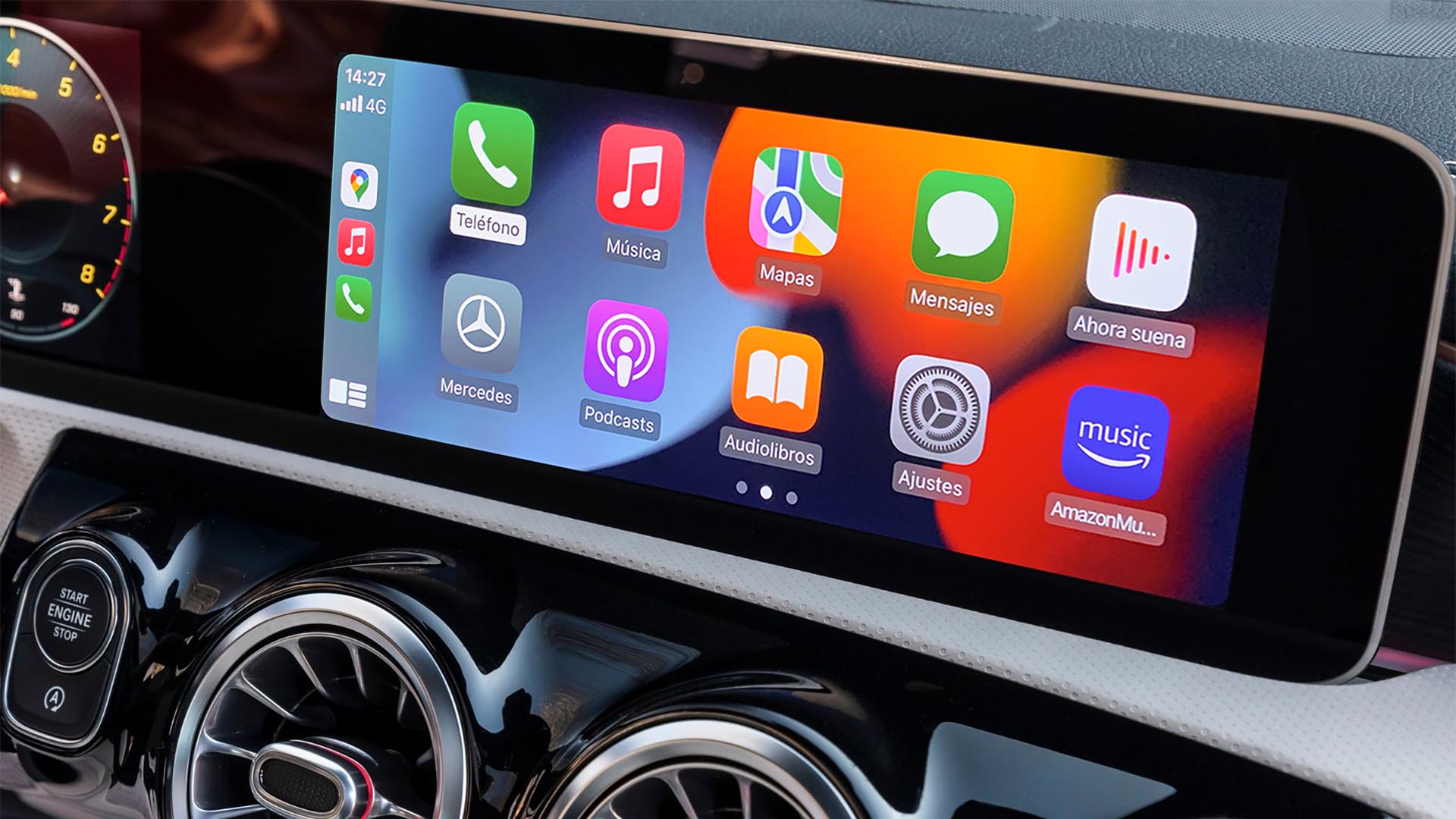
Apple CarPlay and Android Auto have become important parts of the in-car experience for many American drivers, and a new survey suggests that removing them could influence where consumers shop for their next vehicle.
A November 2025 survey of 1,003 U.S. car owners conducted by AmericanTrucks found that 39% considered the absence of Apple CarPlay or Android Auto a deal-breaker when shopping for a vehicle. Another 44% said they would be less likely to purchase from an automaker that removed the technology.
The findings come as automakers increasingly develop their own infotainment platforms and seek greater control over vehicle software. General Motors has become one of the most prominent examples after removing traditional phone projection from several newer electric vehicles and moving toward a more integrated native software strategy.
The AmericanTrucks survey indicates that consumers may not be ready to give up the smartphone platforms they already know. Sixty percent of respondents who use CarPlay said removing the technology would make them less likely to buy from a brand. The figure was 40% among Android Auto users.
GM also received a notable negative response. Thirty-seven percent of all respondents said they would be less likely to purchase a GM vehicle because the company decides to phase out CarPlay and Android Auto.
Among GM owners who use CarPlay, the figure rose to 48%, while 33% of GM owners using Android Auto said they would be less likely to buy a GM vehicle.
Those figures represent purchasing intentions rather than evidence that consumers have already stopped buying GM vehicles.
CarPlay Leads Android Auto Among Survey Users
Apple CarPlay was the more widely used system among AmericanTrucks survey respondents. Fifty percent said they used CarPlay, while 30% used Android Auto. The remaining 20% were either unsure which system they used or did not identify with either platform.
The survey also found a difference in how strongly users viewed the loss of phone projection. Among CarPlay users, 55% said the absence of Apple CarPlay or Android Auto would be a deal-breaker. Among Android Auto users, 36% gave the same response.
The research does not establish why CarPlay users showed a stronger reaction. The difference could be related to familiarity with Apple’s interface, the applications respondents use, or the expectations they have developed around smartphone connectivity.
What is clearer is that many drivers have become accustomed to having their phone’s ecosystem available on the vehicle’s display. Navigation, calls, messages, and music can all be accessed through interfaces that users already understand.
That familiarity gives Apple and Google an advantage over automakers attempting to create replacement systems. A driver who changes vehicles does not need to learn an entirely new interface when using CarPlay or Android Auto.
The survey found relatively low confidence that automakers can fully reproduce that experience. Only 29% of CarPlay users said they trusted automakers to create systems capable of matching Apple’s or Google’s smartphone platforms. Among Android Auto users, the figure was 34%.
There were differences between individual automakers. Tesla owners showed the highest confidence in automakers’ ability to create comparable systems, at 62%, followed by BMW owners at 59%.
The results suggest that consumers’ attitudes may depend partly on their experience with a manufacturer’s existing software. Drivers satisfied with an automaker’s native system may be less concerned about losing smartphone projection.
GM’s CarPlay Strategy Has Created Consumer Resistance
General Motors has become a major focus of the debate because it removed Apple CarPlay and Android Auto from several newer electric vehicles. Instead, GM has pursued an integrated infotainment strategy built around native vehicle software and Google’s automotive technology.
The automaker has argued that a native system can provide deeper integration with vehicle functions and give GM greater control over the digital experience. The AmericanTrucks results show that some customers view the change differently.
Thirty-seven percent of survey respondents said they would be less likely to buy a GM vehicle because of the phase-out. Among GM owners who use CarPlay, 48% said they would be less likely to buy from the automaker. The figure was 33% among GM owners using Android Auto.
The survey also found that 35% of GM owners said they would switch brands if GM dropped CarPlay and Android Auto, while 25% were unsure.
That reaction could matter because existing owners are an important source of repeat business. Customers who already know a brand’s vehicles may still reconsider their next purchase if a feature they use every day is removed.
However, GM’s position requires some context. The company has not removed CarPlay and Android Auto from every vehicle in its lineup.
GM clarified that the systems would remain available in its gasoline-powered vehicles for the foreseeable future. The company’s move away from traditional phone projection is most significant in newer EVs using its newer software architecture.
That distinction remained clear in 2026. GM’s 2027 GMC Sierra, for example, supports both Apple CarPlay and Android Auto alongside GM’s native interface and vehicle functions. GM confirmed the technology as part of the truck’s next-generation infotainment experience.
The Sierra therefore demonstrates that GM has not completely abandoned smartphone projection. Instead, the automaker is taking different approaches depending on the vehicle and its underlying technology.
That is important when interpreting the AmericanTrucks survey. The research measured consumer sentiment toward GM’s announced strategy and does not mean every current GM vehicle lacks CarPlay or Android Auto.
Automakers Face a Difficult Software Choice
The debate reflects a larger shift in the automotive industry. Automakers increasingly want software to become a major part of how their vehicles are differentiated, but consumers already have strong relationships with the technology on their smartphones.
CarPlay allows iPhone users to bring familiar applications and services into the vehicle. Android Auto serves a similar role for Android users. Both systems reduce the need for drivers to learn a completely new interface whenever they purchase another vehicle.
Automakers have different incentives. Developing proprietary software gives manufacturers greater control over the dashboard experience and allows them to integrate vehicle functions directly into their own systems.
It can also reduce dependence on technology companies. The problem is that consumers may not see those benefits as more important than the familiarity of their existing smartphone ecosystem.
The AmericanTrucks survey found that 44% of respondents would be less likely to buy from a brand that removed CarPlay or Android Auto. For 39%, the absence of either system was enough to qualify as a deal-breaker.
Those results suggest that smartphone integration has moved beyond being a minor feature on a vehicle’s equipment list. For a significant portion of consumers, it has become part of their expectations when buying a new vehicle.
Other research highlights why automakers have difficulty developing infotainment systems that consumers immediately embrace.
J.D. Power’s 2025 U.S. Multimedia Quality and Satisfaction study surveyed 92,694 purchasers and lessees of new 2025 model-year vehicles. Five of the 10 most frequently reported problems involved multimedia systems.
The study recorded 42.3 multimedia problems per 100 vehicles, down from 44.1 in 2024. Although the figure improved, multimedia remained one of the most significant sources of reported problems.
The J.D. Power research does not prove that consumers prefer CarPlay or Android Auto over every automaker-developed system. It does show the difficulty manufacturers face as vehicle infotainment becomes more sophisticated.
The challenge is therefore not simply building proprietary software. Automakers must convince drivers that their systems are easy to use, reliable, and valuable enough to replace technology consumers already know.
GM’s approach demonstrates both sides of that equation. The company continues to pursue greater control over the software experience in its newer EVs while retaining Apple CarPlay and Android Auto in gasoline-powered vehicles such as the 2027 GMC Sierra.
For consumers, the issue is ultimately about convenience and familiarity. Drivers who spend years using a particular smartphone ecosystem may not want to change how they navigate, make calls, or access music simply because they purchased a different vehicle.
The AmericanTrucks survey shows that this preference can influence purchasing decisions. Nearly four in 10 respondents viewed the absence of CarPlay or Android Auto as a deal-breaker, while 44% said removing the technology would make them less likely to buy from an automaker.
GM’s experience shows why manufacturers need to consider those expectations carefully. Native software can give automakers greater control, but eliminating familiar smartphone integration can also create resistance among customers.
As vehicles become increasingly software-defined, the competition will not be limited to engines, batteries, design, or driving performance. Automakers will also compete over the digital experience inside the cabin.
The AmericanTrucks findings suggest that consumers will compare those systems with technology they already know well and use every day, particularly their smartphones.