
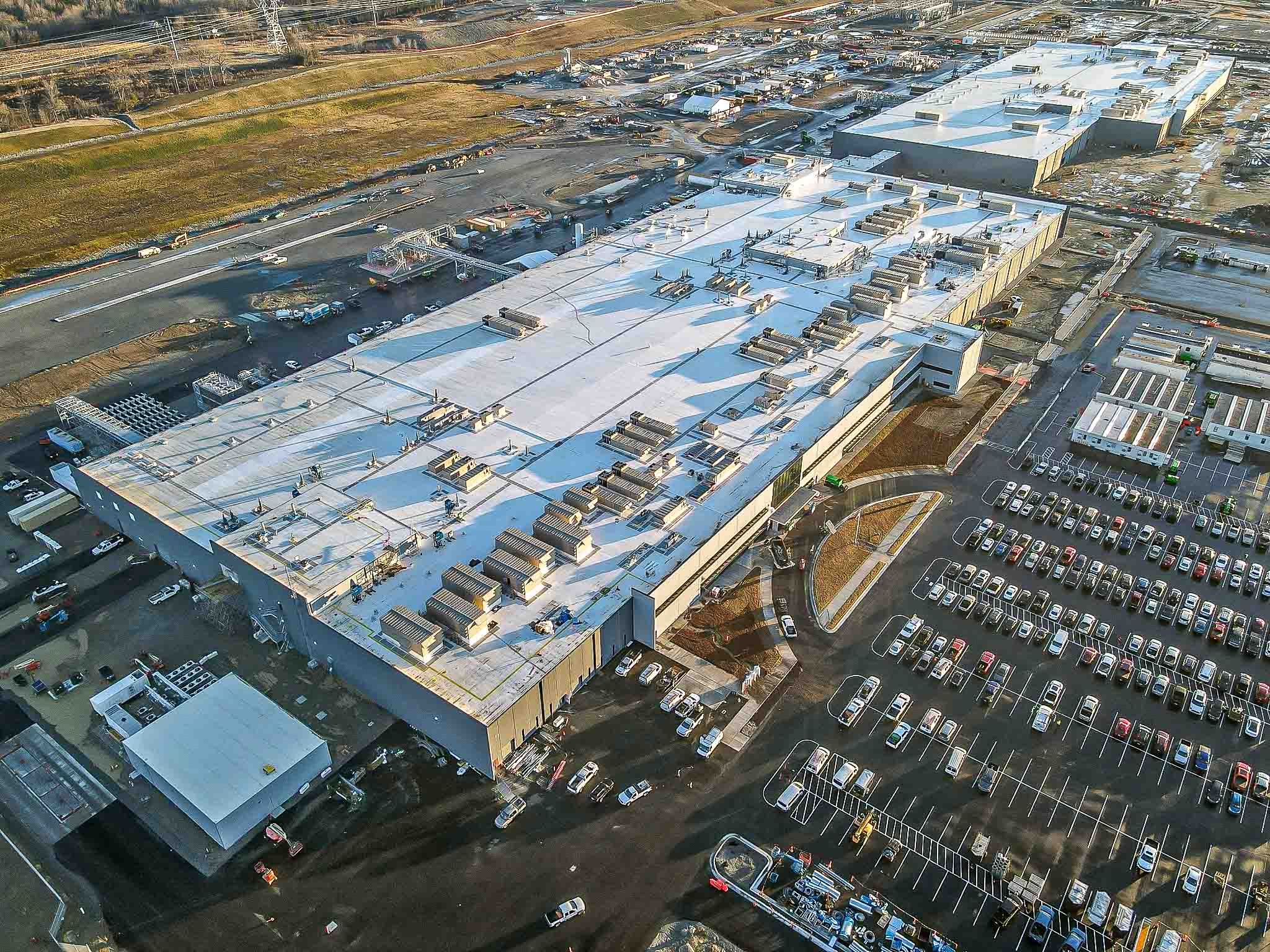
Toyota has opened a new battery development center in Michigan as the automaker expands its work across hybrid, plug-in hybrid, hydrogen fuel-cell, and battery-electric vehicles.
The Toyota Battery Center of North America, located at the company’s research and development campus in Saline, is designed to strengthen battery testing and development capabilities while supporting Toyota’s broader multi-pathway electrification strategy.
The facility covers approximately 30,000 square feet and is intended to serve as a central North American hub for battery evaluation.
Toyota says its engineers will work across the battery development cycle, from raw-material sourcing and technology development through vehicle applications and recycling. That gives the center a wider role than a facility dedicated exclusively to battery-electric vehicles.
The timing is significant because Toyota continues to pursue several forms of electrification simultaneously. While many automakers have concentrated increasingly on battery-electric vehicles, Toyota has continued investing heavily in conventional hybrids, plug-in hybrids, hydrogen fuel-cell vehicles, and BEVs.
The new center is designed to support that broader approach rather than favoring a single propulsion technology.
For Toyota, the strategy reflects its view that different markets and customers will transition away from conventional gasoline power at different speeds. Batteries remain important across nearly all of those technologies, even when they are used in very different ways.
A Battery Center Designed for Multiple Technologies
Toyota’s new facility will evaluate batteries used in full hybrid, plug-in hybrid, hydrogen fuel-cell, and fully electric vehicles. Engineers will be able to test battery performance and develop technologies intended for vehicles operating in North American conditions.
That distinction is important because battery requirements vary considerably between powertrain types. A conventional hybrid generally uses a much smaller battery than a BEV, allowing the gasoline engine and electric motor to work together.
A plug-in hybrid requires a larger battery because it must provide meaningful electric-only driving capability, while a BEV depends almost entirely on its battery for propulsion.
Hydrogen fuel-cell vehicles also use batteries, although their energy system is fundamentally different from that of a battery-electric vehicle. A fuel-cell stack generates electricity, while a battery can store energy and provide additional power when required.
By bringing these development programs together, Toyota can use common testing resources while maintaining different battery technologies for different applications. The company says the center will support its “Multi-Pathway Strategy,” which seeks to provide several electrified mobility options rather than committing exclusively to BEVs.
Toyota’s approach has been evident in its product planning for years. The company remains one of the world’s largest manufacturers of hybrid vehicles while expanding its BEV lineup and continuing research into next-generation battery technologies.
The company has also invested heavily in next-generation batteries. Toyota has previously announced plans for multiple battery types, including lithium-ion designs using different chemistries and structures, as well as all-solid-state batteries. Its published development targets include higher energy density, lower costs, and faster charging for future BEVs.
The Michigan center gives Toyota a dedicated North American location to translate some of that broader battery expertise into vehicles and conditions specific to the region.
Supporting Toyota’s Growing North American Manufacturing Network
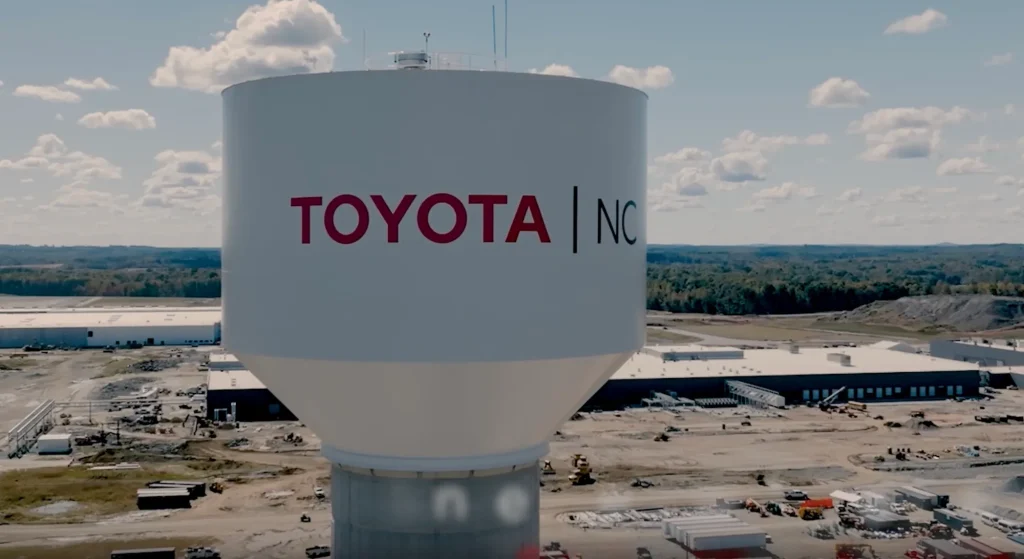
The Saline facility is positioned to work closely with Toyota’s broader North American manufacturing operations. The company said the center will support battery evaluation for Toyota Battery Manufacturing North Carolina as well as vehicle plants throughout North America.
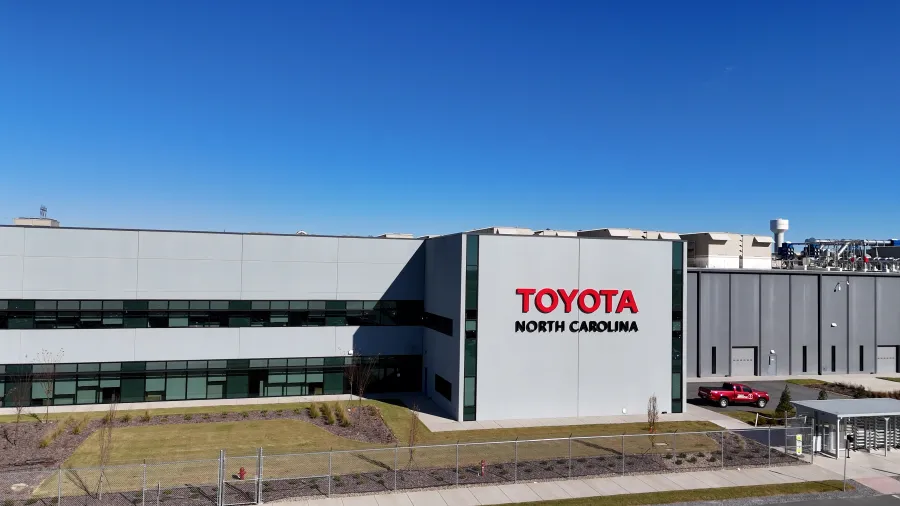
Toyota’s North Carolina battery plant began operations in 2025 and represents a major expansion of the company’s battery manufacturing footprint in the United States.
The plant is designed to produce batteries for a range of electrified vehicles, reinforcing the importance of having local engineering and testing capabilities alongside manufacturing capacity.
The new development center can help connect those activities. Instead of relying primarily on testing and engineering operations in Japan, Toyota can conduct more battery development work close to its North American manufacturing facilities and the vehicles that use those batteries.
That proximity could also make it easier for Toyota engineers to respond to problems discovered during vehicle development or after vehicles reach customers. Jordan Choby, Toyota Motor North America’s group vice president of powertrain, said the center would allow engineers to detect and resolve field concerns faster and closer to the source.
The company also says the facility will help it develop longer-lasting batteries designed around conditions encountered by American drivers. Those conditions can include large temperature variations, long-distance driving, and different charging and usage patterns across the country.
Battery durability is increasingly important as automakers place electrified vehicles into more segments. For hybrids, battery longevity affects the economics and reliability of a vehicle that may remain on the road for many years. For BEVs, durability and degradation directly influence the usable life and long-term value of the vehicle.
Toyota has emphasized battery durability for decades. Its corporate battery strategy has included efforts to improve both development and supply as electrified vehicles have become more important to its global lineup.
Toyota Is Investing in More Than Battery-Electric Vehicles
The opening of the Michigan center also provides a clearer picture of how Toyota intends to approach electrification in the coming years.
Toyota has not abandoned battery-electric vehicles. The company has continued developing BEVs and next-generation battery technology, including batteries aimed at reducing costs while improving range and charging performance.
Toyota previously said its popularization-focused next-generation battery could reduce costs by 40% compared with the battery used in the bZ4X while increasing cruising range by 20%.
At the same time, Toyota continues to see an important role for hybrids and plug-in hybrids. Those vehicles can provide electric assistance or electric-only driving without requiring drivers to depend entirely on charging infrastructure.
That strategy can be particularly relevant in markets where charging infrastructure is uneven or where consumers remain reluctant to switch directly from gasoline vehicles to BEVs.
Toyota’s approach allows the company to offer different levels of electrification while continuing to develop technologies that can eventually support greater battery-electric adoption.
The new Michigan facility therefore represents more than an EV laboratory. Its work spans technologies that use batteries in different ways, allowing Toyota to maintain a broad development pipeline.
Toyota is also continuing research into all-solid-state batteries. The company has previously targeted commercialization of solid-state technology for BEVs, with the potential for higher energy density and faster charging compared with current battery systems.
Whether those technologies reach production at the pace Toyota has targeted remains dependent on manufacturing and cost challenges, but the new North American center gives the company another location for battery research, testing, and evaluation.
Partnership With University of Michigan Adds Research Component
Toyota is also using the new facility to strengthen relationships with the academic community. The company plans to provide research access through a partnership with the University of Michigan Electric Vehicle Center, allowing other research partners to use the center’s battery testing and evaluation capabilities.
The partnership is intended to support research while helping train the next generation of battery engineers and technicians. Toyota is a founding member of the University of Michigan Electric Vehicle Center, making the new facility an extension of an existing relationship rather than an isolated academic initiative.
That workforce-development component could become increasingly important as battery manufacturing expands across the United States. Automakers, battery manufacturers, and suppliers are competing for engineers and technicians with expertise in battery chemistry, electronics, thermal management, manufacturing, and testing.
Toyota’s decision to locate the facility in Michigan also builds on the state’s long-established automotive engineering base. The company has maintained a presence in Michigan for more than 50 years, and its North American research and development operations have contributed to the engineering of several Toyota vehicles sold in the United States.
The center brings together several key elements of Toyota’s strategy, including local engineering, battery production, vehicle development, academic research, and electrification.
For Toyota, that integration could become increasingly important as battery technology develops rapidly and the company expands its electrified vehicle lineup.
The new Battery Center of North America does not signal a move away from Toyota’s multi-pathway strategy. Instead, it strengthens the technical foundation supporting that strategy. Engineers will be able to work on batteries for hybrids, plug-in hybrids, hydrogen vehicles, and BEVs in the same North American development environment.
As Toyota expands its battery manufacturing and electrified vehicle production in the United States, the ability to develop and evaluate batteries locally could reduce development delays and improve the company’s response to real-world vehicle requirements.
It also gives Toyota greater flexibility as consumer demand between hybrid, plug-in hybrid and fully electric vehicles continues to evolve.
The opening of the 30,000-square-foot facility therefore represents a significant investment in the technology behind Toyota’s electrification plans.
Rather than betting exclusively on one powertrain, the company is building battery expertise that can support several technologies at once, giving its North American operations a broader technical base as the automotive industry continues its transition toward electrified transportation.
