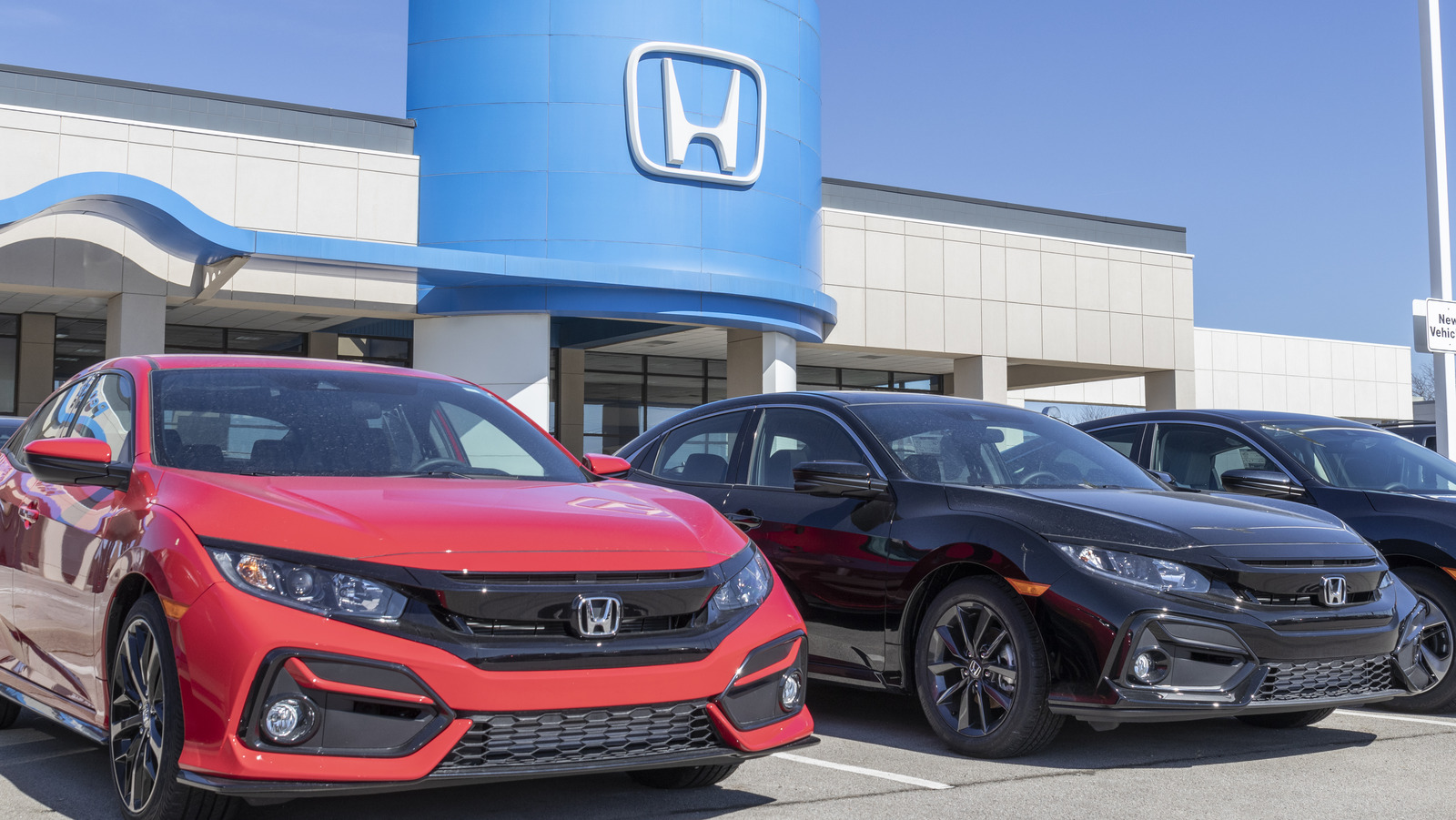
Honda is making a significant change to the way it develops vehicles for India, partnering with Tata Technologies in an effort to lower development costs and bring new models to market much faster.
According to Reuters, the arrangement could reduce vehicle-development costs by as much as 20% and cut development time roughly in half, as Honda attempts to rebuild a business that has lost substantial ground in one of the world’s fastest-growing automotive markets.
The first vehicle under the new arrangement is expected to be a sub-4-meter SUV targeted at the Indian market, with a launch planned for 2028.
A midsize SUV is expected to follow, while Honda could eventually use the revised strategy to strengthen its sedan lineup. Honda itself has confirmed that it intends to introduce India-focused products in the under-4-meter and midsize categories from 2028 onward.
The move represents a major adjustment for an automaker historically known for keeping core vehicle development largely under its own control.
Honda is now placing greater emphasis on local engineering resources, suppliers, and development expertise as it attempts to produce vehicles that better match Indian customers’ expectations for price, equipment, and practicality.
Honda Wants Lower Costs and Faster Development
Under the arrangement, Tata Technologies will develop vehicles specifically for the Indian market, while Honda will retain control over critical areas including technology, connectivity, and driver-assistance systems.
People familiar with the program told Reuters that Honda currently takes around five years to develop a vehicle, meaning the targeted reduction could bring that timeline down to approximately two and a half years.
The cost target is equally significant. Honda expects the partnership to deliver savings of up to 20% compared with its existing development approach.
The company is pursuing those savings at a time when it is under pressure to improve profitability globally and reduce the financial burden associated with its recent electric-vehicle strategy.
Honda has said its automobile business needs a fundamental restructuring. In its 2026 business briefing, the company identified cost reduction, development efficiency, and a stronger product lineup in priority markets as three central pillars of its automobile-business recovery plan.
Honda is also pursuing a broader “Triple Half” strategy intended to reduce development cost, development time, and development workload by half compared with 2025 levels.
The Tata Technologies partnership therefore fits into a greater corporate effort rather than representing an isolated India initiative. Honda is looking for ways to use outside resources more effectively while concentrating its own engineering capabilities on technologies and areas it considers strategically important.
The Indian market provides a particularly strong case for that approach. Vehicles need to be competitive on price while offering the equipment, space, and efficiency expected by increasingly demanding buyers.
A development process designed primarily around the requirements of other markets can make it difficult to achieve that balance.
Reuters reported that Honda previously adapted vehicles originally developed for Japan and other global markets for India. Such an approach contributed to products that were viewed as expensive or over-engineered compared with locally developed alternatives. The new strategy is intended to move away from that model.
Tata Technologies brings a large network of Indian suppliers and engineering resources to the arrangement. That local knowledge is expected to help Honda design vehicles around Indian consumer preferences while reducing development expenses.
Honda’s India Business Has Lost Significant Ground
The urgency behind the change becomes clearer when Honda’s position in India is compared with its earlier performance.
Reuters reported that Honda’s market share in India has fallen to approximately 1.3%, down from a peak of 7.3% more than a decade ago. Its passenger-vehicle portfolio has also contracted to just four models, leaving the company with a relatively limited presence in important segments.
SUVs are particularly important to the turnaround. Indian buyers have increasingly shifted toward SUVs and utility vehicles, while Honda has had a relatively limited selection in the segments generating much of the market’s growth.
Honda currently manufactures the Amaze, City, and Elevate in India, while the ZR-V is sold as a completely built-up imported vehicle. Honda Cars India’s product lineup and manufacturing footprint therefore remain considerably smaller than those of several major competitors.
The company recognizes that its future products need to offer a stronger value proposition. Honda said it has not been able to provide a sufficient lineup that gives Indian customers the right balance of quality and value for money.
Its revised strategy is intended to address that weakness by developing vehicles specifically for local requirements instead of relying heavily on adaptations of global products.
Honda President and CEO Toshihiro Mibe has previously described India as a key focus market while acknowledging that the company has not been successful enough there. The automaker has said it needs to rebuild its business on a fundamentally different basis.
Honda’s importance to India also extends beyond passenger cars. The company has a large motorcycle presence through Honda’s two-wheeler operations, giving it an established customer base and manufacturing infrastructure that can support a broader mobility strategy.
Honda’s 2026 business briefing specifically highlighted India as one of its priority markets, alongside North America and Japan. The company plans to introduce strategic India-focused models from 2028 in both the under-4-meter and midsize categories.
The 2028 SUV Could Define Honda’s Next Phase
The first product resulting from the Tata Technologies relationship will be particularly important because it enters one of India’s most competitive vehicle segments. Reuters reported that the initial SUV will measure less than four meters, a size category that represents a substantial portion of India’s passenger-vehicle market.
The under-4-meter format is important because Indian regulations and market preferences have made compact SUVs an attractive combination of exterior dimensions, interior practicality, and pricing. Honda has historically lacked a strong contender specifically designed around this formula.
A successful vehicle could therefore do more than add another model to Honda’s lineup. It could demonstrate whether the company can combine its established strengths in engineering, reliability, and driving dynamics with the cost discipline and local market knowledge required to compete against Indian manufacturers.
The partnership is also designed to preserve Honda’s quality standards. Although Tata Technologies will take responsibility for substantial portions of development, Honda will supervise the process and retain control over critical technologies.
According to people familiar with the arrangement, Honda’s oversight will cover areas such as connectivity and driver-assistance systems.
That division of responsibility reflects Honda’s attempt to balance two competing priorities. The company needs to become faster and less expensive without allowing cost reductions to undermine the qualities associated with the Honda brand.
The strategy could eventually have implications beyond India. Reuters reported that if the first products developed under the arrangement prove successful in terms of quality, sales, and profitability, Honda could consider using India as an export base.
That possibility would give the partnership greater strategic importance. A development system capable of producing competitive vehicles for India at substantially lower cost could potentially serve other emerging markets with similar customer requirements.
Honda’s broader restructuring suggests the company is already moving toward greater use of external resources.
Its 2026 business plan calls for more standardized components, stronger use of local competitiveness in India and China, digital development tools, and artificial intelligence to improve engineering efficiency. Honda also intends to improve manufacturing efficiency by approximately 20% over the next five years.
For India, the immediate test will be whether Honda can turn that strategy into vehicles that customers consider desirable and affordable. The company has already acknowledged that its existing lineup has not been competitive enough, while its market share has fallen dramatically from its previous high.
The 2028 sub-4-meter SUV will therefore carry expectations beyond those normally attached to a new model. It will be the first major demonstration of Honda’s new approach to local development, sourcing, and cost management.
If the vehicle succeeds, Honda will have evidence that combining its global engineering standards with Tata Technologies’ local expertise can produce faster, more affordable products. If it fails, the automaker could face further pressure to reconsider how it develops and positions vehicles in India.
For now, the partnership marks a clear departure from Honda’s traditional development philosophy.
By targeting a 20% reduction in development costs and roughly half the development time, Honda is betting that a more localized and collaborative approach can restore competitiveness in India while giving the company a faster route to the SUV segments it has struggled to penetrate.