
A flat tire can quickly turn an ordinary drive into a major inconvenience, particularly when a vehicle comes with only an inflation kit or a small temporary spare. However, some modern vehicles still offer something that has become increasingly rare, a full-size spare tire along with the tools needed to install it.
For drivers who travel long distances, venture onto rough roads or simply want greater peace of mind, that hardware can matter more than another convenience feature.
The following U.S.-market vehicles retain this practical approach, although equipment can vary by trim. Each example below is based on current manufacturer information, with particular attention to whether the spare is full-size and whether factory jacking equipment is provided.
1. 2026 Ford Bronco
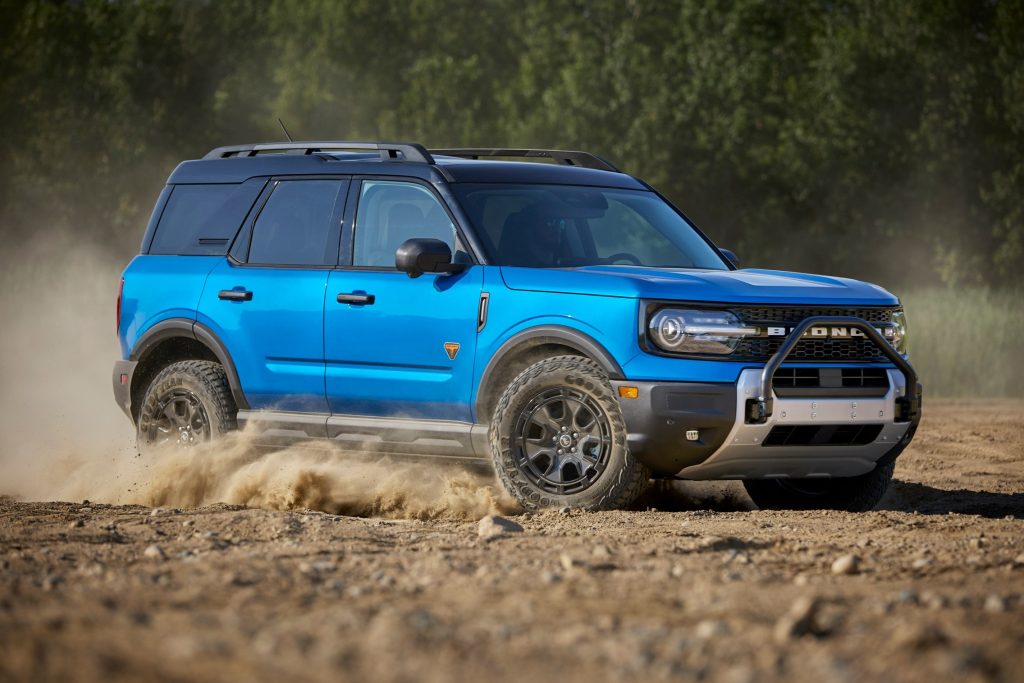
The Ford Bronco is one of the clearest modern examples of a vehicle designed with tire failures in mind. Ford’s 2026 U.S. Bronco order guide lists a full-size spare tire with TPMS, with the exact tire and wheel combination depending on the selected configuration.
For example, the guide specifies a full-size spare with the standard 255/70R16 setup, while other packages use substantially larger tires.
That matters because the spare is intended to remain a genuine replacement rather than simply an emergency tire designed to get the Bronco to the nearest repair shop.
A full-size spare can maintain a more consistent rolling diameter with the tires already fitted to the vehicle, which is particularly useful for a four-wheel-drive SUV when a damaged tire cannot be repaired.
The Bronco’s external spare also has a practical advantage. Mounted on the rear door, it remains accessible without requiring the owner to crawl underneath the vehicle or unload cargo first. That location is particularly useful when traveling on trails, where mud, rocks, and uneven ground can make underbody access unpleasant.
Ford’s factory equipment also includes the hardware necessary for changing a wheel, although exact jack and tool configurations can vary by Bronco specification.
The important distinction is that the Bronco is engineered around carrying a usable full-size spare rather than treating tire failure as a problem that must be solved exclusively with roadside assistance.
For owners who regularly leave paved roads, that is a meaningful piece of equipment rather than an old-fashioned convenience.
2. 2026 Subaru Forester Wilderness
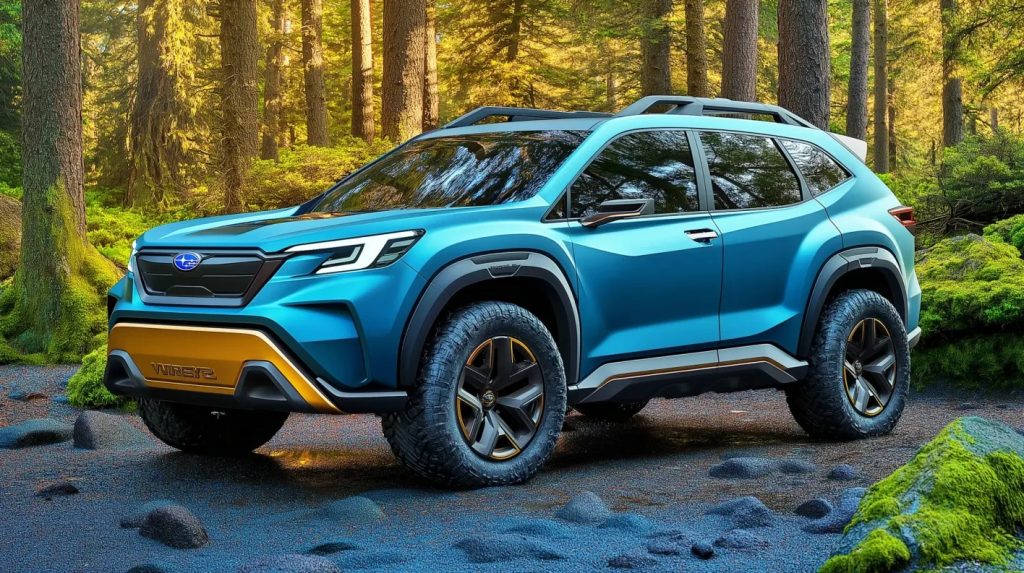
The Subaru Forester Wilderness takes a different route to the same practical idea. Subaru specifically states that the 2026 Forester Wilderness comes with a full-size spare wheel and a 225-millimeter all-terrain spare tire stored below the cargo area. The spare is paired with the Wilderness model’s 17-inch wheels and all-terrain tire setup.
This is significant because the regular Forester lineup does not use the same spare-tire arrangement across every trim. Subaru’s owner documentation distinguishes the Wilderness from versions equipped with a temporary spare, making the Wilderness the configuration to look for if a full-size replacement is important.
There is also a factory jack and tool kit. Subaru’s documentation specifies that the jack, jack handle, screwdriver, towing hook, and wheel-nut wrench are stored in the tool bucket located in the center of the spare tire beneath the cargo floor.
The arrangement suits the Wilderness model’s purpose. Its all-terrain tires, increased ground clearance, and off-road-oriented equipment are intended for drivers who may travel beyond areas where a tire shop or roadside service vehicle is immediately available. A full-size spare means the driver is not forced to rely on a much smaller temporary tire after a puncture.
There is another practical benefit. Because the spare uses a full-size tire, it can remain a useful backup for a wider range of situations instead of being restricted to limited-speed emergency driving.
For someone heading onto a remote forest road or a long highway trip, having both the correct replacement tire and a factory jack in the vehicle can make a major difference when the unexpected happens.
3. 2026 Toyota 4Runner
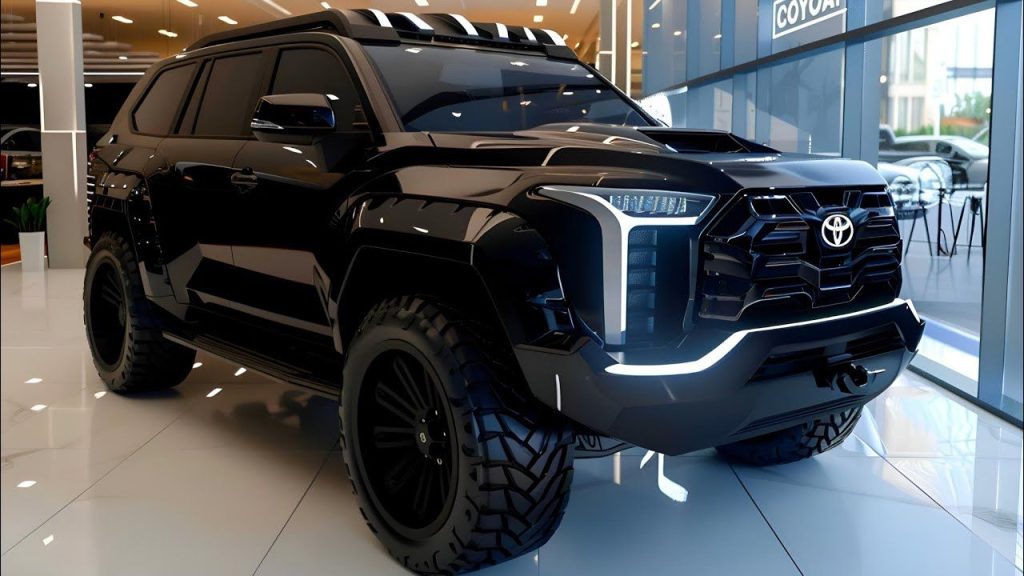
The 2026 Toyota 4Runner is another modern SUV that keeps the traditional spare-tire setup alive, and it does so in a way that fits the vehicle’s off-road mission. Toyota’s 2026 4Runner materials identify a spare tire and dedicated jack and tool storage, with the spare carried underneath the rear of the vehicle.
Toyota’s quick-reference guide specifically shows the jack, tool bag, and spare-tire arrangement, while the owner’s information provides the procedure for lowering the spare and changing a wheel. Toyota Assets
That location is worth noting because the 4Runner does not sacrifice interior cargo space simply to carry a usable spare. The tire is suspended underneath the rear section and can be lowered using the jack handle through an access point in the bumper.
It is a more traditional arrangement than what is found on many crossovers, but it makes sense for a vehicle designed to travel away from paved roads.
The 4Runner also has a genuine advantage when a puncture happens far from a tire shop. Instead of depending entirely on a compressor and sealant, the driver has a physical replacement wheel available. The factory jack and associated tools mean the basic equipment for changing the tire travels with the vehicle.
That distinction becomes more important when driving on gravel, rocky trails, or remote roads where a damaged sidewall cannot simply be repaired with a plug. A full replacement wheel is not glamorous equipment, but it is exactly the kind of hardware that can turn a potentially major problem into a manageable roadside repair.
For buyers considering a 4Runner specifically for travel and outdoor use, checking the exact factory tire specification is still worthwhile before purchase because wheel and tire equipment can vary between configurations.
4. 2026 Toyota Land Cruiser
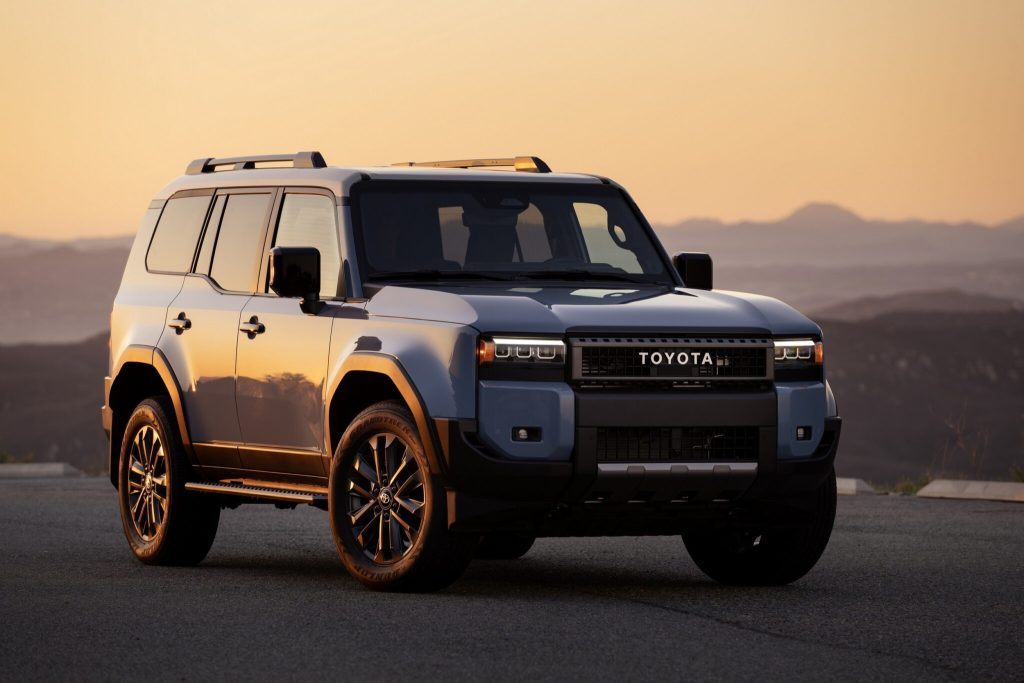
The 2026 Toyota Land Cruiser takes the full-size-spare philosophy even further by combining a conventional spare tire with a factory jack and dedicated tools.
Toyota’s U.S. owner’s manual explicitly identifies the spare tire, jack, and tool bag as equipment supplied with the vehicle. It also provides detailed instructions for removing the spare and using the factory jack to replace a flat.
The spare is mounted underneath the vehicle rather than consuming a large section of the cargo compartment. To retrieve it, the owner assembles the jack handle and extensions, inserts the tool through the rear access point, and lowers the spare using the carrier mechanism.
Toyota provides separate instructions for five-passenger and seven-passenger configurations, showing how the company has integrated the spare-tire system into the Land Cruiser’s packaging.
This is particularly relevant because the Land Cruiser is designed for drivers who may venture considerably farther from paved roads than the average family SUV. A tire damaged by a sharp rock or rough terrain is not necessarily something an inflation kit can fix. Having a physical replacement available gives the driver another option.
The owner’s manual also includes an important detail about proper use. Toyota states that the supplied jack is intended only for tire replacement and for installing or removing tire chains. The manual also identifies the designated lifting points and explains how to position the jack safely.
For a modern vehicle packed with electronic assistance systems and advanced driveline technology, the Land Cruiser’s inclusion of basic mechanical emergency equipment feels reassuringly traditional.
The technology may help get the vehicle through difficult terrain, but when a tire fails, a real spare and a real jack remain difficult to replace.
5. 2026 Jeep Wrangler
The Jeep Wrangler has managed to keep one of the most traditional tire-change setups in the modern SUV market. Its rear-mounted spare is part of the vehicle’s familiar design, and the 2026 owner’s handbook includes dedicated procedures for removing the spare, retrieving the jack, and changing a wheel.
Jeep’s documentation also specifically identifies a “full-size spare” when equipped. That qualification matters because Jeep offers different tire configurations, so buyers should confirm the exact equipment on the vehicle they are considering.
With the full-size spare equipped, the Wrangler gives drivers something increasingly rare on modern passenger vehicles, a replacement tire that can serve as a proper full-size alternative rather than a small temporary donut.
The jack and lug wrench are stored in the rear cargo area. Jeep’s 2026 handbook explains that the load floor is lifted to access the hardware storage area, after which the jack and tools can be removed. The same manual provides designated jacking locations and warns that the jack is intended only for changing tires.
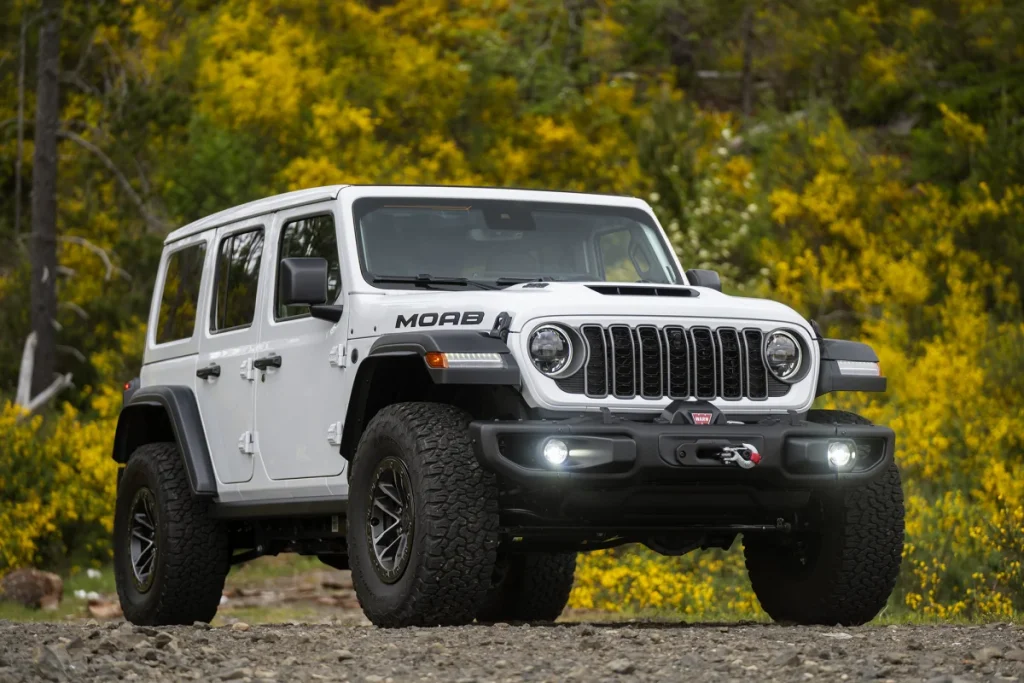
The external spare also has an advantage that is easy to overlook. It remains accessible even when the Wrangler’s cargo area is packed with camping equipment, recovery gear, or luggage. That can be valuable on a long trip because a flat tire does not require unloading everything from the rear.
For an SUV with genuine trail capability, this arrangement makes practical sense. A sidewall puncture from a sharp rock cannot necessarily be repaired with an inflation kit, and a full-size replacement gives the driver a much better chance of continuing the journey.
6. 2026 Toyota Tundra
Pickup trucks have generally been more reluctant than cars and crossovers to abandon the traditional spare tire, and the Toyota Tundra is a strong example.
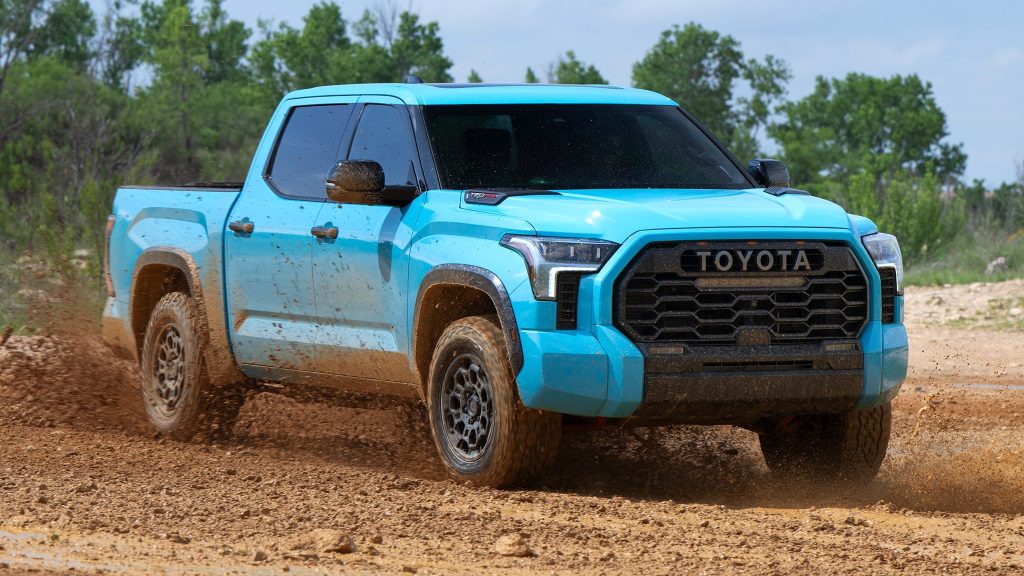
Toyota’s Tundra documentation identifies a full-size spare mounted underneath the body, while the factory equipment includes a jack, tool bag, and the hardware needed to lower the spare from its carrier.
Toyota’s published Tundra specifications list the full-size spare as standard equipment across the configurations shown.
The underbody location is particularly sensible for a truck. Keeping the spare beneath the rear section leaves the pickup bed available for cargo instead of sacrificing usable space to a large tire. When a puncture occurs, the owner can use the supplied jack-handle assembly to lower the spare and retrieve it.
Toyota’s quick-reference materials also show that jack and tool storage varies by cab configuration. Double Cab and CrewMax models store the equipment in different locations, but the basic setup is the same. The truck comes equipped with the hardware needed to perform a conventional tire change.
There is an important distinction between a full-size spare and a temporary-use spare. A temporary tire is designed primarily to get the vehicle somewhere safe for repair.
A full-size spare provides a much closer match to the tires already installed on the truck, although drivers should still check the tire specifications and follow Toyota’s instructions after installing it.
For Tundra owners who tow, haul or travel away from populated areas, that distinction can become particularly valuable. A puncture in the middle of a long highway journey is inconvenient.
A damaged tire several miles down an isolated road can become a much bigger problem. The Tundra’s combination of a full-size spare, factory jack and dedicated storage keeps a very old-fashioned solution relevant in a thoroughly modern pickup.
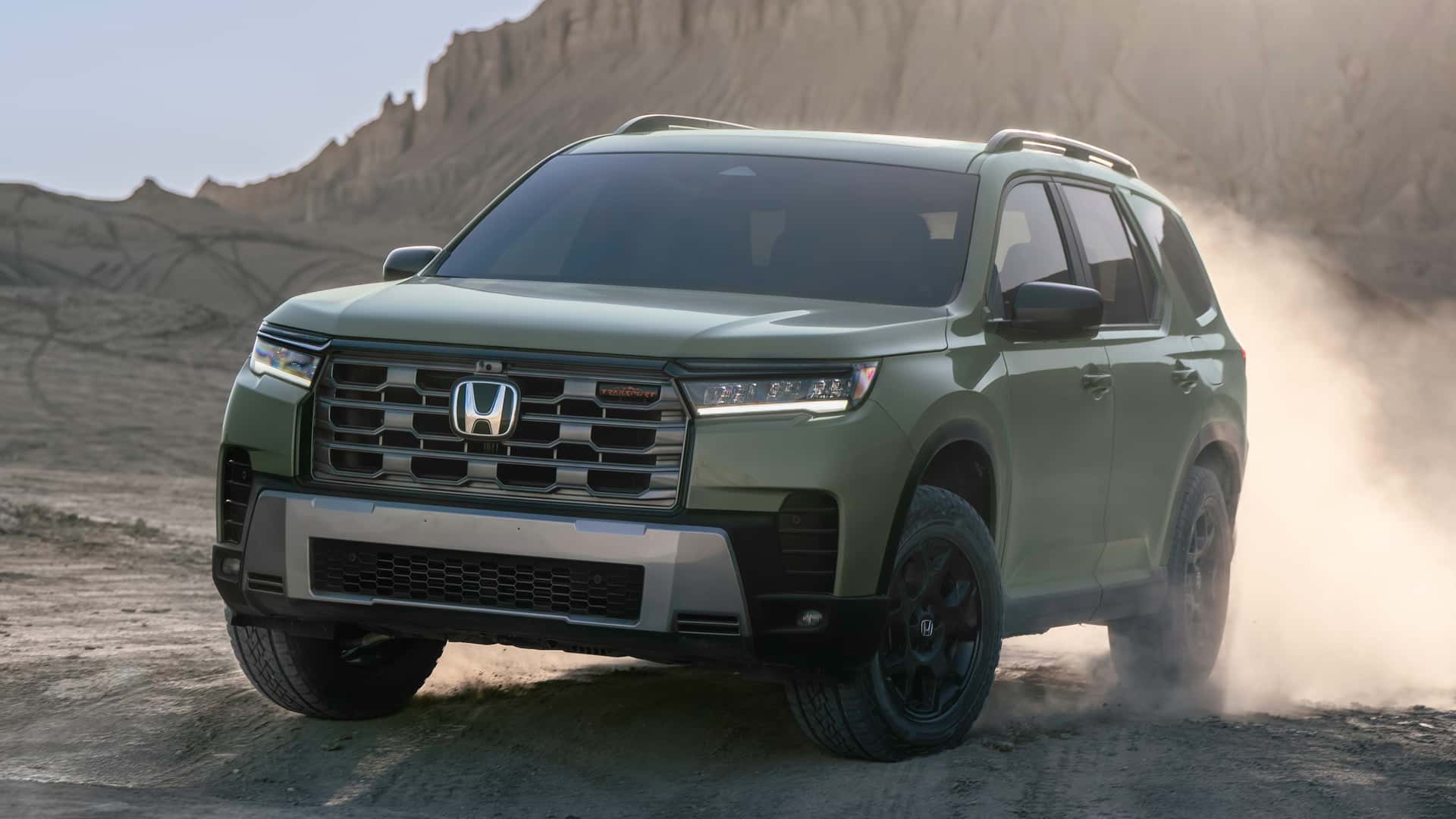
7. 2026 Honda Pilot TrailSport
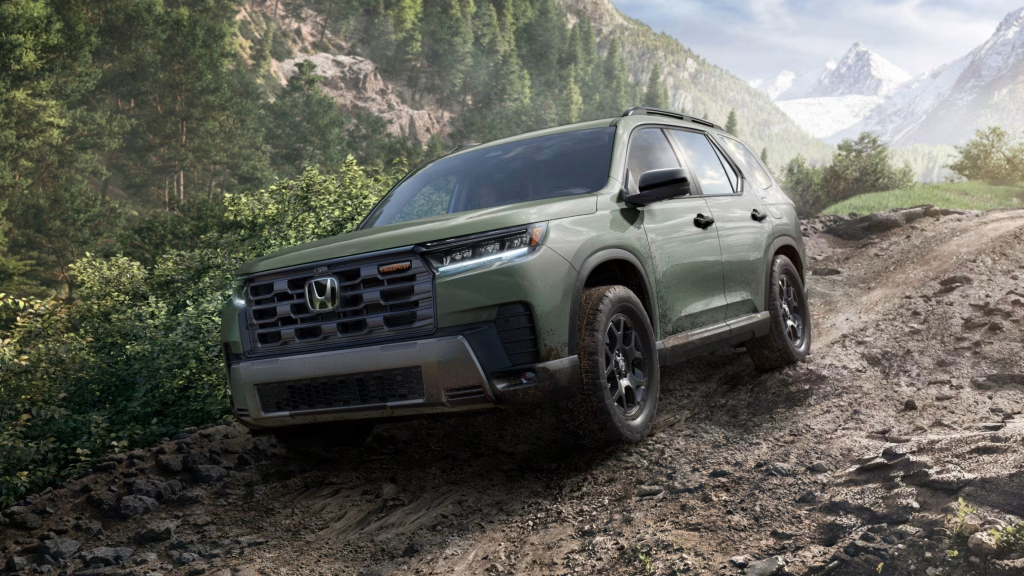
The Honda Pilot is not a full-size-spare vehicle across its entire lineup, which makes the TrailSport version particularly important for buyers who care about tire redundancy. Honda’s 2026 U.S. specifications identify the Pilot TrailSport as the trim equipped with a full-size spare, while the other Pilot versions use a compact temporary spare.
Honda gives the TrailSport a full-size all-terrain spare because the model is intended to handle more challenging surfaces than the standard Pilot.
The spare is mounted underneath the vehicle, preserving the interior cargo area instead of taking up space behind the third row. Honda specifically highlights the underbody mounting as a way to maximize cargo versatility.
The equipment for actually changing the tire is also there. Honda’s 2026 owner’s information lists a jack, wheel-nut wrench, jack-handle bar and box wrench in the vehicle’s tool case. The manual provides a dedicated procedure for lowering the full-size spare through the tire hoist and then positioning the jack at the specified lifting point.
That combination makes the TrailSport an interesting alternative to many family crossovers. A puncture on an ordinary highway is inconvenient, but a damaged tire on a dirt road can be considerably harder to deal with. The full-size spare gives the Pilot a genuine replacement rather than a small temporary tire restricted to emergency use.
Buyers should keep one detail in mind. Honda does not offer the full-size spare on every Pilot. The TrailSport is the version specifically equipped with one, so purchasing a 2026 Pilot does not automatically guarantee that it will include this equipment.
8. 2026 GMC Yukon
The GMC Yukon demonstrates why full-size spare tires remain common on large American SUVs even as they have become less common on smaller vehicles.
GMC’s 2026 vehicle documentation identifies a spare tire carrier underneath the rear of the Yukon, while specifications for the model list a full-size spare wheel and a mechanical jack with tools.
The exact spare arrangement depends on the wheel and tire configuration. GMC’s 2026 documentation explains that Yukons fitted with certain larger tire sizes may require the flat road tire to be carried inside the vehicle, while other tire configurations can use the underbody spare carrier.
That distinction is important because it would be inaccurate to claim that every Yukon configuration carries an identical full-size spare setup. Buyers selecting larger factory wheel-and-tire combinations should verify the equipment for their particular vehicle.
When the underbody system applies, however, the Yukon provides a conventional spare-tire hoist, jack handle extensions and wheel wrench. The factory procedure allows the driver to lower the spare from beneath the rear of the SUV without removing cargo from the passenger compartment.
There is a practical reason this remains useful. The Yukon is frequently used for road trips, towing and family travel, where a flat tire can leave a vehicle carrying several passengers and a substantial amount of luggage. A real replacement tire is particularly useful when the damage is too severe for an inflation kit.
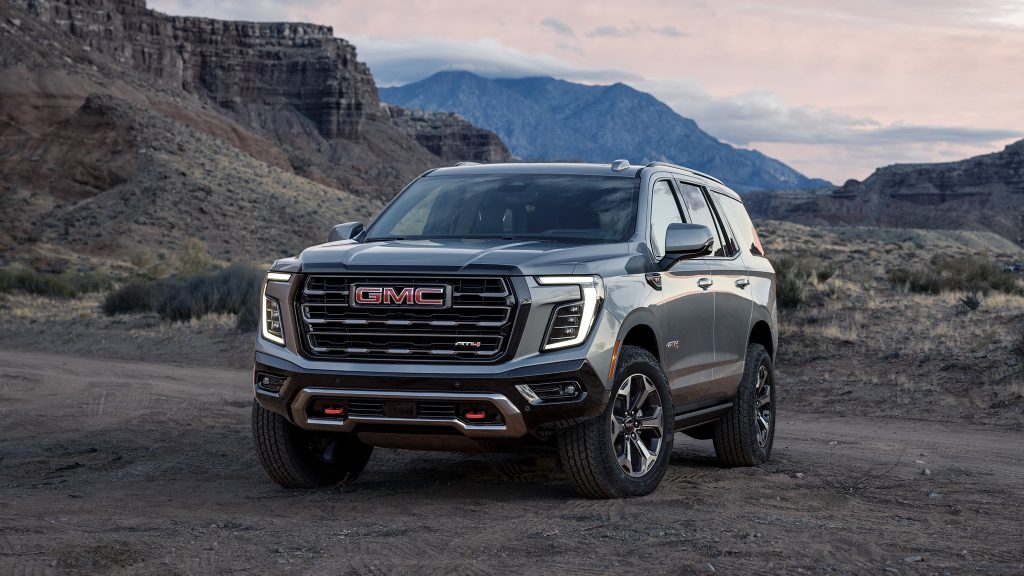
The Yukon therefore retains a surprisingly traditional emergency system beneath all its modern electronics. For the right tire configuration, the owner still has a physical spare, a mechanical jack and the tools needed to perform a conventional roadside wheel change.
9. 2026 Nissan Armada
The Nissan Armada keeps a full-size spare in its modern full-size SUV formula, although the precise terminology deserves attention.
Nissan’s 2026 owner’s manual refers to the spare as a “full-size temporary use only” spare when that equipment is fitted, and it warns that the vehicle must use the specified spare for its particular four-wheel-drive configuration.
Nissan’s U.S. parts catalog also lists a dedicated spare-tire carrier for the 2026 Armada, including the PRO-4X configuration. The spare is stored underneath the rear portion of the vehicle, keeping the main cargo area available for passengers’ luggage and equipment.
The Armada also carries the hardware needed to change the wheel. Nissan’s tire-changing procedure calls for retrieving the jack and tools from beneath the cargo floor, assembling the jack rod and extensions, and using the access opening above the rear bumper to operate the spare-tire winch.
That is a useful arrangement for an SUV designed for long-distance travel. The driver does not need to carry a separate floor jack simply to deal with an ordinary puncture. The factory equipment is already integrated into the vehicle, with dedicated storage for the jack and tool bag.
There is an important caveat, however. Nissan’s wording means the spare should not be treated as though it were necessarily identical in intended use to the four road tires. The Armada manual specifically calls it a temporary-use spare and warns about maintaining appropriate tire circumferences, particularly on four-wheel-drive models.
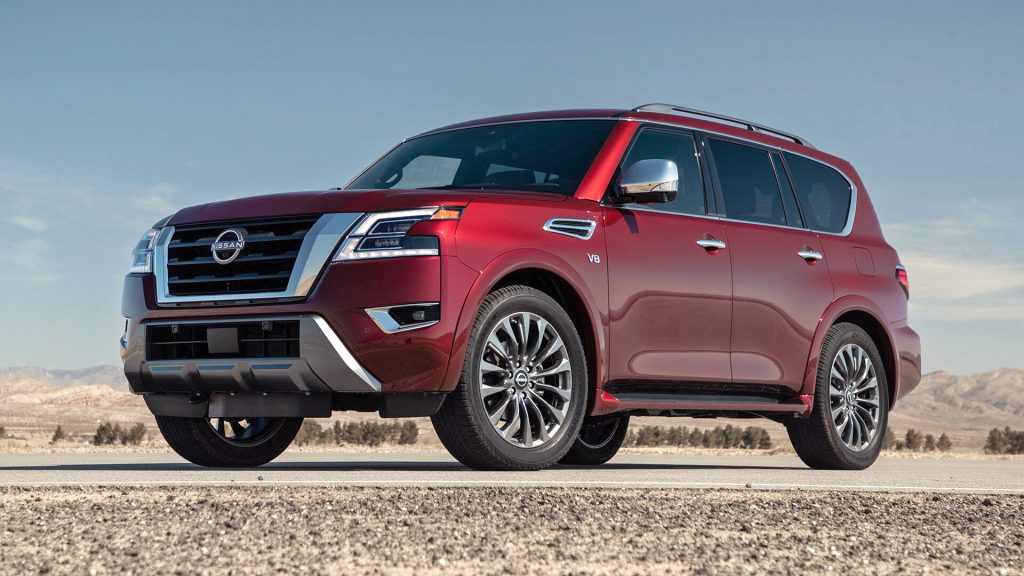
So the Armada earns its place here because it combines a large spare tire with factory lifting equipment, but owners should follow Nissan’s restrictions rather than assuming the spare can be used indefinitely like a normal road tire.
10. 2026 Honda Pilot TrailSport Elite
The final entry needs clarification because Honda’s 2026 Pilot lineup does not provide the same spare arrangement across every trim.
The TrailSport family is the important exception. Honda’s official information identifies the TrailSport as the Pilot equipped with a full-size, all-terrain spare, while the other trims use a lightweight temporary spare.
Because the TrailSport Elite shares the TrailSport-oriented equipment package, the full-size spare is part of the configuration buyers should verify when shopping the model. Honda’s technical documentation lists the full-size spare as a 265/60R18 tire with an 18-by-8-inch wheel when that equipment is fitted.
The factory jack system is equally important. Honda provides a jack, wheel-nut wrench, jack-handle bar and box wrench, with the tools stored in the vehicle. The owner’s information also gives specific instructions for positioning the jack and lowering the spare through its underbody hoist.
The reasoning behind this setup is straightforward. TrailSport buyers are more likely to encounter gravel, dirt, uneven terrain and remote roads than someone purchasing a conventional family-oriented crossover. In those conditions, tire sidewall damage is a problem that a sealant bottle cannot necessarily solve.
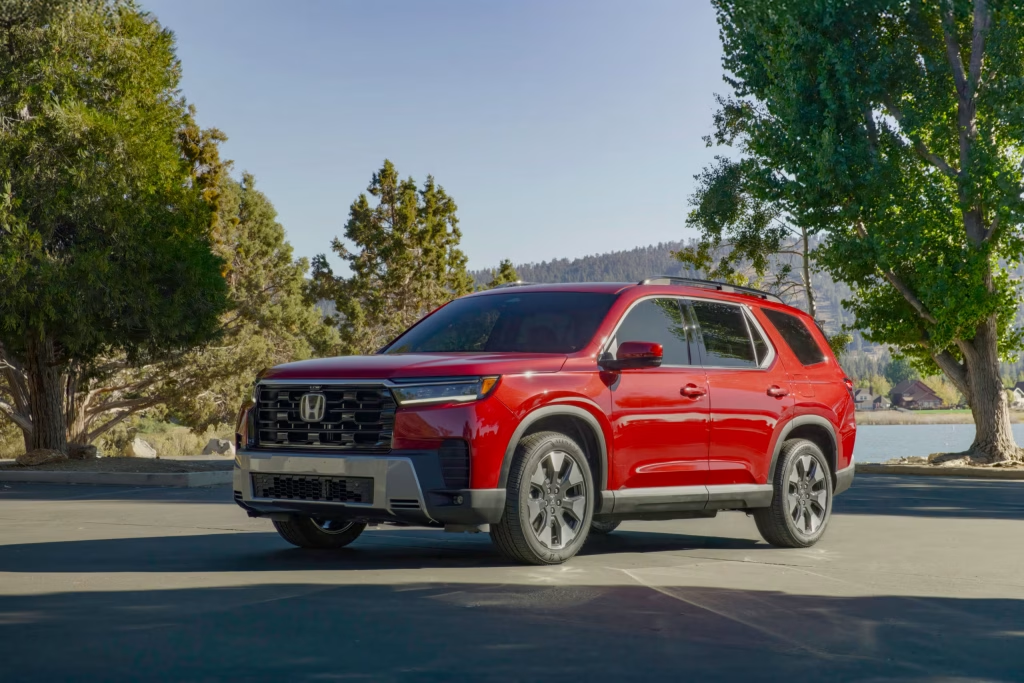
One advantage of Honda’s underbody arrangement is that the spare does not consume the main cargo compartment. That matters in a three-row SUV because carrying seven or eight people already puts a premium on available storage space. Honda specifically points to the underbody mounting as a way of preserving cargo versatility.
For buyers who value practical emergency equipment, the TrailSport shows that full-size spare tires have not disappeared entirely. Instead, automakers increasingly reserve them for vehicles and trims designed for off-road use, where having a full-size replacement can be especially useful.
