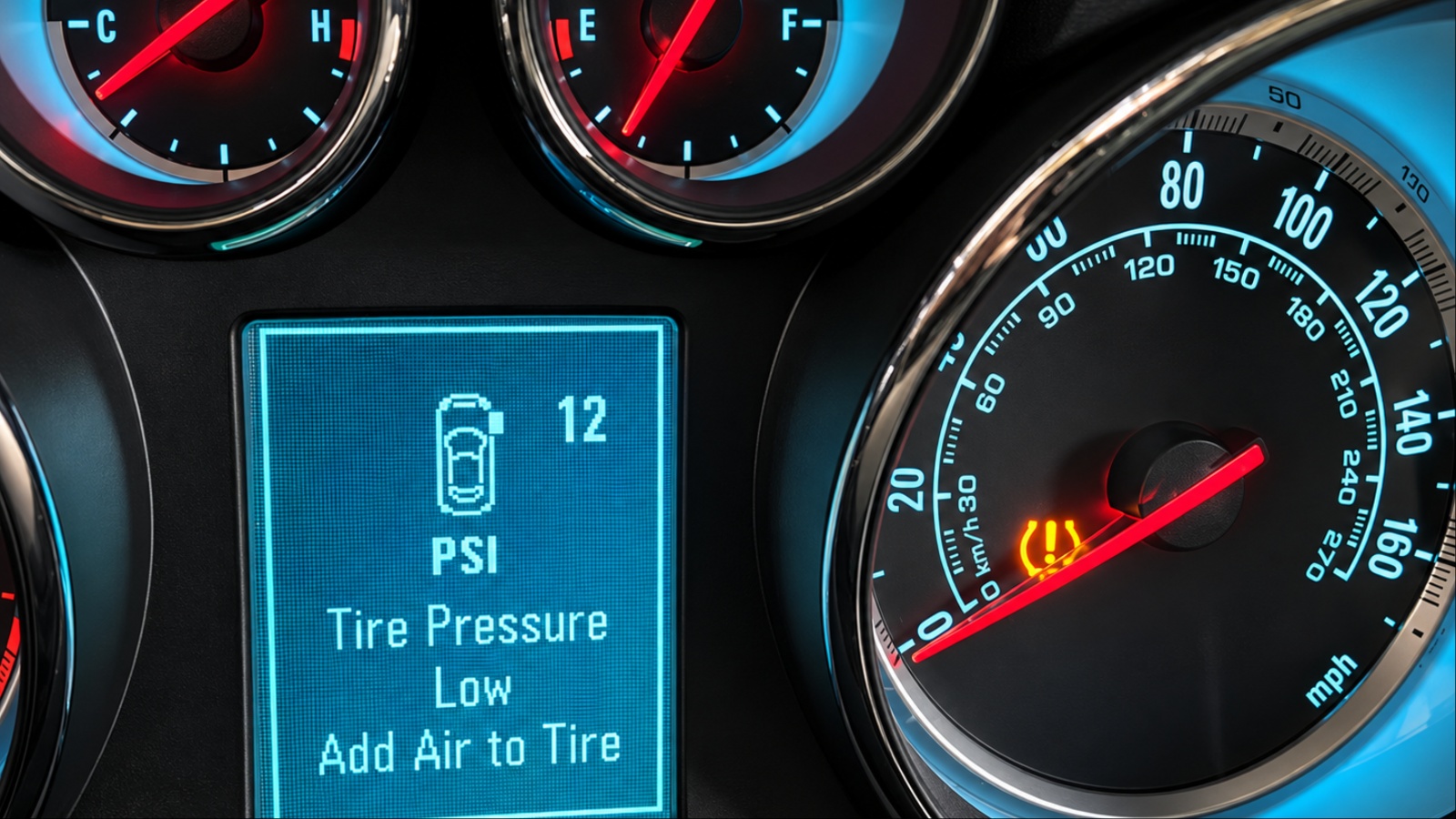
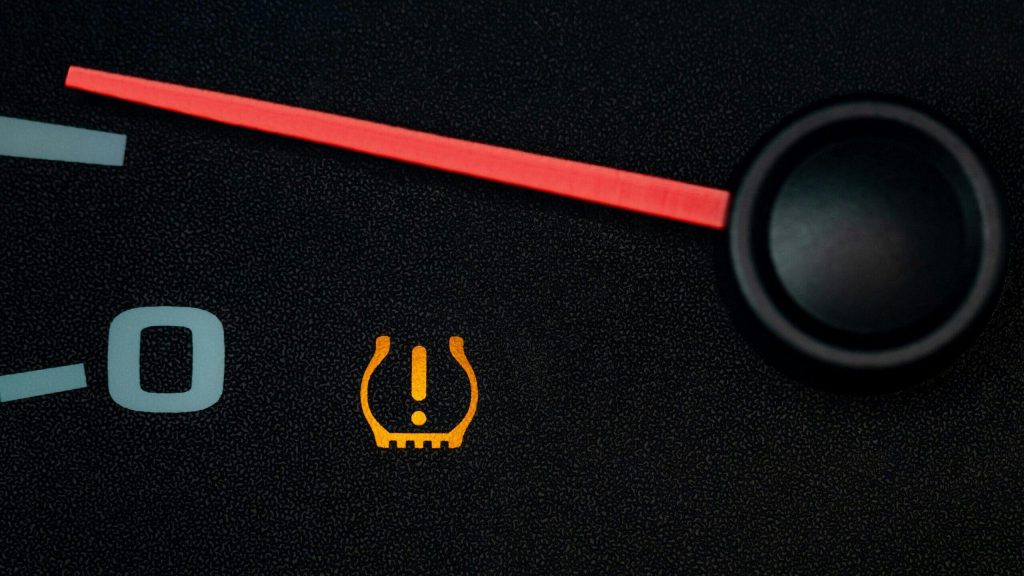
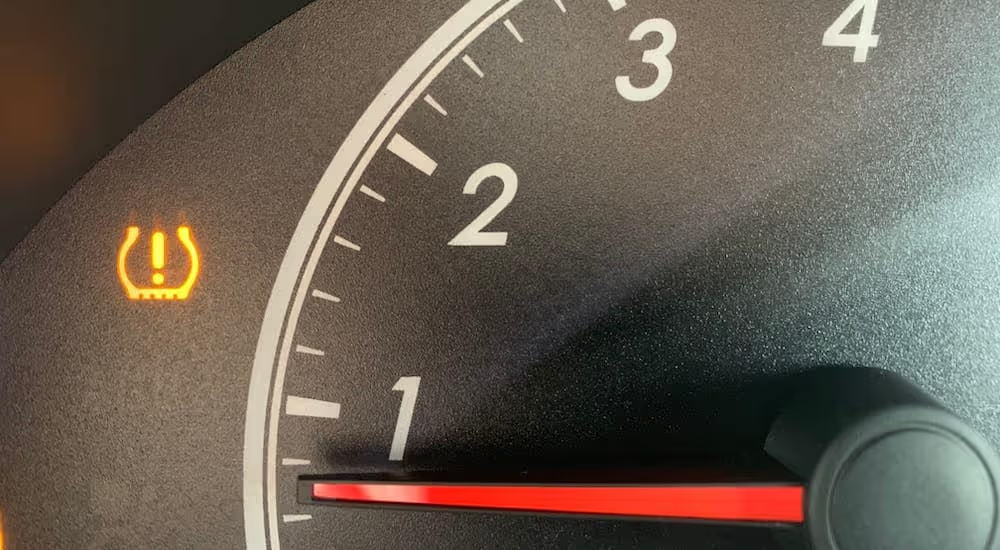
For many drivers, the first truly cold morning of the season can bring an unexpected warning on the dashboard. The yellow tire-pressure light may appear even though the tires seemed perfectly fine the night before. It can look like all four tires suddenly lost pressure, but a significant temperature drop is often the simple explanation.
Tire pressure changes naturally as the temperature of the air inside the tire changes. As the surrounding temperature falls, the air inside the tire contracts, and its measured pressure decreases. When the pressure drops far enough to cross the vehicle’s TPMS warning threshold, the dashboard light comes on.
The commonly used rule of thumb is that a tire loses about 1 pound per square inch, or PSI, for every 10 degrees Fahrenheit drop in temperature. Michelin gives the same guidance, while Bridgestone also states that tires can lose approximately 1 PSI for every 10°F temperature drop.
That is why the first major cold snap of autumn can produce a wave of tire-pressure warnings. The tires did not necessarily spring a leak overnight. They may simply have been close to the vehicle’s warning threshold before the temperature fell.
Why a Cold Morning Can Trigger the TPMS Light
The key to understanding the warning is knowing that tire pressure is temperature-dependent. A tire inflated on a warm afternoon will not necessarily show exactly the same pressure the following morning when the temperature has fallen significantly.
Imagine a tire that was correctly inflated to 35 PSI during a relatively warm afternoon. If the temperature subsequently falls by 30°F, the commonly used 1-PSI-per-10°F rule suggests that the tire could lose roughly 3 PSI from the temperature change alone.
That does not mean the tire has physically lost three pounds of air. The amount of air inside may be essentially unchanged. Instead, the colder air occupies less volume and produces a lower pressure reading.
This distinction is important because drivers sometimes assume that a tire-pressure warning automatically means there is a puncture. A puncture, leaking valve, damaged wheel, or other mechanical problem can certainly cause pressure loss, but temperature can also produce a noticeable pressure change without an actual leak.
NHTSA specifically acknowledges the phenomenon. Its TireWise guidance says that on cold mornings, the TPMS symbol may illuminate temporarily when marginally low pressure falls below the warning threshold overnight.
As the tires warm during driving or outside temperatures rise, the pressure can increase enough for the warning to disappear. NHTSA nevertheless advises drivers to inspect the tires and check their pressure when the warning appears.
That temporary behavior can make the situation confusing. A driver might start the car and see the warning light, drive several miles, and then notice that the light has disappeared. The pressure has increased because the tires have warmed, but that does not mean the underlying cold pressure is correct.
NHTSA’s advice is simple. Check the tires instead of assuming the warning is harmless.
The 1-PSI Rule Is a Useful Guide, Not an Exact Formula
The 1 PSI for every 10°F rule is widely used because it provides a practical way to understand seasonal pressure changes. However, it should not be treated as an exact calculation for every tire and vehicle.
NHTSA documents also describe pressure changes of approximately 1 PSI for every 12°F change in temperature in vehicle owner documentation. Michelin says the average is about 1 PSI for every 10°F, while its tire-maintenance guidance notes that ambient temperature can produce a 1-to-2 PSI change for every 10°F.
The important point is that the direction is predictable. Colder temperatures generally lower tire pressure, while warmer temperatures tend to raise it.
The effect becomes particularly noticeable when a tire is already slightly below the recommended pressure. A temperature drop does not have to create a dramatic pressure change to trigger a warning. If a tire is already close to the TPMS activation point, a few PSI lost through cooling can push it below the threshold.
That is one reason the first cold morning can appear to cause the problem. The tires may have been slowly losing pressure through normal air permeation for weeks, while warmer temperatures kept the measured pressure above the warning threshold. The colder weather can be the final factor that makes the dashboard warning appear.
Bridgestone notes that tires can also naturally lose approximately 1 PSI per month under normal conditions. That gradual loss combines with temperature-related pressure changes, making regular checks particularly important as the seasons change.
A tire that has not been checked since summer can therefore be considerably below its recommended pressure by the time colder weather arrives.
Why the Light May Turn Off After You Start Driving
Another common source of confusion is a TPMS warning that disappears after a few minutes of driving.
This happens because driving generates heat in the tires. As the tires warm, the air inside them expands and the measured pressure increases. The pressure can rise enough to move back above the vehicle’s warning threshold.
NHTSA specifically describes this scenario, noting that the TPMS light can come on during a cold morning and then turn off as the tires heat up during operation. The agency still recommends checking the pressure because the lamp should not illuminate when the tires are properly inflated.
The temporary disappearance of the light, therefore, should not be treated as a repair. A tire that reaches an acceptable pressure after warming up can still be underinflated when cold. The vehicle manufacturer’s recommended tire pressure is a cold-pressure specification, meaning it should be checked when the vehicle has been stationary for several hours.
NHTSA defines a cold tire for pressure-checking purposes as one that has not been driven for at least three hours. Its guidance says the recommended pressure can be found on the Tire and Loading Information label on the driver’s-side door area or in the owner’s manual.
That is the number drivers should use, rather than the maximum PSI printed on the tire sidewall. The sidewall figure describes the tire’s maximum permitted inflation pressure under specified conditions, not the vehicle manufacturer’s recommended operating pressure.
What to Do When the Light Appears
The proper response to a cold-weather TPMS warning is straightforward. Check all four tires with an accurate pressure gauge and inflate them to the vehicle manufacturer’s recommended cold-tire pressure.
Do not simply add a fixed amount of air because the warning appeared. Different vehicles have different recommended pressures, and front and rear tires can sometimes have different specifications.
Check the pressure before driving or after the vehicle has been parked long enough for the tires to cool. Michelin recommends checking tires when they are cold, generally before driving or after they have been stationary for several hours.
If a tire is below the specified pressure, add air until it reaches the recommended cold pressure. Then recheck the other tires rather than assuming the warning indicates only one low tire.
Drivers should also inspect the tires for obvious damage. A pressure warning that repeatedly returns on the same tire deserves additional attention because temperature alone may not explain a continuing pressure loss. Possible causes include a puncture, a damaged valve, a wheel problem, or a leak around the tire bead.
NHTSA emphasizes that TPMS is not a replacement for regular tire maintenance. The agency recommends checking tire pressure at least once a month, even when no warning light is illuminated.
That recommendation matters because a tire can be significantly underinflated without looking obviously flat. Visual inspection alone is not an accurate way to determine tire pressure.
Why Cold-Weather Pressure Matters for Safety
Correct pressure affects more than whether a dashboard warning disappears. Underinflated tires can change how a vehicle handles and can increase tire stress.
NHTSA identifies proper inflation as one of the most important aspects of tire maintenance. The agency warns that underinflation can contribute to tire failure and recommends maintaining the manufacturer’s specified pressure.
Michelin similarly warns that underinflation can increase tire flexing and heat buildup while affecting handling and tire wear.
The seasonal pattern is therefore worth remembering. A tire that was correctly inflated during a warm September afternoon may no longer be at the recommended pressure after several cold nights. The change can be enough to activate the TPMS, especially when the tire was already slightly low.
So when the tire-pressure light appears on the first cold morning of the season, the explanation is often much simpler than a sudden mechanical failure. Temperature has changed the pressure inside the tire, and the TPMS has detected that the pressure has fallen below its warning threshold.
The important part is not to ignore the warning simply because the light disappears after driving. Check the tires while they are cold, use the pressure listed on the vehicle’s door-jamb label or owner’s manual, and investigate any tire that continues losing pressure.
The first cold morning may be what triggers the warning light, but the proper response is the same as at any other time of year. Check the tire pressure and correct it before continuing to drive.