
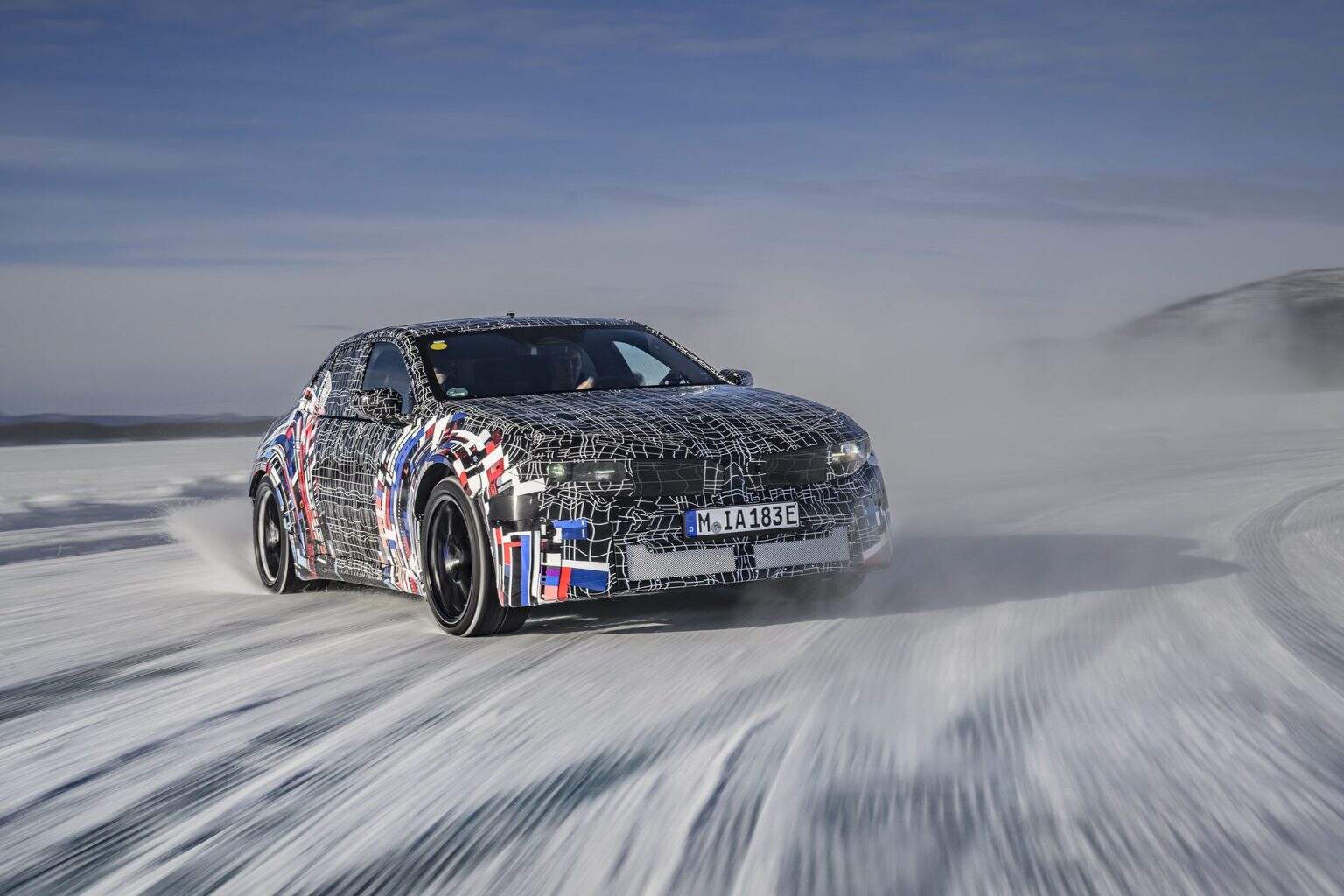
BMW is moving closer to one of the biggest changes in the history of its M performance division. The automaker has offered another glimpse of the next-generation electric M3, a model that is expected to use four independently controlled electric motors and deliver as much as 900 horsepower.
The upcoming performance EV will be based on BMW’s next-generation Neue Klasse architecture and is being developed by BMW M as a purpose-built high-performance electric vehicle rather than simply an electric version of the existing M3.
BMW has previously confirmed that its next-generation M cars will use a four-motor electric-drive system, while reports have placed the system’s potential output at around 1,000 PS, equivalent to roughly 986 horsepower, for an upper-performance configuration.
The frequently cited 900-horsepower figure therefore appears to describe an expected version rather than a confirmed final output.
BMW M has been unusually open about the technology behind the car. The company has described the four-motor setup as a fundamentally new approach to performance, allowing each wheel to receive individually controlled torque.
That capability could give the electric M3 a level of traction and handling control that would be difficult to achieve with a conventional two-motor EV.
The car is expected to arrive during the second half of the decade, with BMW targeting a new generation of M performance vehicles that combine electric propulsion with software-controlled chassis systems.
Four Motors Could Transform the M3
The most important feature of the upcoming electric M3 will not simply be its power output. It will be the way BMW M intends to use four electric motors to control the car.
A conventional dual-motor performance EV generally has one motor on each axle. BMW’s planned system instead places an electric motor at each wheel. This gives engineers independent control over the torque delivered to each corner of the vehicle.
BMW M says its high-performance electric architecture will use four electric motors and a central control unit that can calculate and distribute torque much faster than conventional mechanical systems.
The company has described the system as allowing torque vectoring at each wheel, providing greater control over acceleration, cornering, and vehicle stability. That could fundamentally change how an M3 behaves.
Traditional M cars rely heavily on mechanical components, including differentials, driveshafts, and braking systems, to manage power. The electric M3 will still require sophisticated hardware, but software will play a much larger role in determining how the car responds.
For example, the system could send more torque to an outside wheel during a corner while reducing torque at another wheel. That can help rotate the vehicle and improve traction without relying exclusively on brake intervention.
BMW M has already demonstrated the underlying concept with prototype vehicles. The company has said its four-motor system is being developed specifically to reproduce the emotional character and dynamic behavior expected from an M car rather than simply producing enormous straight-line acceleration.
That distinction matters because the M3 has never been defined purely by horsepower. Its reputation comes from the balance between acceleration, braking, steering, cornering, and driver involvement.
BMW therefore has a difficult engineering target. The electric M3 must be extraordinarily quick without becoming a heavy machine that feels disconnected from the driver.
Nearly 900 Horsepower Would Change the Performance Equation
The reported output is another reason the upcoming M3 has generated so much attention. Autoblog reports that the electric M3 could produce up to approximately 900 horsepower. BMW has not officially confirmed that exact figure for the production car, so it should not be treated as a final specification.
BMW M’s own descriptions of the four-motor architecture, however, make clear that very high power levels are part of the program’s development objectives.
Some reports have cited an even higher potential output of approximately 1,000 PS for the most powerful configuration. That translates to around 986 horsepower using the metric horsepower conversion. Whether BMW ultimately uses that full capability in a road-going M3 remains uncertain.
Either way, the performance potential would place the electric M3 far beyond the power levels traditionally associated with the nameplate.
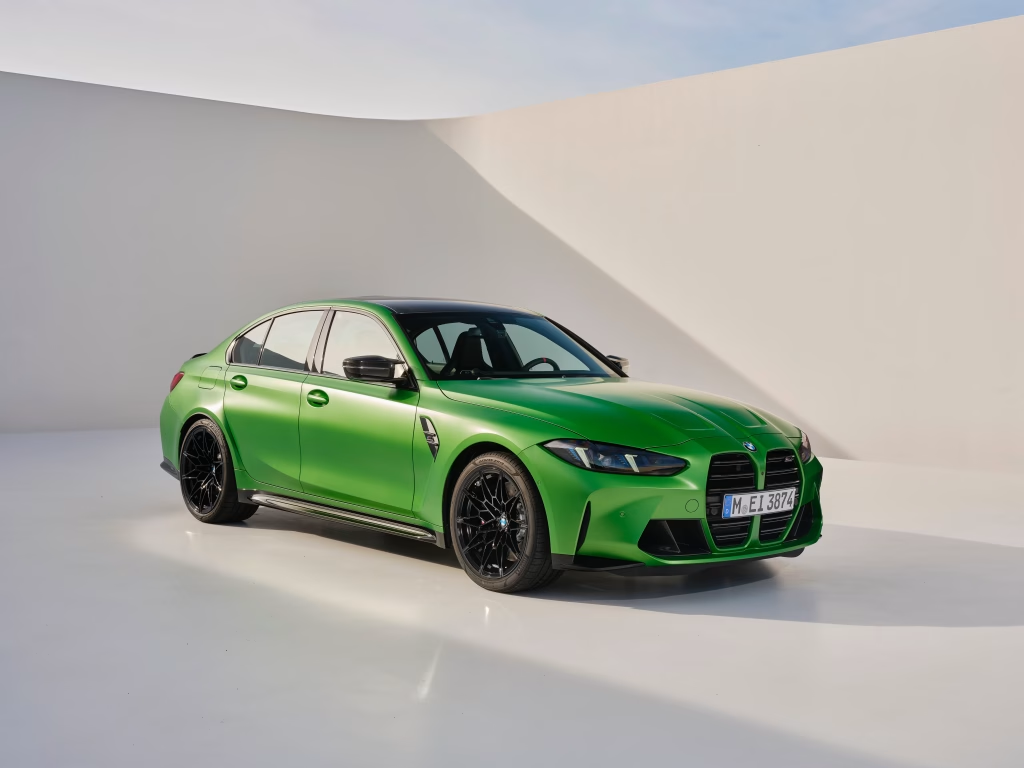
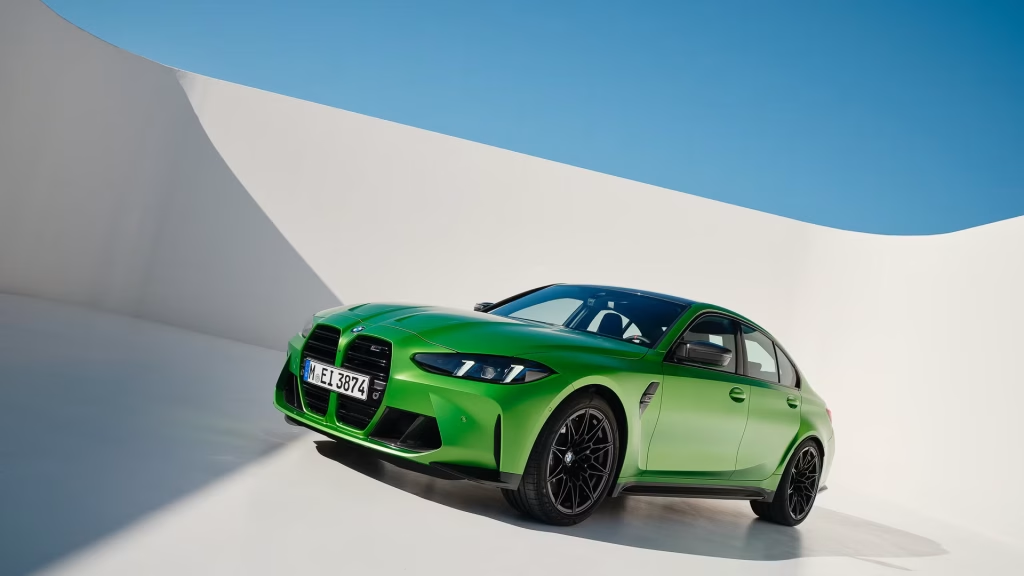
The current-generation M3 Competition xDrive, for example, produces 523 horsepower in U.S. specification. The next-generation electric model could therefore approach twice that figure if the reported 900-horsepower output becomes reality. The challenge will be converting that power into useful performance.
Four motors provide an obvious advantage because the system can distribute torque across all four wheels almost instantly. But battery temperature, tire grip, thermal management, and vehicle weight will all influence how effectively the power can be used.
BMW M is therefore developing more than an electric powertrain. The company is working on an integrated vehicle-control system capable of coordinating the motors, steering, brakes, and other chassis systems.
BMW has said its next-generation M technology will allow the various vehicle systems to operate together through a central control architecture. That approach is intended to give engineers much greater freedom to tune the car’s behavior through software.
The result could be a performance EV that behaves differently depending on the selected driving mode, with the software controlling not only how much power the motors produce but also how that power is distributed around the car.
BMW M Wants an Electric Car That Still Feels Like an M3
Perhaps the biggest challenge is philosophical rather than technical. The M3 has traditionally been powered by high-performance internal-combustion engines, with the engine’s sound, response, and rising power delivery forming an important part of the driving experience. Replacing that mechanical character with four electric motors represents a significant change.
BMW M understands that problem. The company has repeatedly emphasized that future M cars must preserve the characteristics that define the brand even as propulsion technology changes.
The electric M3 is therefore being developed as a new type of performance vehicle rather than simply an M3 with an electric motor replacing its gasoline engine.
BMW’s Neue Klasse architecture is central to that transformation. The platform was designed from the beginning around new electrical, software, and battery technologies. BMW has said its sixth-generation eDrive technology will deliver improvements in range, charging performance, and efficiency compared with its current EV systems.
For the M version, however, the architecture will need to handle dramatically higher performance requirements.
Battery cooling will become especially important. A car capable of producing hundreds of horsepower continuously generates substantial heat, particularly during track driving. BMW M will need to maintain battery and motor temperatures without adding excessive mass or limiting performance after repeated hard acceleration.
Weight is another major concern. Electric performance cars typically carry substantial battery mass, while BMW M cars are traditionally engineered around relatively low weight and precise responses.
Four motors, additional control electronics, and a large battery could push the electric M3 well beyond the weight of its combustion-powered predecessor.
BMW’s solution appears to be a greater reliance on software and highly integrated chassis control. If the company can make the car respond quickly enough, it may be able to offset some of the disadvantages associated with additional mass.
The first production BMW M car based on the Neue Klasse platform is expected to become a technological showcase for that philosophy. Its success will influence how BMW develops other electric M models in the years that follow.
The importance of the project extends beyond the M3 itself. BMW is effectively using one of its most recognizable performance nameplates to demonstrate that electrification does not necessarily mean abandoning the characteristics associated with M cars.
A four-motor layout could also give BMW an advantage over performance EVs that rely on conventional dual-motor systems. Instead of treating the front and rear axles as two separate power units, BMW can control all four corners independently.
That creates possibilities for torque vectoring, traction management, and cornering behavior that were previously difficult or impossible to achieve with a traditional drivetrain.
Still, the production car’s final specifications remain unknown. BMW has not officially confirmed a 900-horsepower rating, final battery capacity, acceleration time, curb weight, or driving range. Those details will be critical in determining whether the electric M3 can deliver more than spectacular numbers.
For now, BMW’s latest teaser confirms that the company is taking a radically different approach to its most important performance sedan. Four electric motors, advanced torque control, and potentially close to 900 horsepower would make the next M3 one of the most technologically sophisticated cars ever to carry the badge.
The real test will come when BMW has to turn that technology into a car that feels natural, controllable, and engaging at the limit. If its engineers succeed, the electric M3 could demonstrate that the transition from gasoline to electric power does not have to mean the end of the traditional M-car philosophy.
