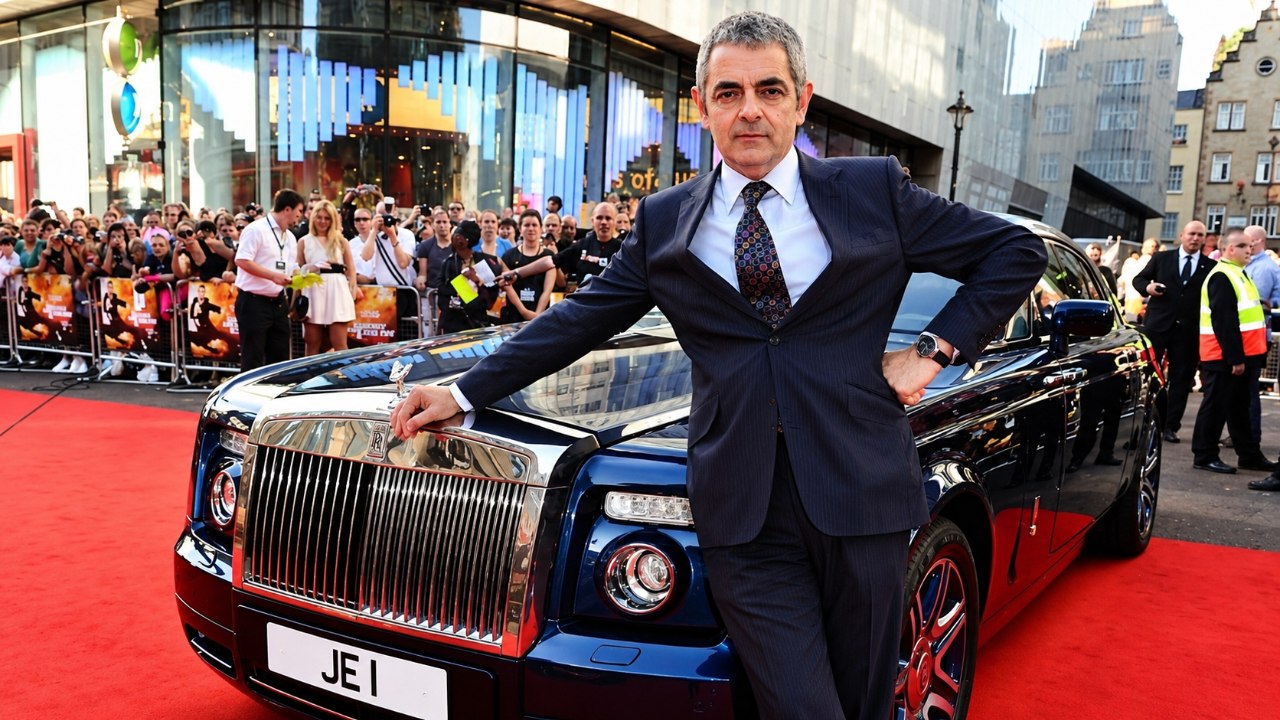
Rowan Atkinson is best known for making audiences laugh as Mr. Bean, but his taste in automobiles is considerably more serious. His history with cars includes exotic supercars, rare classics, rally-bred machines, and understated performance sedans.
More importantly, many were driven rather than simply displayed. Atkinson owned his McLaren F1 for 17 years and put around 40,000 miles on it, raced an Aston Martin V8 Zagato, and competed in historic events with a BMW 328.
This ranking focuses on documented cars associated with his ownership, judging them by engineering significance, rarity, performance, motorsport history, and their connection to Atkinson’s own motoring life.
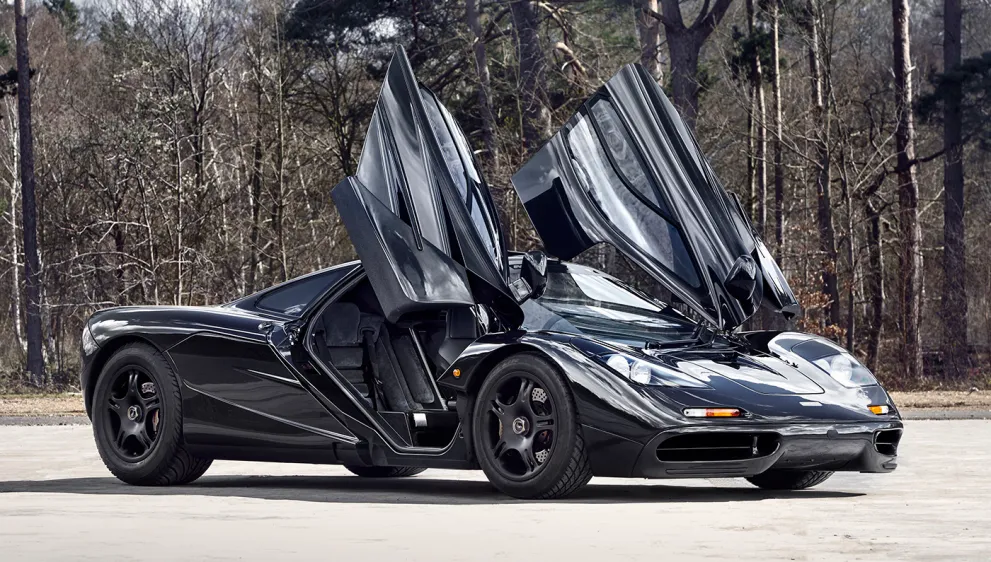
1. McLaren F1
Nothing else in Rowan Atkinson’s automotive history has the same combination of rarity, performance, engineering ambition, and personal connection as his McLaren F1.
He purchased the 1997 example in 1997 and kept it for 17 years, covering roughly 40,000 miles before selling it in 2015. Atkinson himself has described it as his favorite car he ever owned, which gives this machine an unusually strong place in his personal motoring story.
The F1 was extraordinary even before its connection with a famous comedian. McLaren developed it around a carbon-fiber monocoque, a central driving position, and a naturally aspirated BMW V12.
McLaren lists 627 horsepower for the road car and says only 106 examples were produced across the F1 road-car production run. The company also identifies it as the fastest naturally aspirated road car ever built.
Its performance remains staggering. McLaren recorded a top speed of 243 mph for the F1, with the car reaching 100 km/h in 3.2 seconds during its record-setting testing. The figure made it one of the defining performance cars of the 1990s, while its central driving position gave the car an experience unlike conventional two-seat supercars.
Atkinson’s ownership made the story even more dramatic. The F1 was involved in two crashes during his ownership. The second, in 2011, caused extensive damage after the car struck a tree and caught fire. The vehicle was rebuilt and returned to the road before being sold for about £8 million in 2015.
For Atkinson, however, the F1 was not simply an investment. He drove it extensively, including long road trips, which makes his ownership unusually meaningful for one of the world’s most valuable supercars.
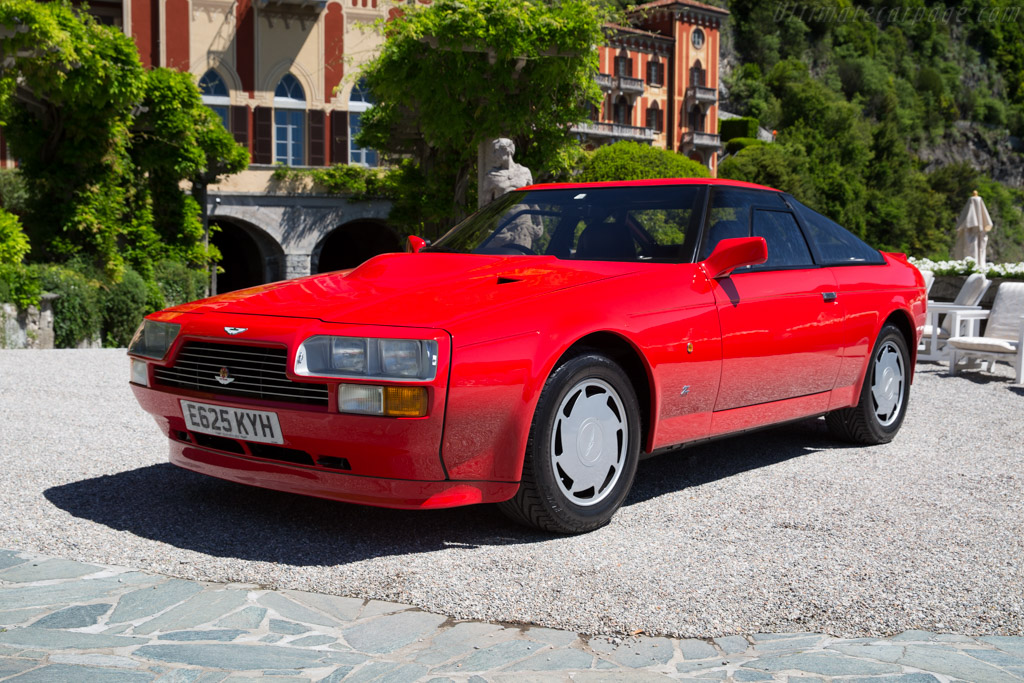
2. Aston Martin V8 Vantage Zagato
The Aston Martin V8 Vantage Zagato occupies a special place in Atkinson’s collection because he transformed an already rare grand tourer into a serious competition machine.
He acquired the 1986 car in 1998 and sent it to Aston Martin Works Service for a ground-up rebuild intended to prepare it for Aston Martin Owners Club racing. The resulting machine was dramatically different from a standard Zagato.
Only 52 V8 Vantage Zagato coupes were produced, giving the model considerable rarity before Atkinson’s modifications were even considered.
The standard car used a 5.3-liter V8, while his example received a specially developed 580XR engine producing 482 horsepower after the competition conversion. The rebuild also reduced weight from roughly 3,968 pounds to approximately 3,274 pounds.
Those changes had a clear purpose. Atkinson wanted a car capable of competing rather than merely sitting in a collection. Aston Martin Works Service fitted competition suspension, upgraded brakes, Perspex windows, and other weight-saving measures.
The five-speed manual transmission was also rebuilt with stronger components. The result was a much more focused machine than the original luxury performance coupe.
The story eventually took a familiar turn. Atkinson crashed the Zagato at Croft Circuit in 2001 during an enthusiasts’ event. The car was rebuilt at a reported cost of around £220,000 before later returning to road specification. He ultimately sold it.
Its place near the top of this ranking comes from the depth of Atkinson’s involvement. He did not simply purchase a rare Aston Martin. He commissioned a specialized racing transformation, competed with it, and continued to use the car after its racing career.
Few celebrity-owned vehicles have such a direct connection to their owner’s enthusiasm for driving.
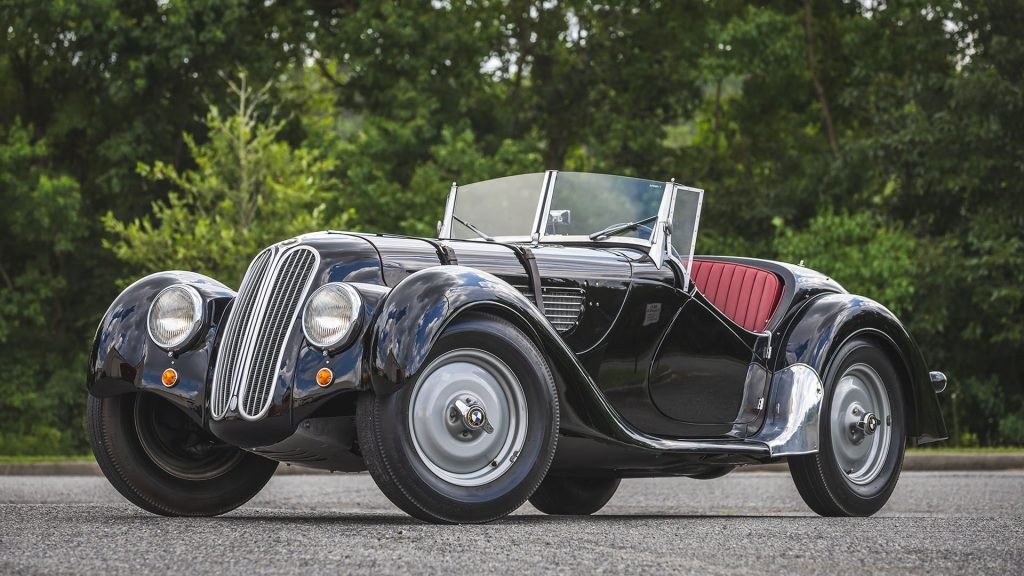
3. BMW 328
The 1939 BMW 328 is radically different from the McLaren F1, yet its historical importance gives it a very strong position in Atkinson’s collection. This is not merely an old sports car.
The 328 is one of the most significant German performance cars of the pre-war era, and Atkinson demonstrated his appreciation for that history by competing in a 1939 BMW 328 Mille Miglia Roadster during the 2011 Mille Miglia Storica.
The standard BMW 328 used a 1,971 cc inline-six engine producing about 80 horsepower. Contemporary and historical documentation puts the roadster’s weight in the neighborhood of 1,765 to 1,830 pounds, depending on specification and source.
Although its power output was relatively low, the car’s lightweight construction helped deliver lively performance. Its chassis and suspension were also engineered to prioritize sporty handling over the comfort expected from modern vehicles.
The model’s competition history makes it even more important. BMW developed racing versions of the 328, and the type achieved significant results in the Mille Miglia and at Le Mans.
BMW’s own historical material records the 328-based Touring Coupe winning its two-liter class at Le Mans in 1939, while the 328’s racing development produced much higher outputs in specialized competition form.
Atkinson’s participation in the 2011 Mille Miglia adds another dimension. The BMW 328 Roadster he drove carried start number 87, with Atkinson sharing the car with co-driver Ian Robertson.
That makes this car important beyond its specifications. The 328 connects Atkinson directly with some of the earliest chapters of European sports-car competition. It is lightweight, mechanically simple by modern standards, and historically significant, and Atkinson actually used it in one of the world’s most demanding historic road events.
4. Lancia Delta HF Integrale
The Lancia Delta HF Integrale represents Atkinson’s appreciation for a completely different form of performance. Instead of a large engine and rear-wheel drive, the 1989 16-valve Integrale combined a turbocharged 2.0-liter four-cylinder with permanent four-wheel drive.
It was developed from a family hatchback but became one of the defining rally-derived performance cars of its generation.
The 1989 HF Integrale 16V produced around 193 horsepower in period European specification, with roughly 220 pound-feet of torque.
The car weighed approximately 2,756 pounds and used a five-speed manual transmission. Its factory top speed was around 137 mph, while period testing put acceleration to 62 mph at roughly 5.7 seconds.
What made the Lancia especially compelling was its drivetrain. The 16-valve version used permanent four-wheel drive with a 47:53 front-to-rear torque distribution. That gave the compact hatchback an unusual ability to put its turbocharged output onto the road, particularly when traction became difficult.
Atkinson reportedly received his 16-valve Delta in 1989 after spending two years with the earlier eight-valve version. His enthusiasm was strong enough that he wrote about the car for Car magazine, describing its ability to get from point A to point B exceptionally quickly.
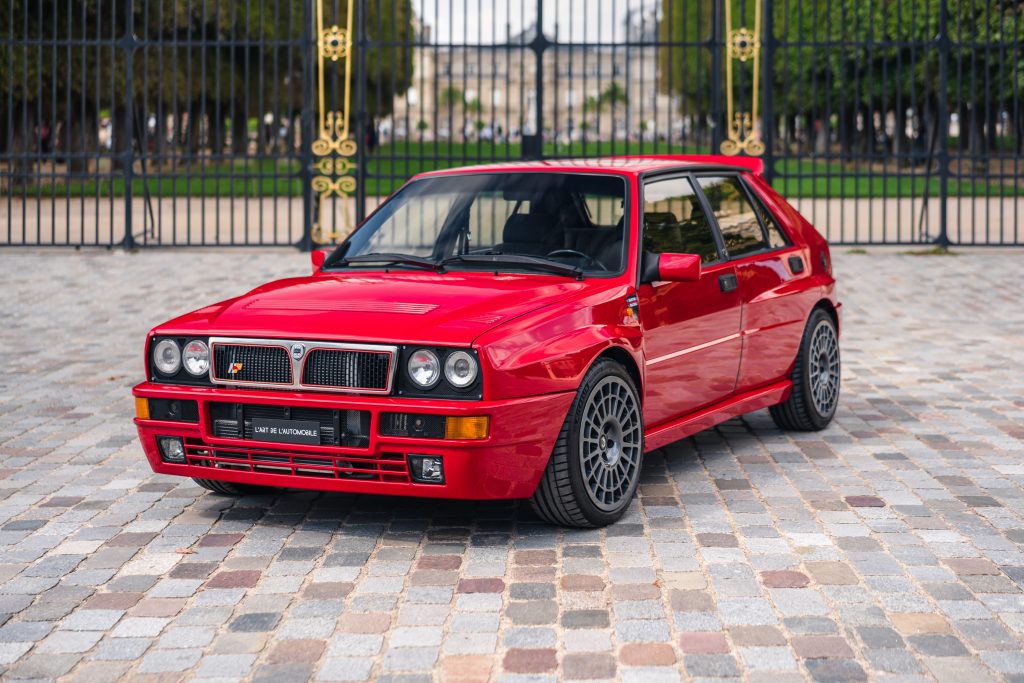
The Integrale also carried genuine motorsport credibility. Lancia’s Delta became one of the most successful rally platforms of its era, and the road cars benefited directly from that development. For Atkinson, it was an example of performance without unnecessary theater.
Its position above several luxury cars comes from that authenticity. The Delta was compact, relatively light, and brutally effective, making it one of the clearest demonstrations that Atkinson’s collection was built around driving interest rather than simply expensive badges.
5. 2002 Acura NSX
The 2002 Acura NSX may look almost understated beside Atkinson’s McLaren and Aston Martin, but its engineering philosophy makes it one of the most important cars he has owned. In the United States, the model was sold through Acura, while other markets received it as a Honda.
Atkinson owned a first-generation NSX, and the 2002 model represents the final major evolution of the original design.
For the six-speed manual version, Acura’s U.S. specifications list a 3.2-liter DOHC VTEC V6 producing 290 horsepower and 224 pound-feet of torque. Curb weight was approximately 3,153 pounds, with a 40:60 front-to-rear weight distribution. Acura also listed a 17-mpg city and 24-mpg highway EPA rating.
Car and Driver estimated the manual NSX could reach 60 mph in 4.9 seconds and recorded a projected top speed of 175 mph for the 2002 model. Those numbers were serious performance figures at the time, but the NSX was never intended to be a difficult-to-live-with exotic.
That usability is part of its appeal. The NSX used a mid-engine layout, aluminum construction, and Honda’s high-revving VTEC technology, yet it could be driven with a degree of everyday ease uncommon among contemporary supercars.
Atkinson’s interest in the car also fits his broader pattern. He has repeatedly demonstrated an appreciation for machines that reward the driver rather than simply advertise their price.
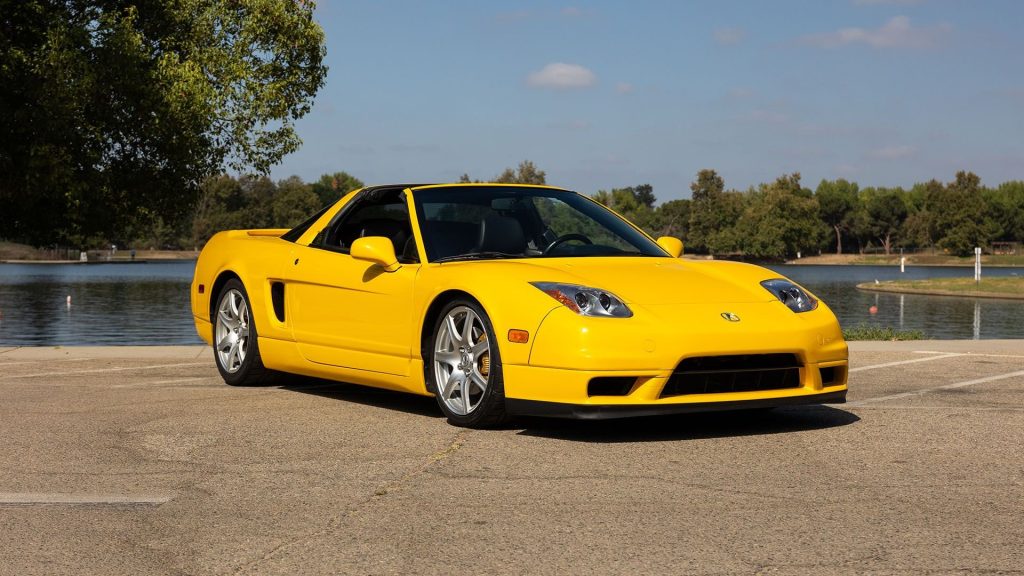
The NSX was not the most powerful vehicle in his garage, but it represented one of the industry’s most successful attempts to combine exotic-car performance with Honda engineering discipline.
Its fifth-place ranking reflects that balance. The NSX does not have the rarity of the BMW or the outright mythology of the F1, but as a driver’s car it remains one of the most technically significant vehicles connected with Atkinson.
6. 1977 Aston Martin V8 Vantage
Before the McLaren F1, before worldwide fame made Atkinson one of Britain’s most recognizable actors, there was an Aston Martin V8 Vantage. British GQ describes the 1977 car as his first “proper” car and reports that he bought it in 1984.
Atkinson was already becoming successful at the time, but this was long before his garage became associated with million-pound supercars.
The early V8 Vantage was a serious machine by 1970s standards. British GQ gives the 5.3-liter V8 an output of 389 horsepower, while Aston Martin reference material lists a 380-horsepower specification for the model. Period performance figures put the car’s top speed around 170 mph and acceleration to 60 mph at approximately 5.3 seconds.
Those figures tell only part of the story. The Vantage was effectively a British muscle car interpreted through an Aston Martin grand-touring formula. It combined a large-displacement V8 with a long-distance chassis, substantial bodywork and a level of luxury that separated it from more stripped-back sports cars.
Atkinson’s example was burgundy, and the car later appeared in Johnny English Strikes Again, adding a direct connection between his personal vehicle history and his movie career. British GQ also notes that he bought the Aston Martin in 1984 and kept it for decades.
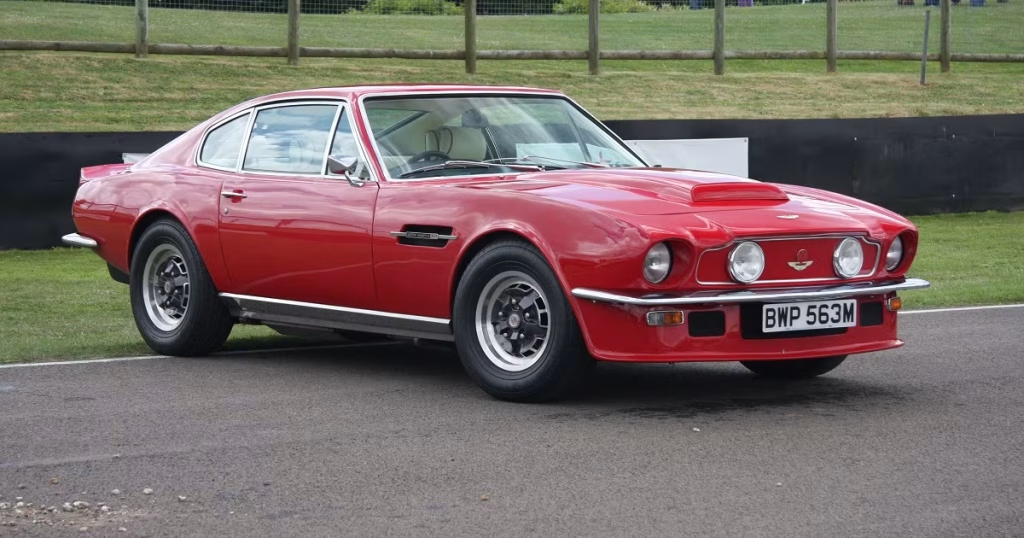
That longevity matters. Many celebrity collections contain cars purchased after success arrived, but this Aston predates Atkinson’s biggest commercial achievements and remained significant throughout his career.
It ranks sixth because its performance was remarkable for its era and because it represents the beginning of his serious car ownership. More than any other car on this list, it demonstrates that Atkinson’s interest in fast and unusual automobiles existed well before the wealth generated by Mr. Bean made a McLaren F1 possible.
7. 1993 Mercedes-Benz 500E
The Mercedes-Benz 500E was the kind of car that could disappear into traffic despite possessing the performance of a sports car. That quality clearly appealed to Atkinson. He owned a 1993 example, sold it in 1994, then bought another 500E in 2017 before selling it again in 2018.
For the North American specification, the 500E used a 5.0-liter V8 producing 322 horsepower and 354 pound-feet of torque, paired with a four-speed automatic transmission. Period performance estimates put 0 to 60 mph at around 5.6 seconds.
Those numbers are impressive, but the real attraction was the disguise. The 500E looked much like an ordinary W124 Mercedes sedan, with its understated bodywork concealing a considerably more serious powertrain. Porsche was involved in the production process, adding another layer of engineering interest to the model.
British GQ lists a 161-mph top speed for Atkinson’s 500E and notes that the car could reach 62 mph in 5.5 seconds. For a luxury sedan from the early 1990s, those figures placed it firmly in performance-car territory.
The repeated ownership is perhaps the best evidence of why it mattered to Atkinson. He sold his original car, apparently missed it enough to return to the model decades later and then sold the replacement after only about a year.
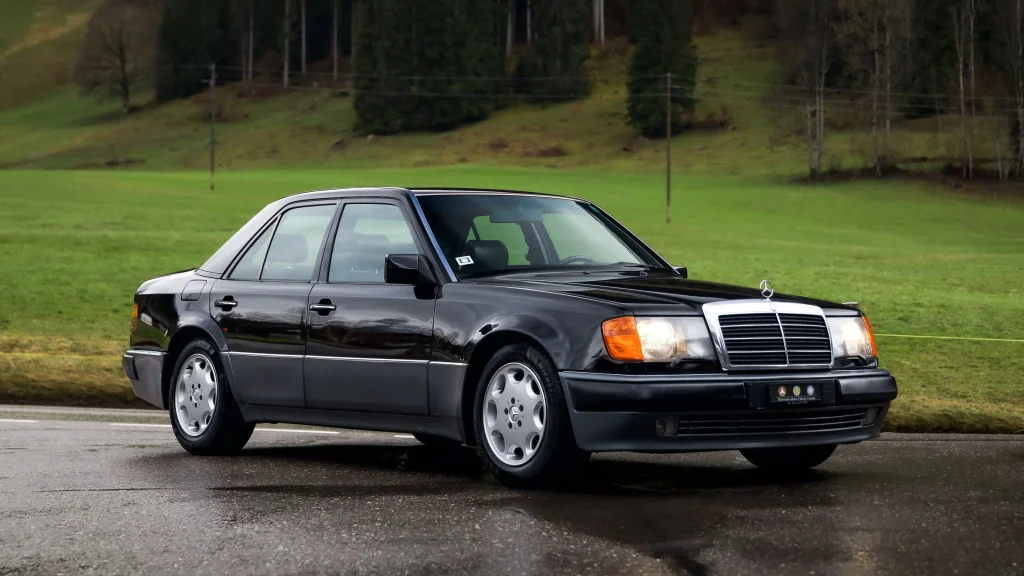
That makes the 500E an important part of the collection’s character. It was not an attention-seeking exotic. It was a fast, sophisticated sleeper that could deliver serious pace without the visual drama of a supercar.
Its seventh-place ranking reflects its unusual combination of restraint and performance, as well as the fact that Atkinson returned to the model after a long absence.
8. 2014 Bentley Mulsanne Birkin Edition
The Bentley Mulsanne Birkin Edition shows the luxury side of Atkinson’s automotive taste. It was considerably larger and heavier than most of the sports cars associated with him, but its connection with Bentley’s racing history gave the special edition more substance than simply adding another luxury sedan to a celebrity garage.
The 2014 Mulsanne Birkin used Bentley’s twin-turbocharged 6.75-liter V8. Published specifications put output at 505 horsepower and torque at 752 pound-feet. Curb weight was approximately 5,919 pounds, making the combination of enormous mass and huge torque one of the defining characteristics of the car.
The Birkin name refers to Sir Henry “Tim” Birkin, one of the famous Bentley Boys and a key figure in the company’s early racing history. British GQ specifically identifies Atkinson’s car as a 2014 limited edition created as a tribute to Birkin, whose association with Bentley included the development of supercharged racing cars.
That historical connection makes the car particularly appropriate for Atkinson. He played Sir Henry Birkin in the 1995 television film Full Throttle, so the special edition connected his acting career with his interest in British motorsport history.
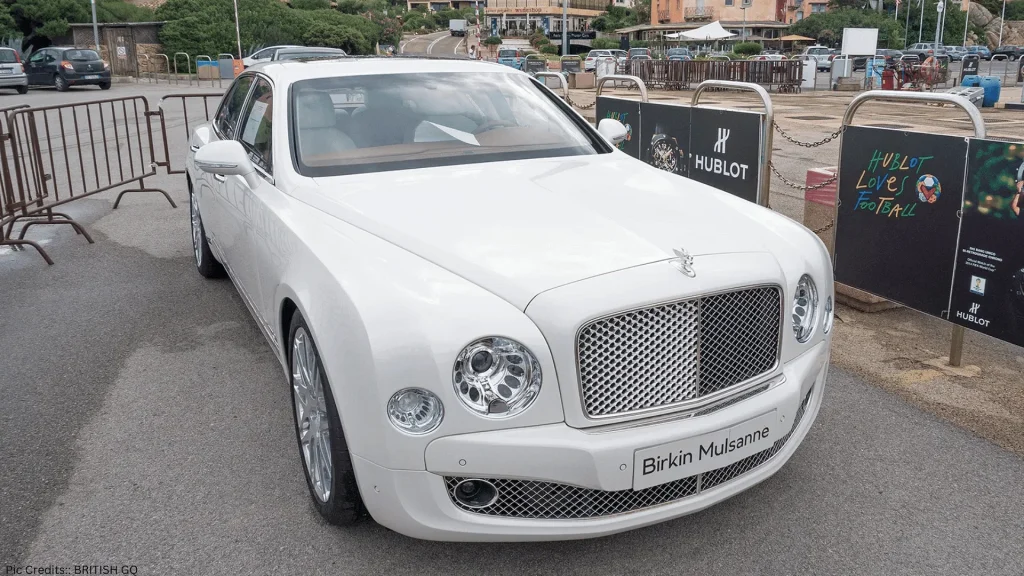
The Mulsanne was not about outright lap times. It was about immense torque, long-distance comfort and an unusually substantial road presence. The Birkin edition added heritage-focused detailing to that formula.
It ranks eighth because its engineering is impressive, but it lacks the driver’s-car purity of Atkinson’s McLaren, NSX, Lancia and Aston Martin. Still, its enormous V8, limited-edition status and direct connection to the Bentley racing story make it one of the more distinctive luxury cars he has owned.
9. Lancia Thema 8.32
The Lancia Thema 8.32 may be the most intriguing choice in Atkinson’s collection for enthusiasts who appreciate understated performance cars. Its exterior resembled an ordinary Italian executive sedan, but beneath the hood was a far more remarkable feature, a Ferrari-derived 32-valve V8 engine.
The 8.32 name referred to eight cylinders and 32 valves. Lancia used a 2.9-liter V8 derived from Ferrari’s 308 and Mondial engines. The naturally aspirated engine produced 215 horsepower and about 214 pound-feet of torque in its non-catalyzed specification.
That engine was installed transversely in a front-wheel-drive sedan, creating an unusual engineering combination. A Ferrari-derived V8 in a front-drive executive car was already unusual, while the restrained exterior made the mechanical package almost invisible to anyone who did not know what they were looking at.
British GQ describes Atkinson’s 1989 Thema as a deep-red example with extensive wood trim and brown cloth seats. The magazine specifically identifies the Ferrari V8 and describes the car as a sleeper, particularly in comparison with the Mercedes-Benz 500E that followed it in the collection.
The Thema also shows that Atkinson valued more than raw speed. His interest in unconventional engineering is reflected in the 8.32, which combined a Ferrari-derived engine with the understated styling of a conventional luxury sedan, creating a distinctive alternative to typical performance cars.
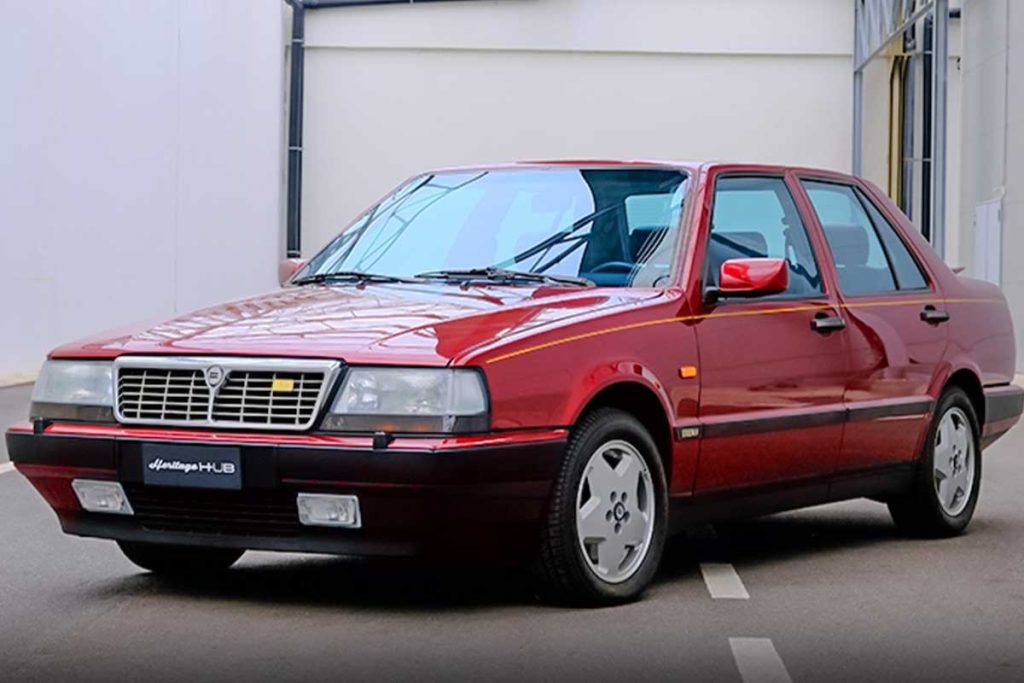
It ranks ninth because its performance was less dramatic than some of the other cars here, but its technical character makes it memorable. The car is essentially a piece of Italian engineering history hidden inside a relatively ordinary sedan.
For a collector who appreciates what happens beneath the bodywork, that is precisely the point. The Thema 8.32 did not need dramatic styling to be special.
10. 2011 Rolls-Royce Phantom Drophead
The Rolls-Royce Phantom Drophead occupies the final position because its significance comes less from outright performance and more from its extraordinary luxury and Atkinson’s unusual connection with the model.
The standard 2011 U.S.-market Drophead Coupe used a 6.7-liter V12 producing 453 horsepower and 531 pound-feet of torque. Cars.com lists a curb weight of 5,886 pounds, a 21-gallon fuel tank and a manufacturer 0-to-60-mph time of 5.6 seconds.
Those numbers are enough to make the Phantom’s size seem almost irrelevant. A vehicle approaching 6,000 pounds could accelerate to 60 mph in less than six seconds, while its V12 delivered the kind of effortless thrust expected from Rolls-Royce’s flagship convertible.
Atkinson’s association with the Phantom became even more unusual because of the car used in Johnny English Reborn. British GQ reports that Atkinson persuaded Rolls-Royce to install an experimental nine-liter V16 engine in the film car. That engine should not be confused with the standard production Phantom Drophead’s 6.7-liter V12.
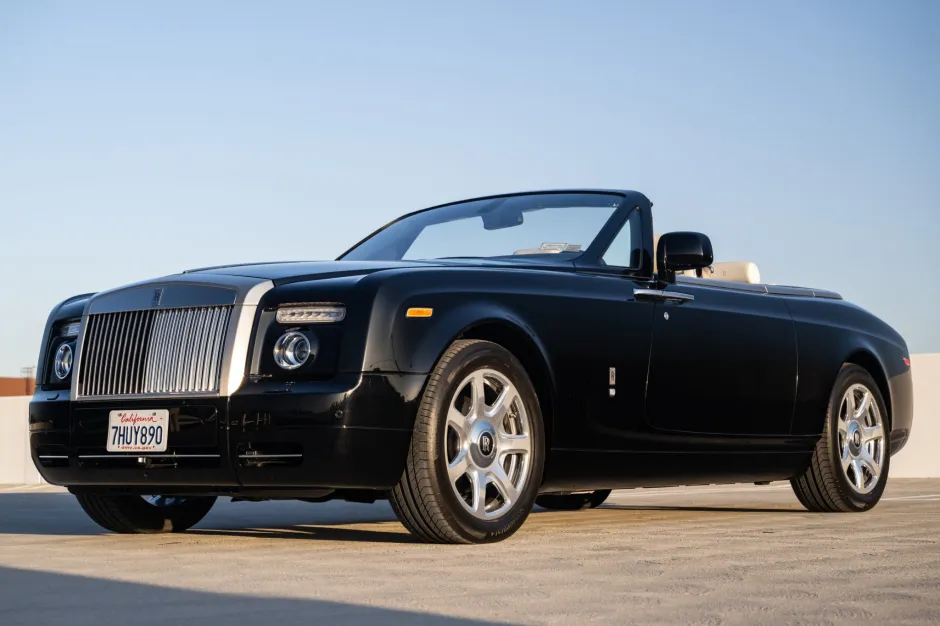
That distinction is important because online descriptions sometimes blur the two vehicles together. The production car’s verified U.S. specifications are those of the V12, while the experimental V16 belonged to the movie project.
The Phantom represents the theatrical side of Atkinson’s car interests. It is enormous, luxurious and mechanically excessive in a way that contrasts sharply with the compact Lancia Delta and lightweight BMW 328.
Its tenth-place position does not mean it is insignificant. Instead, it rounds out a collection that ranges from pre-war racing machinery to one of the world’s most famous supercars.
The Phantom shows that Atkinson’s enthusiasm could also extend to immense luxury cars, particularly when there was something technically unusual happening beneath the surface.