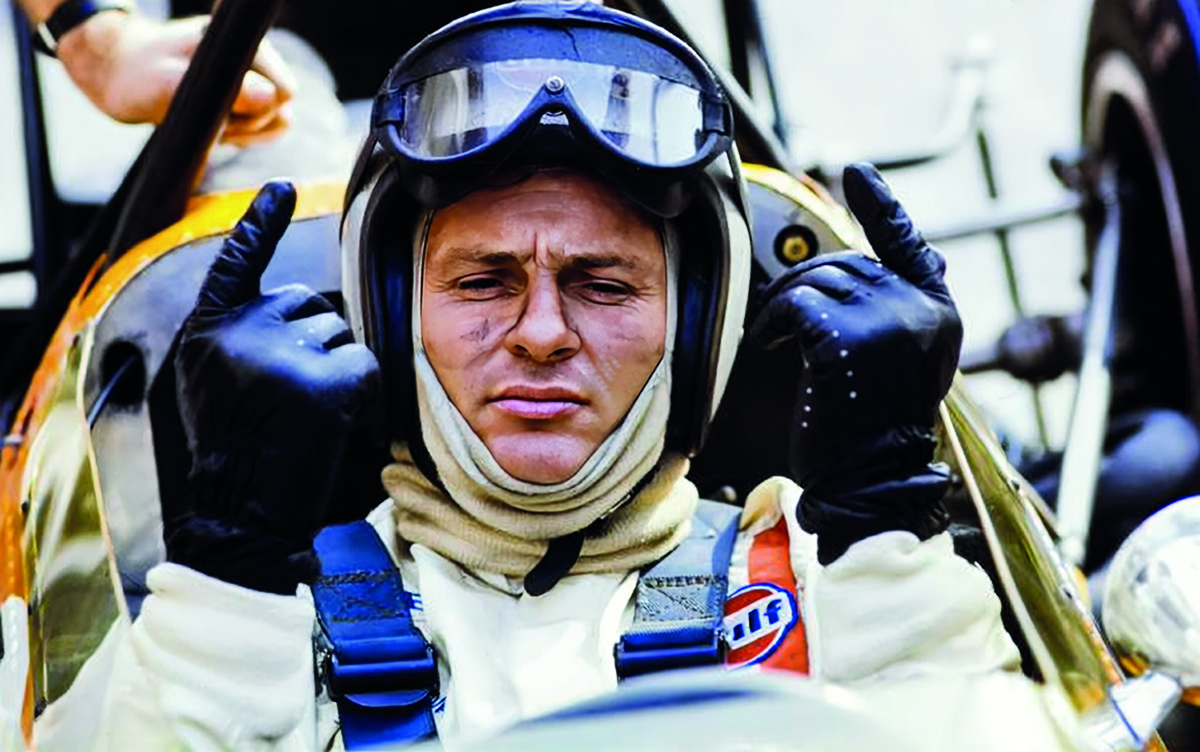
Some of the world’s most important car companies were not created by traditional businessmen. They were built by people who had already experienced competition from behind the wheel and understood what made a racing car faster.
Their experience on circuits, roads, and endurance events influenced everything from lightweight construction to engine development and aerodynamics. Names such as Enzo Ferrari, Bruce McLaren, and Carroll Shelby turned racing experience into automotive businesses that eventually became global brands.
Others, including Colin Chapman and Jack Brabham, used competition engineering as the foundation for their companies. These seven racing drivers proved that driving and building cars could become the same pursuit.
1. Enzo Ferrari
Enzo Ferrari is arguably the clearest example of a racing driver who turned competition experience into one of the world’s most recognizable car companies. Before Ferrari became a manufacturer, Enzo was a competitive driver.
Ferrari’s own historical records state that he began racing in 1919, initially competing with CMN before establishing a close relationship with Alfa Romeo. He achieved important results, including a class victory and second place overall in the 1920 Targa Florio.
His racing career eventually led to something bigger. In 1929, Ferrari founded Scuderia Ferrari in Modena. The organization initially raced Alfa Romeo cars, giving Enzo experience not only as a driver but also as a team manager and organizer.
Ferrari’s corporate history identifies him as an Alfa Romeo driver from 1924 and confirms his creation of Scuderia Ferrari in 1929.
The transition from racing organization to automobile manufacturer happened later. In 1939, Enzo established Auto Avio Costruzioni after leaving Alfa Romeo. Following World War II, he founded Ferrari as an automobile manufacturer, with the first Ferrari-badged racing car, the 125 S, appearing in 1947.
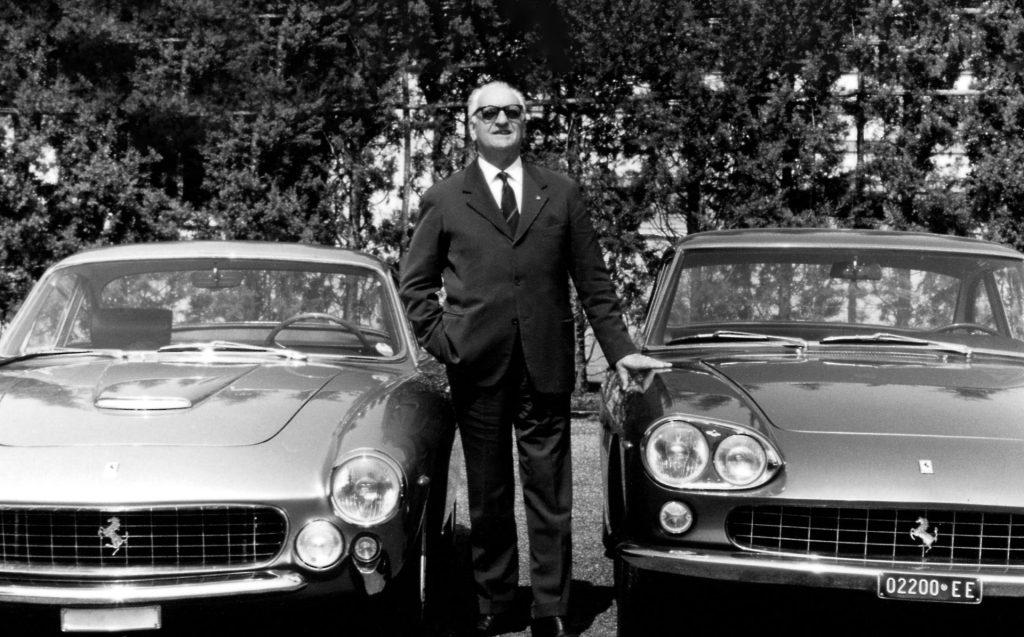
The 125 S used a 1.5-liter V12, establishing the engine configuration that became closely associated with the marque. Ferrari later expanded into road cars, with the 166 Inter arriving in 1948.
Enzo’s importance was therefore not limited to creating a company with his surname. His experience as a driver shaped a business whose original purpose remained deeply connected to racing. Ferrari’s Formula 1 presence began in 1950, and the company continues to operate the longest-running team in the championship.
2. Bruce McLaren
Bruce McLaren turned his abilities as a racing driver into a company that eventually became one of the most successful names in modern motorsport. Born in New Zealand, McLaren became a factory driver for Cooper and achieved his first Formula 1 victory at the 1959 U.S. Grand Prix. He was only 22 at the time, making him the youngest Grand Prix winner then.
His experience with racing machinery eventually convinced him that building cars could offer opportunities beyond simply driving for established manufacturers. In 1963, Bruce McLaren created Bruce McLaren Motor Racing.
McLaren’s official heritage history identifies 1963 as the beginning of the organization and describes Bruce as the founder who established the team’s engineering-focused culture.
The company initially concentrated on racing rather than road cars. McLaren’s cars competed successfully in Can-Am, sports-car racing, and other categories, while Bruce himself continued to race. His achievements included the 1966 24 Hours of Le Mans victory with Chris Amon in the Ford GT40.
The Can-Am program was particularly important to the company’s development. McLaren cars dominated the championship during the late 1960s and early 1970s, establishing the engineering reputation that eventually supported its Formula 1 expansion.
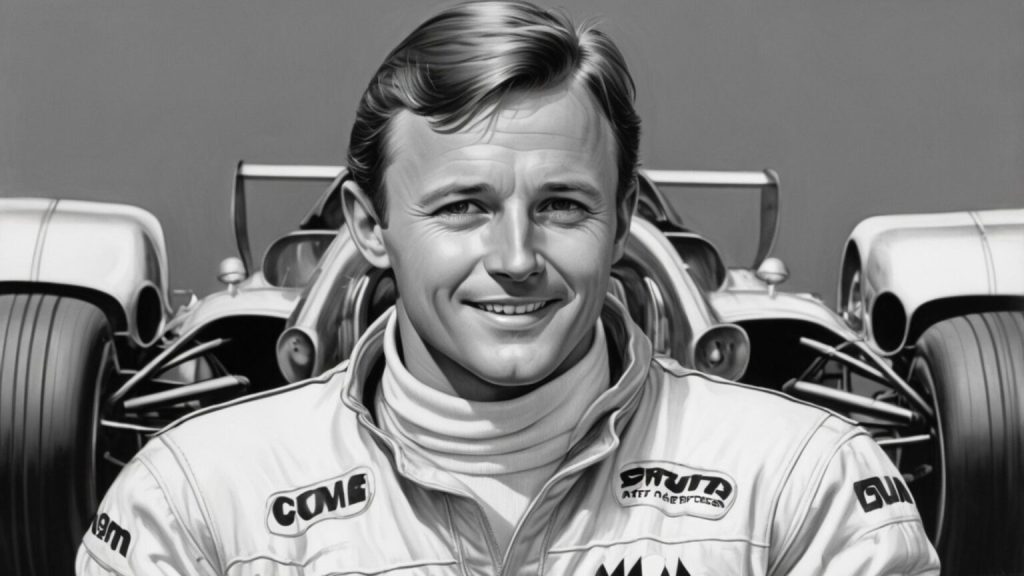
Bruce McLaren’s driving career ended tragically when he was killed testing a McLaren M8D at Goodwood in 1970. He was only 32.
The company he founded survived that loss and continued developing racing technology before eventually creating McLaren Automotive as a road-car manufacturer. The modern McLaren brand therefore traces its roots directly to a racing driver who wanted to build competitive machines himself rather than remain solely behind the wheel.
3. Colin Chapman
Colin Chapman approached car building differently from many racing entrepreneurs. He was an engineer first, but he also competed as a driver, and his experiences in motorsport helped establish the philosophy that became central to Lotus.
Lotus’ official history records that Chapman built his first competition car in 1948, modifying an Austin Seven into what became the Lotus Mark I. His early cars were developed for trials and club competition, giving Chapman direct experience with the advantages of low weight and efficient design. Lotus was formally established in 1952.
Chapman’s approach was famously centered on removing unnecessary mass instead of simply adding engine power. That philosophy eventually produced some of the most influential racing cars of the 20th century.
Lotus entered Formula 1 in 1958, beginning a racing history that eventually produced seven Constructors’ Championships and six Drivers’ Championships. The company also introduced major technical innovations, including the monocoque chassis, aerodynamic advances, and ground-effect technology.
The connection between Chapman’s driving experience and his engineering philosophy was particularly strong in the early years. He understood the effects of weight and balance from actually competing in his own cars, while his engineering background allowed him to translate those observations into new designs.
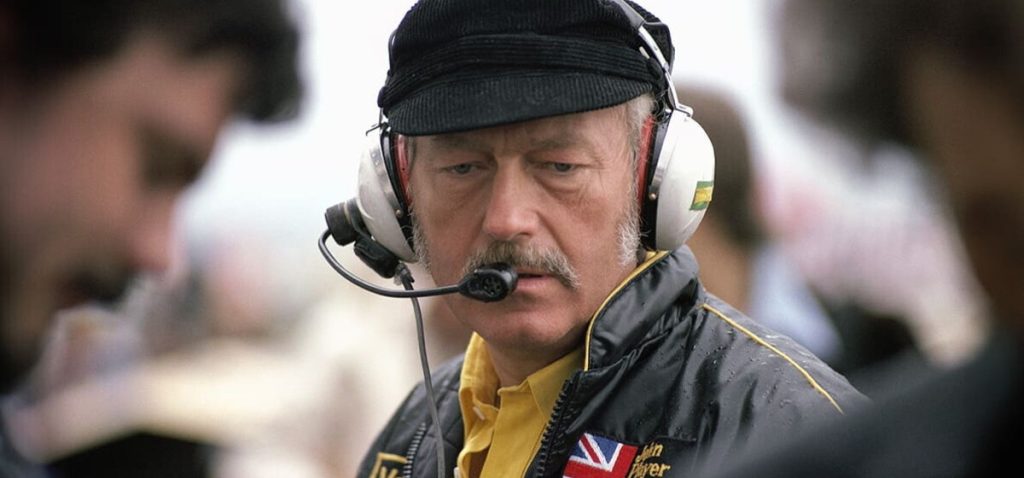
Lotus also became a road-car manufacturer. The Lotus Elite and Lotus Seven helped establish the company outside racing, with the Seven becoming one of the world’s most enduring lightweight sports-car concepts.
Chapman did not build Lotus simply to produce expensive automobiles. Competition remained central to the company’s identity.
His career demonstrates how a racing driver’s understanding of speed can influence an entire design philosophy, eventually turning a small British engineering project into a globally recognized automotive name.
4. Carroll Shelby
Carroll Shelby’s path from racing driver to car-company founder is one of the most recognizable stories in American performance-car history. Shelby began road racing in the early 1950s and quickly established himself as a serious competitor.
His driving career included victories in Ferrari and Maserati machinery before he joined Aston Martin’s factory team.
The defining achievement came in 1959, when Shelby and Roy Salvadori won the 24 Hours of Le Mans overall in an Aston Martin DBR1. Shelby’s official biography identifies the victory as the pinnacle of his racing career before a heart condition forced him to retire from competition in 1960.
Retirement from driving did not end Shelby’s involvement with performance cars. Instead, it changed his role. In 1962, he created Shelby American in California with the objective of building high-performance cars. The first major product was the Cobra, combining a lightweight British AC chassis with Ford V8 power.
The Cobra quickly developed a reputation in American road racing. Shelby’s company later produced the Daytona Coupe, an aerodynamic racing version developed specifically to challenge Ferrari in international GT competition.
The effort worked. Shelby American’s Cobra Daytona Coupe helped the company win the 1965 World Manufacturers’ GT Championship, defeating Ferrari. Shelby’s official history describes the achievement as the only World Manufacturers’ GT Championship won by an American vehicle manufacturer.
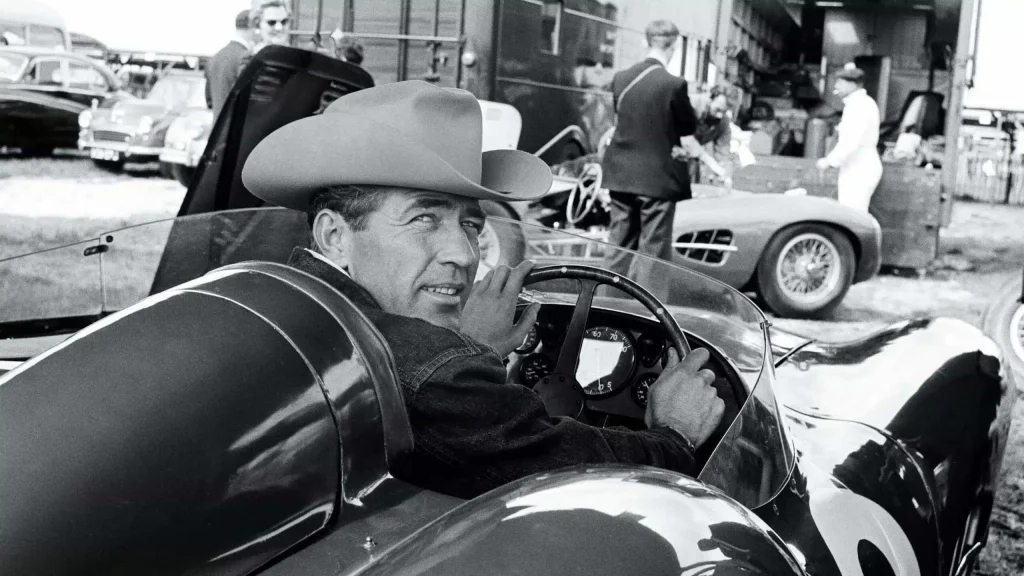
Shelby’s company eventually became closely associated with Ford performance products, including the Shelby Cobra and Shelby Mustang programs.
What makes Shelby’s story particularly compelling is the direct progression from driver to constructor. He did not leave racing behind when he stopped competing. He applied everything learned from driving at the highest level to the development of machines intended to win races.
5. Jack Brabham
Jack Brabham achieved a feat unmatched in Formula 1. He won the World Drivers’ Championship in a car bearing his own name. The Australian champion had already established himself as a world-class driver before becoming a constructor, winning the 1959 and 1960 Formula 1 titles with Cooper.
Brabham’s relationship with Cooper was important because he became deeply involved in the development of rear-engine racing cars. His engineering understanding grew alongside his driving career, giving him the foundation to build his own machines.
In 1960, Brabham and designer Ron Tauranac founded Motor Racing Developments, while the Brabham marque became a major force in racing. The company’s official history identifies 1962 as the point when Jack Brabham and Tauranac officially established the Brabham marque.
The greatest moment arrived in 1966. Brabham drove the Brabham BT19 to the Formula 1 Drivers’ Championship, while the team also won the Constructors’ Championship. The achievement made him the first and remains the only driver to win the Drivers’ title in a car bearing his own name.
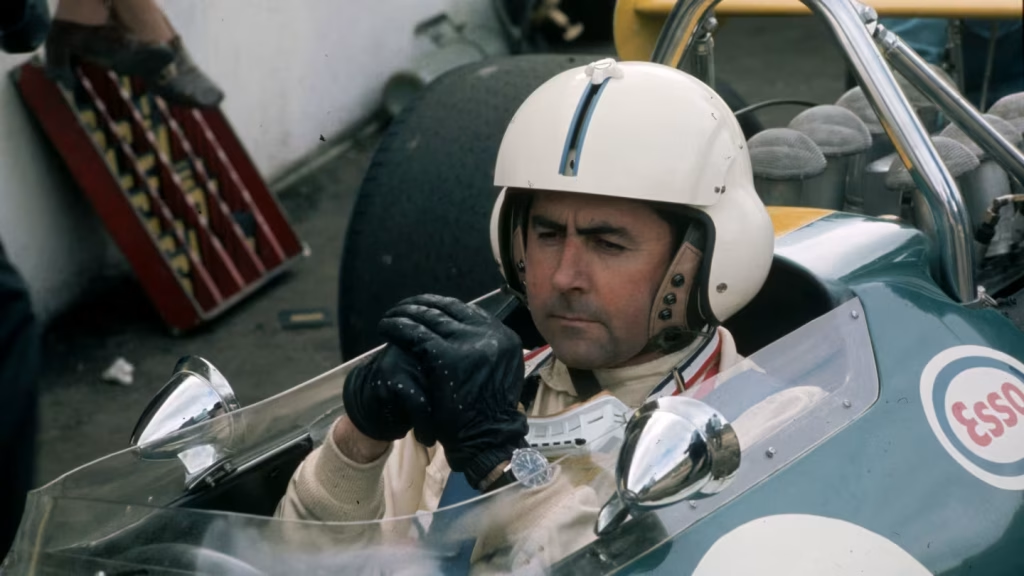
The BT19 was powered by a Repco V8, and Brabham’s success demonstrated the value of combining relatively simple, reliable engineering with a lightweight chassis.
The Brabham organization continued to compete successfully long after Jack’s retirement. The team eventually won four Drivers’ Championships and two Constructors’ Championships between 1962 and 1992.
Brabham’s story is unusual even among racing-driver founders because he was not merely the public face of the company. His name appeared on the cars, he helped establish the organization, and he personally drove one of those cars to the world’s most prestigious single-seater championship.
6. John Cooper
John Cooper helped change racing-car design through the Cooper Car Company, which he co-founded with his father, Charles Cooper. Unlike some founders who began as engineers and later became involved in racing, John grew directly out of a family workshop environment centered on competition cars.
After World War II, John and Charles Cooper began building small racing machines in their Surbiton garage. The Cooper Car Company was established in 1947, and its rear-engine designs eventually reached Formula 1 and the Indianapolis 500.
John Cooper was not simply an executive. He was a racing driver and an active participant in the development of the company’s cars. The rear-engine layout became one of the defining features of Cooper’s racing philosophy and helped accelerate a major change in Formula 1.
Jack Brabham drove Cooper machinery to the 1959 and 1960 Formula 1 World Championships, providing the company with enormous credibility at the highest level of motorsport.
Cooper’s influence later moved into production cars. John recognized the potential of the small Mini and developed a performance version with a more powerful engine, upgraded brakes, and competition-inspired modifications. The Mini Cooper became a motorsport icon and won the Monte Carlo Rally in 1964, 1965 and 1967.
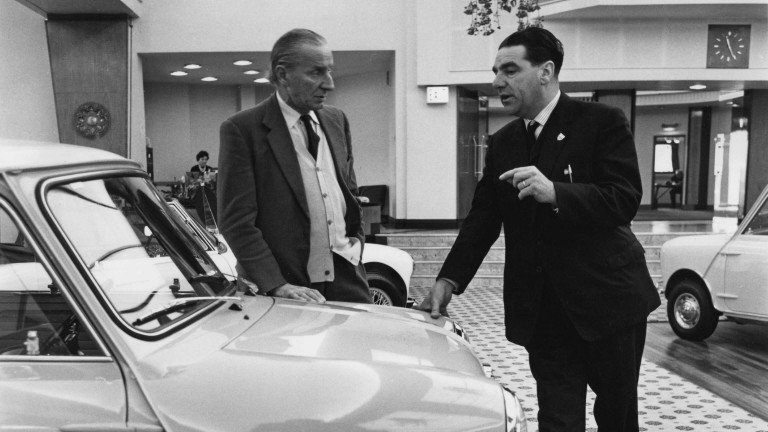
The company’s racing success therefore extended beyond Formula 1. Cooper’s approach helped demonstrate that a small, relatively inexpensive car could become a serious performance machine through intelligent engineering.
John Cooper’s legacy is especially important because the Cooper name remains attached to performance versions of Mini products. His company may not have become a mass-market manufacturer on the scale of Ford or Ferrari, but its influence on rear-engine racing and compact performance cars was enormous.
7. W.O. Bentley
Walter Owen Bentley, better known as W.O. Bentley, provides one of the earliest examples of a competitive driver creating a car company around his own engineering philosophy. Bentley was already involved in motorsport before establishing Bentley Motors in 1919.
Bentley’s official history records that W.O. began racing motorcycles and later competed with DFP cars. His experiments with lightweight aluminum pistons helped improve performance, and he drove a DFP to victory at Brooklands while setting an 89.7-mph flying-mile record.
Those experiences influenced his decision to establish his own automobile company. Bentley Motors was founded on July 10, 1919. W.O. Bentley’s goal was straightforward: to build a fast car, a good car, and the best car in its class.
The first Bentley models quickly developed a competition reputation. The Bentley 3 Litre became the foundation of the company’s early racing success, with Bentley machines competing at Brooklands and Le Mans.
W.O. himself continued racing. Bentley’s U.S. history records that he drove a Bentley 3 Litre in the 1922 Isle of Man TT, finishing fourth, which was his final competitive race.
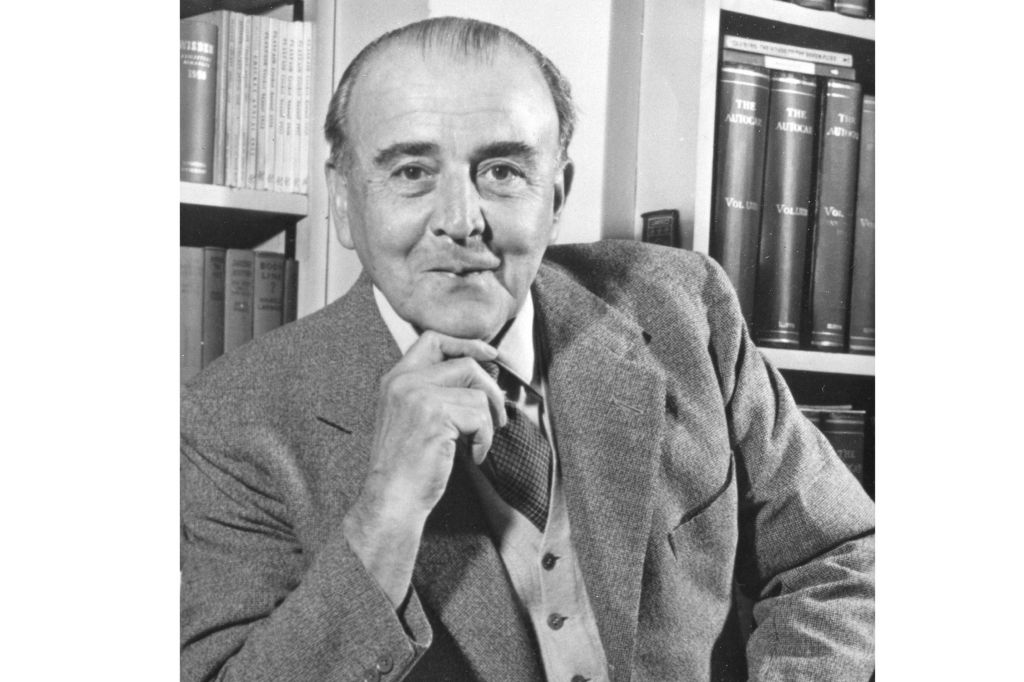
The racing program soon produced major victories. Bentley won the 24 Hours of Le Mans in 1924, followed by further victories later in the decade. The company’s early competition achievements established the connection between Bentley engineering and endurance performance.
W.O. Bentley’s significance therefore goes beyond founding a luxury marque. His racing experience directly influenced the company’s early engineering decisions, and competition became a method for testing and publicizing his cars. Bentley’s original philosophy helped establish a performance identity that remains central to the brand more than a century later.