
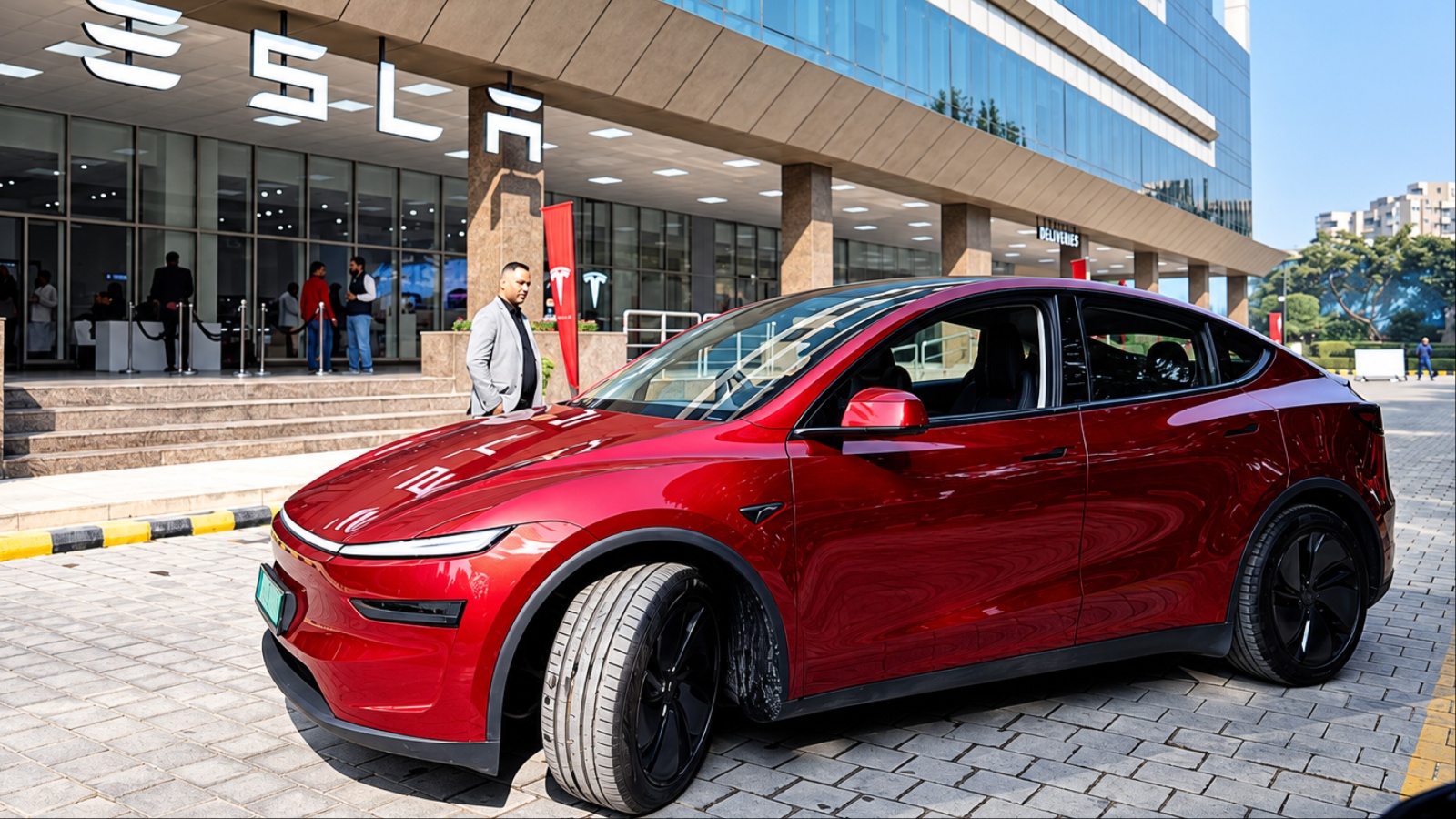
Tesla has gained important political support in Germany as it pushes for wider European approval of its Full Self-Driving technology, a development that could determine how quickly the company’s supervised driver-assistance system expands across the European Union.
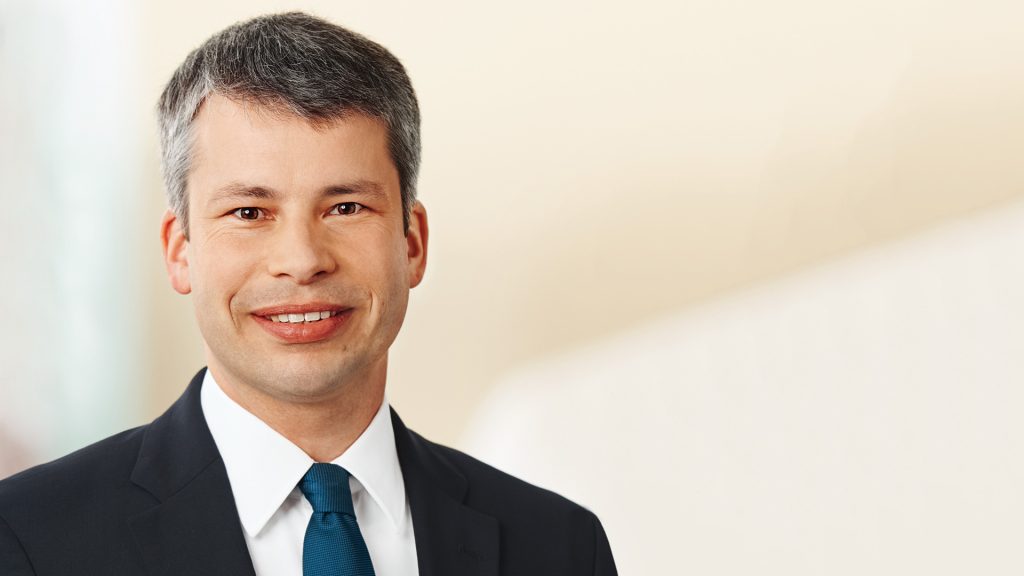
German Transport Minister Steffen Bilger has backed faster EU approval of Tesla’s system and said he wants the technology available across the bloc without unnecessary delay. Germany’s position gives Tesla an influential supporter as European regulators continue debating the technical, legal, and safety requirements surrounding the system.
The development does not mean Tesla has received EU-wide approval. European regulators are still assessing the system, and Reuters reports that the bloc-wide decision has been delayed until December while safety questions remain under review.
Tesla’s European push concerns Full Self-Driving (Supervised), a system that can perform tasks including steering, lane changes, navigation, and turns while requiring the driver to remain attentive and ready to take control. Tesla itself states that the current system does not make its vehicles autonomous.
That distinction is central to the regulatory debate. Despite its name, Tesla’s current European FSD technology remains an advanced driver-assistance system rather than a system that permits the driver to stop supervising the vehicle.
Germany Gives Tesla an Important Ally
Germany’s support is significant because the country is home to some of Europe’s largest automakers and has substantial influence over vehicle regulations and technical approval discussions.
Bilger has indicated that Germany supports making Tesla’s technology available across Europe as quickly as possible. Germany has also agreed to allow Tesla’s system to operate at speeds up to 10% above posted limits, a point that has generated disagreement among some other EU member states.
The speed issue illustrates why approval is more complicated than simply determining whether the software can steer a vehicle or change lanes.
European road rules and vehicle regulations differ in important ways from those in the United States. Regulators must determine how an advanced assistance system behaves within those rules and whether its driver-monitoring and operational limitations provide an appropriate safety margin.
Tesla has already secured approval for supervised FSD in several European countries. The Netherlands became the first European country to approve the system in April, allowing it to operate with required human supervision on highways and city streets.
Tesla’s German website currently lists the Netherlands, Lithuania, Estonia, Denmark, Belgium, Slovenia, and the Czech Republic among European markets where Full Self-Driving (Supervised) has been introduced. The company’s availability information also makes clear that activation depends on local regulatory approval.
That growing list gives Tesla a foundation for its EU-wide campaign. Instead of seeking individual approval indefinitely in every European market, the company wants a regulatory path that allows the technology to expand across the bloc.
Germany’s backing could make that effort more influential, but it does not remove the remaining regulatory hurdles.
Safety and Driver Monitoring Remain Central
The most important issue facing Tesla is whether European regulators are satisfied with the safety evidence surrounding the system.
Tesla says its FSD technology is trained using data gathered from its vehicle fleet and claims that vehicles operating with the system engaged experience fewer collisions than vehicles driven without it. The company currently describes FSD as a supervised system and repeatedly states that drivers must remain attentive.
Regulators and independent safety researchers have approached those claims more cautiously.
A Reuters investigation published October 7 reported that some European safety researchers have questioned the evidence Tesla has used to support its safety case.
The investigation said several researchers criticized Tesla’s research for relying on surrogate measures rather than direct evidence concerning crashes and fatalities and questioned whether some testing conditions accurately represented ordinary drivers.
Those concerns matter because the regulatory question is not simply whether FSD can complete a maneuver successfully. Authorities must also assess what happens when the system encounters an unusual road situation, makes a mistake, or requires a driver to intervene quickly.
Driver monitoring is consequently a major part of the discussion. Tesla’s current FSD documentation says the driver must maintain active supervision and be prepared to take over at any time.
The company’s German support information specifically states that the currently available functions require active monitoring and do not permit autonomous operation. That requirement differentiates Tesla’s European system from a truly driverless vehicle.
The distinction is also important for consumers. A vehicle capable of steering itself through city streets, making turns, and changing lanes can appear highly autonomous, but the legal responsibility for driving remains with the person behind the wheel.
Tesla’s European rollout therefore depends not only on the capabilities of its software but also on whether regulators believe drivers will understand those limitations and remain sufficiently engaged.
Tesla Wants Europe to Move Faster
Tesla has a strong commercial reason for seeking broader European approval. The company has faced increased competition in Europe from established automakers and Chinese EV manufacturers.
At the same time, Tesla’s European vehicle registrations have recently improved. Reuters reported that Tesla’s September 2026 registrations increased sharply in several major European markets, including France, Portugal, Sweden, and Spain.
The company also delivered 486,532 vehicles globally in the third quarter of 2026, exceeding analysts’ expectations and putting Tesla on course to potentially return to annual delivery growth after two consecutive years of declines.
Broader availability of FSD could give Tesla another way to differentiate its vehicles as competition intensifies.
Software has increasingly become an important part of the automaker’s business model. Instead of relying entirely on hardware differences between models, Tesla can potentially introduce new driving capabilities through software updates after vehicles have been delivered.
Tesla’s European FSD subscription is already offered in some markets, although the exact features available vary according to vehicle configuration, country, and regulatory approval. Tesla says the subscription gives eligible vehicles access to advanced driver-assistance features, but those features do not make the vehicle autonomous.
That makes regulatory approval strategically important. The more countries in which Tesla can activate FSD, the larger the potential customer base for the software.
The company is therefore seeking a European framework that would allow its technology to scale more efficiently. But the regulatory process remains unfinished.
Reuters reports that the EU-wide approval vote has been pushed back to December while authorities continue evaluating safety issues. That delay means Germany’s endorsement is an important political development, but it should not be interpreted as a final approval of Tesla’s technology across Europe. Reuters
The situation also highlights differences between EU countries. While some governments have supported faster deployment, others have taken a more cautious position regarding safety, operating rules, and Tesla’s proposed approach.
Tesla has reportedly proposed changing the system’s name to Tesla Assisted Driving in Europe because the technology is not fully autonomous. That would more clearly communicate its supervised nature and could help address concerns created by the “Full Self-Driving” name. Whether that change would influence regulatory approval remains uncertain.
For Tesla, the European debate is about more than a software feature. The company’s long-term strategy increasingly depends on artificial intelligence, autonomous-driving technology, and software services, while its traditional vehicle business faces tougher competition.
An EU-wide approval would provide access to one of the world’s largest automotive markets and give Tesla a much broader environment in which to deploy and refine its supervised driving technology.
Germany’s support is therefore a meaningful development, but the final decision will depend on European regulatory assessments rather than political backing from a single country.
The Netherlands and other European markets have already demonstrated that supervised FSD can receive national approval under specific conditions. The remaining question is whether those approvals can be translated into a broader EU framework that satisfies countries with more cautious safety requirements.
For drivers, the distinction between assisted and autonomous driving will remain critical. Tesla’s own documentation confirms that current FSD features require an attentive driver and do not replace human responsibility.
For Tesla, however, the stakes are considerably larger. European approval could expand the company’s software business, strengthen its product differentiation, and support its broader push into AI-driven transportation.
Germany’s backing gives that campaign additional momentum. But until European regulators complete their safety review and reach a bloc-wide decision, Tesla’s supervised FSD remains a technology expanding country by country rather than an EU-wide autonomous-driving system.
