

Car keys have changed dramatically since the 1950s. What began as a simple metal key used mainly to operate an ignition switch has developed into a sophisticated electronic device capable of locking doors, starting engines, opening trunks, and even replacing the physical key altogether.
Each decade introduced new ideas designed to improve convenience, security, and vehicle access. From traditional metal keys and separate door locks to transponder chips, remote keyless entry, smart keys, and smartphone-based digital access, the history of car keys reflects the wider development of automotive technology.
Looking at this evolution also shows how manufacturers have gradually moved from mechanical security toward electronic and connected vehicle systems.

1950s – The Traditional Metal Car Key
During the 1950s, car keys were primarily simple mechanical tools. They were made from metal and featured a pattern of cuts that matched the lock cylinder inside the vehicle. The key was inserted into the ignition, where turning it operated the ignition switch and allowed the driver to start the engine. Many vehicles also required a separate key for the doors or trunk.
Cars such as the Chevrolet Bel Air, Ford Thunderbird, and Volkswagen Beetle from this era used conventional mechanical key systems. The technology was straightforward because vehicle security depended mainly on the physical design of the lock and key. There were no electronic chips, remote controls, or wireless signals involved.
During this period, the ignition key became increasingly integrated into the starting process. Earlier vehicles could have separate controls for ignition and starting, but manufacturers gradually moved toward systems where turning the key through several positions controlled accessories, ignition, and the starter motor.
Car keys in the 1950s were also relatively basic in appearance. They were usually small metal blades with a simple head that provided a grip for turning the lock. There was little need for plastic housings because the key performed only a mechanical function.
The biggest advantage of these keys was simplicity. They were inexpensive to manufacture, easy for locksmiths to duplicate, and did not depend on batteries. Their weakness was security. Anyone who obtained a properly cut key could potentially operate the vehicle, while skilled thieves could sometimes defeat older mechanical locks.
1960s – Improved Ignition and Security
The 1960s brought gradual improvements to automotive locking and ignition systems. The basic metal key remained dominant, but manufacturers began paying more attention to theft prevention and the relationship between the ignition switch and the steering system.
Cars such as the Ford Mustang, Chevrolet Camaro, and Volkswagen Beetle continued using conventional mechanical keys. The ignition cylinder became a familiar feature on the steering column or dashboard, depending on the vehicle design.
A significant development was the growing use of steering column locking systems. These systems made it harder to steer a vehicle after it had been parked and locked. The key therefore became part of a larger security mechanism rather than simply a tool for starting the engine.
Key designs also became more standardized within individual manufacturers. A single key could operate several functions, including the ignition, doors, and trunk. This reduced the need for drivers to carry multiple keys.
The technology remained entirely mechanical. There were no transponder chips or remote buttons, meaning the key itself still had to physically enter a lock or ignition cylinder. Manufacturing improvements allowed more precise key-cutting patterns, providing better resistance to unauthorized duplication.
By the end of the 1960s, the car key was still recognizable as the traditional metal object that had existed for decades. However, automotive security was beginning to move toward more integrated systems that would eventually make electronic keys possible.
1970s – The Rise of Better Vehicle Security
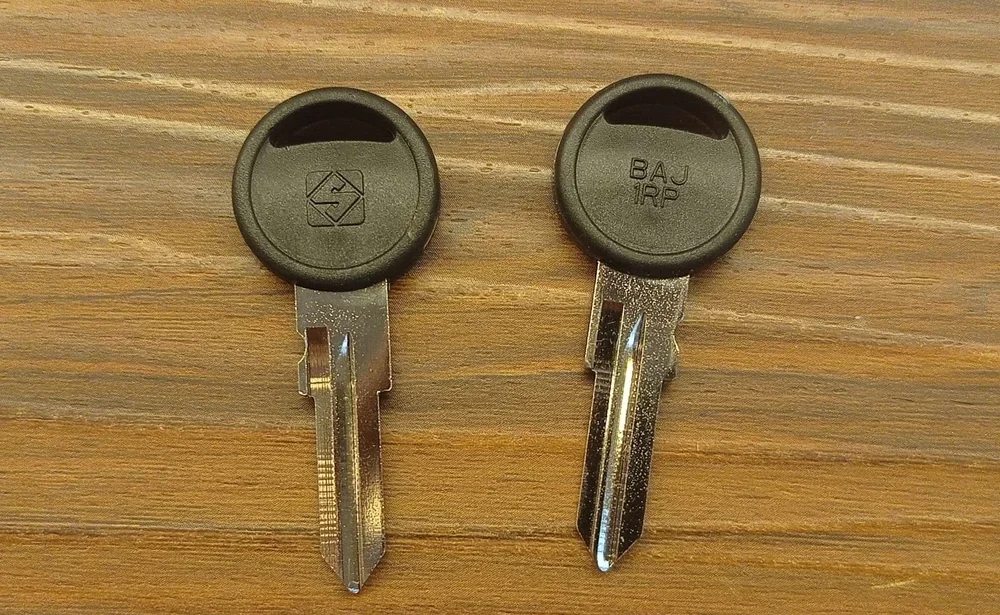
The 1970s saw the automobile industry become increasingly concerned with vehicle theft. Mechanical locks and ignition systems continued to dominate, but manufacturers started experimenting with more effective security mechanisms.
Cars such as the Mercedes-Benz S-Class and various models from General Motors, Ford, and Chrysler used improved ignition and locking systems. Keys remained metal, with grooves and cuts specifically designed for individual lock cylinders.
Steering locks became more common and sophisticated. Once the driver removed the key, the steering mechanism could lock, creating an additional physical barrier against unauthorized use.
Some vehicles also began using more complex key profiles. Instead of simple cuts on one side, manufacturers developed keys with more intricate patterns. These designs made unauthorized key duplication more difficult and helped improve security.
The key itself still had no electronic intelligence. It could not communicate with the vehicle or send a wireless signal. Its job was mechanical, and the vehicle had to physically respond to the movement of the key.
This decade laid important groundwork for later developments. Manufacturers were learning that vehicle security could not rely solely on a metal key. As electronic technology became cheaper and smaller, the automotive industry was preparing for a major change.
1980s – Remote Keyless Entry Begins
The 1980s marked an important turning point. Electronics were becoming smaller, more affordable, and easier to integrate into cars. Some manufacturers began introducing remote keyless entry systems that allowed drivers to lock or unlock their vehicles without inserting the key into the door.
Luxury vehicles helped introduce these features to a wider audience. Models from Mercedes-Benz, BMW, and other premium manufacturers increasingly offered advanced locking and security systems.
Remote key fobs allowed a driver to press a button and send a wireless signal to the vehicle. The car could then lock or unlock its doors. The physical metal key was still required for ignition in many systems, but the key fob introduced a completely new function.
This meant the car key was no longer just a mechanical object. It had started becoming an electronic accessory. Drivers could control their vehicle from a short distance, making everyday use more convenient.
The 1980s therefore created the foundation for the modern key fob. Battery-powered electronics, wireless communication, and increasingly sophisticated vehicle security systems would become central to car access in the following decades.
1990s – Transponder Keys Change Car Security
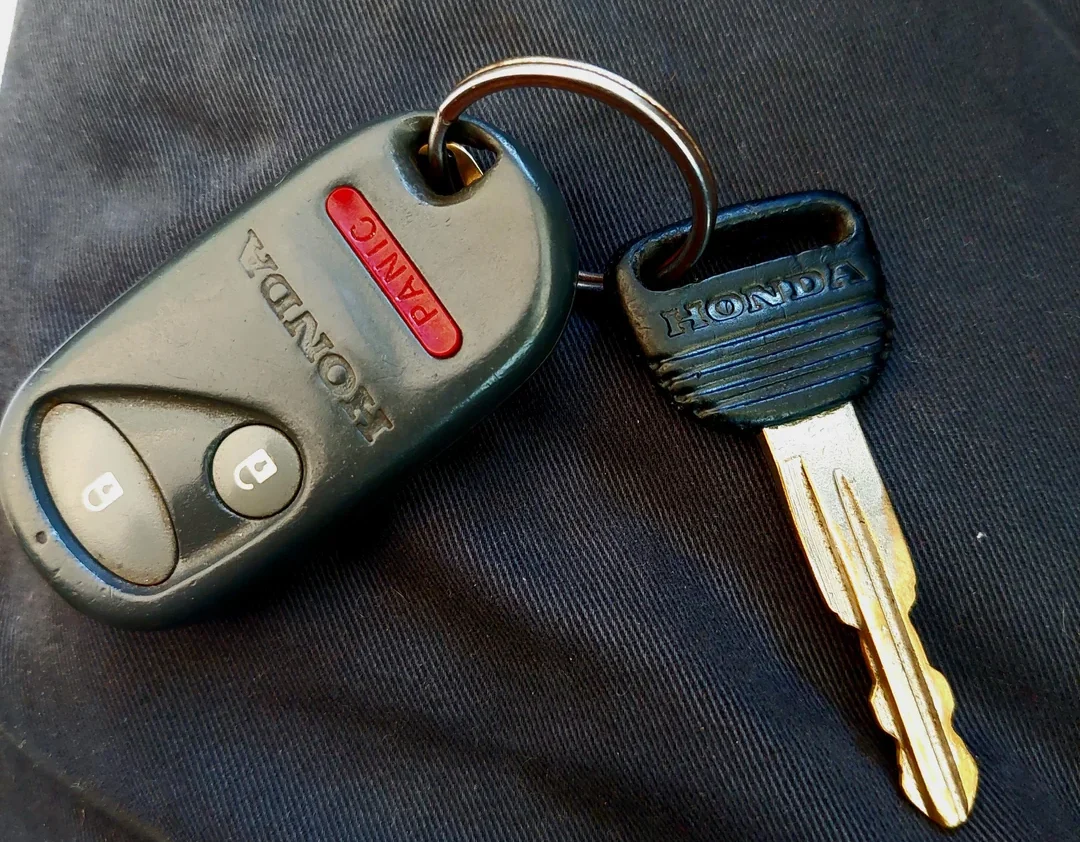
One of the biggest advances in automotive key technology came in the 1990s with the introduction of transponder keys. These keys contained an electronic chip that allowed the vehicle to verify its authenticity, adding an extra layer of security beyond the traditional mechanical cuts used to operate the lock.
Manufacturers such as Volkswagen, Ford, Mercedes-Benz, Toyota, and General Motors introduced immobilizer systems across various models during this period. Volkswagen’s early 1990s vehicles, for example, began incorporating electronic immobilizer technology in certain markets and models.
A transponder key contains a small electronic chip. When the key is inserted into the ignition, the vehicle can communicate with the chip using a radio-frequency signal. If the correct code is recognized, the immobilizer allows the engine to start.
This technology made stolen keys and copied metal blades less useful to thieves. Even if someone managed to cut a physical key that fit the ignition, the engine could remain disabled without the correct electronic authorization.
Remote key fobs also became increasingly common during the 1990s. Some keys combined a traditional metal blade with buttons for locking and unlocking the doors.
The car key had now become both mechanical and electronic. This combination became the standard foundation for vehicle security for many years.
2000s – The Smart Key Era
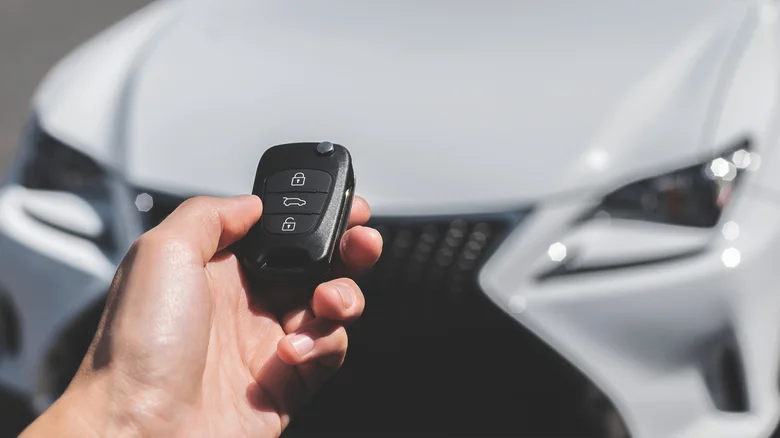
During the 2000s, manufacturers began moving beyond conventional remote key fobs. Smart key systems allowed drivers to unlock and start compatible vehicles without removing the key from their pocket or bag.
Toyota was a major manufacturer associated with widespread smart entry and push-button start technology. Vehicles such as the Toyota Prius offered advanced keyless systems that allowed the driver to enter and start the vehicle with minimal interaction with a traditional key.
Luxury manufacturers including Lexus, BMW, Mercedes-Benz, and Audi also expanded keyless entry and push-button ignition systems.
These systems used short-range wireless communication between the vehicle and the key. Sensors could detect the presence of the authorized key near the vehicle. Touching the door handle could unlock the car, while pressing a start button could activate the engine.
The physical metal blade did not disappear completely. Many smart keys contained an emergency mechanical key hidden inside the electronic housing. This could be used if the key battery was depleted or if manual entry was necessary.
2010s – Connected Cars and Advanced Key Fobs
The 2010s saw car keys become increasingly sophisticated. Key fobs gained more buttons, longer operating ranges, improved security features, and additional functions.
Many modern vehicles could remotely start the engine, open the trunk, lock or unlock doors, and activate alarms through the key fob. Some high-end vehicles even provided information about the car through the key itself.
BMW, Mercedes-Benz, Audi, Jaguar, Land Rover, and other manufacturers developed increasingly advanced electronic access systems. Some models also introduced large display-equipped key fobs capable of showing vehicle information.
At the same time, smartphone technology began influencing vehicle access. Manufacturers started developing mobile applications that allowed owners to lock, unlock, locate, and sometimes start their cars using a smartphone.
This was a major shift because the smartphone could perform several functions traditionally associated with a physical key. Vehicle access was becoming software-driven rather than dependent entirely on a physical object.
Security also became more complicated. Wireless key systems introduced new potential attack methods, including relay attacks against some keyless entry systems. Manufacturers responded with improved encryption, motion sensors, and other security measures.
2020s to 2026 – Digital Car Keys
By the 2020s, the concept of the car key had changed dramatically. Modern vehicles can use smartphones, smartwatches, NFC cards, Bluetooth, and digital credentials for vehicle access.
Companies such as BMW, Hyundai, Kia, Mercedes-Benz, and Tesla have offered different forms of digital or phone-based vehicle access. Features vary by model, market, phone, and manufacturer.
Digital car keys can allow a smartphone to unlock a vehicle and, on compatible models, start it. Some systems use Bluetooth for proximity access, while NFC technology can provide an alternative method when the phone battery is low.
Apple and Google have also supported digital vehicle key technology on compatible devices and vehicles. This has made the smartphone increasingly important in modern vehicle access.
Tesla has taken a particularly software-focused approach, with compatible vehicles using a smartphone as a key through the Tesla mobile application. Physical key cards can also provide an alternative access method.
By 2026, car keys are no longer limited to a piece of metal or a plastic remote. A modern vehicle may support several access methods at the same time, including a physical key, remote fob, NFC card, smartphone, smartwatch, or digital credential.
