
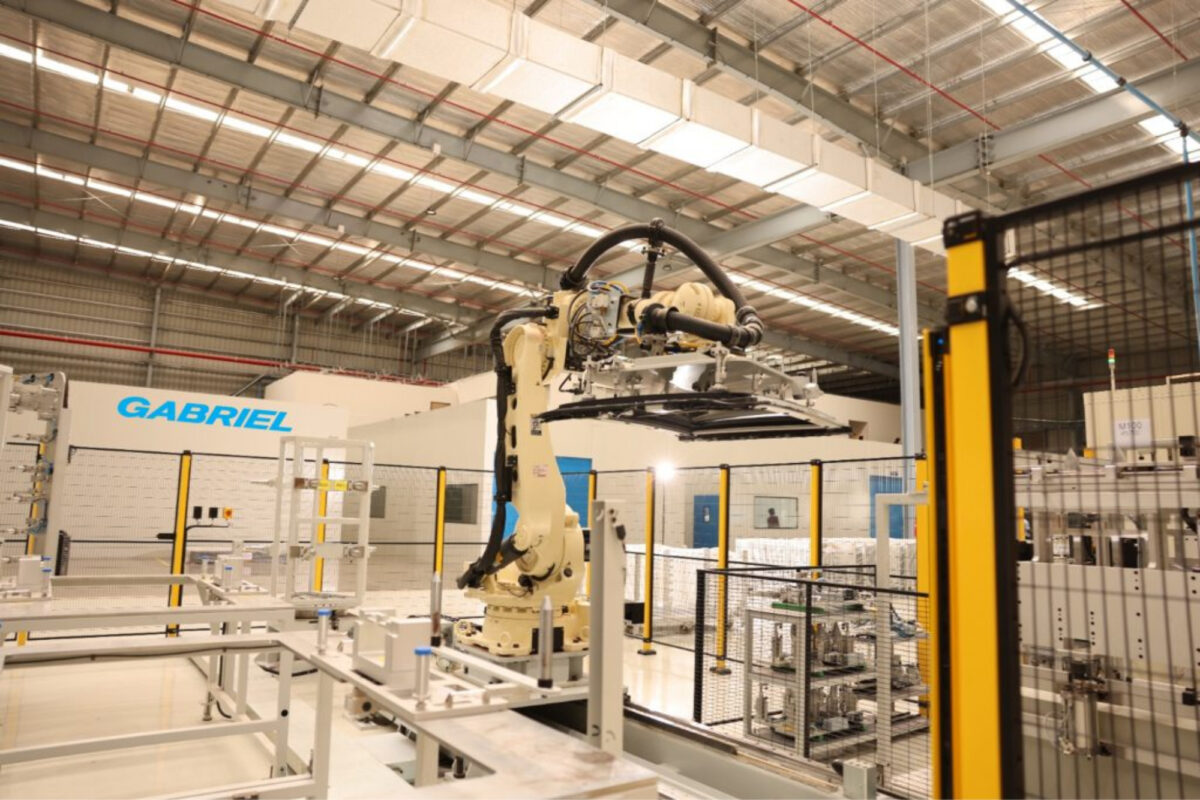
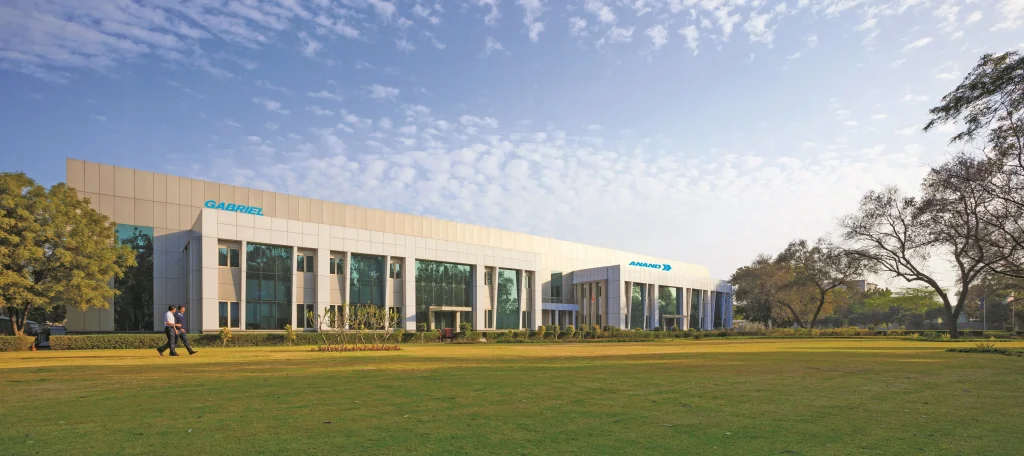
Gabriel India has joined forces with French automotive technology supplier Forvia to develop and manufacture advanced seating systems for the Indian automotive market, marking a strategic expansion beyond Gabriel’s traditional suspension and ride-control business.
The joint venture will combine Forvia’s global seating expertise with Gabriel India’s manufacturing capabilities and established relationships with vehicle manufacturers.
The partnership, announced in October 2026, comes as Indian automakers increase their focus on passenger comfort, cabin quality, and integrated safety features.
As vehicles become more sophisticated, suppliers are being asked to provide complete systems rather than individual components. Seating has become an important part of that transition, bringing together structural engineering, ergonomics, materials, safety, and increasingly complex adjustment features.
The new company, incorporated as Faurecia ANAND Seating India Private Limited, will be majority-owned by Forvia, which holds 50% plus one share. Gabriel India will own 50% minus one share, giving the French supplier a narrow controlling interest in the venture. Financial details of the agreement have not been disclosed.
For Gabriel India, the partnership represents another step toward becoming a broader automotive technology supplier. For Forvia, it creates an additional route into India’s expanding vehicle market through a local partner with manufacturing experience and established automaker relationships.
A New Business Beyond Suspension Components
Gabriel India is the flagship company of the ANAND Group, a diversified automotive components business. The company has traditionally been associated with shock absorbers, struts, and other ride-control products used across passenger vehicles, commercial vehicles, and two-wheelers.
The new seating venture gives Gabriel access to a different segment of the automotive supply chain.
Rather than concentrating primarily on suspension and ride-control components, the company will be able to participate in the development and supply of seating systems, an area where technology, comfort, and safety requirements are becoming increasingly important.
The partnership builds on an existing relationship between the two groups. By combining Forvia’s international experience in automotive seating with Gabriel India’s local manufacturing presence and understanding of the domestic market, the joint venture aims to serve automakers seeking advanced seating solutions produced closer to their assembly operations.
Jaisal Singh, vice-chairman of the ANAND Group, said the partnership was a natural extension of Gabriel India’s transformation into a broader mobility solutions enterprise. The company sees participation in more technology-intensive vehicle systems as strategically important as automakers increasingly seek integrated products from suppliers.
Anjali Singh, executive chairperson of ANAND Group and Gabriel India, also highlighted the complementary capabilities of the two companies. The partnership is intended to create a platform that can respond to the changing needs of the automotive industry while building on their longstanding business relationship.
The joint venture’s focus will be on next-generation seating systems with improved comfort and safety characteristics. Specific production programs, vehicle models, manufacturing locations, and launch timelines have not yet been publicly detailed.
That means the agreement should be viewed as the establishment of a new business platform rather than confirmation that a particular vehicle will immediately receive a new seating system.
Why Advanced Seating Is Becoming More Important
Automotive seating has evolved well beyond providing a place for drivers and passengers to sit. Modern systems must balance comfort, durability, occupant protection, weight, packaging requirements, and manufacturing cost.
Automakers are also seeking greater differentiation inside vehicle cabins. Seat design, cushioning, upholstery, adjustability, and the integration of controls can influence how customers perceive a vehicle, particularly in premium SUVs and feature-rich passenger cars.
Safety is another major consideration. Seating systems must work with seat belts, airbags, and other occupant-protection technologies. Their design can affect how occupants are positioned during a collision, making structural performance and integration with vehicle safety systems essential engineering requirements.
As manufacturers add more electronic features, seating can also incorporate powered adjustments, memory functions, ventilation, and heating, depending on the vehicle and specification.
More advanced applications may involve sensors and electronic controls, although the joint venture has not announced which specific technologies it will offer.
India provides an important market for these developments. Demand for SUVs and better-equipped passenger vehicles has encouraged automakers to invest in cabin comfort and additional features. At the same time, manufacturers need suppliers that can deliver products at competitive costs and maintain consistent quality across large production volumes.
Local manufacturing can help reduce transport requirements and make it easier for suppliers to coordinate with vehicle assembly plants. It can also support closer engineering collaboration when automakers need to adjust a product for a particular vehicle platform or price segment.
Forvia’s technology experience and Gabriel India’s domestic footprint are intended to address these requirements. The venture could supply seating systems to Indian automakers as they expand their product ranges and introduce more sophisticated cabin features.
However, the commercial opportunity will depend on winning production contracts. Establishing a joint venture does not automatically guarantee orders from manufacturers, and suppliers must demonstrate that their products meet each customer’s technical, cost, and quality requirements.
Forvia Strengthens Its Position in India
Forvia is one of the world’s major automotive technology suppliers, with businesses spanning seating, interiors, electronics, and other vehicle systems. Its global experience provides the new venture with access to engineering knowledge and established seating technologies that would be difficult for a local company to develop entirely independently.
India has become increasingly important to international automotive suppliers as vehicle production expands and manufacturers seek to increase the amount of locally sourced content. The market also offers opportunities to develop products specifically suited to domestic customer preferences and manufacturing requirements.
Forvia has previously demonstrated its commitment to India. In 2026, the company announced plans to invest an additional $78.33 million (€70 million) in the country to expand its operations as demand for SUVs, automotive electronics, and premium features continues to grow. The company has also set its sights on substantially increasing its revenue in India by 2030.
The Gabriel partnership adds another route to participate in that growth. Gabriel brings local industrial experience, existing relationships with automakers, and knowledge of the requirements involved in supplying India’s vehicle manufacturers.
Forvia’s majority stake also gives it a controlling position in the new seating business, while Gabriel retains a substantial ownership interest and a role in the partnership.
For Indian automakers, the arrangement could expand the pool of suppliers capable of delivering more advanced seating systems locally. It may also encourage greater collaboration between vehicle manufacturers and component companies during product development.
The benefits will ultimately depend on execution. Seating systems must satisfy demanding durability and safety standards, remain competitive on price, and be delivered reliably throughout a vehicle’s production cycle. The venture will need to build the necessary manufacturing and engineering capabilities while securing customer programs.
Gabriel’s Wider Technology Expansion
The seating agreement follows Gabriel India’s recent partnership with South Korea’s HL Klemove to develop and market automotive electronics and advanced driver-assistance systems in India.
That collaboration, announced in 2026, points to a wider effort by Gabriel to move into higher-growth automotive technology segments beyond its traditional strengths. The Forvia venture continues that direction by giving the company a presence in a different vehicle system.
The two partnerships serve distinct purposes. HL Klemove brings expertise in automotive electronics and driver-assistance technology, while Forvia contributes seating-system capabilities. Together, the arrangements reflect Gabriel’s intention to broaden its role in the supply chain as automakers increase the technological content of their vehicles.
Diversification can provide new revenue opportunities, but it also requires investment in engineering, manufacturing processes, quality control, and customer support. Gabriel will need to develop the operational capabilities required for a new product category while maintaining its established suspension business.
Forvia, meanwhile, gains a partner with domestic manufacturing experience and a foothold in a market where local production and cost competitiveness are important.
The immediate next steps will involve developing the venture’s product offering, establishing manufacturing and engineering arrangements, and securing contracts with automakers. The companies have not yet announced specific vehicle launches or production volumes.
The partnership nevertheless highlights a broader shift in India’s automotive component industry. Suppliers are increasingly moving from individual mechanical parts toward integrated systems that combine engineering, electronics, materials, and safety considerations.
For Gabriel India and Forvia, the opportunity is to translate complementary capabilities into seating products that meet automakers’ changing requirements.
If the venture secures production programs and builds competitive local manufacturing capacity, it could become an important part of Gabriel’s expansion into technology-led automotive systems while strengthening Forvia’s position in the Indian market.
