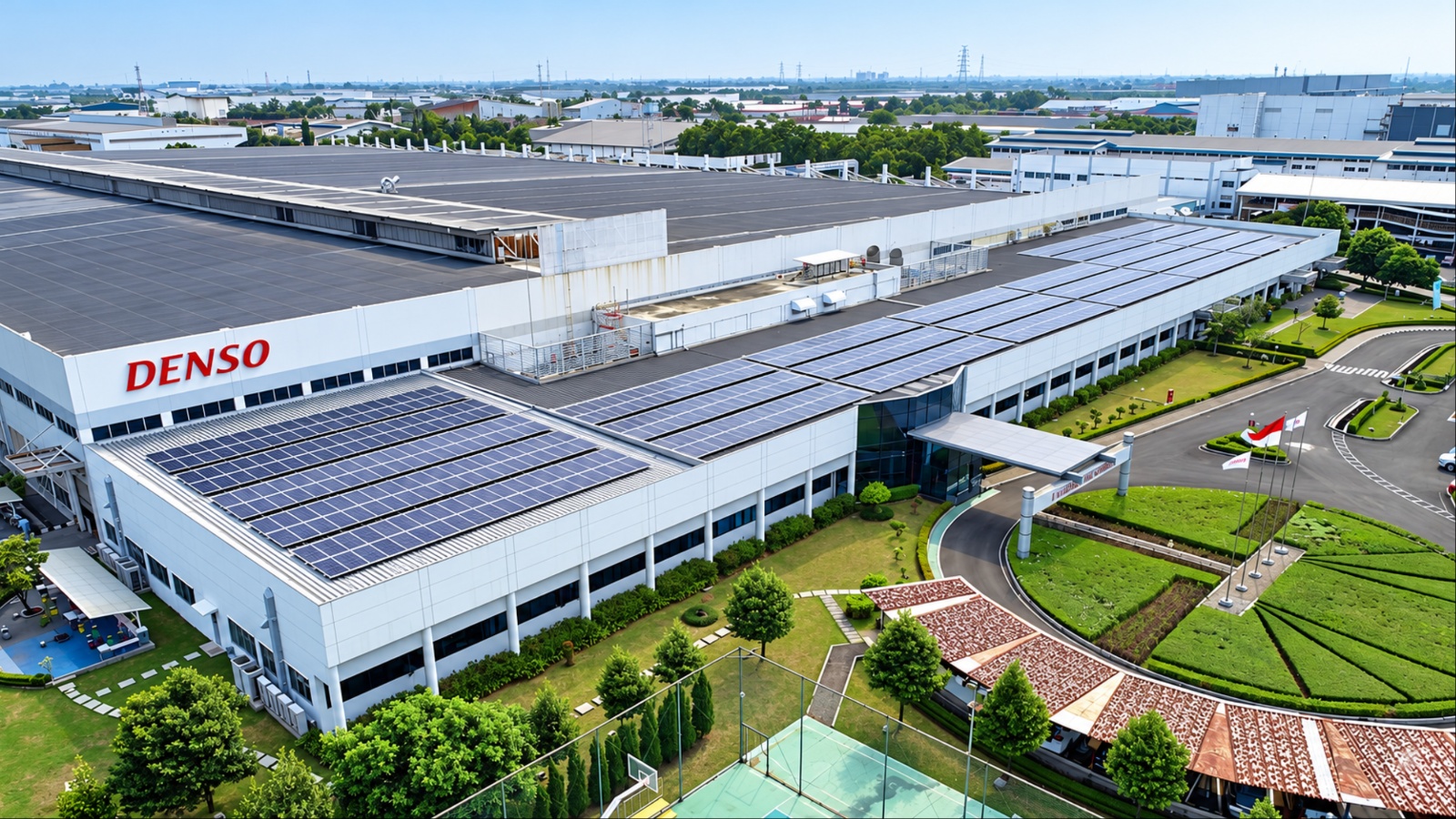
Japanese automotive supplier Denso is investing heavily in semiconductor technology as vehicles become increasingly dependent on electronics, software, and advanced driver-assistance systems.
The company announced plans to invest approximately 500 billion yen, equivalent to $3.3 billion at the time, in its semiconductor business by 2030, with the ambition of tripling the business’s scale by 2035.
The investment plan, announced in October 2023, reflects a long-term change in the automotive industry. Vehicles increasingly require specialized chips to manage electric powertrains, battery systems, safety technologies, connected services, and onboard computing.
For Denso, expanding its semiconductor capabilities is a way to strengthen its position as automakers transition toward electrification and software-defined vehicles.
Denso is one of Japan’s largest automotive suppliers and a major supplier to Toyota. Its business spans thermal management, powertrain components, electronic systems, and vehicle safety technologies.
Semiconductors are becoming more important across these areas, making chip development and reliable access to production capacity strategic priorities.
The company has also pursued partnerships to strengthen its semiconductor supply network. Its plans include expanding production capabilities, developing new technologies, and working with other companies to secure the materials and manufacturing resources needed for future automotive electronics.
Why Denso Is Expanding Its Semiconductor Business
Modern vehicles rely on semiconductors for far more than engine management. Chips regulate electric motors, control battery charging, process sensor information, operate infotainment systems, and support driver-assistance functions.
As manufacturers add more digital features, the number and complexity of electronic systems in vehicles continue to grow.
Electric vehicles place particularly demanding requirements on power electronics. Semiconductor devices must manage the flow of electricity between batteries, inverters, electric motors, and charging systems while limiting energy losses and handling substantial heat.
Denso has identified power semiconductors as a key area for investment. These components help regulate electrical energy and can influence vehicle efficiency, thermal performance, and driving range. Silicon carbide, commonly known as SiC, is particularly relevant because it can offer advantages over conventional silicon devices in high-voltage applications.
Denso introduced its first silicon carbide inverter to the market in 2023. The company has also pursued investment and partnerships connected to silicon carbide manufacturing, including an investment in Silicon Carbide LLC, which handles SiC manufacturing for U.S.-based Coherent Corp.
These initiatives illustrate Denso’s approach: strengthening its own semiconductor technology while collaborating with specialized manufacturers to build a more dependable supply chain.
The strategy is not limited to electric vehicles. Conventional cars and hybrids also need chips for engine controls, transmission management, braking systems, power steering, and other electronic functions. Advanced driver-assistance systems add further requirements because they depend on sensors, processing units, and electronic control systems working together.
As automakers introduce more sophisticated safety functions, the computing requirements of vehicles are changing. Cameras, radar systems, and other sensors generate data that must be processed quickly enough to identify surrounding traffic and help the vehicle respond.
Semiconductor performance, reliability, and energy consumption therefore matter directly to the operation of these systems.
Denso’s investment is intended to position the company for this expanding demand while reducing its exposure to supply constraints.
Partnerships Aim to Strengthen Chip Supply
Securing semiconductor production capacity has become a major concern for automotive manufacturers and their suppliers. The global chip shortages experienced earlier in the decade demonstrated how interruptions at semiconductor facilities can force vehicle plants to reduce output, even when most other components are available.

Automotive chips often have demanding reliability requirements and long qualification cycles. A manufacturer cannot necessarily replace a chip with a different component immediately, because changes can require engineering work, validation, and approval before the alternative is suitable for production.
Denso’s response includes developing strategic relationships with other companies. In 2022, the supplier announced plans to take a stake in a semiconductor fabrication plant that Taiwan Semiconductor Manufacturing Co. was developing in Japan with Sony. That project became part of Japan’s effort to strengthen domestic semiconductor manufacturing.
Such partnerships can give automotive suppliers access to production capacity and technical expertise without requiring them to build every manufacturing capability independently.
They also reflect the scale of investment needed in semiconductor production. Fabrication facilities require specialized equipment, extensive technical knowledge, and sustained demand to operate economically. Partnerships allow companies to distribute some of these demands while maintaining access to critical technologies.
Denso’s semiconductor ambitions also extend to system-on-chip technology, which combines multiple computing functions on a single chip. These devices can support increasingly integrated vehicle electronics, where software and computing capabilities must coordinate multiple functions.
The shift toward centralized vehicle computing could eventually reduce the number of separate electronic control units required in some architectures. However, it also raises the importance of powerful, reliable chips and the software platforms running on them.
For Denso, the opportunity lies in providing components that automakers can use across multiple vehicle categories and powertrain types.
Electrification and Software Create New Opportunities
The semiconductor investment forms part of Denso’s broader effort to redirect resources toward technologies expected to shape the next generation of mobility.
The company sees electrification, advanced devices, and automotive electronics as key growth areas. These fields are closely linked, as electric vehicles need more advanced power electronics, while driver assistance systems and connected features require greater computing power.
Denso is also adjusting its workforce to support these changes. Its announced plans include hiring employees specializing in electrification and software, as well as reallocating personnel from more mature business areas.
That shift is important because developing automotive electronics requires expertise that differs from traditional mechanical engineering. Semiconductor design, embedded software, thermal management, and functional safety increasingly overlap in the development of modern vehicle systems.
Automakers also want suppliers to deliver integrated solutions rather than isolated components. A semiconductor must work with the inverter, battery management system, vehicle software, and cooling architecture around it. Suppliers able to coordinate those elements can become more important development partners.
Denso’s established relationships with automakers give it an existing route into vehicle programs, but the company still faces competition from semiconductor specialists and other automotive suppliers. It must demonstrate that its technology can meet demanding requirements for cost, reliability, efficiency, and production scale.
The growth of advanced driver-assistance systems adds another dimension. More capable driving systems need dependable electronic control and processing, while increasing vehicle automation places greater emphasis on redundancy, fault detection, and system validation.
Denso’s semiconductor and electronics capabilities could help support these requirements, although the specific products used in each future vehicle will depend on automaker decisions.
A Long-Term Investment With Significant Challenges
Denso’s target of tripling the scale of its semiconductor business by 2035 is ambitious, particularly in a market where technology changes quickly, and manufacturing investments can take years to generate returns.
Demand for automotive chips is expected to evolve alongside electric vehicles, hybrids, digital cockpits, and driver-assistance technology. Yet the market is not guaranteed to grow at a uniform pace. Vehicle production cycles, changing powertrain strategies, and economic conditions can affect demand for individual chip categories.
Manufacturing capacity also requires careful planning. Building too little capacity can leave suppliers unable to meet demand, while expanding too quickly can create underused facilities if customer requirements change. Partnerships can help manage some of these risks, but they do not remove the need for sustained investment and reliable customer commitments.

Denso must also compete with established semiconductor manufacturers that have extensive experience in chip design and production. Its advantage is its understanding of automotive requirements and its ability to connect semiconductor technology with complete vehicle systems.
Turning that advantage into a larger semiconductor business will depend on execution, technology development, and customer adoption.
The original $3.3 billion announcement should therefore be understood as a long-term investment commitment, not evidence that the entire amount has already been spent or that the business has already tripled in size.
Denso’s strategy highlights how the automotive supplier industry is changing. Companies that once concentrated primarily on mechanical components are increasingly investing in chips, software, and advanced electronics to remain relevant as vehicles become more complex.
For Denso, semiconductors are no longer a supporting technology at the edge of its business. They are becoming a central part of its plans for electrification, vehicle safety and future mobility.
The success of its investment will depend on whether it can expand production, strengthen partnerships and deliver technologies that automakers need as their vehicles become more software-intensive.