
Leasing a car can keep monthly payments lower than financing a purchase, but the amount shown in an advertisement rarely tells the whole story.
At the dealership, customers may encounter acquisition fees, documentation charges, optional protection packages, and other costs that increase the amount due at signing. Some charges are legitimate expenses, while others are negotiable add-ons that provide little value for a particular driver.
The key is knowing the difference before signing. Federal consumer guidance from the FTC and leasing disclosures governed by Regulation M can help American shoppers identify unnecessary extras, question unclear fees, and negotiate a more transparent deal.
1. Dealer-Installed Protection Packages
Paint sealants, fabric protection, interior coatings, and similar packages are frequently presented in dealership finance offices as ways to preserve a new vehicle’s condition. On a lease, however, these products deserve particular scrutiny because you may return the vehicle after two or three years without ever benefiting from their claimed long-term advantages.
The important question is what the package actually provides. A dealer might charge several hundred dollars for paint or upholstery protection, even though comparable products may be available from independent retailers.
The price is not automatically pure profit, since materials and labor cost money, but the markup can make the package a poor value for some customers.
The Federal Trade Commission warns consumers that add-ons can increase the cost of a vehicle deal and that dealers must not misrepresent optional products as mandatory. You can decline an unwanted package and ask for its price and terms in writing.
Leasing does not eliminate the need to protect the vehicle. You remain responsible for qualifying excess wear and damage under your contract. But that does not mean you need every coating offered by the dealership.
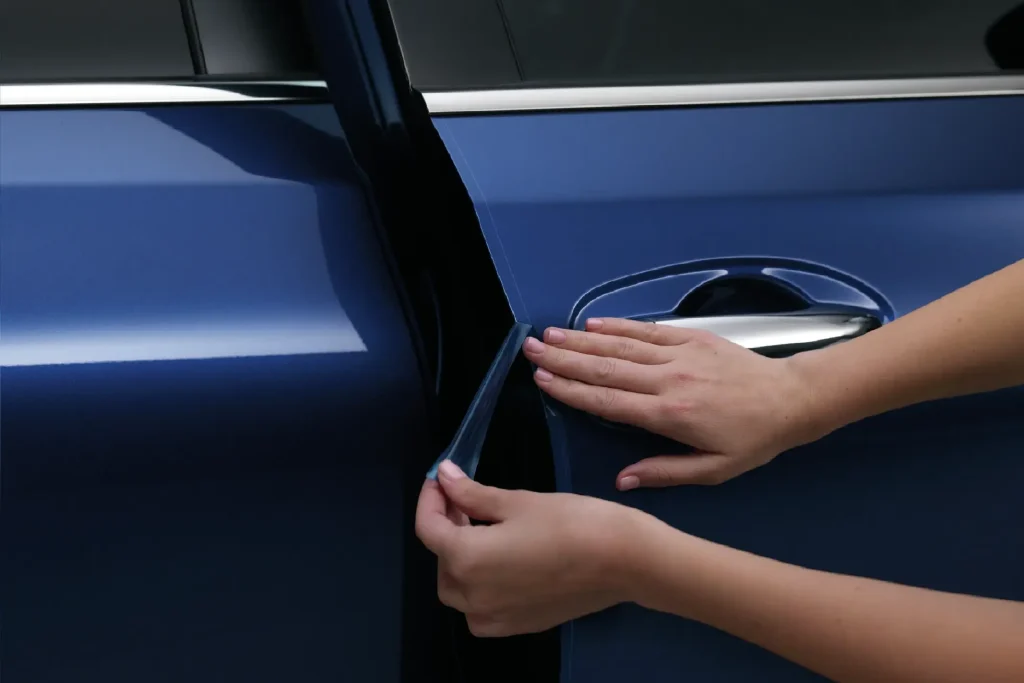
Before signing, ask whether the package is optional, what protection it provides, how long coverage lasts, and whether claims have exclusions.
If it has already been installed, request a lease quote without it and ask whether the dealer will remove the charge. Do not assume a dealer-installed item must be purchased simply because it appears on the paperwork.
2. VIN Etching
VIN etching involves marking a vehicle’s identification number on its windows, often marketed as a theft-deterrent measure. Dealers may present it as an added security benefit, but the cost deserves scrutiny, particularly when the service appears as a separate charge on a lease agreement.
The service itself is real, and some consumers may value it. However, the price charged by a dealership can be considerably higher than the cost of obtaining similar etching elsewhere. That difference does not prove the entire fee is profit, but it is a reason to ask what you are actually paying for.
On a leased vehicle, you will usually return the car at the end of the contract unless you exercise a purchase option. Paying a large upfront amount for a marking service may therefore offer limited personal value, especially if the same protection is already included in another package or if the service is not required by the leasing company.
The FTC advises consumers to question optional add-ons, request itemized prices, and refuse products they do not want. Dealers should not falsely claim that an optional service is mandatory.
Ask the salesperson whether VIN etching is required by the lease provider or simply offered by the dealership. Request the price separately, check whether it is already included in a protection package, and ask for a revised quote without it. If local law or the lease contract genuinely requires a particular service, request the relevant documentation.
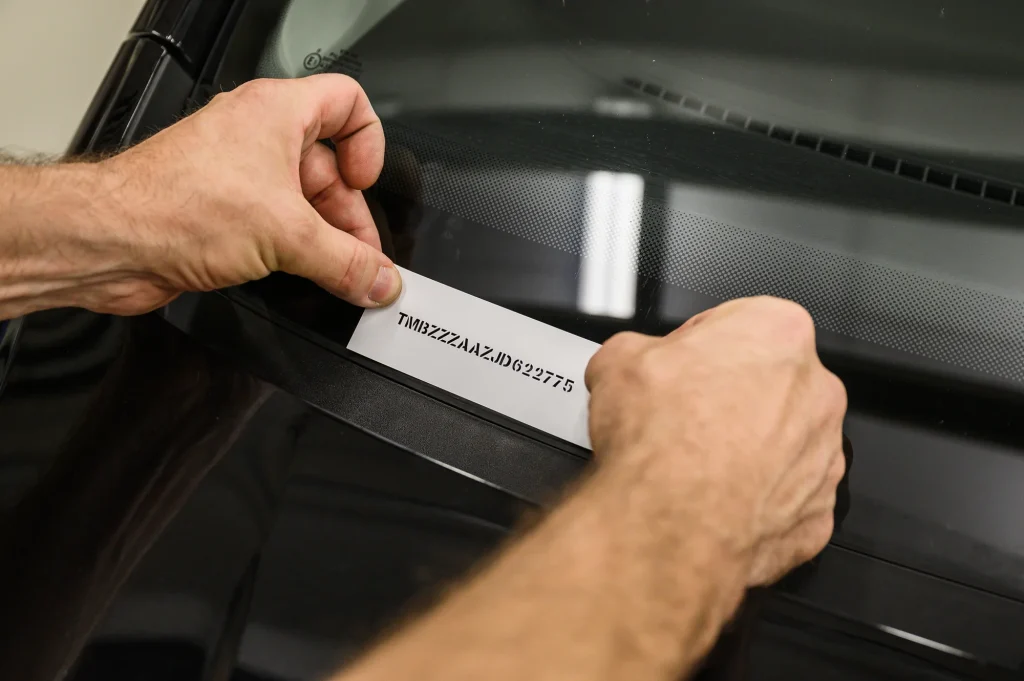
A security product should earn its place through clear value, not pressure at the signing desk. If you cannot establish that the service is necessary or worth its price, declining it is a reasonable way to keep your lease costs under control.
3. Nitrogen Tire Inflation
Nitrogen-filled tires are often marketed as a premium upgrade, with claims that nitrogen maintains pressure longer and helps protect tires. Nitrogen can reduce pressure loss under certain conditions, but ordinary air already contains about 78% nitrogen.
For many everyday drivers, paying a substantial dealership fee for nitrogen inflation may provide little practical advantage over properly maintaining conventional tires.
The FTC has specifically identified nitrogen-filled tires that contain no more nitrogen than normal air as an example of a potentially bogus add-on. Its guidance emphasizes that consumers should not be charged for products that provide no genuine benefit.
That does not mean every nitrogen service is worthless. Specialized applications may benefit from nitrogen, and the service itself can have a legitimate cost. The concern is whether the dealer’s price is justified and whether the claimed benefit is meaningful for the vehicle’s intended use.
On a lease, tire care matters because you may be responsible for damage or excessive wear when returning the vehicle. But nitrogen is not a substitute for checking tire pressure, rotating tires, or replacing worn tread. Maintaining the pressure specified on the driver’s door placard is far more important for typical road use.
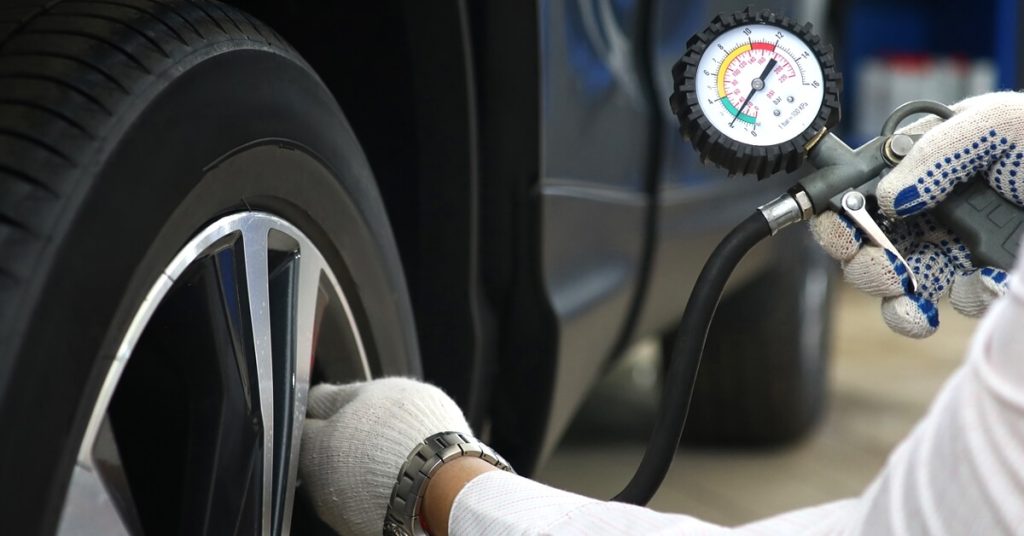
Before accepting this charge, ask whether nitrogen inflation is optional, what it costs, and what measurable benefit is promised. If the vehicle already has the tires inflated with ordinary air, you can usually decline an expensive upgrade unless you have a specific reason to want it.
The best protection for leased tires is regular inspection and correct inflation. Do not let a premium label turn a basic maintenance task into an expensive add-on.
4. Dealer-Installed Accessories
Wheel locks, splash guards, cargo trays, door-edge protectors, illuminated badges, and appearance packages can all appear on a lease quote.
Some accessories are useful, but others are added because the dealership wants to increase the amount collected on the transaction. The problem is not that every accessory is overpriced. It is that customers may be charged for equipment they did not ask for.
The FTC advises consumers to request itemized prices and warns that dealers cannot misrepresent optional add-ons as mandatory. Its guidance also explains that charges for products or services a customer did not agree to can be improper.
Accessories can be especially frustrating on a lease because you generally return the vehicle at the end of the term. If an accessory does not reduce your monthly costs, meet a contract requirement, or provide a benefit you value, paying extra for it may make little sense.
Start by reviewing the original window sticker and the dealer’s itemized quote. Determine which items were installed by the manufacturer, which were added by the dealership, and which are optional.
Ask for a revised quote without unwanted accessories. If an item has already been installed, that does not automatically mean the charge is legally mandatory, although the dealer may negotiate based on its inventory and pricing policy.
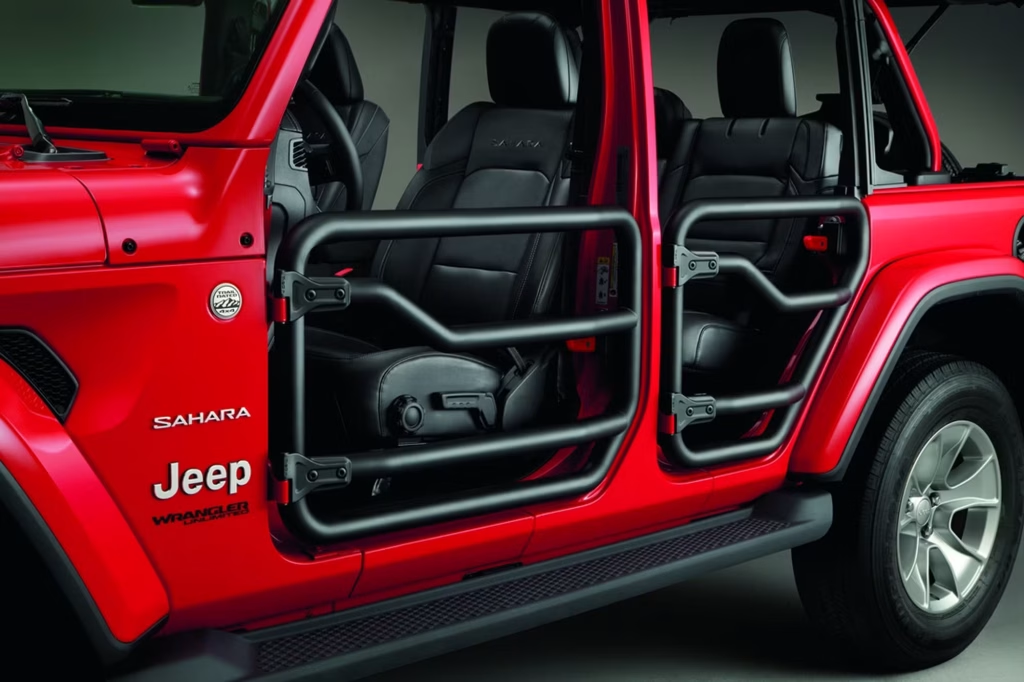
A useful accessory should have a clear price and purpose. Do not judge the deal only by a small increase in monthly payment, since even a few hundred dollars spread across a lease adds to the total cost.
Before signing, compare the agreed terms with the final lease paperwork. If an unapproved accessory appears, ask for its removal or a written explanation before proceeding.
5. Dealer Documentation Fees
A documentation fee, often called a doc fee, is one of the most confusing line items on a U.S. lease worksheet. Dealers may describe it as payment for preparing paperwork, processing registration documents, or handling administrative tasks.
Because the charge appears in the finance office rather than on the vehicle’s window sticker, some customers assume it is a government fee. It usually is not a government tax, and its name alone does not establish what the money covers.
However, calling every documentation fee pure dealer profit would be inaccurate. Dealers may incur administrative costs, and state laws vary in how these fees must be disclosed or limited. The more useful question is whether the amount is clearly disclosed, consistently charged, and included in the advertised price when required.
The Federal Trade Commission’s September 2026 pricing-transparency guidance states that advertised vehicle prices must include mandatory dealer fees, including documentation fees.
Dealers cannot promote an artificially low price and reveal a required fee only after a customer has invested time negotiating. The FTC also explains that state-specific rules may impose additional disclosure requirements or fee limits.
For lease shoppers, the practical move is to request a written breakdown of the amount due at signing and the complete payment terms.

Ask whether the documentation fee is mandatory, whether the dealer can reduce it, and whether the advertised lease offer already accounts for it. A dealer may refuse to negotiate a standard fee, but you can still compare competing offers using the total cost.
Do not focus exclusively on eliminating one line item. A dealer might decline to reduce its documentation fee while offering a better vehicle price elsewhere. Compare the complete deal, and question any fee that appears late, changes without explanation, or was omitted from the advertised price despite being mandatory.
6. Lease Acquisition Fee Markups
An acquisition fee is commonly associated with arranging a vehicle lease through a financing company or leasing provider. It may cover the lessor’s administrative costs for establishing the contract.
Depending on the lease program, the fee may be fixed, included in the advertised offer, or payable upfront. It is important not to confuse this charge with a dealer documentation fee because the two can serve different purposes.
The acquisition fee is not automatically dealer profit. In many transactions, it belongs to the leasing company, and the amount may be specified by the lender’s program.
However, customers should still check whether the quoted figure matches the applicable lease terms and whether the dealer has added a markup or included another charge under a similar description.
Federal consumer leasing rules require disclosure of relevant lease costs and charges. The Consumer Financial Protection Bureau’s Regulation M materials explain that lease disclosures can include charges such as acquisition and disposition fees, depending on the transaction.
That disclosure requirement helps consumers understand the contract, but it does not establish that every fee is negotiable or that every dollar goes to the dealer.
Before signing, ask the finance manager to identify the company receiving the acquisition fee and provide the amount in writing.
Then compare it with another lease quote for the same vehicle and financing program. If the figures differ, ask whether the difference reflects a different lender, a different incentive, or an additional dealer charge.

Also ask whether the fee is paid upfront or incorporated into the lease balance. Rolling a fee into the balance can increase the amount on which the lease’s financing charge is calculated, depending on the contract.
The goal is not to assume that a legitimate leasing expense is a scam. It is to make sure the amount is accurate, properly disclosed, and not inflated without a clear explanation.
7. Prepaid Maintenance Plans
Prepaid maintenance plans are another add-on that can increase the cost of leasing a vehicle. A dealer may offer a package covering scheduled oil changes, inspections, tire rotations, or other routine services for a fixed upfront price.
The main appeal is convenience. Drivers make a single payment instead of covering separate service costs and can keep their vehicles maintained for the duration of the lease.
That arrangement can be useful for some drivers, but it is not automatically a bargain. A lease may last only two or three years, and the vehicle could require relatively little scheduled maintenance during that period.
If the package costs more than the services you would otherwise purchase, the extra payment provides little financial benefit. Some plans also restrict where you can receive service, which can make them less convenient than they initially appear.
The Consumer Financial Protection Bureau identifies prepaid maintenance plans as optional products and recommends comparing their cost with paying for maintenance as needed. The agency also notes that certain plans may require customers to return to a particular dealer for service.
Before agreeing to a maintenance package, request a written list of included services, their scheduled intervals, and any exclusions. Then check the manufacturer’s maintenance schedule for the exact model and lease duration. Calculate what those services would cost individually at a dealership or reputable independent shop.
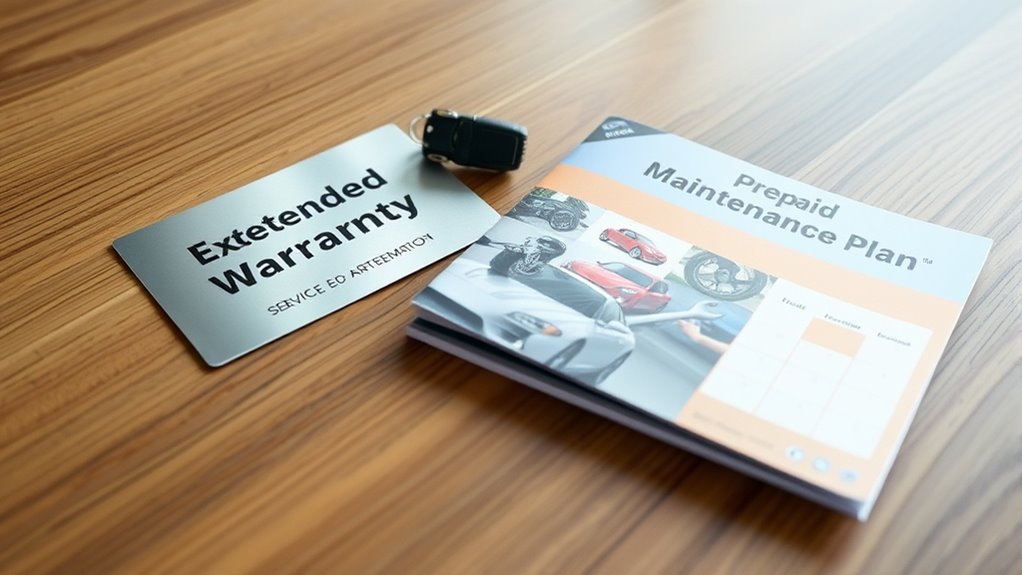
Do not assume the package is worthless simply because you are leasing. If it covers maintenance you genuinely need at a competitive price, it could make sense. The concern is paying a premium for services you would not otherwise buy or for coverage that duplicates a manufacturer’s complimentary maintenance program.
Ask the dealer to remove the package from the lease quote and show you the revised payment. If the salesperson says the plan is compulsory, request the lease terms in writing and verify whether it is genuinely required for that offer. Optional add-ons should not be presented as mandatory when they are not.
8. Tire, Wheel, Key, and Dent Protection
Tire and wheel protection, key replacement, and dent repair plans are often presented as a convenient way to avoid unexpected expenses during a lease.
These packages may cover certain tire punctures, wheel damage, lost or damaged keys, or minor dents. Because leased vehicles must generally be returned in acceptable condition, the promise of protection can sound particularly appealing.
The problem is that the advertised package may cover less than customers expect. A tire plan might exclude damage caused by improper use, while a wheel policy may limit the types of damage eligible for repair.
Key protection could impose limits on replacement costs, and dent coverage may apply only to specific kinds of minor damage. The price can be substantial even when the likelihood of making a claim is low.
Federal consumer guidance identifies key, tire, and dent protection among the types of optional vehicle add-ons consumers should examine carefully.
The FTC also advises customers to ask for the price of each add-on, understand what it covers, and ensure that the final paperwork lists only products they agreed to purchase.
Lease shoppers should first review the lessor’s standards for excess wear and use. Those standards explain what condition the vehicle must be in when returned and what charges may apply. Compare those requirements with the protection plan’s actual coverage rather than assuming every scratch, damaged tire, or missing key will be paid for.

Next, ask whether the plan overlaps with coverage you already have through an insurer, roadside assistance membership, vehicle warranty, or another policy. Confirm deductibles, claim limits, exclusions, and cancellation terms before deciding.
These products are not necessarily useless, and some drivers may benefit from them. However, a dealer’s recommendation is not proof that a package offers good value. Request a lease quote without the protection plan, compare the cost of buying coverage separately, and pay only for protection that addresses a realistic risk.