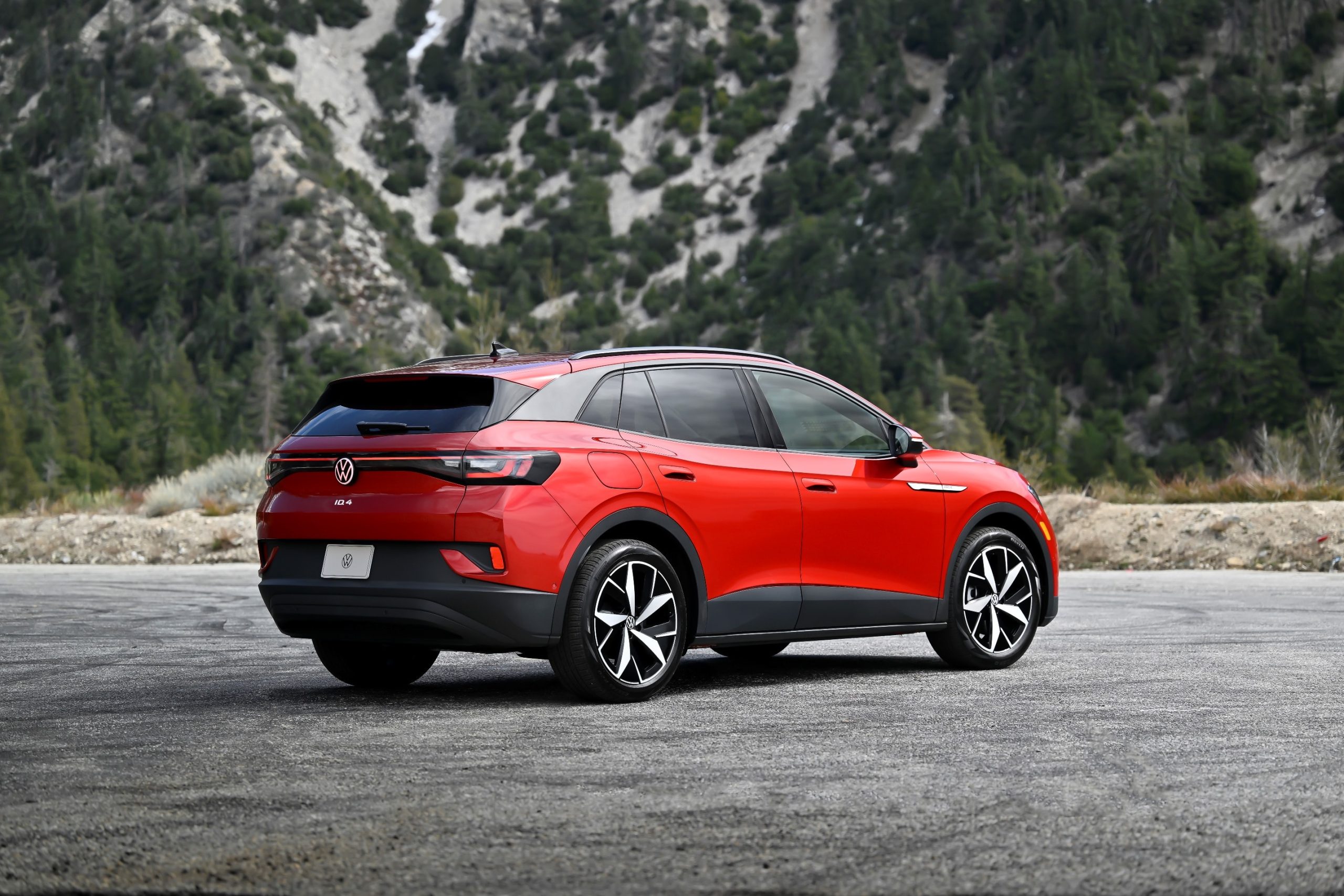
Volkswagen has issued a serious battery safety warning affecting 22,524 ID.4 electric vehicle owners, advising drivers to limit charging to 80% amid concerns about potential battery fire risks. The warning highlights the importance of battery management, charging habits, and manufacturer safety guidance for electric vehicle owners.
For affected drivers, the recommendation raises practical questions about daily driving range, charging routines, and long-term battery health. Understanding the reason behind the 80% charging limit, the possible risks involved, and the steps owners should take is essential for maintaining safety while continuing to use their electric vehicles.
Understanding Volkswagen’s ID.4 Battery Safety Warning
Volkswagen’s ID.4 is a fully electric SUV designed for everyday commuting, family travel, and longer journeys. Like other battery-powered vehicles, it relies on a high-voltage lithium-ion battery pack to store and deliver energy. These batteries offer several advantages, including efficient energy use, smooth acceleration, and reduced tailpipe emissions.
However, lithium-ion battery systems require careful monitoring because certain internal defects can increase the risk of overheating. When a manufacturer identifies a potential battery safety concern, temporary charging restrictions can help reduce exposure to conditions associated with the suspected fault.
The recommendation to stop charging beyond 80% is therefore an important precaution for drivers covered by the warning.
The reported warning affects 22,524 Volkswagen ID.4 owners, making it a significant concern for the affected vehicle population. However, the number of vehicles involved should not be interpreted as proof that every battery is defective or that every affected car faces an immediate fire.
Vehicle safety campaigns can cover cars that share a particular battery component, manufacturing process, or technical characteristic. The actual level of risk can vary depending on the underlying issue and the condition of each battery pack.
Owners should confirm whether their individual vehicle is included in the relevant campaign rather than relying on headlines or general model information.
An 80% charging limit is a familiar recommendation in electric vehicle ownership because charging to a lower level can reduce battery stress in certain circumstances. For a vehicle affected by a specific safety concern, however, the instruction may have a different purpose from routine battery care.
It can serve as a temporary precaution while engineers investigate the problem, arrange inspections, or develop a repair. The precise technical reason for this particular warning must be established through Volkswagen’s official recall documents and owner communications.
Without those documents, it would be inaccurate to claim that charging above 80% directly causes a battery fire in every affected ID.4.
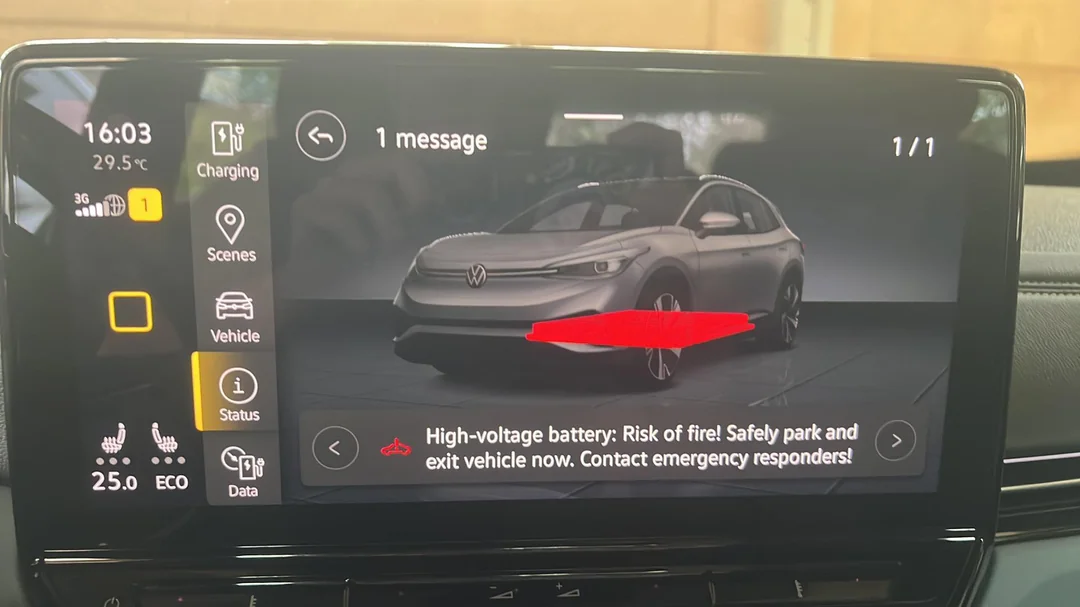
Battery safety is especially important because high-voltage electric vehicle batteries contain substantial amounts of stored energy. A fault within a battery cell can sometimes trigger an uncontrolled rise in temperature, potentially affecting nearby cells. This process is known as thermal runaway.
Depending on the nature of the defect, it can produce smoke, flames, and hazardous gases. Battery management systems, temperature sensors, cooling arrangements, and protective structures are designed to reduce these risks.
Yet no complex energy storage system is entirely free from failure. When a manufacturer identifies a possible defect, following the recommended charging restrictions can provide an additional layer of precaution.
For owners, the most useful response is to treat the warning seriously without assuming that a fire is inevitable. Drivers should check their vehicle identification number, review official correspondence, and contact an authorised Volkswagen dealer if they are uncertain about their status.
A vehicle identification number, or VIN, helps manufacturers determine whether a particular car falls within a recall or safety campaign.
Owners should also read the exact instructions provided for their vehicle because restrictions may differ according to model year, battery configuration, and campaign details. Accurate information from the manufacturer is more reliable than general advice shared through online forums or social media.
Why Charging Beyond 80% Can Matter for Battery Safety
Lithium-ion batteries operate through chemical reactions that move lithium ions between internal electrodes during charging and discharging. As a battery approaches full capacity, its charging behaviour changes, and the battery management system carefully controls the process to keep operation within designed limits.
In ordinary circumstances, a modern electric vehicle is engineered to manage charging safely, including charging to 100% when permitted by the manufacturer. A safety warning connected to a suspected battery defect changes the situation.
If a particular cell or component is vulnerable under certain operating conditions, the manufacturer may recommend avoiding a specific charge range until the issue has been addressed.
Charging limits can be particularly relevant when a battery defect has been linked to internal electrical shorts, overheating, or other abnormal behaviour. The exact relationship depends on the design of the battery and the nature of the fault.
A lower charging limit may reduce the amount of energy stored in the pack and help avoid a condition associated with the suspected defect. However, it does not repair a damaged cell or guarantee that a battery cannot catch fire.
The instruction should be understood as a risk-reduction measure, not a permanent substitute for an inspection, software update, or physical repair when one is required.
It is also important to distinguish a recall-related restriction from general electric vehicle charging advice. Many EV manufacturers recommend charging to around 80% for regular daily driving because keeping a battery away from its upper and lower limits can help reduce degradation in some battery chemistries.
Drivers can charge to higher levels when additional range is needed, provided the vehicle manufacturer permits it. In a safety campaign, the same percentage may be used for a different reason. A restriction associated with a possible defect should take priority over ordinary convenience or battery longevity preferences.
Battery temperature, charging speed, cell condition, and the vehicle’s cooling system can all influence battery operation. High-power charging creates more heat than slower charging under many operating conditions, although actual temperatures depend on the vehicle, charger, battery state, and environmental conditions.
Battery management systems are designed to regulate charging and protect the pack, but a known defect may require additional precautions. Owners should not assume that switching to a slower charger makes it acceptable to ignore an official 80% limit.
If Volkswagen’s guidance applies to a particular vehicle, the stated restriction should be followed until the company provides updated instructions.
Drivers should also avoid concluding the cause of a battery fire before the manufacturer or relevant safety authority releases technical findings. Battery incidents can result from different factors, including manufacturing defects, damaged components, electrical failures, or external damage.
Establishing the cause requires investigation rather than speculation. In the case of the reported ID.4 warning, owners need clear information about the affected battery components, the conditions associated with the risk, and the remedy available. Until those details are confirmed, the safest course is to follow the stated charging limit and seek guidance directly from an authorised service provider.
What the 80% Charging Limit Means for ID.4 Owners
For most drivers, limiting charging to 80% means accepting a shorter available driving range between charging sessions. The actual reduction depends on the vehicle’s battery capacity, efficiency, driving conditions, and the amount of energy normally available at a full charge.
Highway speeds, cold weather, cabin heating, heavy loads, and hilly routes can also increase energy consumption. Drivers who regularly travel long distances may therefore need to plan their journeys more carefully while the restriction remains in effect.
For people whose daily journeys are relatively short, the difference may be manageable with a few adjustments to their usual routine.
Owners can begin by reviewing their typical daily mileage and identifying suitable charging opportunities. Charging at home overnight, where available, can help maintain sufficient range without repeatedly visiting public charging stations. Drivers who rely on public chargers may need to include charging stops in their schedules or allow additional time for their journeys.
Navigation systems and route-planning applications can help identify charging locations along longer routes. However, owners should ensure that any charging plan respects the manufacturer’s safety instructions and does not depend on exceeding the permitted battery level.
The charging limit may also affect drivers who regularly travel between cities or live in areas with limited public charging infrastructure. A smaller usable charge can reduce flexibility, particularly on routes with long distances between stations. In these circumstances, planning becomes more important than usual.
Drivers should check charging locations before departure, account for weather-related range changes, and maintain a suitable reserve rather than relying on the maximum estimated distance shown by the vehicle.
If a journey cannot reasonably be completed within the permitted charging range, owners should contact Volkswagen for advice on suitable arrangements rather than disregard the warning.
A charging restriction can create understandable frustration for customers who purchased an electric vehicle partly for its convenience and driving range. Owners may have concerns about lost time, reduced flexibility, repair scheduling, and the effect of a safety campaign on their vehicle’s value.
These questions deserve clear answers from the manufacturer. Volkswagen should communicate the scope of the affected population, the technical reason for the restriction, the expected duration of the precaution, and the available repair options through its official channels.
Any reimbursement, replacement, or other customer support should be confirmed through the applicable campaign terms rather than assumed.
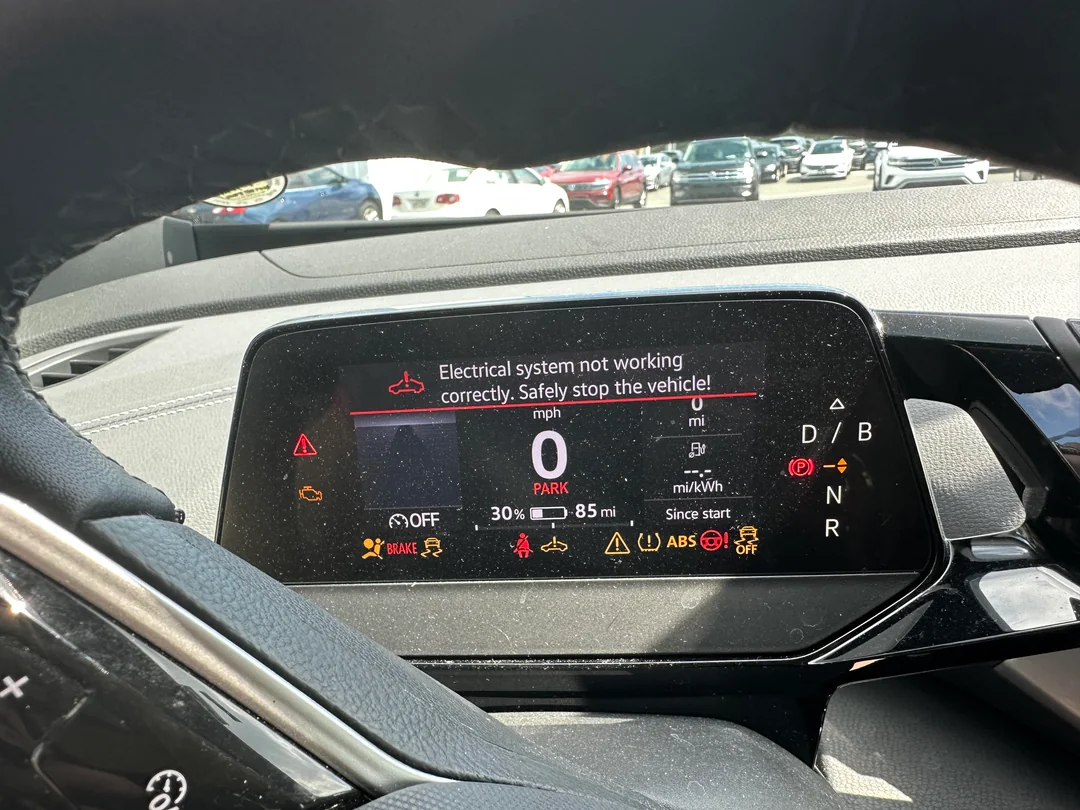
Drivers should keep records of official notifications, service appointments, and any instructions received from the dealership. If the vehicle displays a battery warning, unusual temperature message, or other indication of a possible electrical problem, the owner should consult the vehicle manual and contact the manufacturer or roadside assistance service as appropriate.
Smoke, flames, a burning smell, or other signs of an immediate battery emergency require urgent attention. Occupants should leave the vehicle, move to a safe distance, and contact emergency services. They should not attempt to inspect or repair a high-voltage battery themselves.
What Owners Should Do Next
The first step is to establish whether the vehicle is included in the reported safety campaign. Owners can use Volkswagen’s official recall resources or contact an authorised dealer with their VIN. The dealer can check the applicable vehicle records and explain whether the charging restriction applies.
This is particularly important for used ID.4 vehicles, because the current owner may not have received earlier correspondence. A vehicle’s registration year alone may not be enough to determine eligibility, since recall coverage can depend on specific production details or components.
If the vehicle is confirmed as affected, owners should follow the precise charging instructions supplied by Volkswagen. Where the official notice sets an 80% maximum, drivers should avoid charging beyond that level until updated guidance is issued.
They should also ask whether additional measures are required, such as a software update, battery inspection, replacement of a component, or restrictions on parking and charging.
The answer should come from the relevant campaign instructions, as different battery-related recalls can involve different remedies. Owners should not assume that every ID.4 requires the same service procedure.
It is equally important to ask about the expected timeline for a permanent remedy. Some safety campaigns can be addressed through software changes, while others require physical inspection or replacement of parts. The repair method depends on the defect and the manufacturer’s technical findings.
Owners should request written confirmation of the recommended interim precautions, the availability of parts if needed, and the process for arranging the repair. If the dealer cannot immediately provide a definitive answer, drivers should ask where they can obtain an official update and how they will be notified when the next step becomes available.
Drivers should be cautious about relying on unofficial advice that contradicts a safety notice. Online discussions can help owners exchange experiences, but individual reports do not establish whether a vehicle is safe to charge beyond the stated limit.
Similarly, an absence of visible problems does not prove that a battery is free from an internal defect. Battery faults may not produce obvious symptoms before a failure occurs. The purpose of a precautionary campaign is to address a possible hazard before every affected vehicle experiences a problem, which is why compliance matters even when the car appears to operate normally.
Owners should also keep an eye on official updates from Volkswagen and relevant vehicle safety authorities. A temporary charging restriction may change after further testing, a revised risk assessment, or the availability of an approved repair. Until that happens, the current instructions should remain the basis for charging decisions.
Drivers should retain any relevant service records and confirm that completed repairs are documented. If a vehicle is sold while a campaign remains active, the owner should disclose the outstanding safety notice to the buyer and follow applicable legal requirements.