
American drivers are falling behind on car loans at a pace not seen in well over a decade. Auto loans more than three months past due have reached a level last seen after the 2008 financial crisis. The numbers behind that milestone are hard to ignore.
The average new car payment is now about $765 a month. The average used payment sits near $600. Before the pandemic, both ran closer to $300 to $350.
New vehicles cost close to $50,000 today. Used ones average around $27,000. Both prices are up roughly 41% since the pandemic. Interest rates add another layer of strain. Borrowers with excellent credit pay about 7.5%. Those with poor credit can face rates well into the twenties.
Lenders are seeing the damage firsthand. One Illinois lender says payments that once arrived 30 to 35 days late now arrive around 45 days late. That shift matters because it pushes more accounts toward the 90-day mark.
This article walks through the data. It explains what is driving the stress and who is most exposed. It also looks at what the next official reading in November could reveal.
How Car Payments Grew Out of Reach
The squeeze starts with the sticker price. New vehicles now average close to $50,000, and used cars average around $27,000. Both prices are up roughly 41% since the pandemic. One industry estimate says it now takes about 35 weeks of median household income to buy the average new vehicle.
Monthly payments have followed prices upward. The average new payment is about $765, and the average used payment is near $600. Before the pandemic, buyers typically paid $300 to $350. Payments have roughly doubled in a few years.
Edmunds put the first quarter average new payment at a record $773. The average amount financed also set a record at $43,899, up from $41,473 a year earlier.
One in five new car buyers now commits to $1,000 or more every month. That share was only 17.7% a year earlier. Interest rates make every borrowed dollar more expensive. Buyers with excellent credit pay about 7.5%.
Buyers with poor credit can face rates well into the twenties. That gap turns a hard payment into an impossible one. Edmunds put the average new loan rate at 6.9% in the first quarter. That figure covers buyers across every credit tier.

Lenders have stretched loan terms to keep monthly bills down. The average new loan now runs about 70 months. A record 22.9% of financed new purchases carry terms of 84 months or longer. Seven-year loans have become a mainstream product.
Down payments are shrinking as loans grow. The average new car down payment fell to $5,815 in the second quarter, from $6,433 a year ago. That is just 11.6% of the average purchase price. It is the lowest equity cushion since late 2020.
Promotions have also dried up. Only 1.2% of new car buyers landed a 0% loan in the second quarter. Longer loans carry a hidden cost. Total interest on the average new loan hit a record $9,811 in the second quarter.
Many buyers also carry old debt into new loans. About 30.9% of trade-ins in the first quarter were underwater. The average amount owed on those trade-ins above their value reached $7,183. That gap does not disappear when the buyer trades the car.
Buyers who roll that gap into a new loan finance about $55,970 and pay roughly $932 a month. That is $159 more than the average new payment.
The new loan therefore starts with the borrower already behind. One missed paycheck can break the budget. Used cars offer little relief. Earlier this year, Edmunds measured the average used payment at $559, while Experian measured $531.
The latest figure near $600 shows how fast that market is moving. Cheaper cars are no longer cheap to finance. All of this has pushed auto debt to record levels. Balances reached $1.71 trillion in the second quarter.
Borrowers took out a record $211 billion in new auto loans in that quarter, and balances grew $58 billion over the year. Car loans are now the second-largest category of consumer debt, behind only mortgages.
What the Delinquency Data Really Shows
The New York Fed tracks how many borrowers fall 90 days or more behind. Its second-quarter report showed serious auto delinquency at the highest level since 2010.
The share of auto balances 90 days or more past due stood at 5.5%, down slightly from 5.6% in the first quarter. The stock of bad loans has stopped rising for now, but it remains very high.
The first quarter reading was well above the long-term average of 3.59%, and 12.2% higher than a year earlier. The Q2 figure sits only a notch below that peak.
The flow of fresh trouble is still growing. The share of current balances turning seriously late reached 3.00%, up from 2.93% a year earlier. That means the problem has not eased. The stock has plateaued, but new cases keep arriving.
The rest of the household picture looks calmer. Only 4.7% of all debt was in some stage of delinquency. The flow into serious delinquency fell to 2.57% from 2.91% a year earlier. Auto loans are moving against that trend.
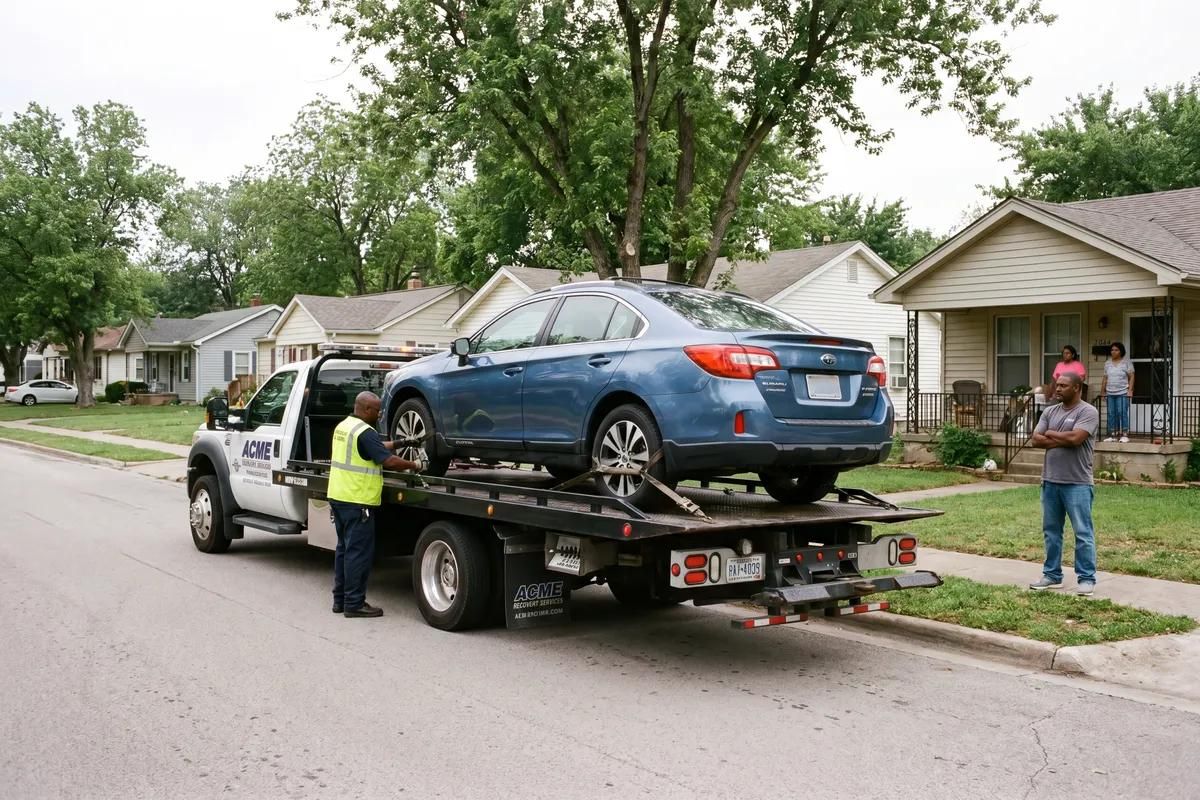
Lenders often see strain in payment behavior before it appears in reports. One Illinois lender says payments that once arrived 30 to 35 days late now arrive around 45 days late.
Each extra week matters. A borrower at 45 days is near the 60-day mark, and the 90-day line is not far behind. Subprime borrowers are the most visible casualty. Fitch’s index of subprime loans 60 days or more late hit a record 6.90% in its January reading.
That is the highest level in more than 30 years of data, and above any reading from 2008 and 2009. The old crisis benchmark has been passed. The rate eased to 6.80% in February. That is still close to record territory.
Prime borrowers look very different. Their 60-day delinquency rate is about 0.4%, broadly in line with historical norms. The stress is highly concentrated. Subprime borrowers hold only about 17% of active auto accounts, yet account for nearly two-thirds of delinquent loans.
Lenders are absorbing real losses. Fitch put annualized net losses on subprime loans at 9.63% at the end of 2025. Recoveries on repossessed cars are weak, with the recovery index slipping to 32.86% in December 2025. Older, high-mileage vehicles in the loan pools are part of the reason.
Lender failures added to investor worry. Fitch pointed to bankruptcies in late 2025, including Tricolor, tied to fraud and governance problems. Repossessions tell the same story. Cox Automotive data show repossessions jumped 43% between 2022 and 2024.
Reports in June said repossession rates were approaching levels seen during the Great Recession. The same reports found no authoritative data showing a systemic crisis.
Analysts caution against a direct comparison with 2008. That crisis grew out of mortgages, while auto loans are roughly 9% of total household debt. Still, car loans often act as an early warning. Auto loan performance has historically served as a leading indicator of broader consumer stress.
What Comes Next for Borrowers and Lenders
The next chapter arrives in November. The New York Fed is due to publish its third quarter household debt report then. That report will show whether serious delinquency has peaked. It will update the 5.5% stock and the 3.00% flow measure.
Three readings deserve attention. The first is the share of auto balances 90 days or more late. The second is the flow into serious delinquency. It is the cleanest signal of new trouble.
The third is early delinquency. A rise there foreshadows the 90-day numbers in later quarters. The second quarter report already showed early delinquency rising slightly for auto loans. That raises the risk of another uncomfortable reading.
Forecasters see no quick relief. TransUnion projects delinquency rates will stay roughly flat through the end of 2026. Flat would still be high. It would leave rates well above historical norms.

Fitch expects the subprime strain to linger. Newer loan batches are improving, but still perform worse than pre-pandemic ones. Subprime lending itself has pulled back. Fewer subprime originations alongside rising serious delinquency suggests the stress traces back to earlier loans.
Investors have stayed calm so far. Demand for subprime auto bonds has held steady, suggesting confidence in tighter lending standards. That confidence will be tested if losses keep growing. Weak recoveries leave lenders less cushion.
Consumer advocates are pressing for action. The Consumer Federation of America has called the auto financing market “at a breaking point.” They want Congress and regulators to look harder at dealer practices. The group calls some of those practices abusive.
Borrowers who are behind still have options. Many lenders offer hardship programs that lower rates, reduce minimum payments, or defer a payment.
Those whose credit has improved may refinance. A better score can qualify a borrower for a lower rate. Buyers should test any payment against take-home pay. Gross income hides how tight the budget really is.
Avoiding long terms also helps. An 84-month loan with a small down payment can cost around $10,000 in interest alone. Rolling negative equity into a new loan deserves caution. It can lock a buyer into a four-figure payment for years.
The core problem is simple. Prices, rates, and loan terms have all pushed payments beyond many budgets. The November data will show whether borrowers and lenders are adjusting.
A fall would suggest the worst is passing, while a rise would signal deeper trouble. Until then, late-payment behavior is the number to watch. If lateness keeps stretching, more accounts will cross the 90-day line.