Sports cars are often associated with expensive ownership, but some models hold their resale value remarkably well. In the United States, five-year depreciation depends on factors such as buyer demand, production numbers, performance credentials, and the availability of comparable used cars.
Data from iSeeCars’ 2026 resale-value rankings show that the Porsche 911 and Porsche 718 Cayman retain more of their value than most luxury sports cars, while models such as the Chevrolet Corvette and Toyota GR86 also perform strongly in their respective categories.
The figures below use published five-year resale-value estimates, not guaranteed future selling prices.
1. Porsche 718 Cayman
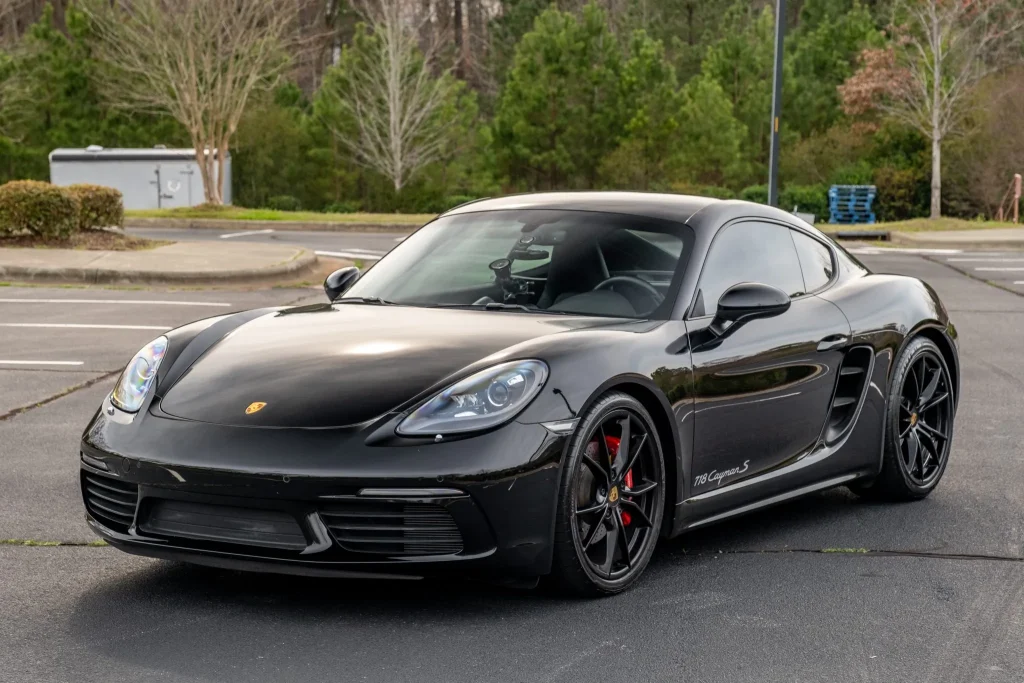
The Porsche 718 Cayman stands out for its strong resale value, combining a purpose-built sports-car design with exceptional value retention. In iSeeCars’ 2026 study of five-year depreciation, the Cayman lost just 9.6% of its value, ranking first among all vehicles analyzed.
The estimated average difference between its original manufacturer’s suggested retail price and its value after five years was approximately $6,988.
Its mid-engine layout gives the Cayman a distinctive character. With the engine mounted behind the seats but ahead of the rear axle, the car has a balance that appeals to drivers who value precise handling on winding roads and at track events.
Its compact two-seat cabin and coupe body also make it a more focused choice than a grand-touring car designed primarily for long-distance comfort.
The resale figures do not mean every Cayman will lose only 9.6% of its purchase price. iSeeCars calculates averages from used-car market data, and actual values depend on mileage, condition, maintenance records, transmission choice, and installed options.
A heavily modified example or a car with an accident history can perform very differently from a well-maintained vehicle with a documented service record.
Buyers should also remember that strong resale value does not make the Cayman inexpensive to own. Insurance, tires, brakes, and scheduled maintenance can cost substantially more than they would for an ordinary commuter car.
The data simply suggest that the purchase price may be better preserved over five years than that of many competing vehicles. For enthusiasts who want a dedicated sports coupe and care about depreciation, the Cayman makes a compelling case backed by measured market results.
2. Porsche 911
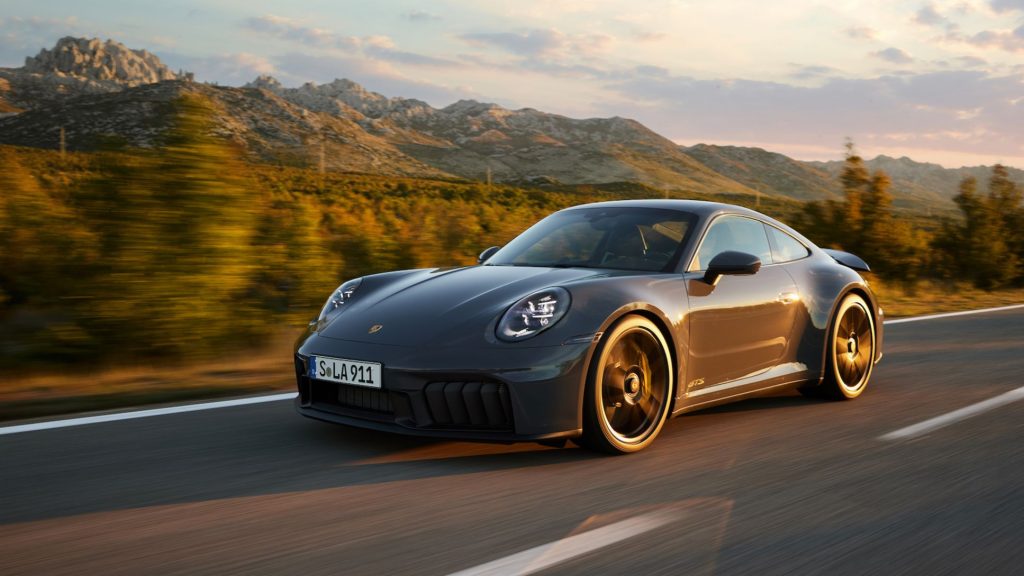
The Porsche 911 benefits from a well-established reputation that continues to attract buyers across generations. In iSeeCars’ 2026 study of five-year depreciation, the 911 ranked second among all vehicles, retaining much of its value with a depreciation rate of just 11.1%.
The study estimated an average dollar difference of $15,533 between the original MSRP and the car’s value after five years.
The 911’s appeal extends beyond outright performance. Its rear-engine layout, recognizable shape, and broad range of versions allow buyers to choose between everyday usability and more specialized performance.
Carrera models serve as versatile road cars, while higher-performance variants attract drivers seeking sharper responses and greater power. This broad appeal helps sustain demand in the used market, although individual versions can have different depreciation patterns.
That distinction matters because a single percentage cannot describe every 911. Coupe, convertible, and hybrid versions have different resale estimates in iSeeCars’ model-specific data. For example, its separate 2026 luxury sports-car ranking puts the standard 911 coupe at 94.7% retained value after five years, while the convertible is estimated at 84.9%.
These figures come from a different category-level calculation than the 11.1% depreciation figure in the broader study, so they should not be treated as directly interchangeable.
For a prospective owner, the 911’s strong retention is encouraging, but it does not remove the need for careful purchasing. Maintenance records, accident history, mileage, factory options, and condition all affect resale value.
Expensive repairs can also offset some of the money preserved through lower depreciation. The data support the 911’s reputation for holding value, but buyers should compare the exact generation and trim they intend to own rather than assuming every version follows the same curve.
3. Chevrolet Corvette
Few American sports cars have the cultural recognition of the Chevrolet Corvette, and its resale figures give enthusiasts a concrete reason to pay attention.
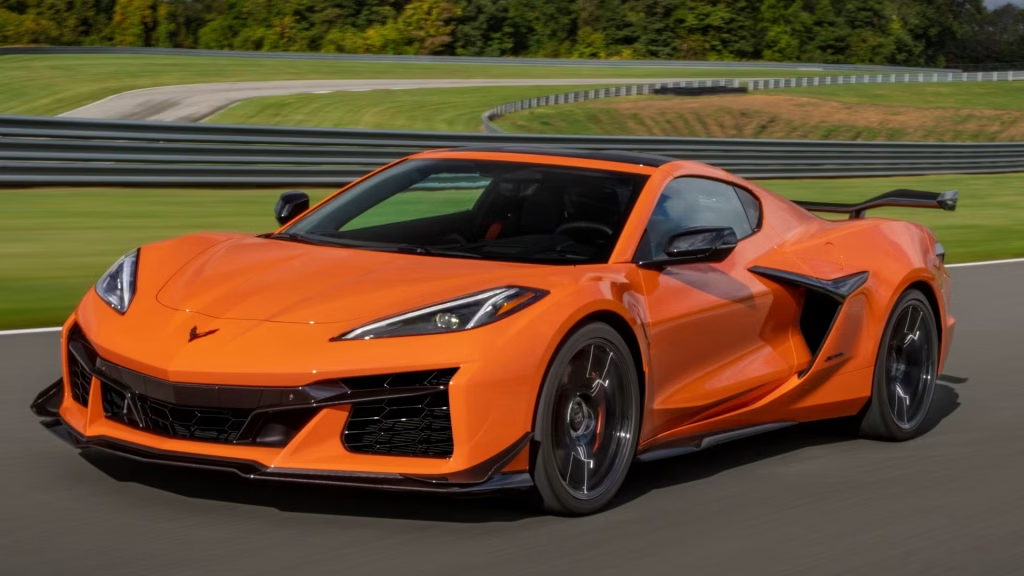
In iSeeCars’ 2026 five-year depreciation study, the Corvette lost 18.7% of its value, with an estimated average difference of $13,365 between its original MSRP and its value after five years. That placed it third among all vehicles in the study, behind the Porsche 718 Cayman and Porsche 911.
The Corvette’s appeal comes from its combination of high performance and a price that traditionally undercuts many European exotics with comparable speed. The current-generation C8 moved to a mid-engine layout, changing the car’s proportions and handling character while retaining its role as a two-seat American performance machine.
That engineering change also broadened its appeal to buyers who previously might have considered only European sports cars.
Its market position is not identical across every version. iSeeCars’ separate luxury sports-car data estimates that the Corvette coupe retains 82.1% of its value after five years, while the convertible retains 75.1%.
The broader depreciation figure of 18.7% comes from the study’s calculation for the Corvette model as a whole. It should not be compared directly with estimates for specific body styles, as the figures may be based on different vehicle samples.
For buyers, resale strength can make the Corvette’s purchase price easier to justify, but it does not remove the costs of tires, brakes, insurance, or repairs. Demand can also vary by engine, options, mileage, and condition. A well-documented, unmodified example may attract a different pool of buyers than a heavily customized car.
The data support the Corvette’s place among sports cars that preserve value well, but buyers should compare the exact generation and body style they want rather than assuming all Corvettes depreciate at the same rate.
4. Toyota GR86
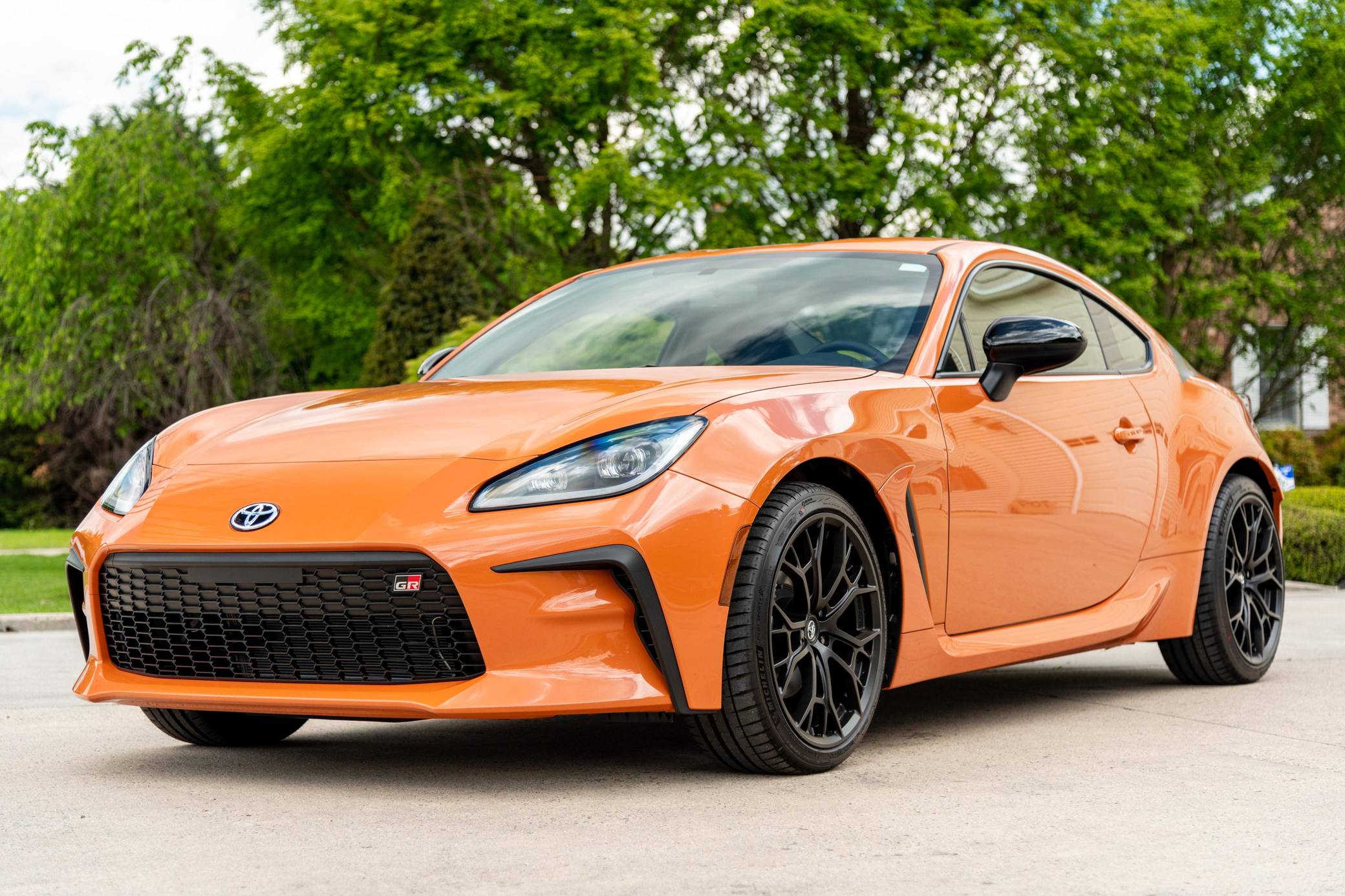
The Toyota GR86 is proof that a sports car does not need a six-figure price tag to retain a large share of its value. iSeeCars’ 2026 sports-car resale study estimates that the GR86 keeps 88.5% of its value after five years, meaning its depreciation is approximately 11.5%.
The analysis puts its average five-year resale value at about $27,880 and identifies it as the best-retaining sports car in its category.
The GR86 follows a different formula from the high-powered luxury cars higher on this list. It is a lightweight, rear-wheel-drive coupe with a naturally aspirated 2.4-liter flat-four engine producing 228 horsepower.
Rather than relying on huge power figures, it emphasizes steering response, balanced handling, and driver involvement. Its relatively accessible entry price also brings it within reach of buyers who want a dedicated sports car without taking on the purchase and maintenance costs of a premium European model.
Scarcity and demand can affect resale prices, but the GR86’s result should not be interpreted as proof that every example will sell for nearly its original price.
Mileage, accident history, modifications, trim, and market conditions all influence an individual car’s value. iSeeCars calculates its estimates from large sets of new and used vehicle transactions rather than predicting the exact selling price of any one car.
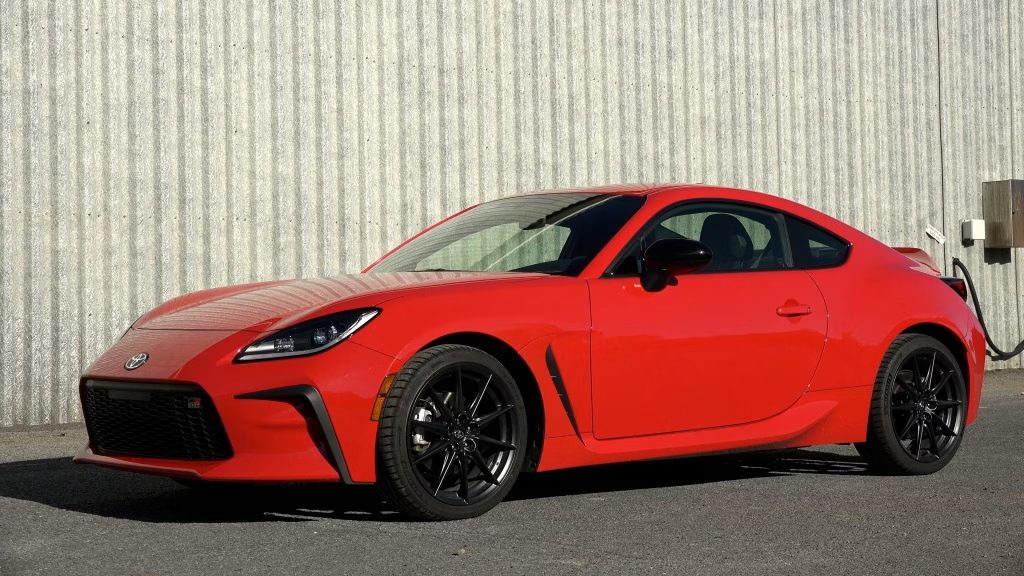
For a buyer who plans to keep a car for five years, the GR86’s figures suggest a relatively small depreciation penalty compared with the broader sports-car category. iSeeCars estimates that sports cars as a group lose 25.8% of their value over the same period.
The GR86’s projected depreciation is therefore less than half that category average, making it an appealing option for drivers who value handling and resale economics in equal measure.
5. Chevrolet Camaro Coupe
The Chevrolet Camaro coupe remains an interesting choice for buyers who want traditional American performance without paying the prices associated with high-end European sports cars.
In iSeeCars’ 2026 sports-car resale-value study, the Camaro coupe retained 81.3% of its value after five years, equivalent to depreciation of approximately 18.7%. The average price of a five-year-old Camaro coupe in the study was about $33,769.
The Camaro’s formula combines a front-mounted engine, rear-wheel drive, and a low-slung coupe body. Depending on the model year, buyers could choose four-cylinder, V6, or V8 power, with performance-oriented SS and ZL1 versions occupying different positions in the lineup.
These variations matter in the used market because engine choice, factory equipment, and performance credentials can affect both buyer demand and asking prices.
Production history adds another consideration. Chevrolet ended sixth-generation Camaro production after the 2024 model year, meaning buyers shopping for a newer example must turn to the used market.
The end of production can influence interest in a discontinued model, but it does not guarantee that every Camaro will appreciate or retain the same percentage of its value. Condition, mileage, accident history, and local demand remain important.
The 81.3% retention figure comes from a category-specific analysis, so it should be treated as an estimate for the Camaro coupe rather than a promise for every trim.
A high-performance version may behave differently from a four-cylinder model, and modifications can either attract a specialist buyer or reduce the car’s appeal to someone seeking factory-original condition.
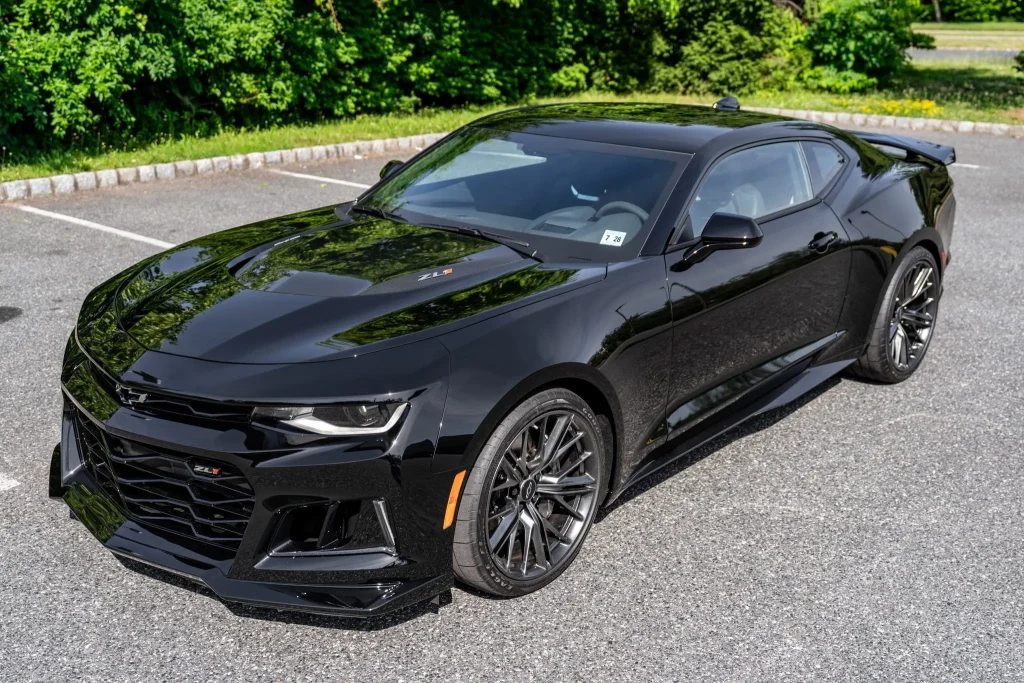
For shoppers, the Camaro’s resale performance makes it worth considering alongside other sports coupes.
A thorough inspection is particularly important for examples that may have been driven hard or modified. Its relatively strong value retention is encouraging, but maintenance costs and the price paid initially still determine whether a particular purchase makes financial sense.
6. Ford Mustang Coupe
The Ford Mustang coupe completes this list with a five-year value-retention figure of 79% in iSeeCars’ 2026 sports-car resale study.
That means the model loses approximately 21% of its value over five years, based on the study’s estimated comparison between original MSRP and used-car prices. It ranked third in the publication’s sports-car resale list, behind the Toyota GR86 and Chevrolet Camaro coupe.
The Mustang benefits from an unusually broad identity in the American market. It can serve as a daily driver, a weekend performance car or a platform for modification, with engine options and trim levels that appeal to different budgets.
The EcoBoost models offer turbocharged four-cylinder power, while GT versions use a V8. Special editions and high-performance models can have their own resale patterns, so the 79% figure should not be assumed to apply equally to every Mustang configuration.
Another advantage is the car’s established enthusiast following. Buyers can find extensive parts support, specialist repair knowledge and a large community interested in different generations of the Mustang.
These factors can help keep a model visible in the used market, although they cannot guarantee that any individual vehicle will hold its price.
A five-year retention rate of 79% is strong compared with many vehicles, but it still represents a meaningful loss in dollar terms. The final result depends on the original transaction price, dealer incentives, mileage, condition and how the car is equipped.
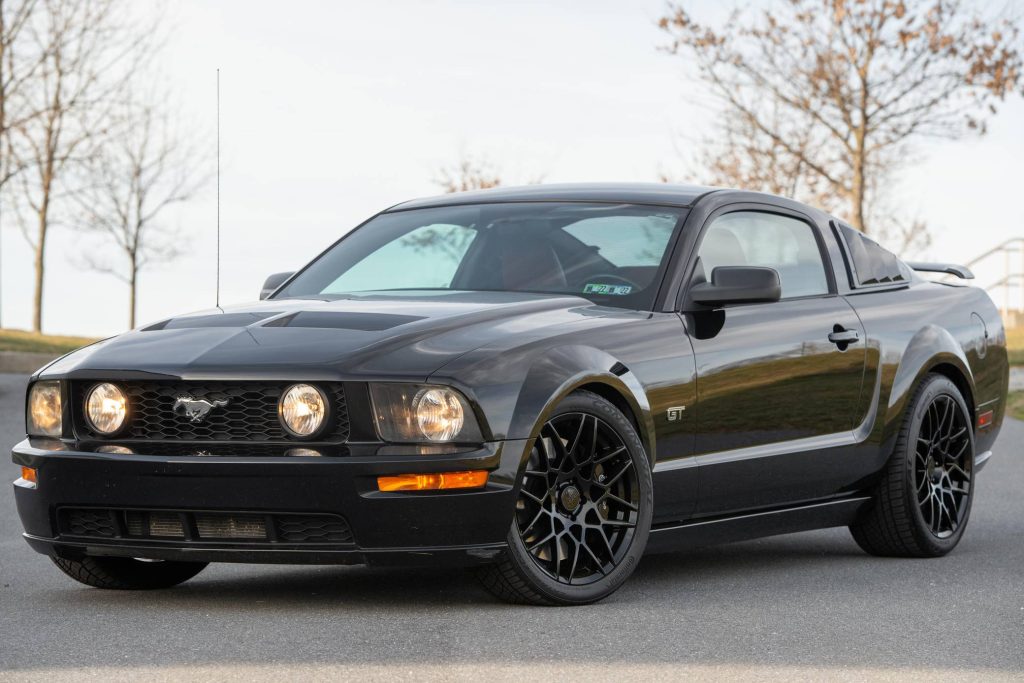
Buyers who paid above sticker price may experience a different financial outcome from those who purchased at a discount.
Anyone shopping for a used Mustang should examine service records, check for accident damage and look carefully for signs of aggressive modifications.
The published data suggest the Mustang can preserve much of its original value, but a well-maintained example bought at a sensible price offers a better chance of achieving that result.