Water crossings can turn an ordinary drive into a serious test of a vehicle’s design. For truck and SUV owners who enjoy trails, outdoor trips, or routes with shallow streams, knowing a vehicle’s rated fording depth can help when choosing the right model. Some vehicles are engineered to handle water that reaches well above the wheel hubs, while others are better suited to modest puddles and wet roads.
Ford and Jeep publish factory water-fording figures for several of their 2026 models, giving buyers useful measurements to compare. These ratings deserve a closer look, especially when choosing between a dedicated off-roader and a compact SUV designed for everyday use.
1. Ford Bronco Raptor
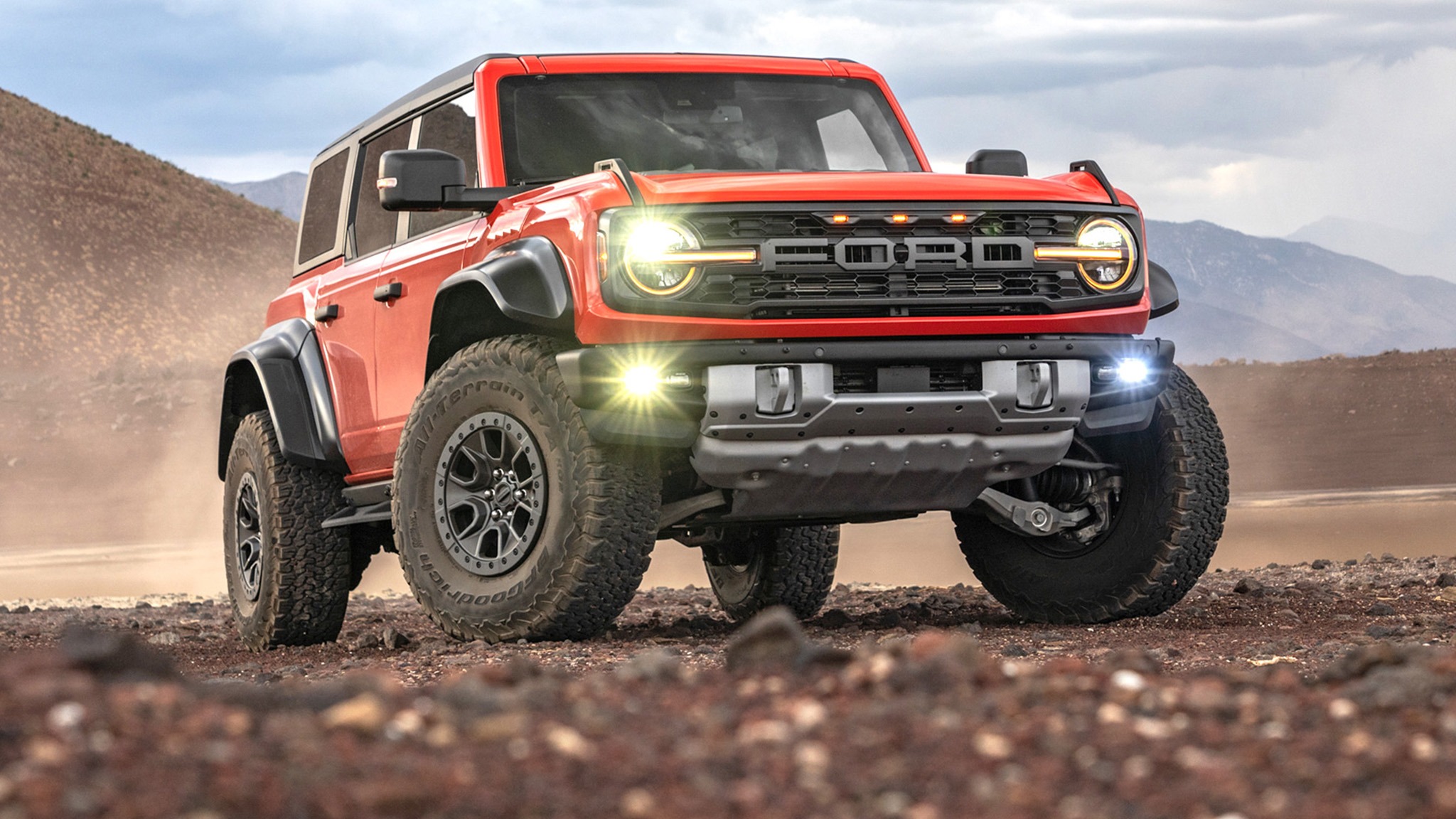
The Ford Bronco Raptor sits at the top of this list with a published water-fording depth of 37.0 inches when equipped with 37-inch tires. That measurement gives this four-door SUV the highest rating among the seven vehicles covered here, making it an appealing option for drivers who prioritize serious off-road capability.
Its design reflects a focus on demanding outdoor driving. Large tires, generous ground clearance, and specialized suspension hardware help the Bronco Raptor tackle rough trails, rocky paths, and uneven surfaces.
Those features also contribute to its usefulness in areas where water may collect across a route. Still, the 37-inch figure should not be treated as permission to enter any body of water that reaches that height.
Water depth, current strength, the condition of the ground beneath the surface, and the speed of the vehicle all affect crossing safety. Even a powerful off-roader can lose traction or suffer mechanical damage when conditions exceed its design limits.
Buyers should also remember that the published figure applies to the specified four-door configuration with 37-inch tires. Equipment, accessories, modifications, and vehicle condition can affect real-world performance. Checking the owner’s manual before attempting a crossing remains essential.
For drivers seeking a factory-rated SUV with an especially high water-fording figure, the Bronco Raptor makes a strong first impression. Its 37-inch rating places it ahead of the other vehicles on this list.
2. Jeep Wrangler
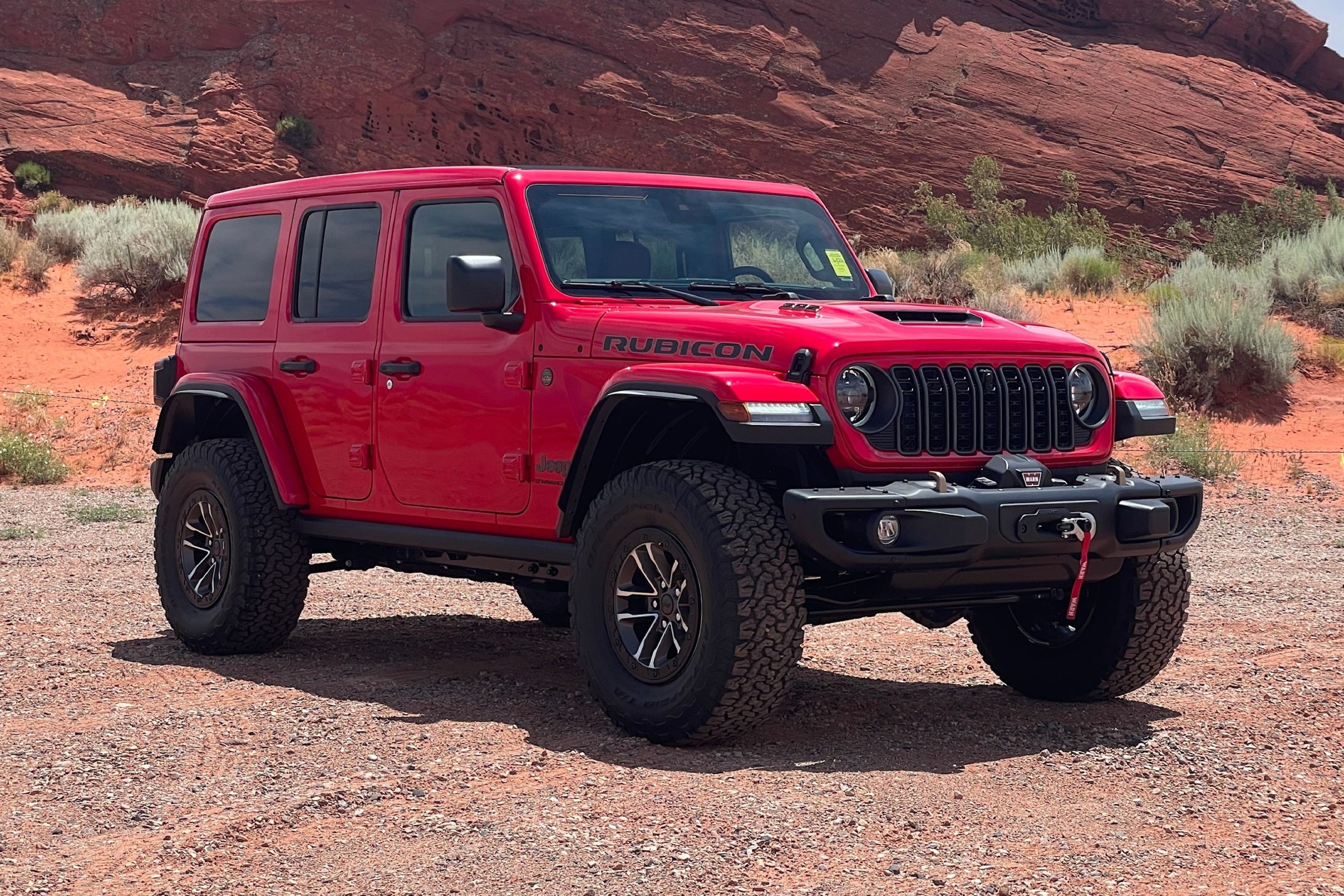
Jeep’s Wrangler earns second place with a published maximum water-fording depth of up to 35 inches. This figure puts the familiar off-road SUV close behind the Bronco Raptor, giving it a strong position among factory-rated vehicles designed for demanding outdoor use.
Part of the Wrangler’s appeal comes from its purpose-built character. Its available four-wheel-drive systems, rugged construction, and off-road-focused equipment make it suitable for drivers who spend time away from paved roads.
Depending on the configuration, features such as protective underbody equipment and specialized tires can help the vehicle cope with rough conditions.
Water crossings require a different set of precautions from climbing rocks or driving across loose gravel. A Wrangler may have the equipment needed for a properly assessed crossing, yet the driver still needs to know the water’s depth and whether the surface below is firm enough to support the vehicle.
A hidden hole can cause trouble even when the water appears shallow near the bank. The phrase “up to 35 inches” also matters. It identifies a maximum rating rather than a guarantee that every Wrangler trim and equipment combination can safely reach that depth.
Buyers should verify the rating for their exact model year and configuration before relying on the published maximum. For shoppers who want an SUV with a long-standing off-road focus, the Wrangler deserves a place near the top of the shortlist.
Its 35-inch rating provides a useful reference point, provided drivers treat it as a factory limit rather than an invitation to take unnecessary risks.
3. Ford Bronco With the Sasquatch Package
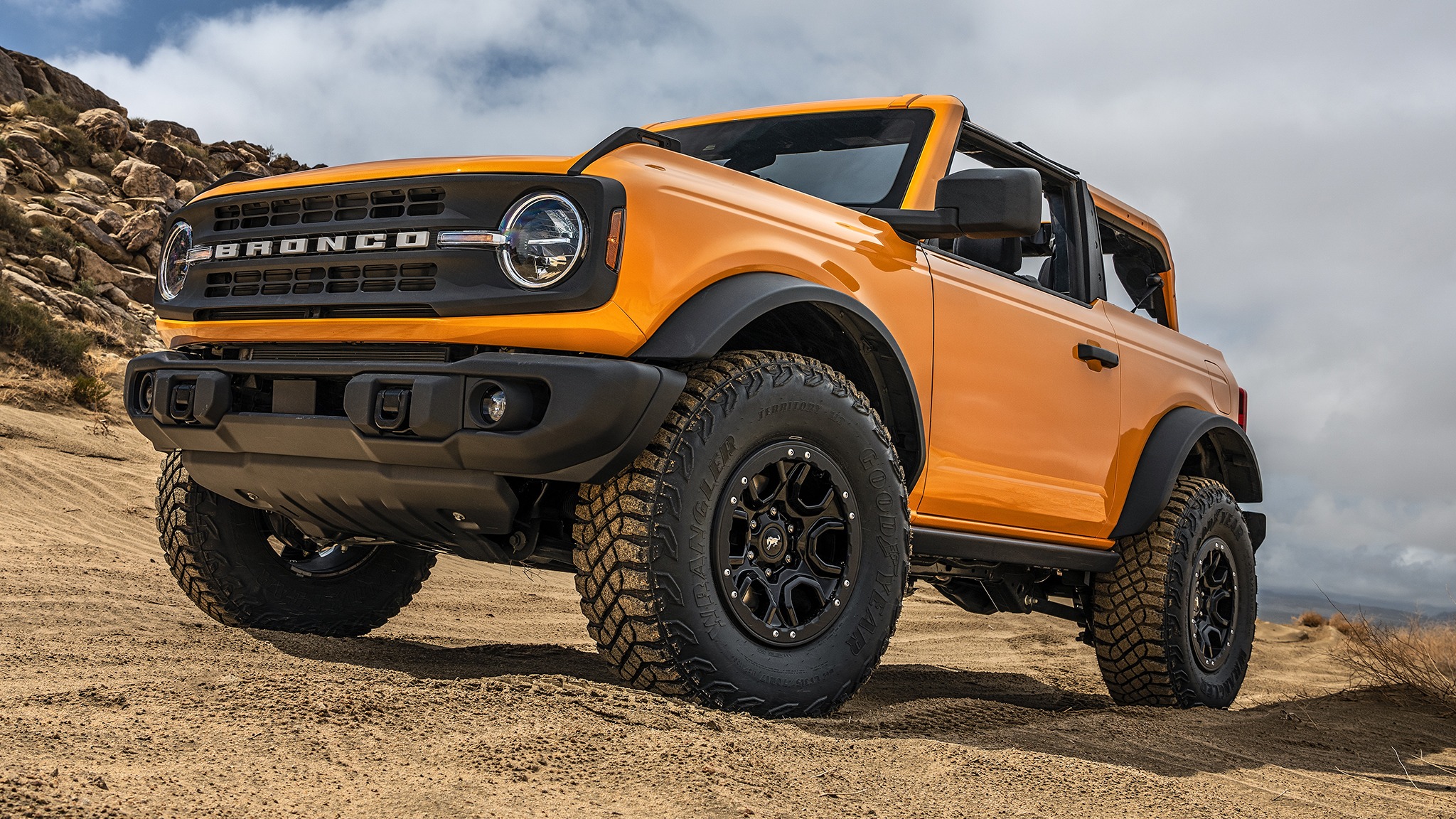
A 33.5-inch water-fording rating gives the Ford Bronco equipped with the Sasquatch Package a strong position in this group. Although it falls short of the Raptor’s 37 inches and the Wrangler’s maximum 35 inches, the standard Bronco configuration with this package still offers a substantial factory-published depth.
The Sasquatch Package is aimed at drivers who want more serious off-road equipment than a basic SUV typically provides. Depending on the model configuration, its hardware includes larger tires and features intended to improve traction and clearance away from paved roads.
These additions can be helpful when a route includes rocks, muddy sections, ruts, or shallow water. For many buyers, the attraction lies in having a vehicle suited to weekend adventures without necessarily choosing the most specialized Bronco model.
The Sasquatch-equipped version offers a middle ground between a conventional daily driver and a high-performance off-road machine.
That said, a higher fording rating does not make water crossings routine or harmless. Water can conceal debris, wash away the road surface, and enter components that are not designed to remain submerged. Drivers should inspect the route whenever possible and avoid moving water that could compromise the vehicle’s stability.
The 33.5-inch figure belongs specifically to the Bronco with the Sasquatch Package, so it should not be applied automatically to every Bronco sold in 2026. Equipment differences matter when comparing factory specifications.
For drivers who want a Bronco with substantial off-road capability but do not need the Raptor’s higher rating, the Sasquatch package offers a compelling combination of rugged equipment and a published 33.5-inch water-fording limit.
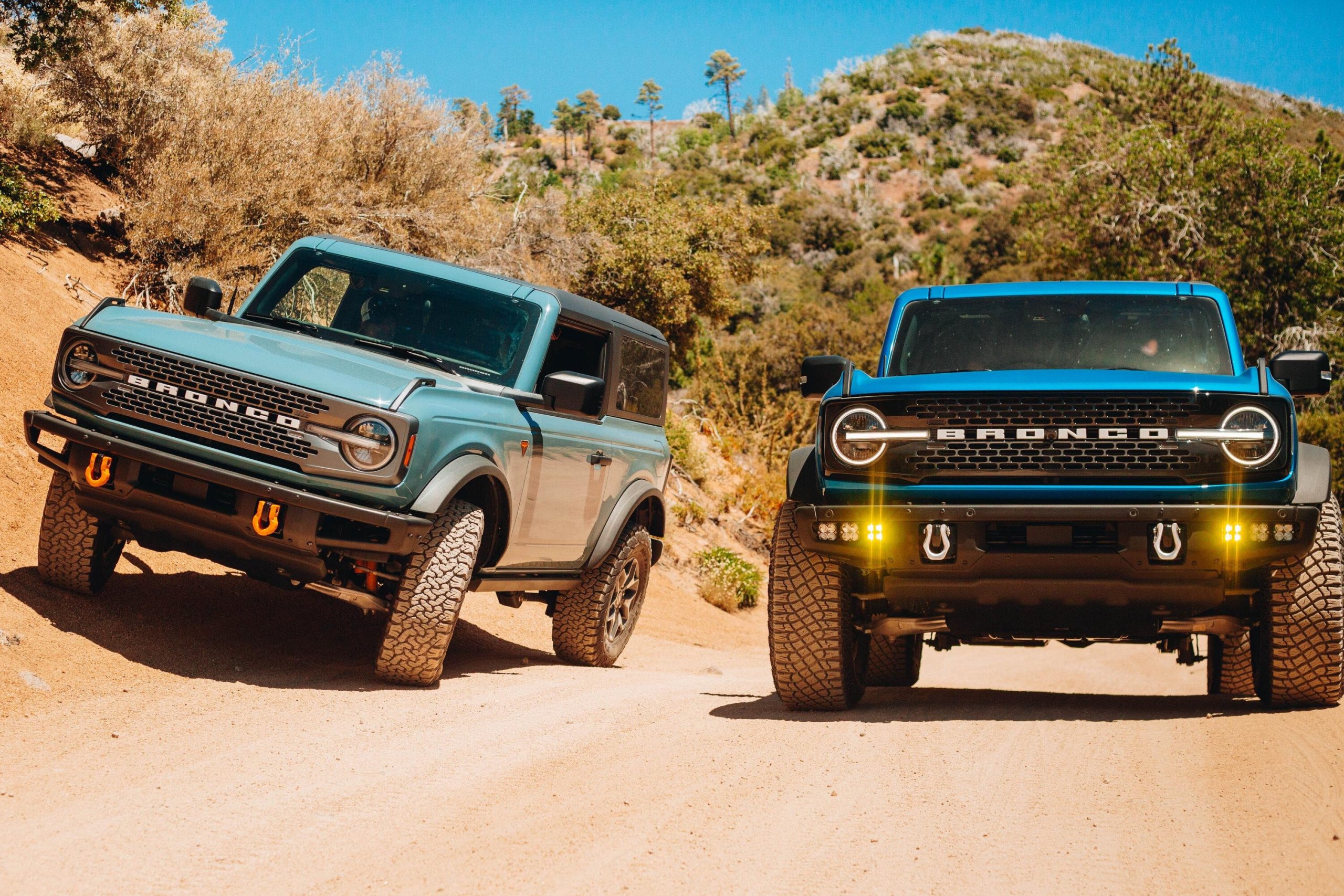
4. Ford Bronco Base, Big Bend, Outer Banks, and Badlands
The Ford Bronco Base, Big Bend, Outer Banks, and Badlands trims are all listed with a water-fording depth of 31.5 inches. This gives buyers several options if water-crossing capability is a priority, allowing them to choose a trim that suits their preferred features, equipment, and driving requirements while retaining the same stated fording depth.
The shared rating is particularly useful because the Bronco range includes versions aimed at different priorities. Some buyers may prefer a simpler configuration, while others want additional comfort, styling features, or equipment intended for trail driving.
The fact that these four trims share the stated depth allows shoppers to consider those differences without assuming that a higher-priced model automatically has a higher fording limit.
However, the matching figures do not mean every trim is identical in every respect. Tires, drivetrain equipment, installed accessories, and other configuration details can affect how a vehicle behaves in demanding conditions.
Buyers should consult the factory specifications for their precise model and read the owner’s manual before attempting water crossings.
It is important to remember that the 31.5-inch rating applies under specific conditions and should not be treated as a guarantee that the Bronco can safely cross water of that depth in every situation. Water levels may change throughout a crossing, while the surface beneath the water could be soft, uneven, or unstable. Drivers should assess the conditions carefully and avoid entering water that could put their vehicle or safety at risk.
For someone comparing several Bronco trims, this shared rating makes the buying process easier. It provides a clear specification to consider alongside comfort, price, daily usability, and the kind of off-road driving the vehicle will be expected to handle.
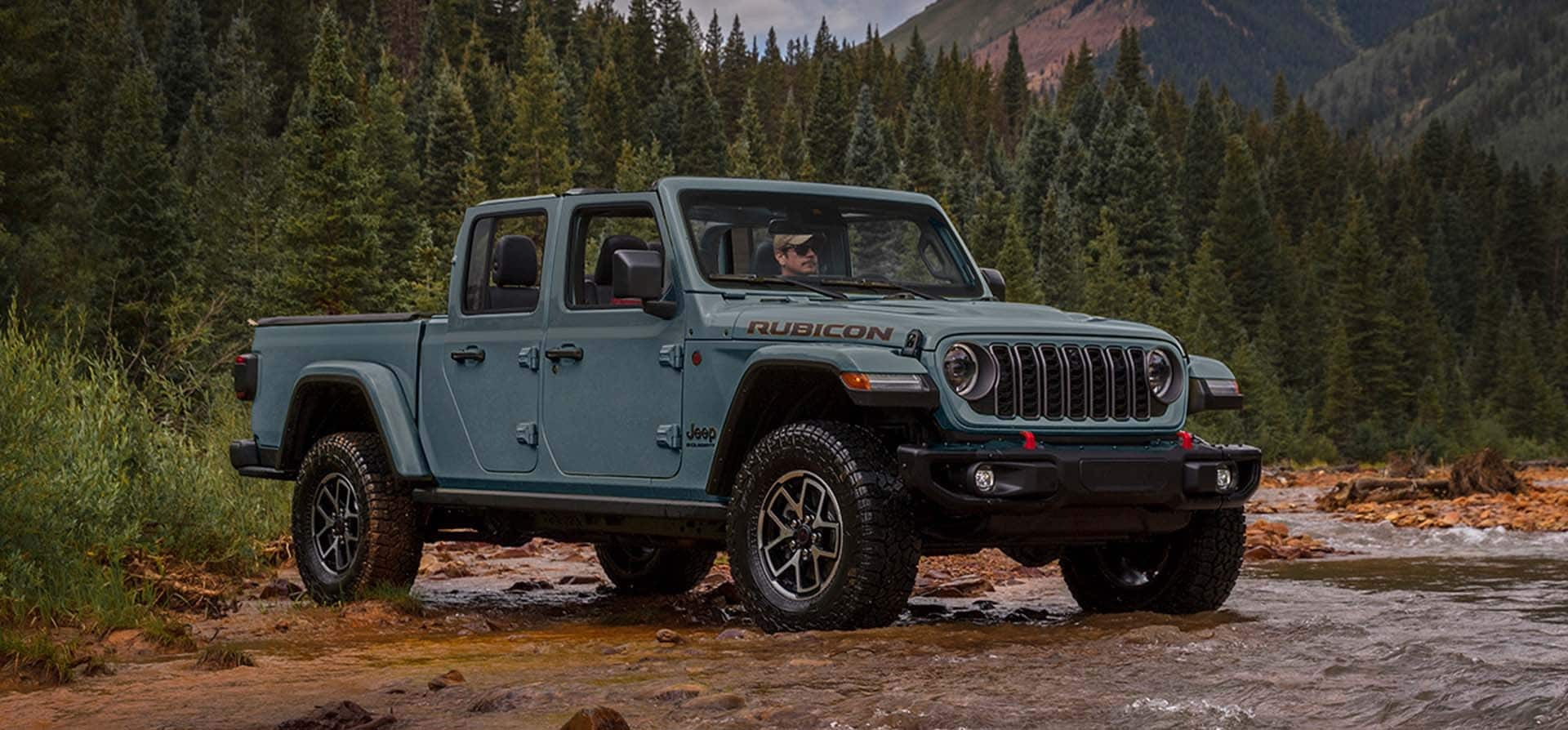
5. Jeep Gladiator
Pickup buyers do not have to give up a strong published water-fording rating to get an open cargo bed. The Jeep Gladiator offers a maximum stated depth of up to 31.5 inches, placing it alongside the standard Bronco trims listed above.
The Gladiator combines the general utility of a pickup with equipment intended for off-road use. Its cargo bed provides space for tools, camping supplies, outdoor equipment, and other items that may be awkward to carry in an enclosed SUV.
For people who use one vehicle for work, recreation, and everyday travel, that arrangement can be attractive. Its off-road-focused configurations may also appeal to drivers who regularly encounter rough tracks or remote access roads.
Yet the truck’s pickup design introduces practical considerations when driving through water. Cargo should be secured, loose items should be protected from splashes, and the driver needs to consider how added weight affects handling.
A 31.5-inch rating does not establish that the entire truck can remain submerged to that level without risk. Water may reach vulnerable electrical connections, the intake system, or other components before a driver recognizes a problem. A strong current can also make even a shallow crossing unsafe.
The stated maximum applies to qualifying configurations, so anyone shopping for a Gladiator should check the specification associated with the exact model and equipment package.
For drivers who prefer a pickup over an SUV, the Gladiator brings useful cargo capacity together with a published water-fording figure that compares favorably with several off-road vehicles.
Its rating is worth considering, but safe route assessment remains just as important as the number on the specification sheet.
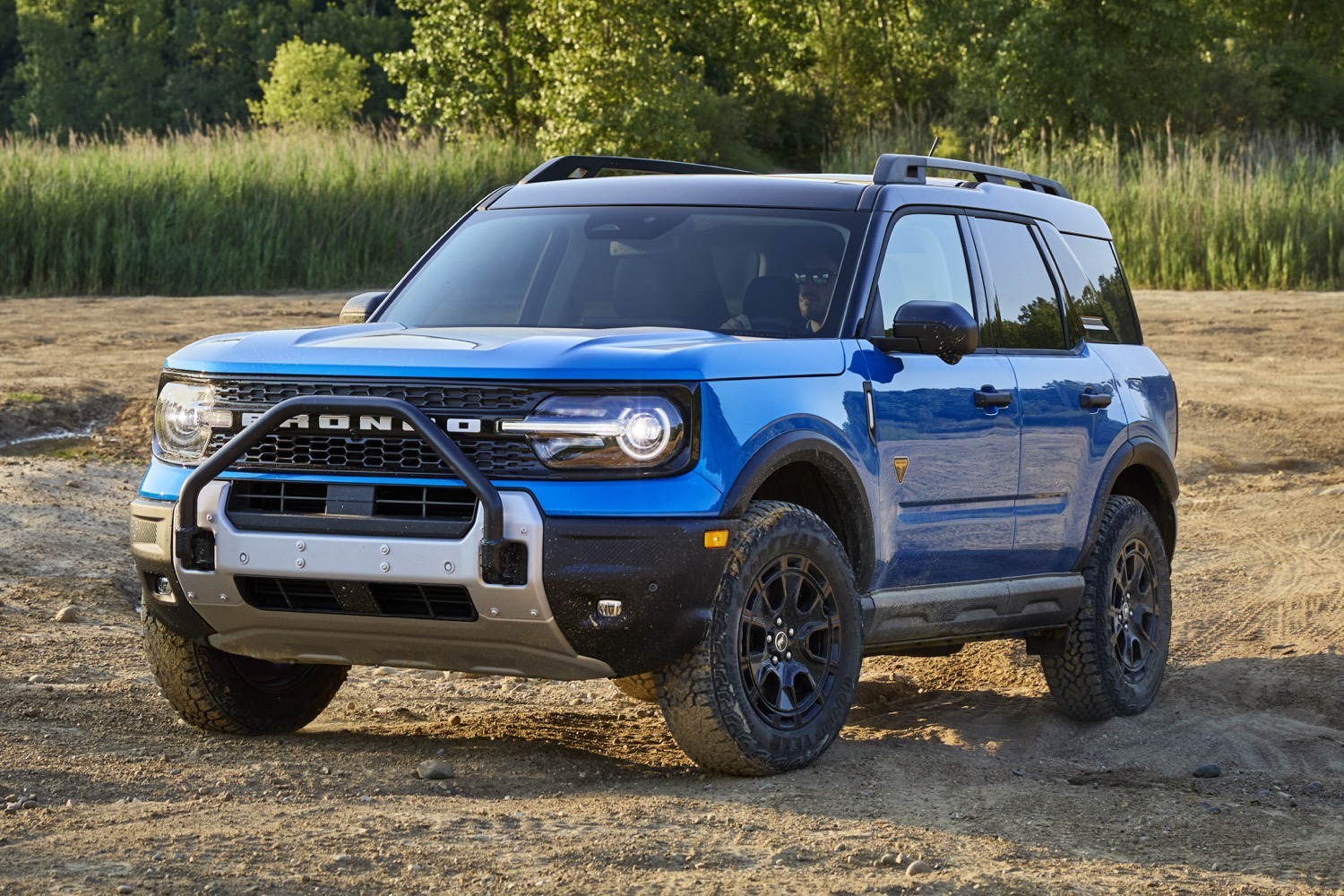
6. Ford Bronco Sport Badlands
The Ford Bronco Sport Badlands has a published water-fording depth of 23.6 inches. That is considerably lower than the ratings of the larger Bronco models, yet it still gives the compact SUV a stated measurement for buyers who want to understand its capabilities beyond ordinary paved-road driving.
The Bronco Sport occupies a different place in Ford’s lineup from the full-size Bronco. Its smaller body and everyday-friendly design make it suitable for people who want a practical vehicle for commuting, errands, road trips, and occasional outdoor adventures.
The Badlands trim adds an off-road emphasis for drivers who expect to travel along less-maintained routes. A 23.6-inch rating can be helpful when comparing the Badlands with other compact SUVs, particularly when factory-published water-fording information is available for only a limited number of manufacturers.
Still, buyers should avoid assuming that a stated rating guarantees protection against every possible water-related problem. The conditions at the crossing matter just as much as the vehicle’s equipment.
Rain can change water depth rapidly, while mud and loose gravel can reduce traction. A crossing that looks manageable from the driver’s seat may also hide a damaged road surface or an unexpected drop.
It is also worth distinguishing between water-fording capability and general water resistance. A vehicle may handle wet roads and puddles with ease without being suitable for deeper water.
For drivers who prefer a smaller SUV with some off-road ability, the Bronco Sport Badlands offers a useful balance of everyday practicality and a published 23.6-inch maximum.
That specification provides a starting point for comparison, not a substitute for careful judgment.
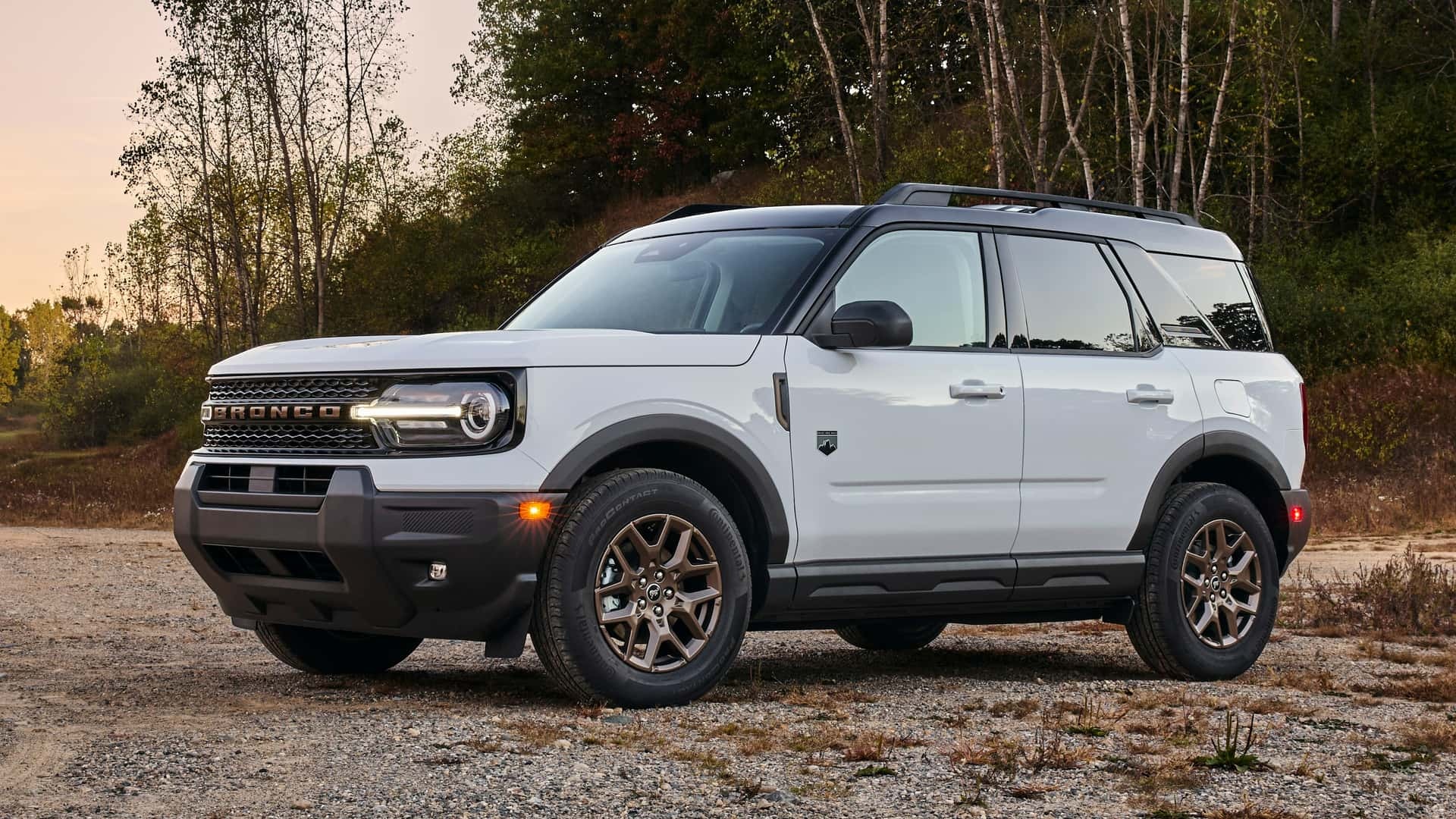
7. Ford Bronco Sport With the 1.5-Liter Engine and Standard Tires
Rounding out the list is the Ford Bronco Sport equipped with the 1.5-liter engine and standard tires, which carries a published water-fording depth of 17.7 inches.
It has the lowest rating among these seven configurations, but that does not make it an unsuitable choice for drivers whose needs center on everyday transportation and occasional outdoor travel.
The Bronco Sport’s compact dimensions and SUV layout can make it convenient for urban streets, parking lots, family errands, and longer highway trips.
Its higher seating position and available all-wheel-drive equipment may also appeal to drivers who occasionally encounter unpaved roads or wet conditions.
The 17.7-inch specification is useful because it establishes a stated limit for this particular configuration. It also demonstrates why buyers should check the engine and tire combination rather than relying on a model name alone.
Two vehicles that look similar can carry different published capabilities. Drivers should be especially cautious about treating the rating as a target.
Water can rise unexpectedly, and the depth at the edge of a puddle may be much less than the depth near its center. Even water below the stated maximum can cause damage if it enters an intake or reaches vulnerable components.
Before crossing any flooded road, assess whether an alternative route is available. If the depth is uncertain, the current is strong, or the road surface cannot be seen or assessed safely, turning around is the wiser decision.
For buyers considering the entry-level Bronco Sport configuration, the 17.7-inch figure provides a clear reference for comparing it with the Badlands and the larger Bronco family.
It is best viewed as a limit to respect, not a promise that every crossing below that depth will be safe.