Buying a car is only the first meeting. The real relationship begins in the service lane. That is where owners decide whether they will stay loyal. The J.D. Power 2026 U.S. Customer Service Index looked at exactly this. It surveyed 51,228 owners of one- to three-year-old vehicles during 2025. Scores run on a 1,000-point scale.
The industry average rose three points to 868. Premium brands jumped eight points to 886. Mass-market brands rose three points to 865. Scores matter because they predict behaviour. When satisfaction reaches 950, about 86% of mass-market owners say they will definitely return for paid service. For premium owners, the figure is 88%.
Yet most dealers still miss the basics. Only 26% of customers experienced nine or ten of the top service practices. Photo and video updates reach just 26% of mass-market owners.
This list covers eight brands that stood out. They are Porsche, Infiniti, Lexus, Cadillac, MINI, Subaru, Mazda, and Buick. Each earned its place through published scores and clear patterns in the data.
1. Porsche
Porsche took first place with a score of 915. It also won the premium segment for the second year running. Last year it scored 912, so it improved by three points. The brand has now finished in the top three for nine consecutive years. That is a long streak. It points to habits, not luck.
Porsche also topped all five survey categories among premium brands. Those are service quality, vehicle pick-up, service advisor, service facility and service initiation. Winning every category is rare.
The network is large for a sports car maker. More than 200 independently owned Porsche Centers serve US owners. Keeping that many owners happy takes consistent training and standards.
In the premium car segment, Porsche tied Infiniti at 921. In premium SUVs, it came second with 910. So the strength is not limited to the 911. Owners of premium cars spend more time at the dealer. The study found premium visits average about 2.46 hours. Porsche wins in spite of that long wait.
Part of the answer is the advisor relationship. J.D. Power found advisor scores reach 928 in the premium segment when photo or video evidence is shared. Premium owners expect that level of transparency.
Porsche owners also tend to be enthusiasts. They notice details and ask sharp questions. Advisors who can answer well build trust quickly. The lesson is simple. Porsche treats service as part of the product. Owners are paying for the whole experience, not only the car.
2. Infiniti
Infiniti was the big surprise of the 2026 study. It scored 912 and finished second among premium brands. It sat just three points behind Porsche. The jump is notable because Infiniti has not always ranked this high.
In the premium SUV segment, it finished fifth the year before. This year it won that segment outright. Its SUV score was 911. Porsche followed at 910, and Lexus took third with 897.
A one-point margin is thin, but it still counts as a win. In the premium car segment, Infiniti tied Porsche at 921. Lexus trailed by 11 points. That is a clear gap.
The premium SUV average was 884. Infiniti beat that by 27 points. Such a margin does not come from small tweaks. Infiniti is a smaller brand in the US market. A smaller network can be easier to manage. Fewer dealers means standards can be enforced more tightly.
Smaller volume may also help at the service desk. Advisors can give each owner more attention. Owners feel recognised instead of rushed. Still, a rise from fifth to first points to real effort.
Dealers appear to have focused on the basics. Those include clear communication, honest estimates and finishing work on time. Infiniti shows that a brand can recover quickly. Service satisfaction is not fixed by reputation. It can be rebuilt through daily execution.
3. Lexus
Lexus scored 900 and ranked third among premium brands. It was the only brand outside the top two to reach that mark. Its reputation for care is well earned.
Lexus has long built its image on hospitality. Customers expect a calm, polished visit. The data suggests many of them get it. In the premium car segment, Lexus scored 910 and took third.
In premium SUVs, it scored 897 and also took third. That consistency stands out. Its SUV score slipped slightly from the year before. In 2025, Lexus placed second in that segment with 902. A small drop did not hurt its standing.
Notably, Lexus is famous for reliability. Reliable cars should mean fewer repair visits. Yet the brand still ranks highly for service, which suggests the experience itself is strong.
Many owners come in for routine maintenance. That visit is the main chance to impress. Lexus dealers appear to make it easy. Convenience matters more than ever. J.D. Power notes that few dealers offer mobile or valet service. Those options can set a brand apart.
Lexus is well placed to lead here. Owners already expect loaner cars and comfortable lounges. Adding pick-up and drop-off would be a natural step. The brand also proves that reliability and service work together. A trusted car makes owners relaxed. A good dealer visit then confirms that trust.
4. Cadillac
Cadillac scored 891 in the 2026 study. It tied with Lincoln and finished above the premium average of 886. That is a solid result for an American luxury brand.
For years, domestic luxury brands were seen as weaker on service. This score challenges that view. Cadillac now sits comfortably above the segment norm.
The five-point margin may look small. But premium averages are climbing quickly. Rising eight points in one year makes the average harder to beat.
Cadillac is also in the middle of a major shift. It has been expanding its electric lineup. Dealers must learn new products and new customer questions.
Doing that while holding a strong score is a real achievement. Electric vehicles often need different service skills. Staff training matters more than ever.
The study also found that owners want transparency. They want to see what is wrong and why. Photo and video updates are a simple tool for that.
Only 44% of premium customers received such updates. Dealers who do this routinely gain an edge. Cadillac’s score hints that many of its dealers are starting to listen.
Cadillac also benefits from its owner profile. Many buyers are loyal to General Motors. They arrive with some goodwill and expect it to be rewarded. The risk is complacency. A score near the average can slip fast. But a brand that keeps improving can climb into the top tier.
5. MINI
MINI ranked highest among mass-market brands with a score of 887. It narrowly beat Subaru at 886. A single point separated first from second. The brand has a distinct personality. Owners often choose a MINI for style and fun. They expect the dealer visit to feel special too.
MINI sits in an interesting spot. It is sold at mass-market prices but carries premium ideas. That mix may raise owner expectations. Dealers appear to meet those expectations. The mass-market average was 865. MINI beat it by 22 points.
Smaller networks may help again. MINI does not have thousands of dealers. That makes consistent training easier to deliver. The brand also draws a loyal community. Many owners have had several MINIs. Repeat buyers tend to be more forgiving, but also more demanding about small details.
The study showed what drives mass-market scores up. Photo and video evidence lifted advisor scores to 907. Meeting top service practices matters even more.
When all ten practices are met, average satisfaction reaches 979. When only three are met, it falls to 632. That is a huge gap. MINI’s result suggests its dealers lean toward the higher end of that range.
They do the small things well. Owners notice and reward it. For a mass-market brand, topping the list is a real statement. It shows that service quality is not only a luxury benefit.
6. Subaru
Subaru scored 886 and finished second among mass-market brands. It also won the SUV and minivan segment with 887. Nissan followed at 885, so the race was tight.
Subaru also placed second in the mass-market car segment with 881. Mazda led that group at 884. Strength in both categories is impressive. There is a twist. Subaru topped the mass-market ranking in 2025 with 896. This year it fell ten points. Even so, it stayed near the top.
That drop is a useful reminder. Service satisfaction can move quickly. A brand cannot rely on past results. Subaru owners are famously loyal. Many drive their cars for years and return to the same dealer. That relationship rewards good service.
The brand’s customers often live in places where cars matter. Weather, terrain and long trips make reliability important. Dealers there know owners depend on their vehicles.
Loyal owners also notice slips. A longer wait or a missed promise can sting more. This may explain part of the year-over-year decline. Even so, 886 is well above the 865 mass-market average. Subaru still leads most of its competitors.
Few brands would call that a bad year. Subaru’s challenge is clear. It must protect a strong base while adding convenience. Mobile service and clear updates could help it climb back.
7. Mazda
Mazda scored 884 and ranked highest in the mass-market car segment. Subaru followed at 881, and Chevrolet took third with 873. Mazda’s lead over Chevrolet was 11 points.
Mazda has long pitched itself as a premium-feeling mainstream brand. Its design and interiors aim higher than the price suggests. The service experience seems to follow the same idea.
Car segments are shrinking as buyers move to SUVs. That makes leadership in cars a quieter win. But it still reflects real strength. Mazda’s dealer network is smaller than those of the largest rivals. That can make culture easier to shape. Dealers often know their customers by name.
Owners who choose Mazda are often enthusiasts. They care about driving feel and build quality. They tend to expect careful, respectful handling. Service speed is a major issue for the industry. Mass-market owners spend about 1.61 hours at the dealer. Any brand that trims that time gains goodwill.
J.D. Power also found that dealer maintenance visits take longer than comparable aftermarket visits. Independent shops are a real threat. Mazda dealers must justify the trip.
Their score suggests they are doing so. Quality work, friendly advisors and clean facilities all help. Together they keep owners coming back. Mazda’s result shows that smaller brands can win on service. It does not take the biggest network. It takes steady attention to the customer.
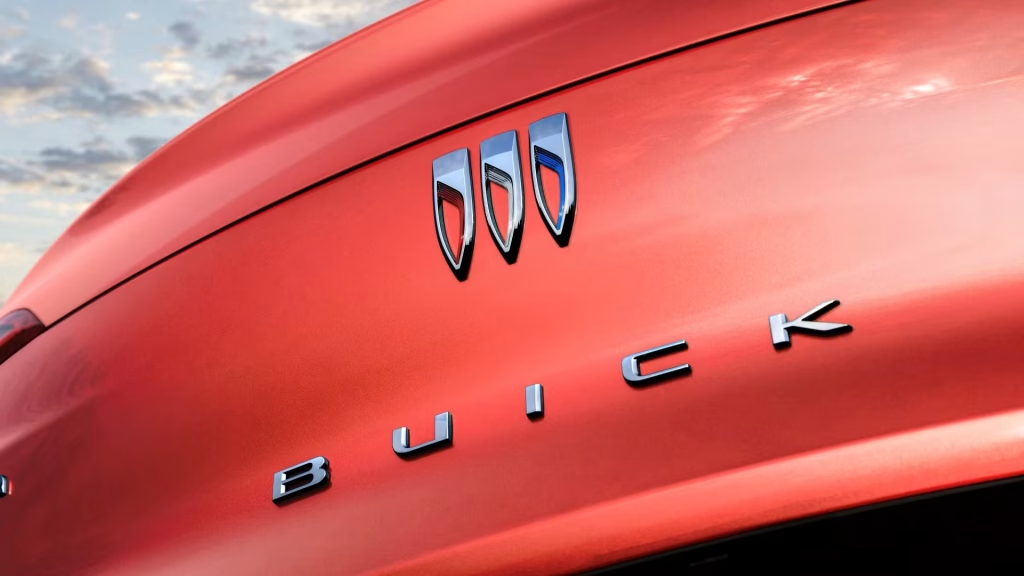
8. Buick
Buick scored 882 and ranked third among mass-market brands. It led all General Motors brands in the study. That is a strong showing inside a large company.
Buick also placed third in the SUV and minivan segment. It beat the segment average of 871 by 11 points. The margin shows consistency across its lineup.
The result is notable because Buick is a mass-market brand with premium touches. Its buyers often skew older and value comfort. They want a calm, respectful service visit.
Buick’s dealers seem to deliver that. Advisors appear to explain work clearly. Owners report feeling informed and cared for. The study stresses that basics matter most.
Keeping customers informed and explaining the work done makes a big difference. Buick seems to follow that rule. Photo and video inspection reports are rising in importance. Customers increasingly want proof of what was found. Buick advisors appear to be adapting.
Buick’s score also reflects network size. It has fewer dealers than Chevrolet. Many are combined with other GM brands, which can bring shared service talent.
Still, being the top GM brand is not a small feat. Chevrolet scored lower in the car segment. Buick’s edge shows that brand focus counts. The takeaway is encouraging. A quiet, steady brand can outperform louder rivals. Good service rarely makes headlines, but owners remember it.