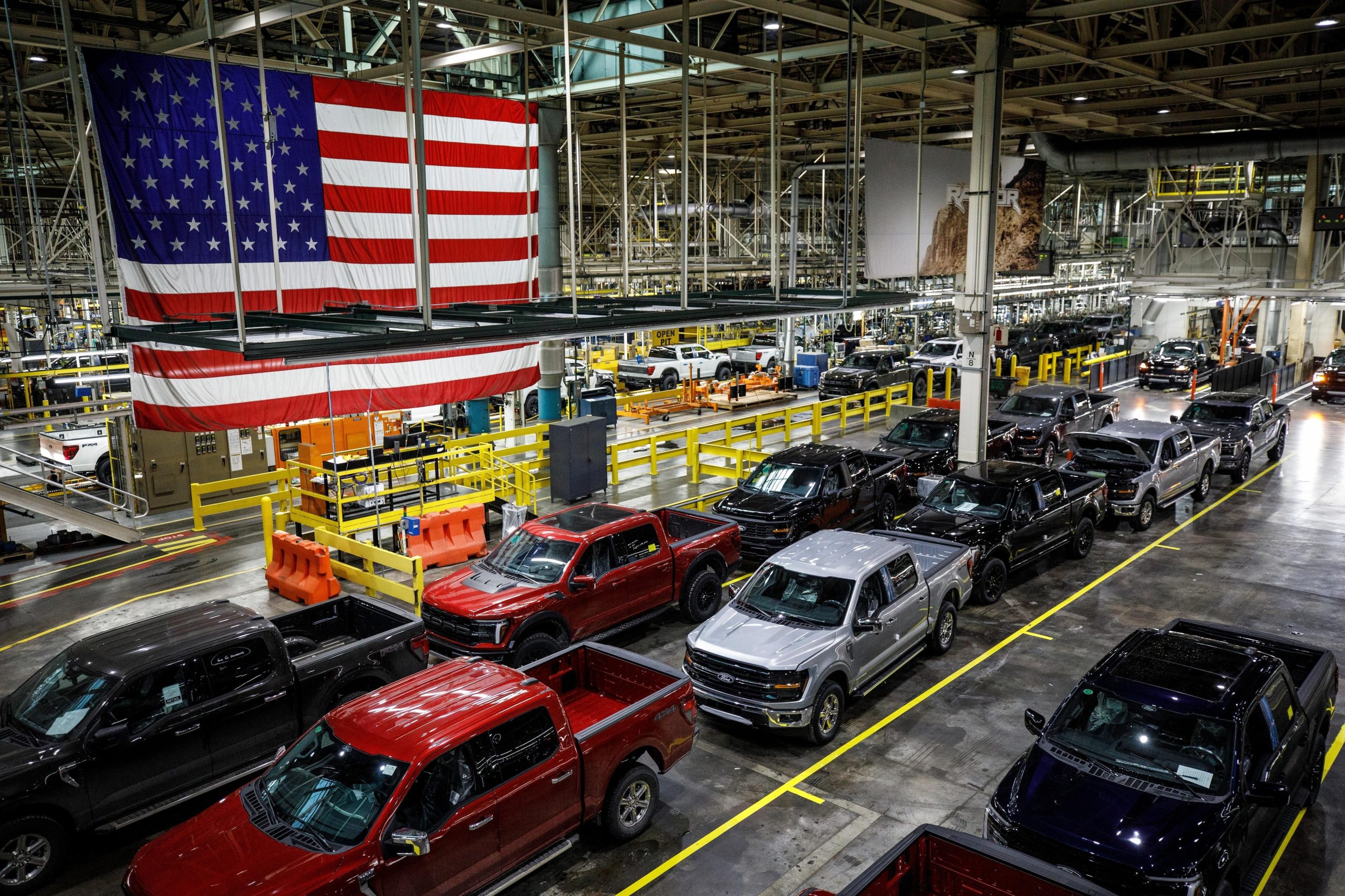
Buying American is rarely a simple choice. A badge can say Detroit while the build sheet says Mexico. A badge can say Tokyo while the truck rolls out of Kentucky.
The 2026 Made in America Auto Index tries to cut through that noise. Researchers score each model on where it is assembled. They also weigh where the engine and transmission come from. Parts content, research and development, and profit location all count.
That wider lens changes the ranking. Some Detroit names slip. Some foreign names climb. One California company sits far above the rest. This list ranks nine brands by their model-line averages. Tesla leads at 83.4. Volkswagen trails at 37.6. The gap between them is 45.8 points.
Each entry below explains the number. It names the plants behind it. It also shows what pulls each brand up or down. Read the scores as a measure of domestic economic footprint. They do not measure quality, price, or value. A low score does not mean a bad car. A high score does not mean a perfect one.
1. Tesla: 83.4
Tesla leads by a wide margin. Its average sits nearly 15 points above the next brand. The reason is simple. Almost every Tesla sold in America is built in America.
The Fremont, California plant is the anchor. Tesla bought the former NUMMI factory in 2010. Today it builds the Model S, Model X, Model 3, and Model Y. That is a large share of the lineup under one roof.
Austin adds the second pillar. The Texas Gigafactory builds the Model Y and the Cybertruck. It also serves as the company’s headquarters. That matters because the index counts where profits and management sit.
The battery story lifts the score further. Tesla’s Nevada Gigafactory makes battery packs and drive units. Those are the most expensive parts of an electric vehicle. Keeping them in the US raises domestic parts content sharply.
Powertrain scoring is where rivals usually lose points. Many brands import engines and transmissions. Tesla has neither in the traditional sense. Its electric drive units are made in-state, so that category stays strong.
Research and development also stays close to home. Engineering and design work are centered in California and Texas. Few rivals concentrate this much of that work domestically.
Still, the score is not perfect. Some battery cells and raw materials come from abroad. Suppliers in Asia remain part of the chain. That keeps Tesla below a flawless mark.
The narrow spread inside the lineup is notable. Most brands see wide swings from model to model. Tesla’s models cluster tightly. A buyer gets a similar domestic footprint whichever one they pick.
The takeaway is clear. Vertical integration pays off in this index. Building cars, packs, and drive units in one country lifts every category at once. Tesla’s 83.4 is the product of that strategy.
2. Honda: 68.9
Honda is the surprise of the top tier. A Japanese brand outscores every Detroit name on this list. It also beats Jeep by 1.7 points. The story starts in Ohio. Honda has built vehicles there for more than four decades. The Marysville and East Liberty plants anchor its US output. Nearby Anna produces engines.
Alabama adds more weight. The Lincoln plant builds the Odyssey, Pilot, Passport, and Ridgeline. That is a heavy share of Honda’s larger vehicles. Those models tend to score well because their parts content is high.
Indiana contributes too. The Greensburg plant builds the Civic and CR-V. Those are two of the best-selling nameplates in the country. High volume at US plants lifts the brand average.
Honda also builds engines and transmissions domestically. That is where many importers fall short. Owning that step raises scores on the most heavily weighted parts.
Research is another factor. Honda runs major development work in Ohio and California. That keeps engineering credit inside the country. There is a limit to the score.
Some Honda and Acura models are still imported. Smaller cars and some hybrids come from Japan, Canada, or Mexico. Those models drag the average below the leaders.
Profit location also holds Honda back. The parent company is Japanese. The index counts where corporate profit lands. That costs every foreign brand some points.
The lesson is about commitment. Honda has invested in US plants for decades. That long game shows up in the 2026 numbers. At 68.9, it proves a foreign badge can carry a strongly American build.
3. Jeep: 67.2
Jeep is the highest-ranked Detroit-linked brand. It still lands third. The score is strong, but it hides a split. Ohio drives much of that strength. The Toledo plant builds the Wrangler and Gladiator. These are the brand’s icons. They are also among the most American-built vehicles on sale.
Michigan adds the Grand Cherokee. It comes from the Detroit assembly plant on Jefferson Avenue. Large SUVs like this carry heavy US parts content. That helps the average.
The Wagoneer family also adds weight. Those full-size SUVs are built in Michigan. They sit at the upper end of the brand’s pricing. They also lean on domestic powertrains.
The weak spot is the small end of the lineup. Jeep’s compact models have been assembled outside the US. The Compass has been built in Mexico. The Renegade has come from Italy. Those models pull the brand average down.
Without them, Jeep would rank higher. The best Jeeps score well above the brand’s 67.2. The worst land far below it. That spread defines the entry.
Corporate structure also plays a role. Jeep belongs to Stellantis, a multinational group. Profit and management are spread across Europe and North America. The index penalizes that split.
Engines help the score. Jeep’s V6 and V8 units have been built in US plants. Domestic powertrains lift the parts category. They offset some of the imports elsewhere.
The takeaway is that Jeep’s identity matches its numbers. The off-road icons are rooted in Ohio and Michigan. The compact crossovers are not. A buyer who wants the most American option should pick a Wrangler, Gladiator, or Grand Cherokee.
4. Ford: 61.7
Ford is the surprise of the middle. The Dearborn automaker is a symbol of American industry. Yet it lands fourth, behind Honda and Jeep. Trucks carry the brand. The F-150 is built in Dearborn and Kansas City. It is the best-selling pickup in the country. Its domestic content is high, and so is its sales volume.
Kentucky adds more weight. The Kentucky Truck Plant builds the Expedition. It also builds the Lincoln Navigator. These large SUVs boost the average.
The Mustang helps too. It is built in Flat Rock, Michigan. The Bronco comes from the Michigan Assembly Plant in Wayne. Both carry strong domestic credentials.
The drag comes from Mexico. The Maverick compact pickup is built in Hermosillo. The Mustang Mach-E is built in Cuautitlán. Both are popular. Both pull the average down.
Imports play a part as well. Ford has sold models built in other countries. Those vehicles score low on assembly and parts. They widen the gap between its best and worst.
Powertrain sourcing is mixed. Ford builds many engines in Ohio, Michigan, and Kentucky. But it also imports some units. That split shows up in the final number.
Ford’s headquarters and profits are fully domestic. That gives it an edge over foreign brands. Even so, 61.7 is lower than many buyers would guess.
The lesson is that a national badge guarantees little. What counts is the assembly line for each model. Ford’s trucks are very American. Its newer small and electric models are less so.
5. Chevrolet: 58.3
Chevrolet is the second Detroit brand in the middle of the pack. It lands 3.4 points behind Ford. The gap comes down to where specific models are built. The Corvette is the standout. It is assembled in Bowling Green, Kentucky. It has been built there since 1981. It is as American as a car can be.
Silverado pickups add strength. They are built in Fort Wayne, Indiana, and Flint, Michigan. Those plants anchor the brand’s domestic base. Large trucks carry heavy US parts content.
The electric Silverado also helps. It is built at Factory Zero in Detroit. That plant gives GM a domestic EV footprint. Battery sourcing adds some complexity, but assembly stays local.
Then comes the drag. Some Chevrolet crossovers are built abroad. The Equinox and Blazer have come from Mexico. The Trax has come from South Korea. Those three are high-volume models.
Volume matters here. A brand average reflects its whole lineup. High-selling imports drag it down more than rare domestic sports cars lift it. That is why Chevrolet trails Ford.
Sedans have also faded. The Malibu and Camaro were once built in Kansas and Michigan. Both have ended production. Their exit removed models that scored well.
GM’s profits and headquarters are domestic. That helps the corporate category. But parts sourcing is global. Many components come from Mexico, Canada, and Asia.
The takeaway is a split personality. Trucks and the Corvette are deeply American. Crossovers and small cars are not. At 58.3, Chevrolet sits right between those two worlds.
6. Toyota: 54.8
Toyota sits just below the halfway mark. It is the second Japanese brand on the list. It trails Honda by 14.1 points. Kentucky is its largest US base. The Georgetown plant builds the Camry and RAV4. It also builds the Lexus ES. These are three of its most popular models.
Indiana adds the Highlander and Grand Highlander. Those three-row SUVs carry high domestic content. The Princeton plant also builds the Sequoia. That brings more large vehicles into the US column.
Texas supports the truck side. The San Antonio plant builds the Tundra. It also builds some Tacoma volume. Pickups usually score well, so they help the average.
Alabama, Tennessee, and West Virginia build engines and transmissions. That domestic powertrain work is a real strength. It lifts the parts category above many importers.
The weakness is its import-heavy lineup. Many Toyota models still arrive from Japan. Others come from Canada and Mexico. The Prius and several Lexus models are examples.
Toyota’s global structure also costs points. Profits go back to Japan. Much R&D happens abroad as well. The index weighs both.
Compared with Honda, the gap is notable. Honda builds more of its volume in the US. Toyota imports a larger share. That is the main reason for the 14.1-point difference.
The takeaway is a brand of two halves. Its US-built trucks and SUVs rank among the stronger domestic choices. Its imported hybrids and luxury cars do not. A buyer should look at each model rather than the badge.
7. Nissan: 49.1
Nissan lands below 50. Fewer than half its average points come from American content. It sits 5.7 points behind Toyota. Tennessee is its main base. The Smyrna plant is one of the largest in North America. It builds the Rogue and Pathfinder. It also builds the Infiniti QX60.
Mississippi adds more. The Canton plant builds the Frontier pickup. It has also built other crossovers and vans. The plant has long been central to Nissan’s US footprint.
Tennessee also supports powertrain work. The Decherd plant produces engines. That helps the parts category. It keeps some key components in-country.
The Rogue is the brand’s volume leader. Its US assembly helps the average. Without it, the score would sit even lower. The drag is an import-heavy lineup. The Sentra has been built in Mexico. Several smaller cars come from Japan. Many Infiniti models also arrive from overseas.
Nissan’s finances also matter. The company has faced restructuring and shrinking sales. Plant utilization has been uneven. That affects its investment and parts decisions.
Corporate profit leaves the country. Nissan is a Japanese company with an alliance structure. Its headquarters and R&D sit largely abroad. That removes points from the corporate categories.
The takeaway is that Nissan has a strong US core but a weak fringe. The Rogue, Pathfinder, and Frontier are respectable. The imported small cars are not. The 49.1 average reflects that uneven balance.
8. Hyundai: 44.2
Hyundai is the second-lowest brand. It trails Nissan by 4.9 points. But its trend is rising fast. Alabama is the core of its US output. The Montgomery plant builds the Tucson and Santa Cruz. It has also built the Santa Fe. Those models give the brand a base of domestic assembly.
Georgia is the future. The Hyundai Motor Group Metaplant is rising near Savannah. It is built to produce electric vehicles. Models like the Ioniq 5 are tied to that investment.
That plant matters more for the next index than this one. It was only starting up. Its full effect on parts and battery content will take time. Scores should climb as it ramps up.
For now, imports dominate the lineup. Many Hyundai models come from South Korea. The Elantra, Sonata, and Kona are examples. These models carry little domestic content.
Powertrains are another gap. Engines and transmissions are often built in Korea. That removes points from the most heavily weighted category. Domestic powertrain plants are rarer than at Honda or Toyota.
Corporate structure adds more weight. Hyundai is a Korean company. Its profits, headquarters, and core research sit overseas. The index counts those factors.
Still, the investment is large. Billions have gone into US plants and battery partnerships. That money is aimed squarely at the domestic score. It also helps with federal EV incentive rules.
The takeaway is a brand in transition. Its 44.2 reflects the past. Its Georgia and Alabama plants point to the future. Watch this score in coming years.
9. Volkswagen: 37.6
Volkswagen finishes last. Its 37.6 sits 6.6 points behind Hyundai. The explanation fits in one sentence. Its US line rests on a single plant. That plant is in Chattanooga, Tennessee. It opened in 2011. It builds the Atlas and Atlas Cross Sport. It also builds the electric ID.4.
Those three models carry the brand’s domestic credentials. They are well above the rest of the lineup. But they are only a handful of vehicles. The remainder of VW’s US sales are imports. The Jetta and Taos come from Mexico. The Golf GTI and Golf R come from Germany. The Tiguan has been built in Mexico too.
Mexican plants supply some of its highest-volume cars. Those cars score low on assembly and parts content. That drags the average down hard. Germany adds another layer.
The company’s headquarters, profits, and core research sit in Wolfsburg. The index counts that as a major loss on the corporate side. Few rivals have so little domestic corporate weight.
Powertrains follow the same pattern. Most engines and transmissions are made outside the US. That keeps the most important category weak.
There is room to grow. Volkswagen has tied its US future to new projects. Its Scout Motors venture plans a plant in South Carolina. That could raise the group’s American footprint significantly.
The takeaway is a brand with a narrow base. One factory cannot carry a full lineup. Until more production moves stateside, Volkswagen will stay at the bottom.