Penske Automotive Group has agreed to leave the public stock market in a transaction led by its two largest shareholders, Penske Corporation and Japan’s Mitsui & Co. Announced on October 15, 2026, the deal values the international automotive retailer at approximately $16.3 billion, including debt.
Under the agreement, eligible shareholders outside the buying group will receive $212 per share in cash. The transaction is expected to close in the first quarter of 2027, subject to shareholder and regulatory approvals.
For one of the world’s major dealership operators, the move would end its public-market listing and place the business under concentrated private ownership.
The Deal Structure and What Shareholders Receive
The agreement calls for Motown Acquisition Corp., an entity owned by Penske Corporation and Mitsui, to merge with Penske Automotive Group. Once the transaction closes, the publicly traded company will become privately held.
The buying group will own the business, with Penske Corporation expected to hold approximately 64% and Mitsui approximately 36%.
The $16.3 billion valuation is the company’s enterprise value, which includes debt. It is not the cash being paid to acquire every share.
The offer of $212 per share applies to eligible shares held outside the investor group, and the company said the transaction represents a purchase of the remaining publicly held interest. The cash consideration for those shares is approximately $3.9 billion, according to WardsAuto.
The $212 offer represents an 8.8% premium over Penske Automotive’s closing share price of $194.79 on October 14, the trading day before the announcement. It is also higher than the $210-per-share proposal disclosed in July 2026.
The updated terms followed negotiations involving a special committee of independent directors, which unanimously recommended the transaction to the board. Directors affiliated with the buying group recused themselves from the board’s deliberations and vote, according to regulatory filings.
The agreement is not subject to a financing condition, according to the company’s filing. The proposed funding includes equity commitments from Penske and Mitsui and debt financing arrangements. The companies will still need to complete the required closing steps, including shareholder and regulatory approvals, before the deal can be finalized.
The deal gives shareholders a guaranteed cash payout instead of leaving them exposed to future changes in the company’s share price. However, the stated premium is measured against the stock’s market price before the announcement, not the price each investor paid or the return they personally earned.
Shareholders should review the official merger materials for eligibility, timing, and the treatment of their shares.
A Major Dealership Group With a Broad International Business
Penske Automotive Group is much more than a U.S. car dealership chain. The Bloomfield Hills, Michigan-based company operates franchised automotive dealerships, commercial truck dealerships, and other transportation-related businesses.
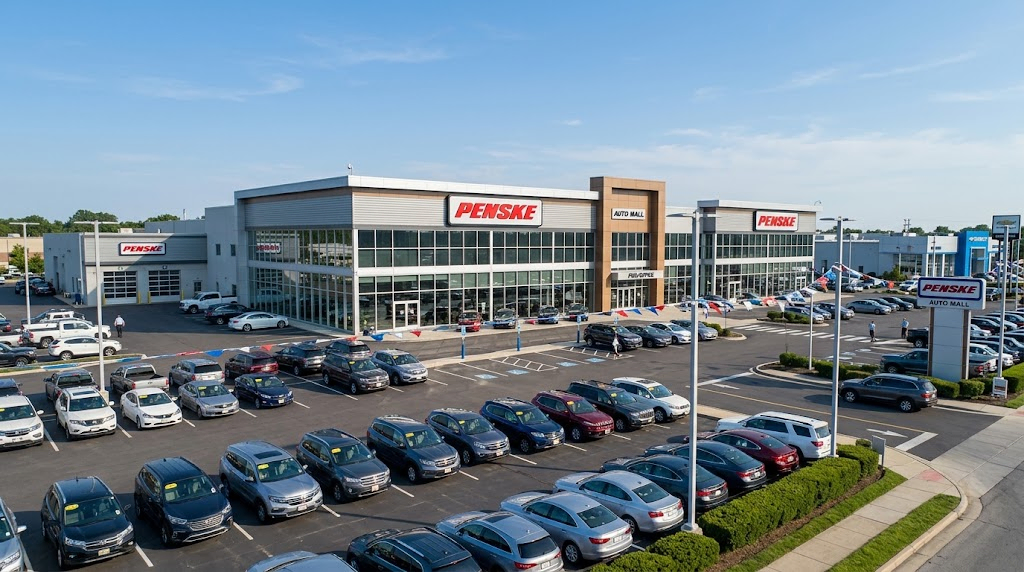
Its operations span the United States and several international markets, making it a substantial player in both vehicle retailing and commercial transportation.
As of June 30, 2026, Penske Automotive operated 362 franchised retail automotive dealerships, including 146 in the United States and 216 outside the country, primarily in the United Kingdom.
Its wider business also includes commercial truck retailing and distribution, as well as a significant interest in Penske Transportation Solutions.
That diversified structure matters because dealership groups face different pressures depending on their markets and product mix. New-vehicle retailing can be affected by interest rates, manufacturer incentives, inventory levels, and consumer demand.
Used-vehicle sales depend on acquisition costs and resale values, while service departments, parts operations, and commercial truck businesses have different revenue patterns.
Penske’s financial performance before the buyout announcement demonstrated the scale of its operations. For the second quarter of 2026, the company reported revenue of approximately $8.51 billion, up about 11% from the same period a year earlier.
Adjusted earnings were $3.62 per share. Growth in parts and service operations helped support results amid pressure on new-vehicle retail margins.
The acquisition does not mean that Penske Automotive’s dealerships will automatically change their names, manufacturers, or day-to-day operations. The transaction concerns ownership of the parent company.
Individual dealerships will continue to operate subject to their franchise agreements, manufacturer requirements, and applicable laws. Any future changes to the group’s strategy, investments, or organizational structure will depend on decisions made after the transaction closes.
Penske Corporation brings an existing relationship with the retailer through its controlling ownership, while Mitsui has been a significant shareholder and commercial partner. Their combined ownership has already given them substantial influence over the business.
Taking the company private would formalize their control over the remaining shares and remove the need to satisfy the same public-market reporting and shareholder expectations that apply to a listed corporation.
What Private Ownership Could Mean for the Business
Going private can change how a company makes investment and operating decisions, but it does not guarantee that management will change its strategy. A publicly traded company must regularly report financial performance, disclose material developments, and respond to the expectations of investors who can buy or sell its shares.
A privately held company still has legal and financial obligations, but it no longer has publicly traded shares or the same routine relationship with public-market shareholders.
For Penske Automotive, private ownership could provide greater flexibility when planning long-term investments. Dealership acquisitions, facility upgrades, commercial truck operations, and other capital-intensive projects may require decisions whose benefits emerge over several years.
Private ownership can make it easier to evaluate those investments without the same immediate focus on quarterly market reactions, although lenders and owners will continue to expect financial discipline.
The structure could also simplify coordination between Penske Corporation and Mitsui, which already hold substantial interests in the company. With the ownership split expected to settle at approximately 64% and 36%, the two groups will have a clear framework for their respective economic interests.
That arrangement does not reveal every future strategic priority, however, and the companies have not announced a comprehensive post-acquisition operating plan.
For dealership employees, customers, and manufacturers, the immediate implications are more limited. The announcement itself does not establish plans to close stores, cut jobs, change vehicle brands, or alter customer service policies.
Such claims would require separate evidence. The most direct change is at the corporate ownership level, where shares held by eligible public investors will be purchased for cash, and the stock will be delisted once the transaction is completed.
The deal also illustrates how ownership can evolve in the dealership industry. Large retail groups need capital to acquire stores, maintain facilities, manage inventory, and adapt to changes in vehicle technology and consumer buying behavior.
Public listings can provide access to equity markets, but they also bring disclosure requirements and pressure to deliver results that investors can evaluate each quarter. A private structure changes that balance rather than eliminating the underlying commercial challenges.
There are important limits to what can be concluded before closing. The agreement remains subject to shareholder and regulatory approvals, and the expected first-quarter 2027 completion date is a target rather than a guarantee.
The company has not announced that the transaction will trigger a particular acquisition program, change its workforce, or produce a specific financial benefit. Those outcomes should not be assumed from the ownership change alone.
For eligible public shareholders, the central question is whether the agreed cash consideration and transaction terms meet their circumstances.
For the broader automotive retail sector, the deal is notable because it involves a major international dealership group rather than a single-store operator or a small regional chain.
Penske Automotive’s proposed $16.3 billion take-private transaction would consolidate ownership under Penske Corporation and Mitsui while ending the retailer’s public-market listing.
The $212-per-share cash offer provides eligible outside shareholders with a defined exit price, while the expected 2027 closing would shift the company into a privately held structure.
Whether that structure leads to different investment priorities or operating decisions will become clearer only after completion. For now, the confirmed development is a major ownership transition, not an announced overhaul of Penske’s dealership network.