
Paying off a car loan should make ownership less stressful, but an aging vehicle can introduce a different set of expenses just as the monthly payments disappear. Components that survived years of commuting may eventually need replacement, and some repairs cost considerably more than routine maintenance.
That does not mean every paid-off car should be sold. The important question is whether a repair represents ordinary wear, an isolated failure, or the beginning of repeated mechanical problems.
For American drivers, understanding these ten potentially expensive repairs can help with budgeting, negotiating repair estimates, and deciding when keeping an older vehicle still makes financial sense.
1. Automatic Transmission Failure
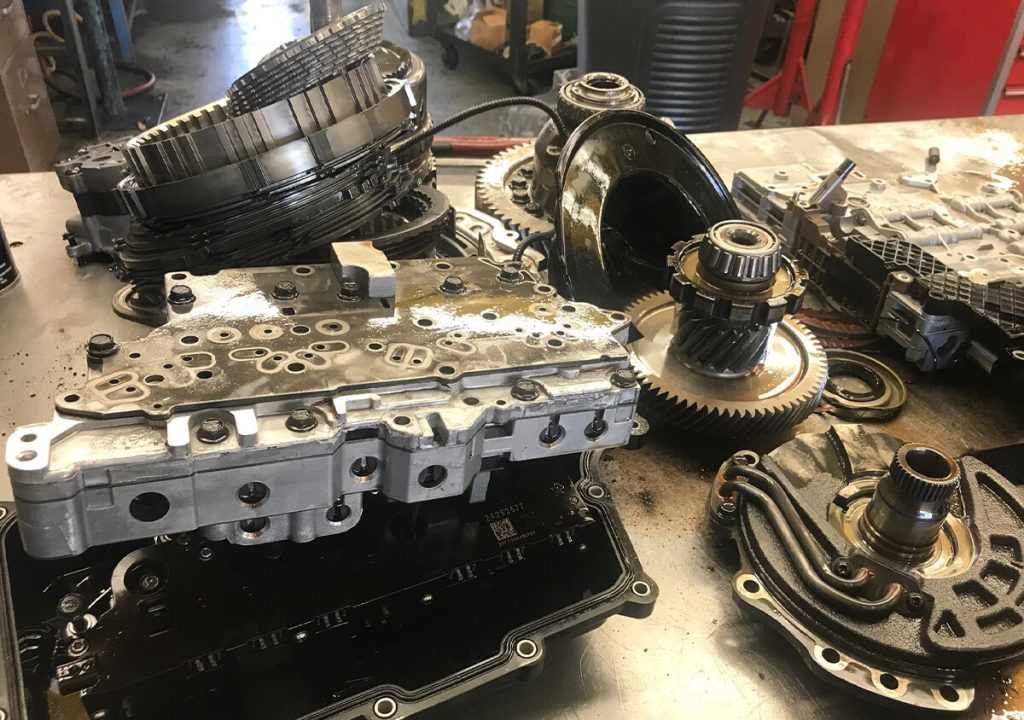
A transmission failure can erase much of the financial relief that comes with paying off a car. Automatic transmissions contain numerous mechanical and hydraulic components, and modern units may also rely on sophisticated electronic controls.
After years of operation, wear, overheating, neglected servicing, or internal component failure can lead to expensive repairs.
Early symptoms may include slipping between gears, delayed engagement when selecting Drive or Reverse, harsh shifting, shuddering, or engine speed rising without a corresponding increase in road speed.
These symptoms do not always mean the transmission needs replacement. Low fluid, damaged wiring, faulty sensors, or control-system problems can sometimes produce similar behavior.
Start by reviewing the vehicle’s maintenance records and checking the manufacturer’s transmission-service requirements. Fluid specifications and inspection procedures differ by model, and some transmissions do not have conventional dipsticks.
A qualified technician can scan for diagnostic codes, examine available fluid information, and determine whether the fault is electrical, hydraulic, or mechanical.
Repair costs vary widely. A minor external leak or control-related repair may be manageable, while a complete rebuild or replacement can cost several thousand dollars, depending on the vehicle and local labor rates. Obtain a written estimate that separates parts, labor, fluids, programming, and warranty coverage.
Compare that estimate with the vehicle’s market value, overall condition, and expected future maintenance. A paid-off car with a healthy engine, solid body, and dependable suspension may still justify a major transmission repair.
Do not approve a replacement based on symptoms alone. Get a proper diagnosis first, then compare the cost of repairing the existing unit with a rebuild, replacement, or changing vehicles.
2. Engine Head Gasket Failure
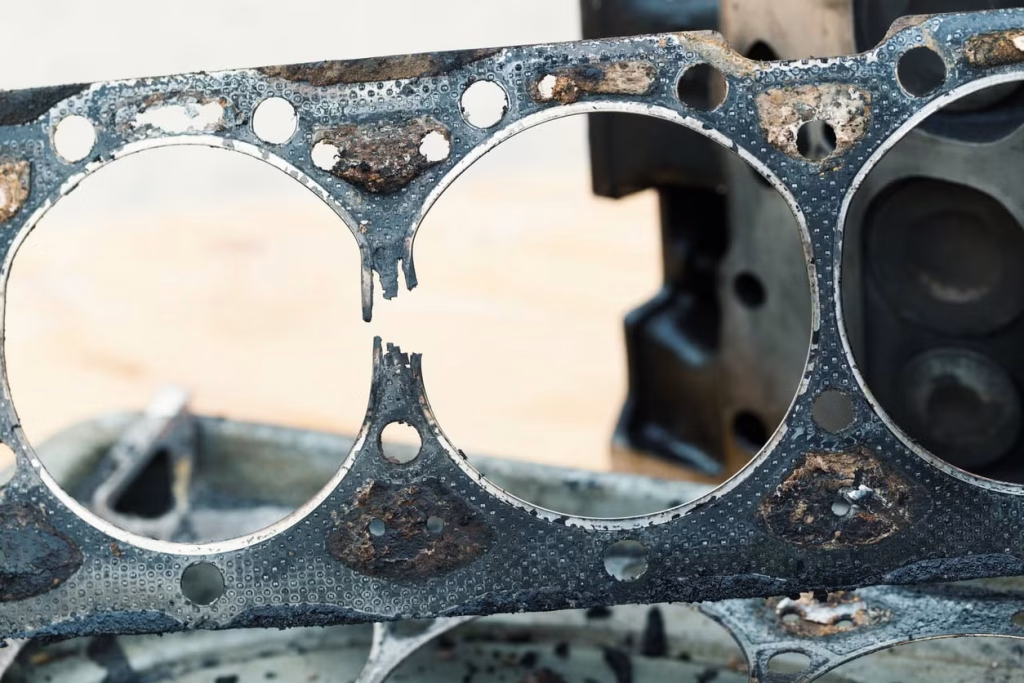
A blown head gasket can become one of the most financially painful problems in an older car because it can affect the engine’s ability to maintain compression, circulate coolant, and keep oil and coolant separated. The repair may arrive after years of dependable service, particularly if the engine has experienced overheating or other cooling-system problems.
The head gasket seals the joint between the engine block and cylinder head. When it fails, symptoms can include coolant loss without an obvious external leak, persistent white exhaust smoke after warm-up, overheating, rough running, or combustion gases entering the cooling system. Not every symptom confirms a failed gasket, however.
A leaking intake gasket, a faulty cooling-system component, or another engine problem can produce similar signs.
Diagnosis matters because the repair can require substantial disassembly. A technician may perform a cooling-system pressure test, check for combustion gases in the coolant, or carry out compression and leak-down testing. The results help establish whether the gasket has failed and whether overheating has damaged the cylinder head.
Repair costs depend on the engine design, labor requirements, and extent of damage. Some engines require considerable work to access the cylinder head. If the head is warped or cracked, machining or replacement may add significantly to the bill.
Before approving the repair, ask whether the shop has checked the original cause of overheating. Replacing a gasket without correcting a failed water pump, radiator restriction, or other underlying problem could lead to another failure.
A head gasket failure does not automatically mean the car must be scrapped. If the engine’s remaining condition is good and the repair cost is reasonable compared with replacing the vehicle, fixing it may make financial sense. However, severe overheating and extensive internal damage can change that calculation substantially.
3. Catalytic Converter Replacement
An aging car can develop an expensive emissions-system problem just when its owner expects lower costs after paying off the loan. A failed catalytic converter is one possibility, although a warning light alone does not establish that the converter itself needs replacement.
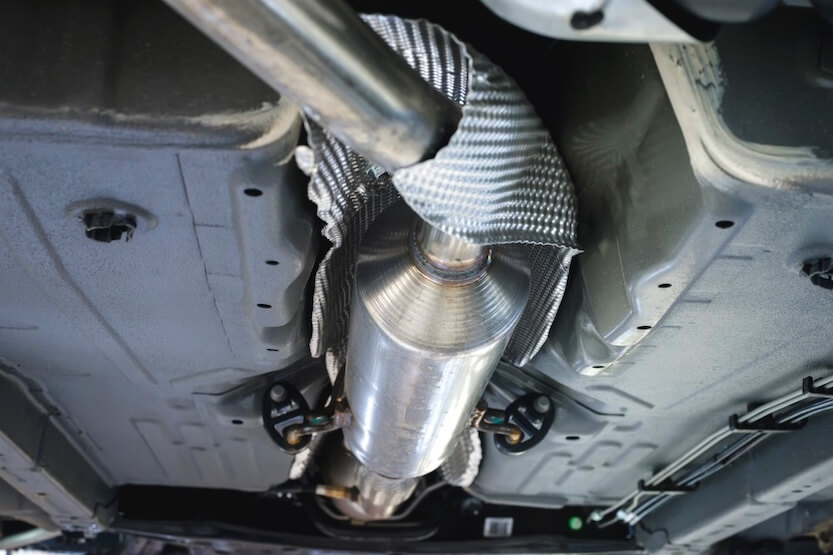
The catalytic converter helps reduce harmful exhaust emissions by promoting chemical reactions within the exhaust system. Over time, it can become damaged, contaminated, or internally restricted. Physical impact, overheating, and certain engine faults can contribute to failure.
Drivers may notice a check-engine light, reduced engine performance, unusual exhaust smells, or difficulty accelerating if the converter becomes severely restricted. Some converters fail without obvious driving symptoms.
Diagnostic trouble codes related to catalytic-converter efficiency can help direct the investigation, but they are not conclusive proof that replacement is necessary.
A qualified technician should inspect the exhaust system, examine relevant sensor readings, and investigate possible causes such as misfires, excessive oil consumption, or fuel-control problems. An engine that continues sending unburned fuel into the exhaust can damage a replacement converter, making it important to address the underlying fault.
Costs vary according to the vehicle, converter design, parts availability, and labor. Federal emissions rules and state inspection requirements can also affect which replacement parts are acceptable. California and certain other states have additional emissions requirements, so confirm that the chosen component complies with the applicable rules.
The converter should not be removed or bypassed as a shortcut. Tampering with required emissions equipment can violate federal law and create inspection problems.
Before spending money, confirm the diagnosis and the correct replacement specification. A converter can be expensive, but a properly repaired emissions system may allow an otherwise dependable paid-off vehicle to remain in service for years.
4. Hybrid Battery Pack Replacement
For owners of older hybrid vehicles, the high-voltage battery pack can become a major expense after the original loan has been paid off. Hybrid batteries are designed for long service, but their performance can decline with age, temperature exposure, usage patterns, and the condition of individual cells or modules.
Warning signs vary by vehicle. Drivers may notice reduced fuel economy, unusual fluctuations in the battery charge display, changes in engine operation, or a hybrid-system warning. These symptoms can also result from cooling problems, electrical faults, or other components, so they should not automatically be blamed on the battery pack.
A specialist should scan the hybrid control system and assess battery performance using the manufacturer’s diagnostic procedures. The inspection should also cover battery cooling fans, air passages, electrical connections, and relevant sensors. Restricted cooling can contribute to battery problems, and ignoring it may undermine a replacement pack.
Replacement costs vary substantially by vehicle, battery design, labor requirements, and whether the owner chooses a new, remanufactured, or used unit. Warranty coverage also differs, so confirm its duration, mileage limits, and what it actually covers before authorizing work.
Age alone cannot predict when a hybrid battery will fail. Some packs remain serviceable for many years, while others develop problems sooner because of their operating environment or individual condition. A battery warning therefore calls for diagnosis, not an automatic decision to sell the vehicle.
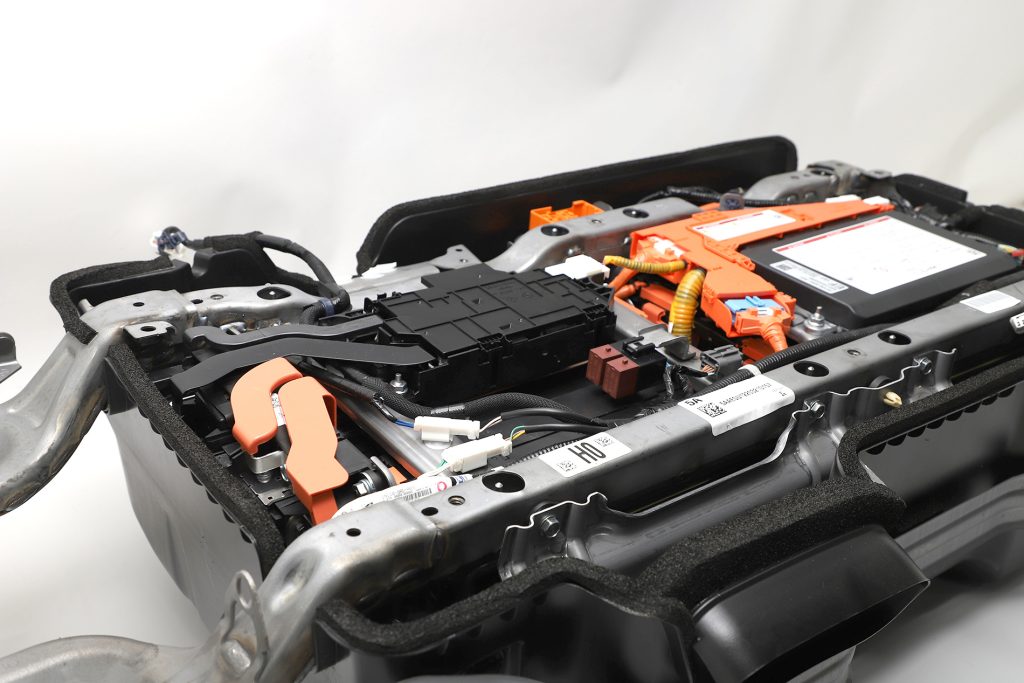
Compare the repair estimate with the hybrid’s condition and expected future use. If the engine, transmission, body, and other systems remain sound, battery replacement may preserve a vehicle that still meets your needs. If several major components also require attention, replacing the car may deserve serious consideration.
5. Air-Conditioning Compressor Failure
An air-conditioning system that stops cooling can feel like a minor inconvenience until a repair estimate arrives. Compressor replacement can be expensive on some vehicles, particularly when the unit is difficult to access or the failure contaminates other parts of the refrigerant circuit.
The compressor circulates refrigerant through the air-conditioning system. Its clutch, internal components, seals, or electrically driven mechanism can fail with age. Symptoms include weak cooling, unusual noises when the system operates, or a compressor that does not engage when expected.
However, poor cooling does not automatically mean the compressor has failed. Low refrigerant caused by a leak, a faulty pressure sensor, a failed condenser fan, or an electrical problem can produce similar symptoms. A proper diagnosis should identify the cause before parts are replaced.
Ask the shop to check refrigerant pressures, inspect for leaks, and test the relevant electrical controls. If the compressor has suffered internal failure, the technician should determine whether debris has circulated through the system. Depending on the damage and manufacturer procedures, additional components may require cleaning or replacement.
Refrigerant handling requires appropriate equipment and must follow applicable environmental regulations. Avoid improvised recharge products that may introduce incompatible materials or conceal an unresolved leak.
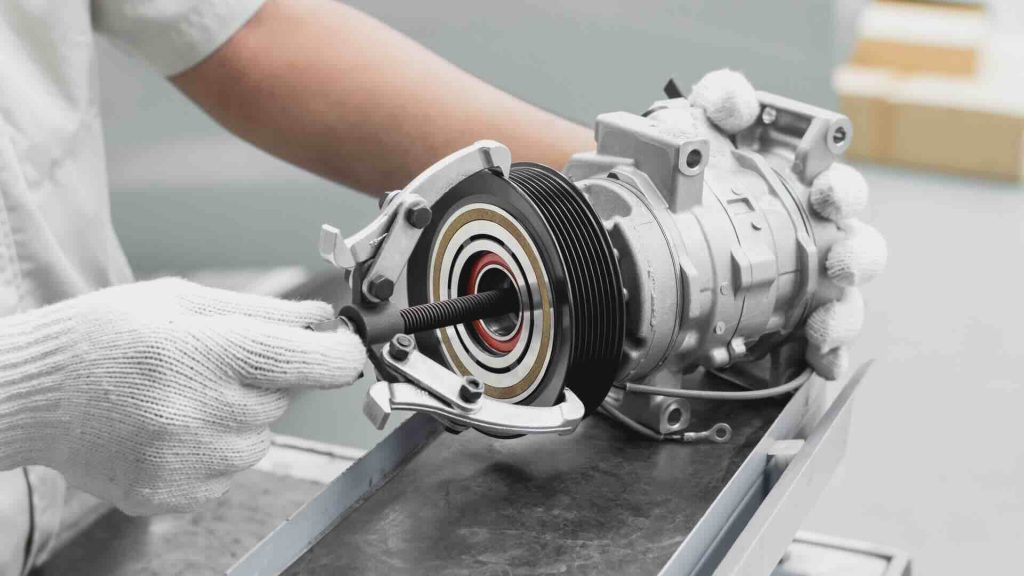
Repair prices depend on the vehicle’s layout, refrigerant type, parts availability, and labor. A compressor replacement may involve recovering refrigerant, removing surrounding components, and following specific procedures before recharging the system.
Do not replace the compressor until testing confirms it is responsible. If the rest of the vehicle is reliable, restoring the air conditioning can be a sensible investment, especially in regions with hot summers. The decision should account for the complete repair, not just the price of the compressor itself.
6. Power Steering System Repairs
Power steering problems can become expensive when an older vehicle develops leaks, pump failure, damaged steering gears, or faults in its electric steering system. Because steering directly affects vehicle control, these symptoms should be investigated promptly rather than postponed until the next service appointment.
Hydraulic power steering systems use fluid pressure to reduce the effort required to turn the wheel. Their pumps, hoses, seals, and steering racks can deteriorate over time. Common warning signs include whining during turns, fluid leaks, increased steering effort, or a steering wheel that feels inconsistent.
Electric power steering systems operate differently and may use an electric motor, sensors, and electronic controls instead of a conventional hydraulic pump. Warning lights, intermittent assistance, or unusually heavy steering can indicate a fault, but the cause may be electrical rather than mechanical.
Diagnosis should begin by identifying the system fitted to the vehicle. A technician can inspect hydraulic fluid and hoses where applicable, scan electronic systems, and check the steering rack, pump, motor, and related connections. Replacing an entire steering assembly without confirming the fault can lead to unnecessary expense.
Costs vary considerably. A leaking hose may be relatively inexpensive to repair, while replacing a steering rack or an integrated electric steering assembly can cost substantially more. Some repairs also require wheel alignment or specialized calibration.
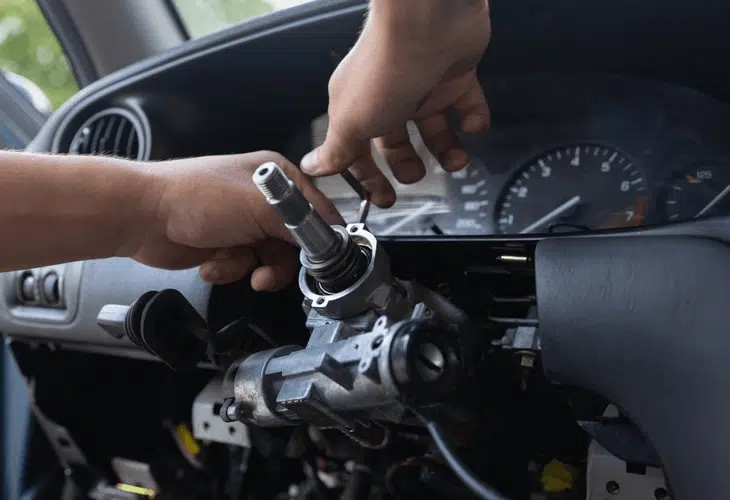
Never ignore a sudden loss of steering assistance. The vehicle may still be steerable, but the increased effort can make emergency maneuvers more difficult. If steering becomes unpredictable or excessively heavy, stop safely and arrange professional assistance.
A steering repair is not automatically a reason to replace a paid-off car. Evaluate the confirmed fault alongside the vehicle’s other systems and repair history. When the structure, engine, and transmission remain dependable, fixing the steering system may be more economical than taking on another vehicle payment.
7. Fuel Pump Failure
A fuel pump failure can leave an otherwise dependable older car stranded without much warning. After years of operation, the pump may lose pressure, develop electrical faults, or stop working altogether. The repair can be particularly expensive when the pump is difficult to access or integrated into a larger fuel-delivery assembly.
The pump supplies fuel from the tank to the engine at the pressure required by its design. Symptoms of trouble may include extended cranking, hesitation during acceleration, sudden loss of power, or an engine that stalls and refuses to restart.
These symptoms can also be caused by ignition faults, clogged filters where serviceable, wiring problems, or other fuel-system issues.
A mechanic should check fuel pressure and flow using the manufacturer’s recommended procedures and verify the electrical supply. Replacing the pump can also involve different levels of labor, as some vehicles require the fuel tank to be lowered, while others have a dedicated service access panel. This design difference can significantly influence repair costs.
Avoid repeatedly cranking an engine that will not start without establishing the cause. Repeated attempts may drain the battery and complicate diagnosis without fixing the underlying problem.
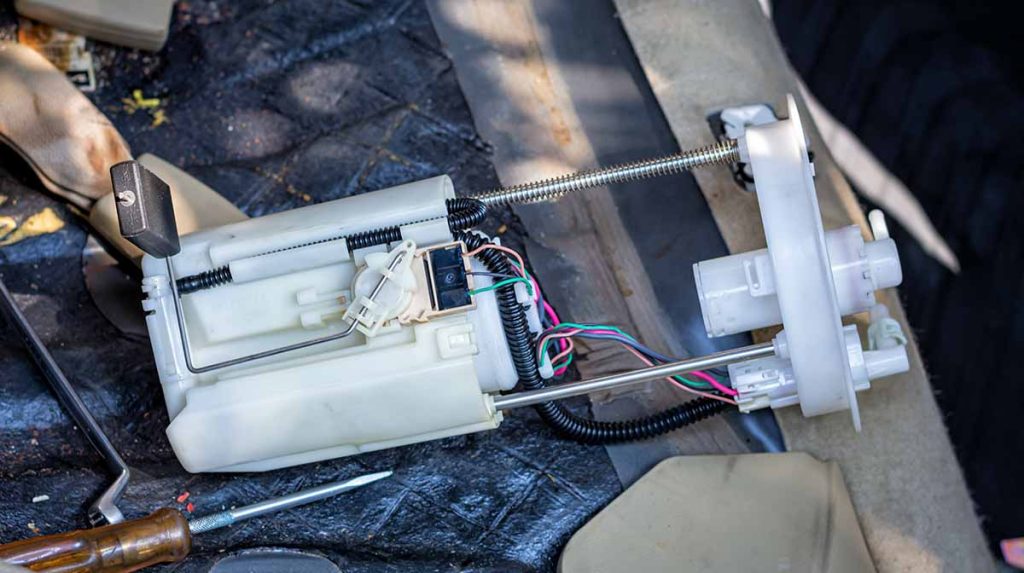
Fuel quality, contamination, operating conditions, and the condition of the surrounding system can influence pump life. Follow the manufacturer’s recommendations and address fuel contamination or related faults if discovered.
Ask whether the diagnosis includes checking the pump control circuit, relay, and wiring. A pump that receives insufficient voltage may appear defective even when the actual problem lies elsewhere.
A confirmed fuel pump failure is often a repairable issue rather than a sign of general vehicle deterioration. If the car has a sound engine and transmission, replacing the pump may restore reliable operation. Compare the written estimate with the vehicle’s condition before deciding whether to keep it.
8. Electronic Control Module Failure
Modern vehicles depend on electronic control modules to manage functions such as engine operation, transmission behavior, anti-lock braking, and body electronics. A failure in one of these modules can create a complicated and potentially expensive repair, particularly when the original component is no longer readily available.
Symptoms depend on which module is affected. An engine control module fault may cause starting problems or persistent warning lights, while a body control module issue can interfere with lighting, locks, or other electrical features. However, these symptoms are not proof that a module has failed.
Low battery voltage, damaged wiring, poor grounds, corroded connectors, and faulty sensors can produce misleading diagnostic codes. A technician should test power supplies, grounds, communication networks, and relevant circuits before recommending an expensive electronic replacement.
Some replacement modules require programming, software configuration, or security-system pairing. This means the price of the component alone may not represent the complete repair cost. Confirm that the shop has the appropriate equipment and can configure the replacement for your particular vehicle.
Ask whether a repair service can restore the existing module safely and reliably. Depending on the fault, repairing the original unit may be possible, but not every module is repairable, and the result depends on the damage and the specialist performing the work.
Parts availability also matters for older vehicles. A discontinued module may require sourcing a compatible component, verifying its part number, and confirming that programming support is available.
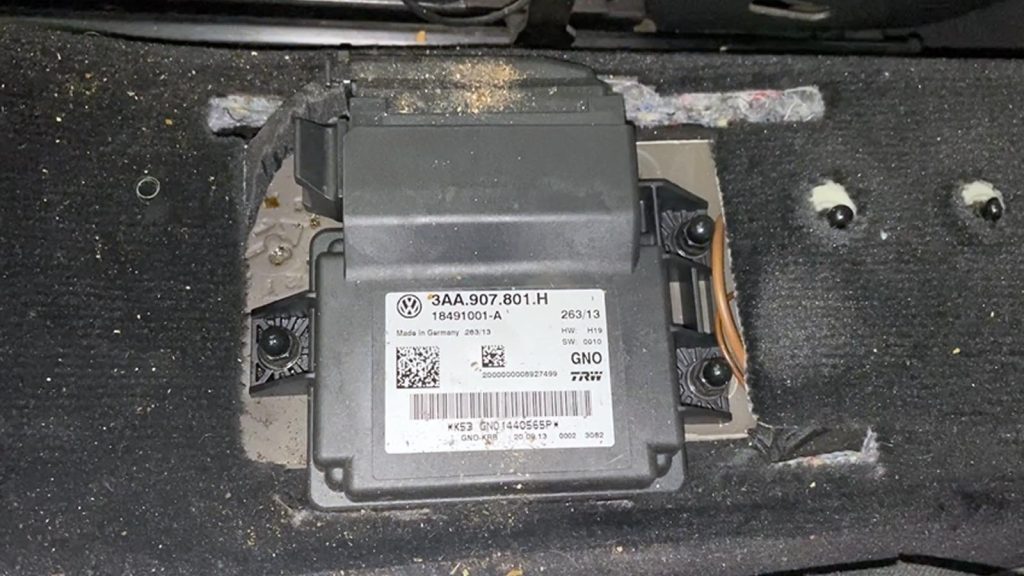
Do not authorize module replacement simply because a scan tool displays a code. Accurate diagnosis can prevent unnecessary spending on an otherwise healthy paid-off vehicle. If a confirmed module failure is repairable and the remaining systems are in good condition, the expense may be justified.
Consider selling only after comparing the verified repair cost with the car’s value and broader maintenance needs.
9. Timing Belt or Timing Chain Repairs
Timing-system repairs can arrive at an inconvenient point in a vehicle’s life because they may require substantial labor even when the engine otherwise runs well. Whether the car uses a timing belt or chain, the consequences of neglect depend on the specific engine design.
Timing belts have manufacturer-specified replacement schedules, which may include both mileage and age limits. On certain interference engines, belt failure can allow pistons and valves to collide, causing severe internal damage. That is why the correct service interval matters more than a generic mileage estimate.
Timing chains are not automatically maintenance-free. Chains, guides, and tensioners can wear, and lubrication problems may accelerate deterioration. Persistent rattling, engine timing codes, or rough running can indicate a fault, but diagnosis is necessary because other components may produce similar symptoms.
Review service records and consult the maintenance schedule for the exact model year and engine. If a timing-belt replacement is overdue or cannot be verified, ask a qualified mechanic whether preventive replacement is appropriate. Depending on the design, the shop may recommend replacing related components during the same job to avoid duplicating labor.
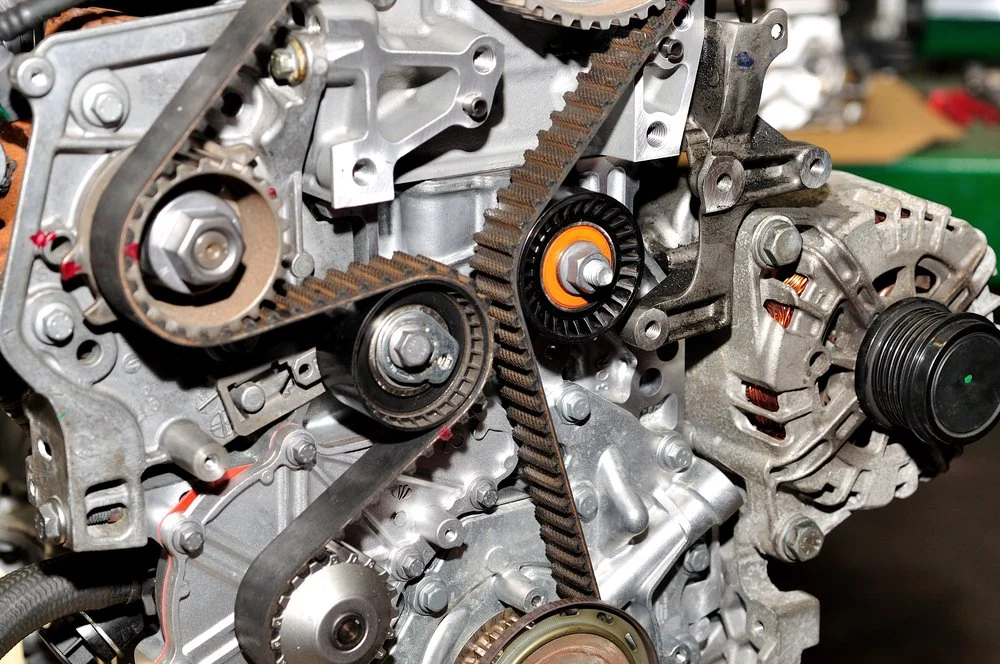
Costs vary according to engine layout, accessibility, parts, and labor rates. A timing-chain repair can be particularly expensive when significant engine disassembly is required.
A timing-system repair does not automatically mean the engine is worn out. If the engine has good compression, stable oil pressure, and no evidence of internal damage, completing the required work may allow it to continue operating reliably. The sensible decision depends on the engine’s condition, the repair estimate, and the maintenance still ahead.
10. Rusted Subframe or Structural Repairs
Structural corrosion can become one of the most difficult expenses to justify on a paid-off car because it affects more than appearance. Depending on its location and severity, rust can compromise suspension mounting points, frame sections, and other areas that contribute to vehicle safety.
Cars driven in parts of the United States where winter road salt is common deserve particular attention. Salt and moisture can accelerate corrosion, especially around seams, underbody panels, and areas that retain dirt.
Vehicles from coastal environments may also experience corrosion, although actual condition depends on exposure and maintenance.
Ask a mechanic to inspect the underbody on a lift. On body-on-frame vehicles, the inspection should include frame rails and crossmembers.
On unibody cars, pay close attention to structural sections, rocker panels, floor areas, and suspension attachment points. Surface rust is not automatically dangerous, but deep corrosion, perforation, and weakened mounting areas require professional assessment.
Fresh undercoating does not necessarily indicate a problem, yet unexplained coatings can make corrosion harder to evaluate. Request a closer inspection if the metal appears patched, distorted, or unusually clean in isolated areas.
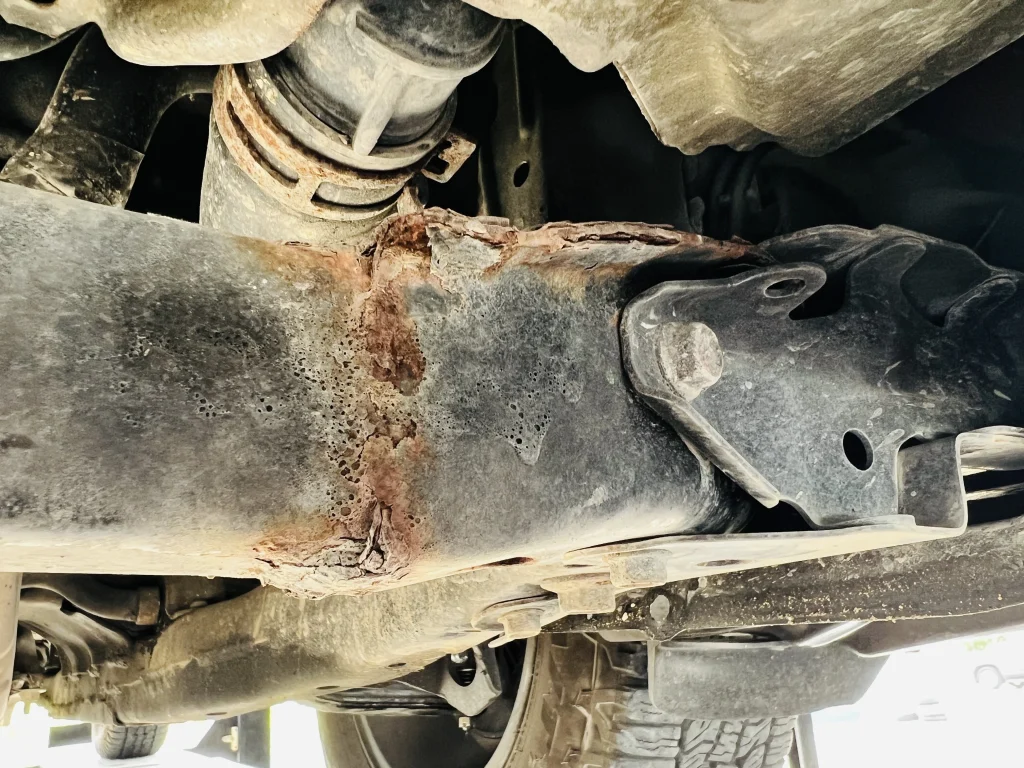
Repair costs depend on whether the affected component can be replaced separately, the extent of the damage, and local labor rates. Replacing a bolt-on subframe may be feasible on some vehicles, while extensive corrosion affecting integral structural sections can be far more difficult and expensive to address.
Do not treat serious structural rust as a cosmetic defect or rely on a seller’s reassurance that it is harmless. Obtain a written assessment from a qualified repair professional.
Sometimes the most expensive repair is the one that makes continued ownership impractical. If structural corrosion threatens safety or requires extensive work that exceeds the vehicle’s reasonable value, replacing the car may be the more sensible option. A paid-off vehicle is valuable only while it remains safe and economical to operate.
