

Sports cars are built to deliver speed, sharp handling, striking designs, and an engaging driving experience. However, performance alone does not tell the full story of a vehicle’s safety.
Crash test ratings help buyers understand how well a car protects its occupants during collisions, but not every sports car receives an independent safety assessment in the United States. Some models have limited production, while others lack the sales volume or testing coverage needed for a published rating.
This article examines seven sports cars with limited US crash test coverage and explains what buyers should know before purchasing them.
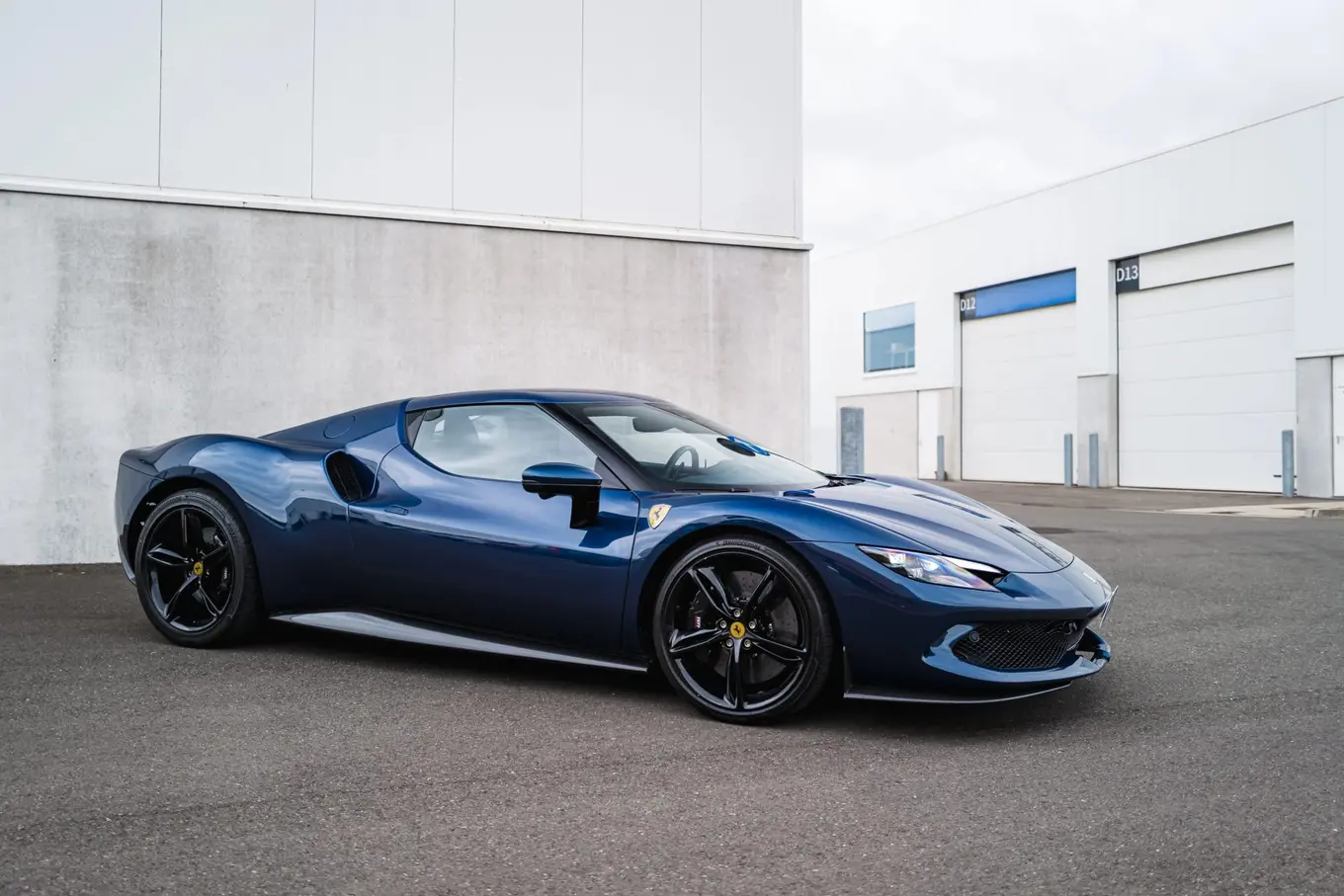
1. Ferrari 296 GTB: Hybrid Performance With Limited Public Crash Test Data
The Ferrari 296 GTB represents a major shift in Ferrari’s approach to high-performance road cars. It combines a twin-turbocharged 3.0-liter V6 engine with an electric motor to produce a combined output of approximately 819 horsepower.
The result is a compact mid-engine sports car with rapid acceleration, sophisticated electronics, and impressive performance on winding roads. Its advanced hybrid powertrain adds engineering complexity, making its construction and safety systems particularly interesting to examine.
The 296 GTB is designed around a lightweight aluminum chassis and a body structure engineered to manage the forces associated with a collision. Ferrari also incorporates modern driver assistance features, airbags, stability control, and braking technology.
These systems help reduce certain risks on the road, but their presence does not establish how a particular vehicle would perform in every crash scenario. Structural performance, restraint systems, and crash energy management must be evaluated through suitable testing before firm conclusions can be drawn.
The main limitation for US buyers is the lack of a readily available, model-specific public crash test rating from major American assessment programs such as the National Highway Traffic Safety Administration (NHTSA) or the Insurance Institute for Highway Safety (IIHS).
This should not be confused with evidence of poor safety. NHTSA and IIHS do not publish ratings for every vehicle sold in the country, and their coverage of expensive, low-volume exotic cars is limited. The absence of a published rating means buyers have less independent comparative information.
The hybrid system also introduces safety considerations that differ from those of a conventional gasoline-powered sports car. High-voltage components require specialized procedures during repairs and after serious collisions.
Emergency responders and trained technicians must follow the manufacturer’s instructions when handling damaged hybrid components. These requirements do not mean that the 296 GTB is inherently dangerous. They highlight why proper maintenance, qualified repair facilities, and accurate information about the vehicle’s electrical architecture matter to owners.
Anyone considering a Ferrari 296 GTB should review its official safety equipment, recall history, warranty conditions, and maintenance requirements. A qualified Ferrari technician can inspect the chassis, brakes, tires, suspension, and high-voltage system before a used example is purchased.
Buyers should also verify that all driver assistance features work as intended. Without a suitable independent crash rating, the most responsible approach is to assess documented equipment and vehicle condition while acknowledging that important crash performance questions may remain unanswered.
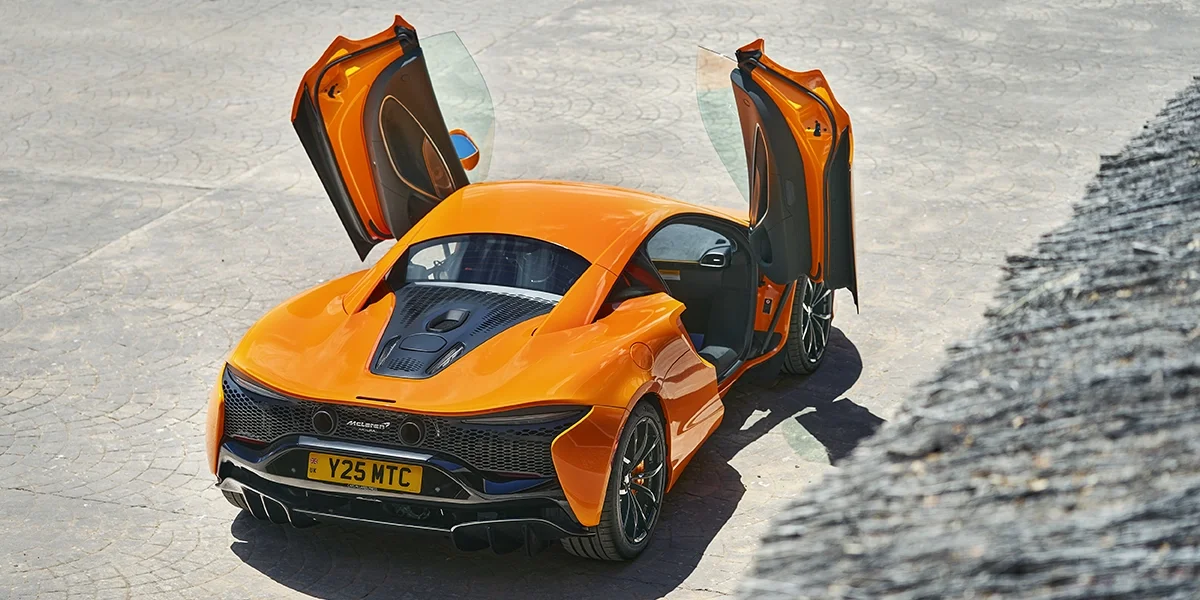
2. McLaren Artura: Lightweight Engineering and Safety Questions
The McLaren Artura is a modern hybrid supercar developed around a lightweight carbon-fiber structure. Its powertrain combines a twin-turbocharged 3.0-liter V6 engine with an electric motor, delivering approximately 671 horsepower in its original specification.
The Artura was developed to balance extreme performance with everyday usability, and its low mass helps support acceleration, braking, and handling. Its technical sophistication makes independent safety information especially valuable for prospective buyers.
McLaren uses carbon-fiber construction in its road cars to achieve a strong, lightweight passenger cell. Carbon-fiber structures can provide excellent stiffness and protection when engineered for specific loads, but the material alone does not establish a vehicle’s crashworthiness.
The shape of the structure, its connections, energy-absorbing components, seat design, and restraint systems all contribute to occupant protection. A meaningful safety assessment requires evidence about how these elements work together during controlled impact testing.
The Artura does not have a widely available US crash safety rating from NHTSA or IIHS that allows buyers to compare it directly with mainstream sports cars. These organizations have different testing procedures and publication practices, and their databases do not cover every low-volume model.
As a result, shoppers may find detailed specifications, performance figures, and equipment lists without finding an equivalent standardized crash score. This gap in public data should be stated clearly rather than interpreted as proof of either exceptional or poor crash performance.
Modern electronic safety systems are also important in a car capable of such high speeds. Stability control can help a driver maintain control when available tire grip is exceeded, while anti-lock brakes help prevent wheel lockup during hard braking.
Driver assistance functions may provide additional support in certain situations, depending on the specification and market. These technologies have limits, particularly when a driver enters a corner too quickly, drives on slippery surfaces, or ignores changing traffic conditions. They cannot replace sound judgment.
Buyers evaluating a used Artura should arrange an inspection with a technician experienced in McLaren vehicles. The inspection should include the carbon-fiber structure, suspension, brakes, tires, electrical systems, and any previous collision repairs.
Service records and recall completion should be checked through authorized sources. It is also worth confirming the precise safety equipment fitted to the individual vehicle, since specifications can vary by model year and market. These checks offer practical information, but they cannot substitute for an independent crash test rating that has not been published.
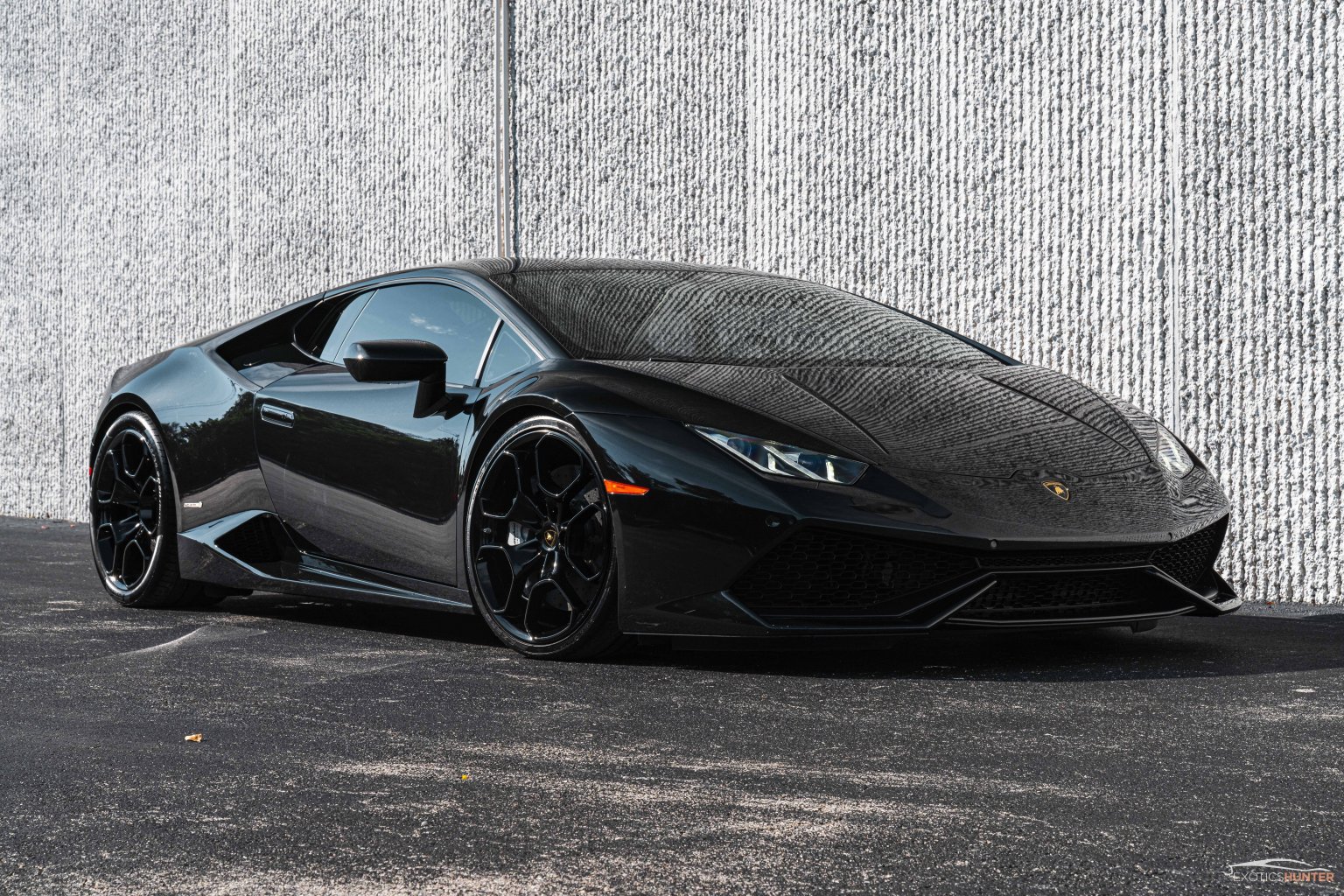
3. Lamborghini Huracán: High-Speed Capability Without a Complete US Crash Rating
The Lamborghini Huracán became known for its naturally aspirated V10 engine, sharp styling, and high-performance handling. Depending on the version, its output ranges from roughly 580 horsepower in earlier configurations to more than 630 horsepower in later variants.
The Huracán was offered in several body styles, including coupe, Spyder, and track-focused versions. This broad model range matters because equipment, weight, power, and some structural details differ across the lineup.
Lamborghini’s engineering emphasizes a rigid passenger compartment, sophisticated chassis design, strong braking performance, and electronic stability systems. Certain variants use carbon-fiber and aluminum structural components to manage weight while maintaining stiffness.
These design choices can support vehicle control and occupant protection, but a technical description cannot establish the results of a standardized crash. Crash outcomes depend on impact speed, collision angle, overlap, vehicle compatibility, restraint performance, and numerous other factors.
For many Huracán variants, American buyers will not find the kind of comprehensive, readily comparable NHTSA or IIHS crash rating that is available for numerous high-volume passenger vehicles.
The situation can vary with the model year and exact version, so it is important to check the official databases rather than assume that every Huracán has identical testing coverage. The lack of a published score should be understood as a limitation in accessible evidence. It does not establish that the car failed a crash test.
The Huracán’s high performance creates a practical safety concern that goes beyond crash ratings. Its powerful engine can generate rapid acceleration, and its handling characteristics reward smooth inputs and appropriate driving technique.
Tires must be in good condition and suitable for the vehicle, while brakes and suspension components need to operate within their intended specifications. Electronic stability systems can help in difficult circumstances, but their ability to correct a mistake is limited by available grip and the laws of physics.
A pre-purchase inspection is particularly important for a used Huracán because some examples may have experienced hard driving, track use, or modifications. Buyers should look for evidence of structural repairs, damaged suspension components, mismatched tires, worn brakes, and warning lights.
They should also review service records, recall information, and the operation of airbags and driver assistance equipment. A specialist inspection can uncover problems that a visual check misses, helping buyers make a more informed decision without pretending to provide a formal crashworthiness assessment.
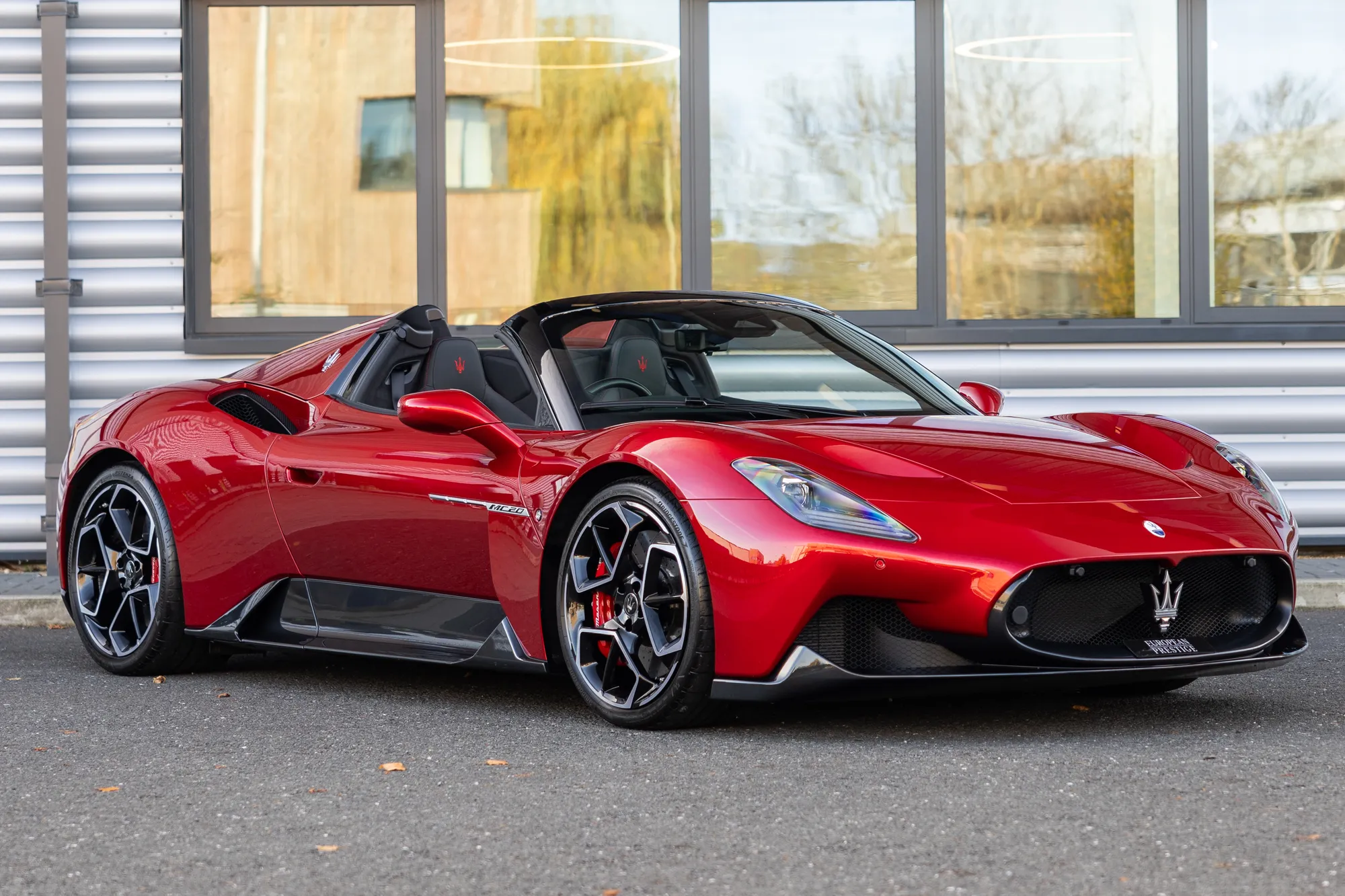
4. Maserati MC20: An Exotic Supercar With Limited Independent Testing
The Maserati MC20 marked Maserati’s return to the high-performance mid-engine sports car segment. It uses a twin-turbocharged 3.0-liter V6 engine producing approximately 621 horsepower in its original coupe form.
The car features a carbon-fiber central structure, a low body, and a chassis designed to combine high-speed stability with responsive handling. Its engineering and relatively low production volume make it a useful example of why crash testing coverage can be limited for exotic vehicles.
The MC20’s carbon-fiber architecture is intended to provide a stiff structure while keeping weight under control. Its design includes conventional modern occupant protection features, such as airbags and electronic stability control.
Yet even advanced construction does not eliminate the need for impact testing. Engineers must consider how the front and rear structures absorb energy, how forces travel through the passenger compartment, and how restraints control occupant movement during a collision.
US shoppers should not assume that the MC20 has a published NHTSA star rating or an IIHS award simply because it is sold as a road car. These American programs do not test every model, and the MC20 lacks the broadly available independent crash rating commonly seen on mainstream vehicles.
Buyers can consult manufacturer documentation and official safety databases for the exact model year, but they may have to make a purchase decision without a standardized crash score. That uncertainty deserves attention, particularly at this price level.
The MC20 also has practical ownership considerations connected to its specialized construction. Carbon-fiber structures can require manufacturer-approved inspection and repair methods after an impact.
Damage that appears cosmetic may warrant a more detailed examination, especially if it affects mounting points, suspension geometry, or structural components. Repairs performed without suitable equipment or expertise can compromise the integrity of a vehicle. Owners should therefore use qualified repair facilities and retain detailed records of any accident-related work.
Before purchasing an MC20, buyers should request a full service history and commission an inspection by a specialist familiar with Maserati’s supercar platform. The assessment should cover structural condition, airbags, brakes, tires, suspension, electrical components, and evidence of previous repairs.
Official recall information should be checked by vehicle identification number, since outstanding campaigns can differ by production date. These precautions cannot generate a missing crash test score, but they can help identify known risks and establish whether a particular example has been maintained properly.
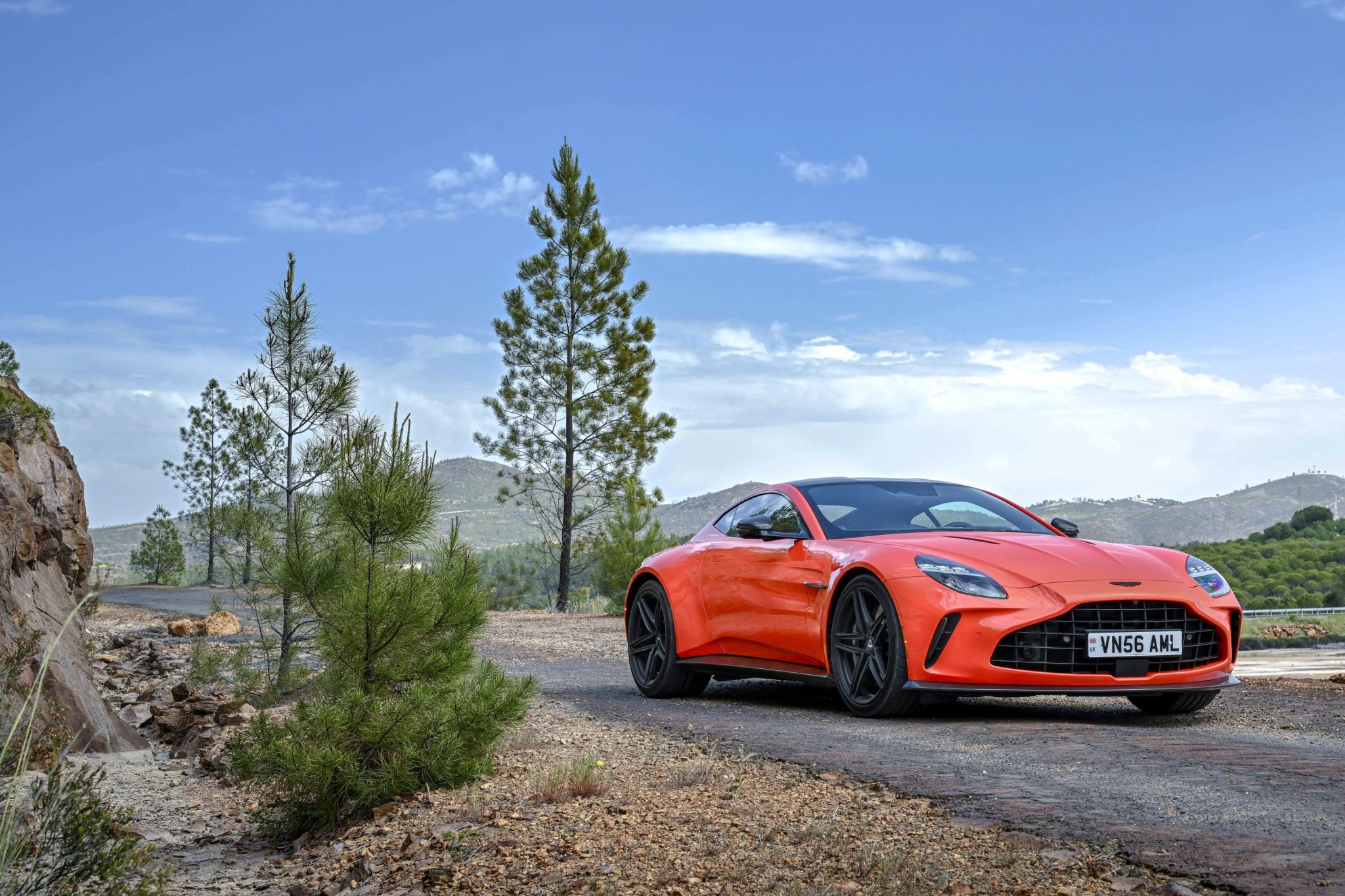
5. Aston Martin Vantage: Grand Touring Luxury Meets Performance
The Aston Martin Vantage blends traditional British grand touring character with modern sports car performance. Recent generations use a twin-turbocharged V8 engine, with output varying by model year and specification.
The latest generation introduced for the 2025 model year produces up to approximately 656 horsepower in its standard Vantage configuration. Its design combines a low center of gravity, a carefully developed chassis, and advanced electronic systems intended to help drivers manage substantial power.
Aston Martin places considerable emphasis on chassis stiffness, braking performance, and electronic control. The Vantage includes occupant protection equipment and stability systems intended to reduce risks during everyday driving. Its engineering team must balance comfort, handling, weight distribution, and crash protection within a compact sports car body.
However, the presence of these systems is not equivalent to a public crash test result. Without standardized impact data, buyers cannot reliably compare its occupant protection performance with vehicles that have completed published American safety assessments.
The Vantage has limited publicly available US crash test coverage compared with more common vehicles. Buyers should verify the exact generation and model year in NHTSA and IIHS databases before describing it as unrated, since different versions may have different records.
For many exotic sports cars, the absence of a published rating reflects testing coverage rather than a known safety failure. A careful article about vehicle safety must distinguish missing evidence from negative evidence, particularly when discussing expensive performance cars.
Powerful engines and rear-wheel-drive configurations can place substantial demands on drivers, especially in wet conditions. Modern traction control and stability management help regulate wheelspin and correct certain loss-of-control situations, but they cannot overcome every mistake.
Tires, suspension condition, road surface, and driver input all influence how safely the Vantage responds. Buyers who intend to use the car regularly should learn its controls, respect changing weather conditions, and avoid assuming that premium engineering makes high-speed driving risk-free.
A used Vantage deserves a detailed mechanical and structural inspection before purchase. Technicians should examine the brakes, tires, suspension, steering, airbags, electronic control systems, and any evidence of previous collision repairs.
Service history can help establish whether essential maintenance has been completed, while a vehicle identification number lookup can identify applicable recalls. Prospective owners should also confirm that replacement parts and repair work meet the manufacturer’s requirements. These measures offer a practical way to assess a specific car when a public independent crash rating is unavailable.
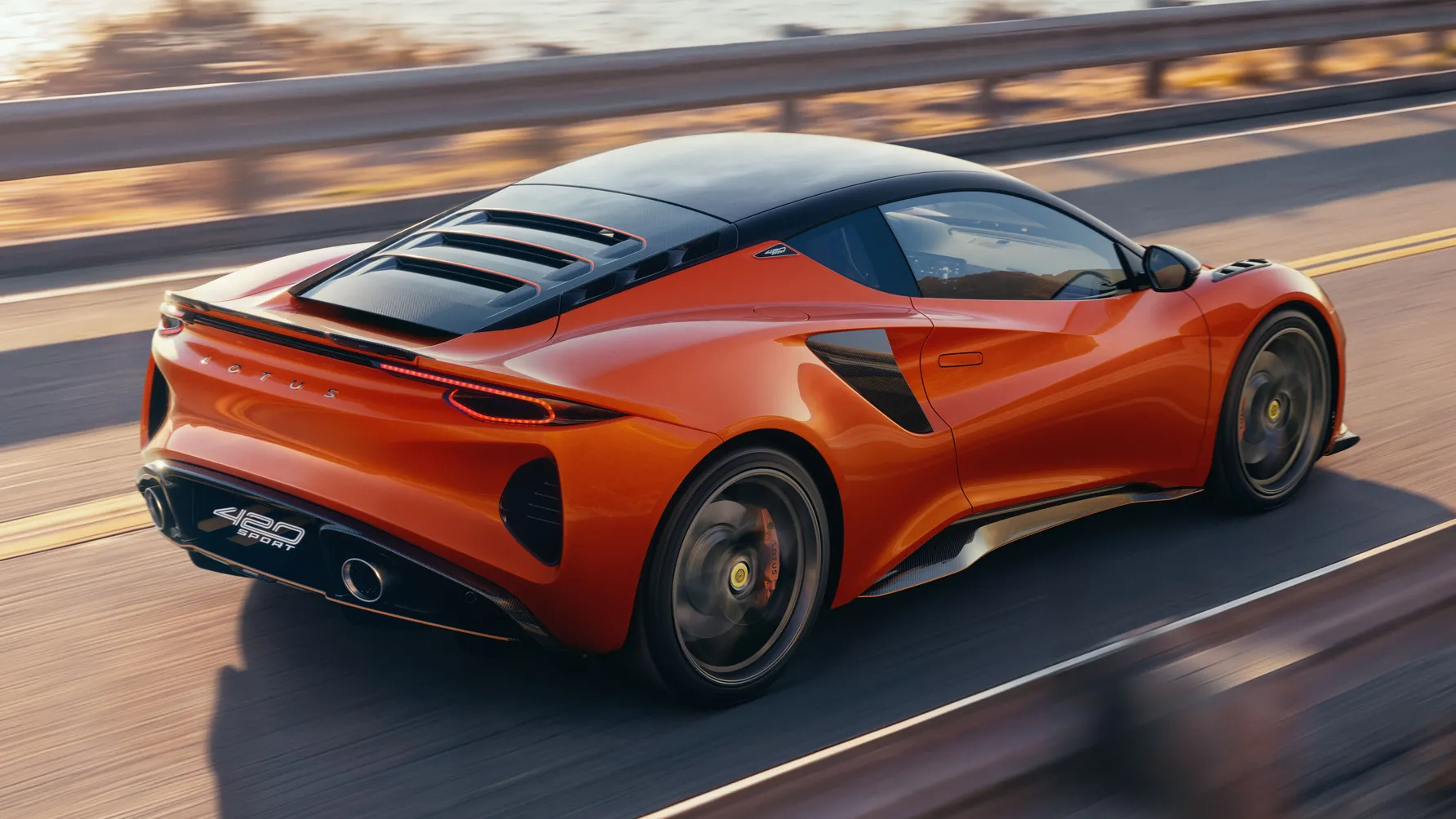
6. Lotus Emira: Lightweight Handling With Questions About Crash Data
The Lotus Emira represents a modern interpretation of the lightweight sports car philosophy. Introduced as a road-going performance coupe, it is available with different powertrain configurations depending on the market and model year.
Buyers may encounter versions powered by a supercharged V6 or a turbocharged four-cylinder engine. Rather than focusing solely on maximum horsepower, the Emira emphasizes steering response, balanced handling, and an engaging connection between the driver and the road.
Lotus has historically focused on low vehicle weight, suspension development, and precise handling. The Emira follows that tradition while providing contemporary equipment and a more substantial cabin than some earlier Lotus models. Its structure and restraint systems are designed to protect occupants, but good handling does not automatically indicate superior crash protection. A car can respond predictably during cornering and still require separate evaluation for frontal impacts, side collisions, roof strength, and injury risk.
American crash test coverage for the Emira is limited compared with that of mainstream sports coupes. Prospective owners should search official NHTSA and IIHS records for the specific year and configuration rather than rely on informal statements that the model has never been tested anywhere.
Testing in another country, manufacturer engineering validation, and a publicly available US rating are different things. Each offers a different level of information, and they should not be treated as interchangeable evidence.
The Emira’s handling characteristics can contribute to accident avoidance when the driver maintains appropriate speed and leaves sufficient room for unexpected events. Responsive steering and balanced chassis behavior may help a driver make controlled corrections.
However, these qualities do not eliminate the danger posed by distracted driving, poor tires, wet roads, or excessive speed. Modern safety technology works best when combined with sensible driving habits, regular maintenance, and a clear understanding of the vehicle’s limits.
Buyers should check the Emira’s maintenance history and verify that all relevant recalls have been completed. A specialist inspection should include the chassis, suspension mounting points, steering components, brakes, tires, and restraint systems.
Since sports cars can be modified for appearance or performance, it is also wise to check whether nonstandard suspension parts, wheel changes, or engine modifications affect reliability and predictable handling. An independent inspection cannot replace a formal crash test, but it can provide meaningful evidence about the condition of the car being considered.
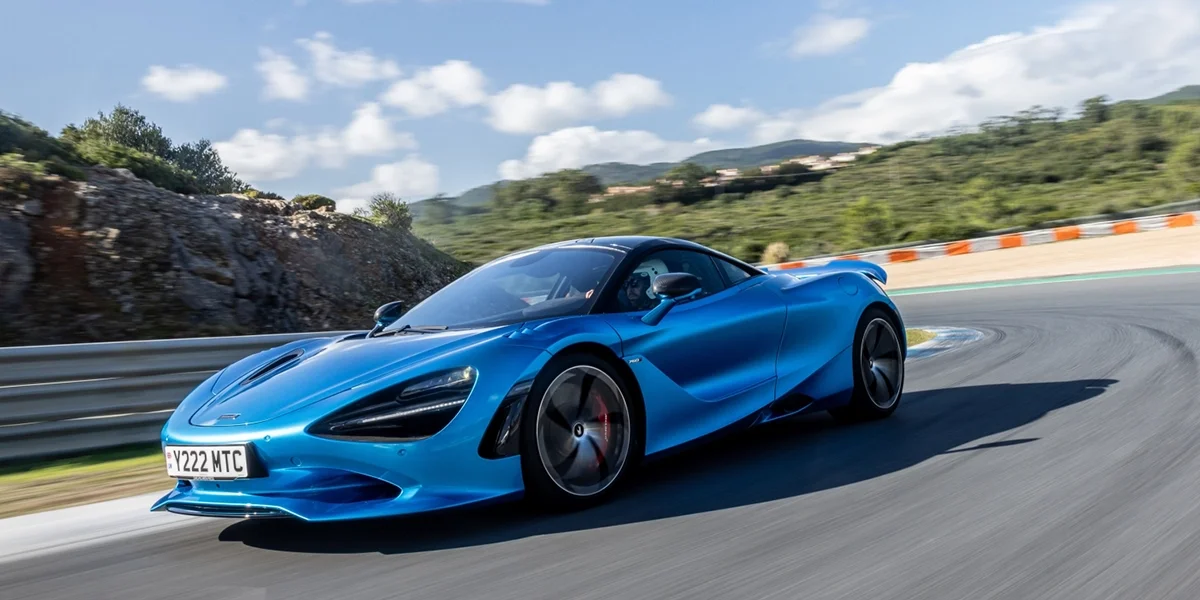
7. McLaren 750S: Extreme Performance and the Limits of Public Safety Ratings
The McLaren 750S is a lightweight, mid-engine supercar developed to deliver exceptional acceleration and precise handling. Its twin-turbocharged 4.0-liter V8 produces approximately 740 horsepower, allowing it to reach high speeds very quickly.
Available as a coupe or Spider, the 750S combines carbon-fiber construction with advanced suspension and braking technology. Its capabilities make it a compelling performance car, but they also underline the importance of understanding its safety equipment and the limits of available crash data.
The 750S uses a carbon-fiber passenger structure and modern electronic systems to support control and occupant protection. Its braking hardware and suspension are engineered for demanding driving, while stability control helps manage certain situations involving lost traction.
Carbon-fiber construction can deliver useful structural properties, yet crash performance depends on the entire vehicle design. The passenger cell, deformation zones, seat belts, airbags, and their interaction during an impact all influence the outcome for occupants.
The McLaren 750S does not have the same widely accessible US crash rating coverage as many popular production cars. Buyers should confirm current records for their particular model year rather than interpret the absence of a familiar safety score as proof of a failed assessment.
Manufacturer testing may provide important engineering information, but it is not identical to a public rating issued by NHTSA or IIHS under a published evaluation program. The distinction matters when comparing safety claims across different manufacturers.
The 750S’s speed and power demand concentration and disciplined driving. High-performance tires and brakes can provide impressive grip and stopping ability under suitable conditions, yet performance depends on temperature, road surface, tire wear, and maintenance.
Stability control cannot guarantee recovery from every loss of traction, particularly when a car is driven beyond the available grip. Owners should become familiar with the car in controlled conditions and avoid using public roads to test its limits.
Anyone buying a used 750S should obtain a specialist inspection and review the car’s full maintenance history. Technicians should check the carbon-fiber structure, suspension, brakes, tires, airbags, electrical systems, and any evidence of track use or previous accidents.
Repair documentation is especially important when structural components have been replaced or repaired. Buyers should also verify recall completion and confirm the vehicle’s original safety equipment. These steps help establish the condition of an individual car, even when independent crash test results are not readily available.
