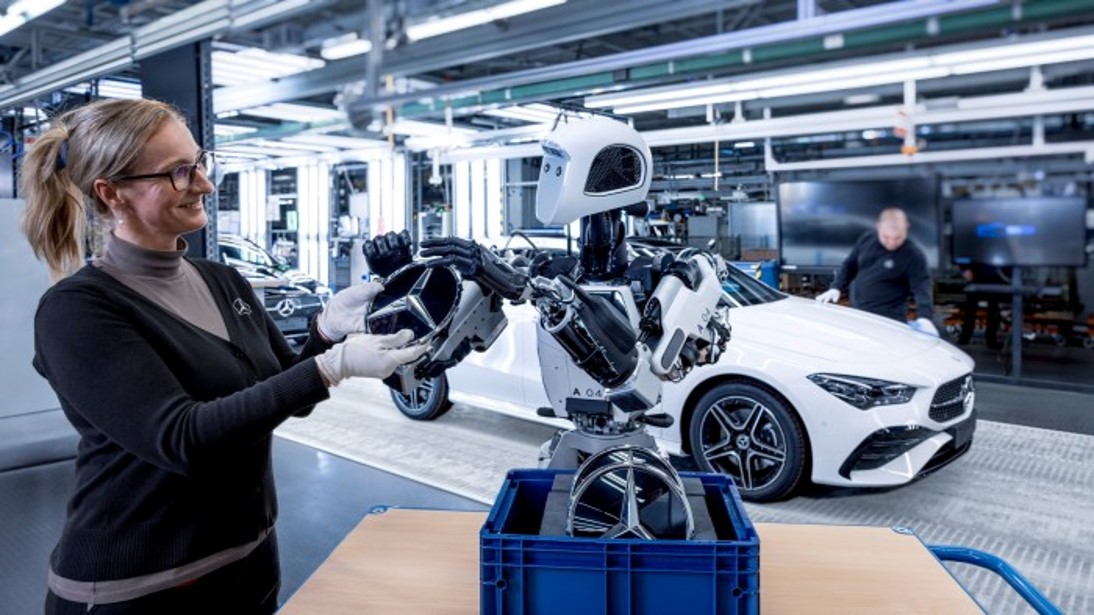
Mercedes-Benz is changing how it develops vehicles with PLM. AI is an artificial intelligence platform designed to connect engineering, procurement, manufacturing, and after-sales operations through a shared digital system.
Announced on October 16, 2026, the initiative aims to reduce vehicle development time by up to 30%, with the company estimating that new vehicles could reach production readiness approximately 17 months sooner. It also expects efficiency gains of up to 50% in selected engineering processes.
The plan reflects a wider shift in automotive development. Modern vehicles combine complex hardware, electronics, and software, while their development involves engineering teams, suppliers, and factories across multiple countries.
Mercedes-Benz wants AI to help these groups work from connected information, identify problems earlier, and understand how decisions in one department affect the rest of a vehicle program.
These targets remain company projections, not independently verified results across every model. The platform’s value will depend on data quality, system integration, and whether faster workflows preserve the safety and validation standards required for road vehicles.
PLM.AI Creates a Shared Foundation for Vehicle Development
Product lifecycle management, or PLM, organizes information and decisions from a product’s initial concept through engineering, manufacturing, and after-sales support. For a modern car, that includes component specifications, software versions, supplier data, manufacturing requirements, and documentation needed for regulatory compliance.
Mercedes-Benz is building PLM.AI as a shared digital foundation to connect these activities. CONTACT Software provides the core platform through CONTACT Elements, while Siemens contributes expertise in computer-aided engineering, simulation, and digital validation.
Mercedes-Benz oversees the architecture, data models, and governance and says it will retain control of its data and AI models developed on the platform.
The idea is to make product information usable across departments instead of leaving it isolated in separate databases and engineering tools.
AI agents could retrieve relevant information, identify relationships between components, and help teams assess the consequences of proposed changes. This could reduce time spent searching for current specifications or reconciling inconsistent records.
Consider a proposed change to reduce a vehicle component’s weight. The modification might affect crash performance, durability, manufacturing costs, and supplier availability. Engineers must consider these consequences before approving the design.
A connected system could identify dependencies earlier and help compare alternatives while adjustments are still relatively straightforward.
Mercedes-Benz says AI agents already support tasks such as material-cost optimization, certification and homologation, fault detection and resolution, and software development. PLM.AI is intended to connect these applications across broader workflows instead of treating each as an isolated tool.
That distinction matters because an assistant that speeds up one engineering task may offer limited benefit if the result must then be transferred manually to other departments. A shared system could help information follow the project through multiple stages and make conflicting requirements easier to identify.
Mercedes-Benz says the initiative represents an investment of approximately half a billion euros. The commitment indicates a broad transformation of its development infrastructure rather than the addition of a single AI feature to existing design software.
A common foundation could help engineers reuse knowledge across vehicle programs and coordinate changes more consistently.
However, different models still have distinct hardware, manufacturing processes, and regulatory obligations. A shared platform can simplify development, but model-specific engineering and validation will remain necessary.
How AI Could Shorten Development and Reduce Physical Testing
Mercedes-Benz says PLM.AI could reduce the time needed to bring new vehicles and technologies to production readiness by up to 30%, equivalent to approximately 17 months under its development-time estimate.

The company also expects efficiency improvements of up to 50% in selected engineering processes. These are projected gains, not a promise that every vehicle program will finish 17 months earlier.
One potential source of savings is less delay between departments. Vehicle development involves repeated reviews, design changes, and approvals.
When teams use disconnected systems, engineers may spend time locating current specifications, checking changes made by other departments, or repeating analysis after new information arrives. Connected data could reduce duplicated work and help teams identify conflicts sooner.
Digital simulation could contribute as well. Engineers already use virtual models to assess aerodynamics, structural performance, and thermal behavior before building physical prototypes. AI-supported analysis could help teams examine more design alternatives and identify promising options earlier in development.
Mercedes-Benz also aims to reduce physical testing by as much as half. That is a future objective, not confirmation that half of all prototype tests can immediately be eliminated.
Real-world testing remains essential for validating crash protection, braking, durability, and other safety-critical systems. Digital models must be checked against physical results before engineers can rely on them for important decisions.
Consider a redesigned battery enclosure. Engineers might want to reduce its weight, but the new structure must still meet strength, thermal, and crash requirements. It also needs to be manufacturable at the required volume and cost.
If AI-supported tools identify conflicts across these requirements earlier, the company could avoid building prototypes that later need substantial redesign.
Certification offers another potential application. Vehicles must meet regulatory requirements in each market where they are sold, and preparing technical documentation can involve significant coordination.
AI agents could help organize information, identify missing records, and support compliance workflows, although final evidence and approvals must still satisfy applicable rules.
For customers, faster development could mean new technology reaches production sooner or engineering improvements are introduced with fewer delays. However, speed matters only when quality is maintained. A shorter schedule that creates software defects, durability problems, or late-stage redesigns would undermine the expected gains.
The real test will be whether Mercedes-Benz can repeat these efficiencies across actual vehicle programs. That requires reliable data, accurate simulations, and clear engineering reviews, not simply more AI-generated recommendations.
Manufacturing and Global Collaboration Join the Same System
A vehicle’s development does not end when its design is approved. Components must be sourced, factories prepared, production processes validated, and service requirements considered. Mercedes-Benz wants PLM.AI to connect these stages so manufacturing and commercial constraints can influence engineering decisions earlier.
A component may work well in a digital design but prove difficult to assemble at production speed. It might require specialized tools, extra manufacturing steps, or a supplier unable to provide the necessary volume.
Giving manufacturing teams access to current product information earlier could help identify these problems before the company commits to equipment or production plans.
Procurement could benefit from the same approach. Material prices, supplier capacity, and component availability influence whether a design is commercially practical. Connecting those details with engineering data could help teams compare alternatives while considering performance, cost, and supply constraints.
AI cannot predict every disruption or replace supplier negotiations, but it could give decision-makers a more complete picture.
Global collaboration is another priority. Mercedes-Benz develops vehicles through international engineering organizations, where teams must coordinate specifications, revisions, and market requirements.
Shared data standards could reduce confusion over which design version is current and help departments understand changes made elsewhere. The company describes PLM.AI as a digital backbone connecting development, production, procurement, sales, and after-sales operations.
After-sales operations could also benefit. If service teams identify recurring faults, engineers could connect that information to affected components or manufacturing processes and use it to inform future revisions.
Better feedback could help improve reliability and repair procedures, although results depend on accurate records and effective follow-through.

Implementation will not be simple. AI systems depend on consistent, trustworthy data, and outdated specifications or incomplete records can produce misleading recommendations. Mercedes-Benz must establish clear rules for access, validation, and accountability. Engineers also need to question AI-generated conclusions and understand the evidence behind them.
The company has emphasized that its teams will remain responsible for product decisions, an important safeguard in a safety-critical industry.
PLM.AI is therefore both a technology investment and an organizational change. Mercedes-Benz is betting that connecting information across the vehicle lifecycle can reduce duplicated work, improve coordination, and shorten engineering timelines.
Its projected 30% reduction in development time is ambitious. The real measure of success will be whether those gains appear in production programs without compromising quality, safety, or reliability.