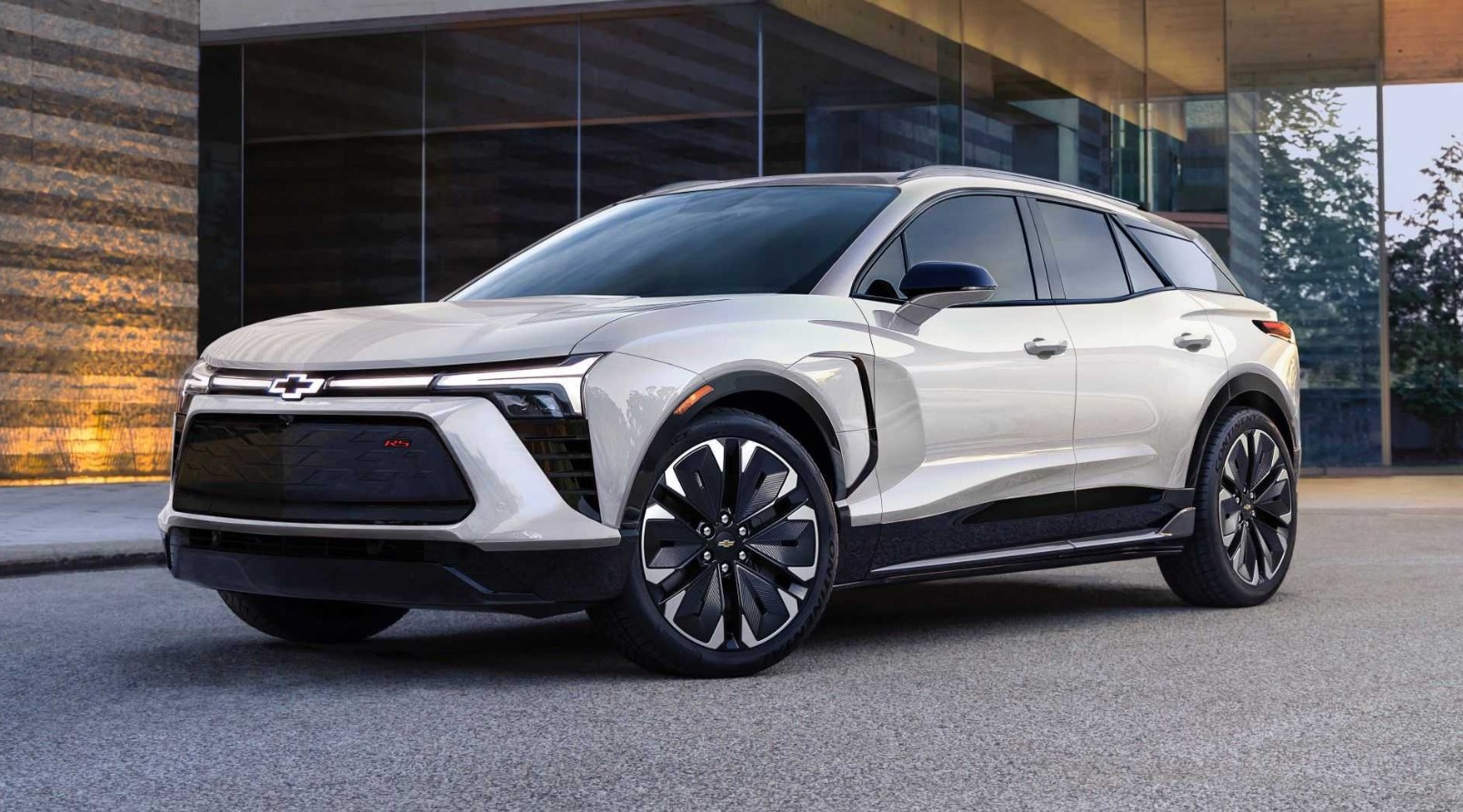
Chevrolet has increased prices on two versions of its 2027 Blazer EV, pushing the electric SUV further above the $45,000 mark while introducing a charging update that could make public charging more convenient.
The LT and RS trims each receive a $300 price increase, while the range-topping SS carries over its previous starting price. All three versions gain a native North American Charging Standard (NACS) port, allowing compatible charging at Tesla Supercharger stations without the need for a separate adapter.
The changes are modest in dollar terms, but they arrive in a competitive electric SUV market where buyers weigh purchase price, driving range, charging access, and equipment carefully. The 2027 update does not transform the Blazer EV’s basic formula.
Instead, Chevrolet is adjusting the price of its mainstream trims while adding a practical improvement to the charging experience.
LT and RS Prices Rise by $300, While the SS Stays Put
According to Kelley Blue Book’s October 15 report, the 2027 Blazer EV LT starts at $45,000 before destination charges. With Chevrolet’s $1,795 destination fee included, the starting price becomes $46,795.
The RS starts at $50,800 before destination, or $52,595 including the fee. Both trims are $300 more expensive than their 2026 equivalents. The SS remains at $60,700 before destination, or $62,495 delivered before taxes, registration, and other dealer charges.
| 2027 Blazer EV trim | Starting MSRP before destination | Price including $1,795 destination | Change |
|---|---|---|---|
| LT | $45,000 | $46,795 | +$300 |
| RS | $50,800 | $52,595 | +$300 |
| SS | $60,700 | $62,495 | No change |
These are manufacturer starting prices, not guaranteed transaction prices. Optional equipment, dealer-installed accessories, local fees, and incentives can change what a buyer ultimately pays.
The LT remains the entry point into the Blazer EV range, but crossing $45,000 before destination puts it in a price bracket where buyers may compare it with a wider selection of electric crossovers.
The RS costs $5,800 more than the LT before destination, reflecting its additional styling and equipment. The SS sits another $9,900 above the RS, bringing performance upgrades and a larger battery.
The $300 increase is small relative to the vehicle’s purchase price. It represents about 0.7% of the LT’s $45,000 base MSRP and roughly 0.6% of the RS’s $50,800 starting price. For a buyer financing the vehicle, the monthly difference may be limited, depending on the loan term and interest rate.
However, the price adjustment still matters when comparing model-year changes, especially if competing vehicles are discounted or available with attractive financing offers.
The more significant issue is the total price after fees and equipment. Buyers should compare similarly configured vehicles rather than relying only on the advertised starting price. An LT with front-wheel drive, for example, has a different price and range profile from an all-wheel-drive version, while options and dealer charges can affect the final amount.
Native NACS Charging Is the More Meaningful Update
The most practical change for 2027 is the Blazer EV’s native NACS charging port. NACS is the connector standard used by Tesla’s Supercharger network and increasingly adopted across the North American electric vehicle market.
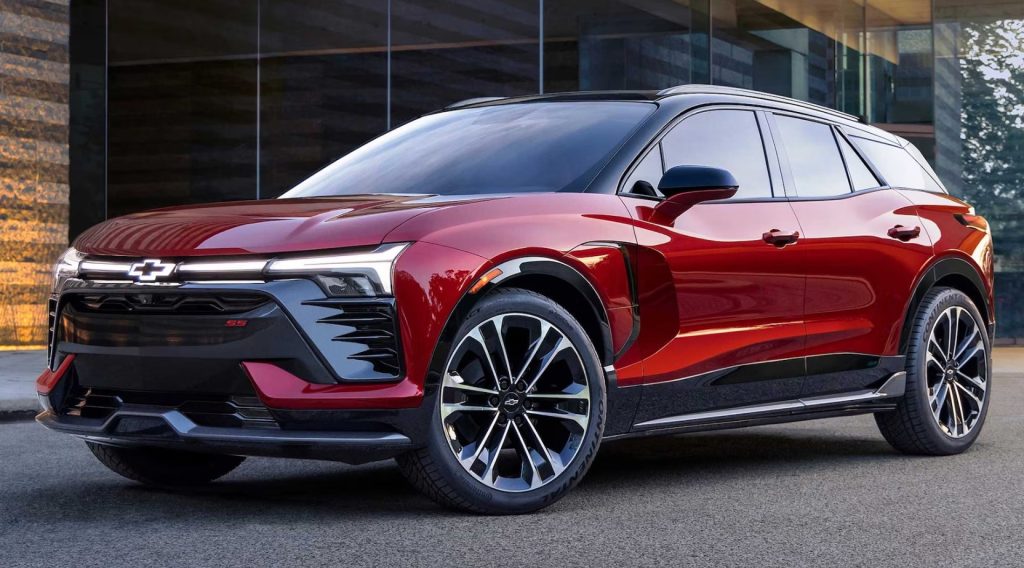
Previously, drivers of many non-Tesla EVs needed a compatible adapter to use certain Supercharger stations. With the port built into the vehicle, the Blazer EV can connect directly to compatible NACS-equipped chargers, subject to station access and vehicle compatibility.
Chevrolet advertises access to more than 250,000 public charging points across North America. That figure covers a broad charging ecosystem, not just Tesla Superchargers, and the actual options available to a driver depend on location, charger type, and network access.
For someone who regularly travels outside a familiar commuting area, having more charging choices can make trip planning easier and reduce the need to carry an adapter for compatible Supercharger use.
The update does not eliminate the need to plan charging stops. Drivers should confirm that a particular Supercharger site is open to their vehicle, check connector and payment requirements, and use the vehicle’s route-planning tools or a charging-network app to find available stations.
Nor does the new port automatically make every public charger faster. Charging speed depends on the station’s output, the vehicle’s charging capability, battery temperature, and the battery’s state of charge.
The Blazer EV retains its existing range figures. LT and RS versions with front-wheel drive are EPA-estimated to travel up to 312 miles on a full charge. Choosing all-wheel drive reduces the quoted range to as much as 283 miles.
The SS, which uses a larger battery and standard all-wheel drive, is rated for up to 302 miles. These estimates vary by configuration and should not be treated as guaranteed real-world distances.
The LT and RS use an 85-kWh battery pack, while the SS uses a 102-kWh pack. The larger battery helps the performance-oriented SS deliver its own balance of power and range, but it does not give it the longest advertised distance in the lineup.
The front-wheel-drive LT and RS remain the range leaders, illustrating the trade-off between efficiency, traction, and performance.
For buyers, the charging-port change adds convenience rather than extra range. The Blazer EV does not gain a longer EPA estimate simply because it can connect to more charging stations.
Its value lies in making the existing range easier to use on trips, particularly for drivers whose routes pass through areas served by compatible Superchargers.
What Buyers Get for the Money
The Blazer EV remains a two-row midsize electric SUV with a technology-focused cabin and useful cargo capacity. Chevrolet lists up to 59.1 cubic feet of cargo space with the rear seats folded, while rear passengers have approximately 39 inches of legroom.
Those dimensions help the vehicle serve as a family car, commuter, and road-trip vehicle rather than a small electric runabout.
The LT includes a 17.7-inch center touchscreen with Google built-in, a dual-level charging cord for Level 1 and Level 2 charging, and a range of standard driver-assistance and safety features.
Super Cruise, Chevrolet’s hands-free driving system for compatible roads, is available on the LT and RS. It is standard on the SS, which also includes a three-year OnStar Super Cruise plan according to Chevrolet’s published equipment information.
The RS adds visual differentiation, including 21-inch wheels, distinctive interior choices with ambient lighting, a black-painted grille panel and lower fascia, and an illuminated front light bar and bowtie animation.
A head-up display and Super Cruise are available. The RS therefore appeals to buyers who want a more distinctive appearance and additional equipment without moving to the highest-performance trim.
The SS is the performance-focused model. It adds a 102-kWh battery, standard all-wheel drive, 22-inch gloss-black wheels, and standard Super Cruise.
Chevrolet estimates a zero-to-60-mph time of 3.4 seconds when Wide Open Watts performance mode is enabled, while its EPA-estimated range is up to 302 miles. That combination puts the SS in a different category from the more efficiency-oriented LT and RS configurations.
Chevrolet has also expanded the availability of its optional Bose premium audio system for the 2027 model year, according to reporting on the update. Buyers interested in audio upgrades should verify the equipment included in the exact trim and configuration they order, since availability and standard equipment can vary.
The central question is whether the additional price brings enough value for each buyer. The LT’s range and technology features may be sufficient for drivers who prioritize everyday usability.
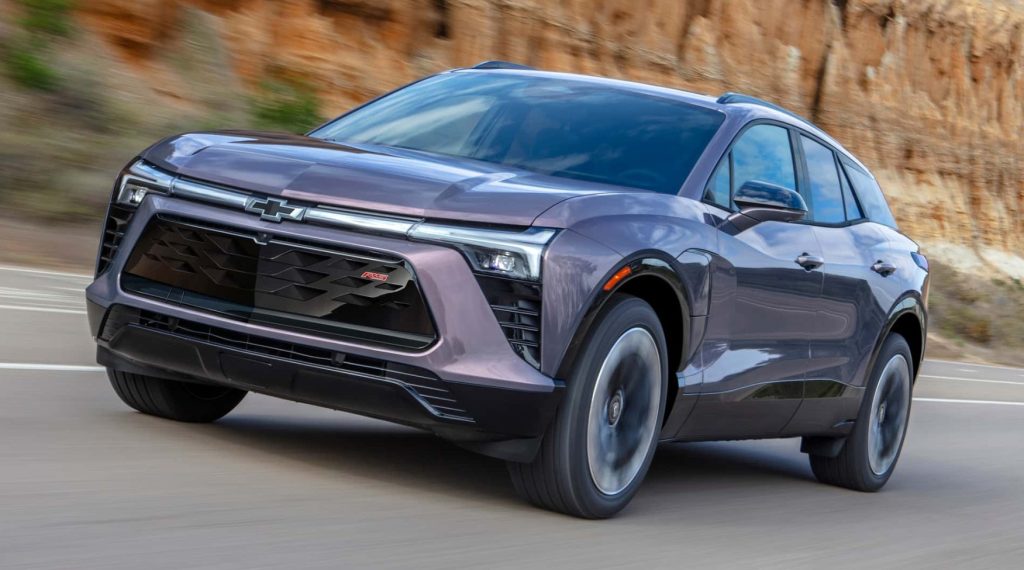
The RS offers more distinctive styling and equipment, while the SS justifies its higher position primarily through performance, a larger battery, and additional standard features. The new charging port benefits the lineup as a whole, but it does not change the fundamental differences between the trims.
For shoppers comparing the Blazer EV with other electric SUVs, the best approach is to compare the final negotiated price, drivetrain, estimated range, included equipment, and charging access.
Manufacturer incentives and dealer discounts can have a greater effect on the purchase decision than a $300 MSRP adjustment.
The 2027 update is therefore less about a major redesign than a small price increase paired with a useful infrastructure improvement. Chevrolet has made the LT and RS slightly more expensive, left the SS unchanged, and brought native NACS charging to the full range.
For buyers, the charging change may be the most noticeable day-to-day benefit, while the right trim still depends on whether price, range, styling, or performance matters most.