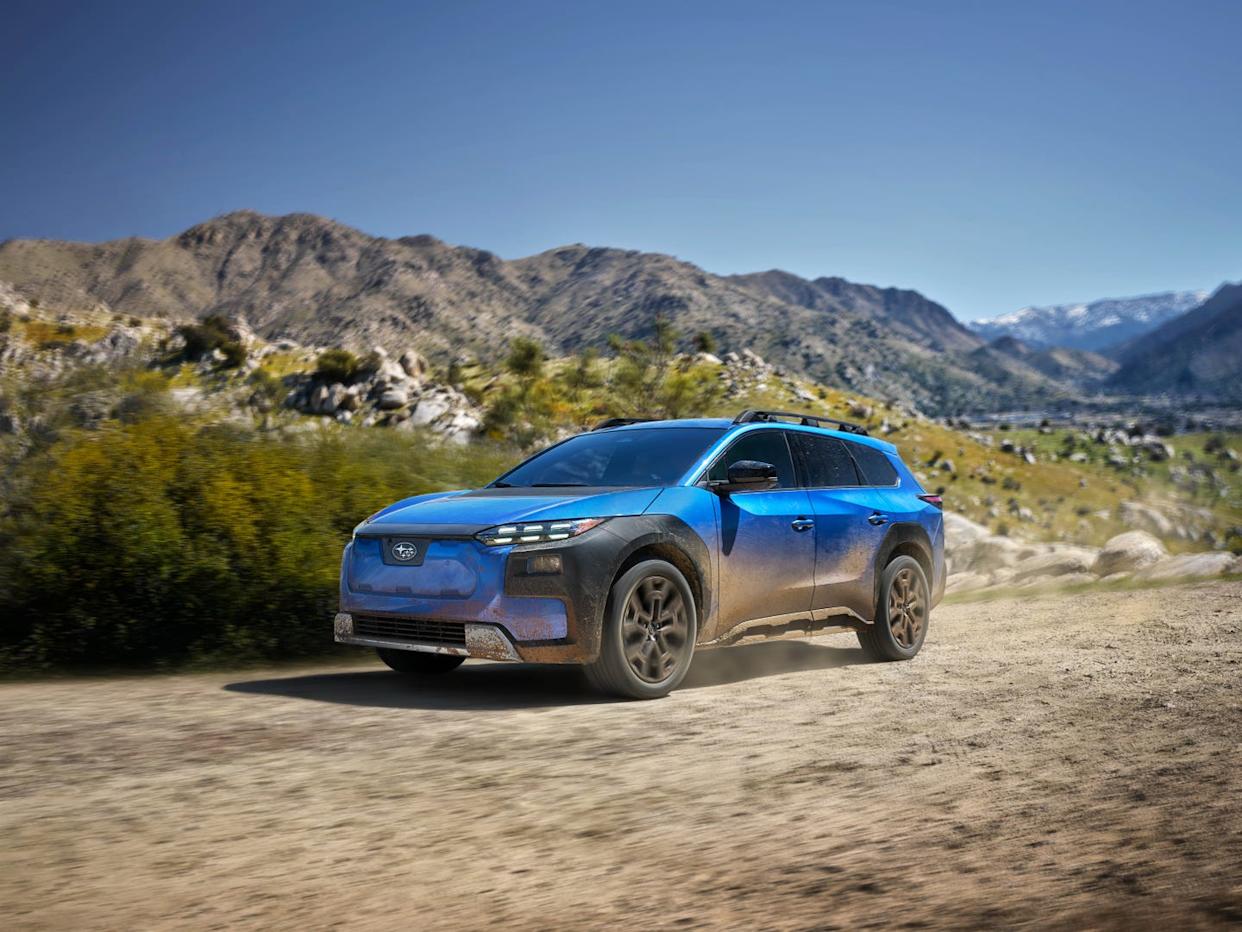
Subaru has given its adventure-focused SUV lineup a new performance flagship with the all-electric Trailseeker.
Combining 375 horsepower, standard all-wheel drive, and a claimed 0-to-60 mph time of 4.4 seconds, the electric SUV delivers acceleration that puts it ahead of the brand’s previous production models.
It also retains the ground clearance, traction systems, and cargo-carrying practicality that Subaru buyers expect from an adventure-oriented vehicle.
Featured in WardsAuto’s October 16, 2026 coverage, the Trailseeker illustrates how electrification is changing Subaru’s traditional strengths.
Rather than relying on a conventional gasoline engine and mechanical drivetrain, the SUV uses electric motors on both axles to deliver immediate power and manage traction across different road surfaces. Its appeal rests on combining that performance with everyday usability, rather than turning the vehicle into a dedicated performance machine.
Dual Electric Motors Make the Trailseeker Subaru’s Quickest Production Vehicle
The Trailseeker’s powertrain uses two permanent-magnet AC synchronous electric motors, one mounted at each axle. Each motor produces 224 horsepower and 198 lb-ft of torque, although the combined system output is rated at 375 horsepower and 396 lb-ft of torque.
The individual motor figures should not simply be added together because the system’s maximum combined output is limited by how the motors and battery operate together.
That output gives the Trailseeker a substantial performance advantage over Subaru’s familiar gasoline-powered SUVs. According to WardsAuto, the electric crossover can accelerate from zero to 60 mph in approximately 4.4 seconds, making it Subaru’s quickest production vehicle yet.
Electric motors can deliver strong torque with very little delay, helping explain why the Trailseeker can feel so responsive when pulling away from a stop or accelerating into traffic.
The powertrain’s design also earned industry recognition. The Trailseeker was named to the 2026 Wards 10 Best Engines and Propulsion Systems list, highlighting the engineering behind its electric drive system.
The award is significant for a company long associated with horizontally opposed gasoline engines and symmetrical all-wheel drive, as it shows that Subaru’s performance identity is no longer tied exclusively to internal combustion.
Power comes from a 74.7-kWh lithium-ion battery pack. That battery supplies the front and rear motors through integrated drive units, which combine electric motors, reduction gearing, and power electronics.
The arrangement reduces the need for the conventional transmission hardware found in gasoline-powered vehicles while allowing the SUV to deliver power smoothly and continuously.
The performance numbers, however, tell only part of the story. The Trailseeker is not a low-slung sports car built primarily for cornering speed. It is a relatively large electric SUV with a taller body, useful cargo space, and ground clearance intended for uneven surfaces.
Its acceleration gives drivers extra responsiveness, but the vehicle’s mission remains broader than straight-line speed.
That distinction matters for Subaru customers. The brand has built its reputation around vehicles that can handle daily commuting, poor weather, and outdoor trips without requiring a specialized off-road vehicle. The Trailseeker adds a quicker, quieter powertrain to that formula while keeping all-wheel drive standard.
A Range of Up to 281 Miles and Charging Designed for Road Trips
Performance would mean less to many electric SUV buyers if it came at the expense of usable range. Subaru rates the Trailseeker for up to 281 miles on a full charge when equipped with 18-inch wheels.
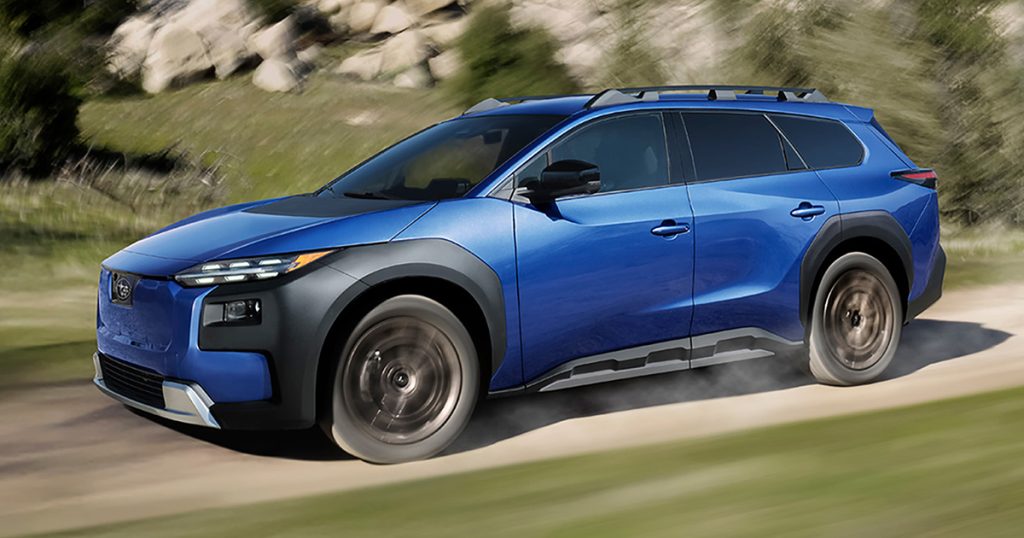
That figure gives it enough estimated range for commuting, errands, and many weekend trips, although the distance available in real driving will depend on speed, temperature, terrain, wheel choice, and climate-control use.
The 74.7-kWh battery is central to that balance. The Trailseeker combines a relatively large battery with dual-motor all-wheel drive, a configuration that offers traction and performance but can consume more energy than a comparable front-wheel-drive setup.
Its official range therefore needs to be considered alongside its capability, rather than compared with electric vehicles designed primarily for maximum efficiency.
Charging speed is another important part of the package. Subaru says the battery can charge from 10% to 80% in approximately 28 minutes under suitable conditions.
That is a useful benchmark for road-trip planning, but it is not a guarantee that every charging stop will take that long. Battery temperature, charger output, the vehicle’s charging curve, and the state of charge when plugging in can all affect the result.
The Trailseeker also supports access to the Tesla Supercharger network through its North American Charging Standard-compatible connection. Access to a larger charging network can make longer journeys easier to plan, particularly for drivers travelling beyond the areas where they already know the available public chargers.
Drivers should still check charger compatibility, availability, and payment requirements before setting off.
Range remains one of the biggest practical considerations for buyers comparing electric SUVs. At up to 281 miles, the Trailseeker does not claim to be a long-distance range leader.
Instead, Subaru is offering a combination of substantial power, standard all-wheel drive, and a battery capacity suited to everyday use and moderate road trips. Buyers who regularly travel long distances through areas with limited charging infrastructure may still prefer a vehicle with greater range or faster charging.
Off-Road Hardware Keeps the Trailseeker Connected to Subaru’s Identity
The Trailseeker’s strongest distinction from many performance-oriented electric crossovers is its attention to rough-road capability.
Subaru lists 8.5 inches of ground clearance, standard Symmetrical All-Wheel Drive, and a dual-function X-MODE system with settings for Snow/Dirt and Deep Snow/Mud. Grip Control and Downhill Assist Control are also included to help manage traction and vehicle movement on challenging surfaces.
The electric drivetrain gives Subaru another way to manage power delivery. With a motor at each axle, the vehicle can adjust how torque is distributed between the front and rear wheels. Sensors help the control system respond to acceleration, braking, and turning, supporting stability and traction as conditions change.
That approach builds on Subaru’s established all-wheel-drive philosophy but uses electric motors instead of a conventional engine and mechanical power-transfer arrangement.
Ground clearance and traction software do not make the Trailseeker an unstoppable off-roader. Tire selection, vehicle weight, approach and departure angles, underbody protection, and driver judgment still matter.
Its capabilities are best understood as an advantage on snowy roads, muddy access tracks, gravel routes, and moderate trails, rather than a promise that it can tackle every obstacle intended for a purpose-built off-road vehicle.
Practicality also remains part of the formula. Subaru describes the Trailseeker as having more cargo space and a taller roof than the Solterra, giving owners additional room for luggage and outdoor equipment.
The vehicle is designed to serve as a family SUV as well as a platform for weekend adventures, a combination that may appeal to drivers who want electric performance without giving up utility.
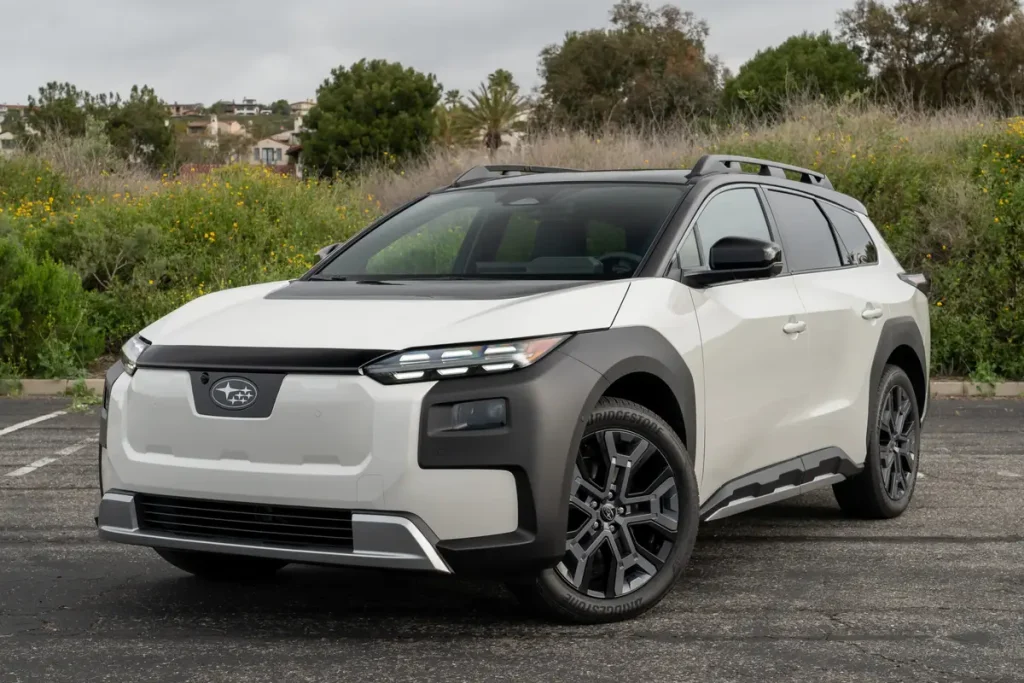
In the U.S. lineup, the 2026 Trailseeker starts at $39,995 for the Premium trim, before the $1,450 destination and delivery charge. The Limited starts at $43,995, while the Touring starts at $46,555, also before the destination charge.
Those prices position it as a mainstream electric SUV rather than a premium performance model, although buyers should check current dealer pricing and incentives when comparing final costs.
The Trailseeker expands Subaru’s growing lineup of electric vehicles, joining the Solterra and the more compact Uncharted. Each model serves a different purpose, with the Uncharted designed for drivers who prefer a smaller crossover. The Trailseeker, on the other hand, offers a roomier interior, greater ground clearance, and more power, making it a suitable choice for those seeking a larger electric vehicle built for adventure.
Together, these models give Subaru more ways to appeal to customers considering electric power without abandoning the brand’s focus on all-weather traction and outdoor practicality.
The Trailseeker’s 375 horsepower and 4.4-second sprint to 60 mph make it a notable milestone for Subaru, but its appeal goes beyond speed. Its 281-mile maximum estimated range, charging capability, standard all-wheel drive, and 8.5 inches of ground clearance give it a broader purpose than simply being the quickest Subaru.
The challenge will be delivering that mix of performance and adventure-ready usefulness in real-world ownership, where charging access, weather, and driving conditions shape the experience as much as the headline specifications.