Cars from 1990 belong to a very different era of automotive safety. Many had fewer airbags, less sophisticated crash structures, and none of the driver-assistance technology now common in new vehicles.
Yet older cars did have certain characteristics that can be advantageous in specific situations, including simpler controls, large windows in some designs, and fewer electronic systems that can distract drivers.
The important distinction is that a car from 1990 cannot fairly be called safer than a modern car in general. This article examines ten period vehicles through a more precise lens, separating their practical safety strengths from the major protections that newer vehicles provide.
1. 1990 Acura Legend: Advanced Restraints for Its Era
The 1990 Acura Legend was an early example of a Japanese luxury car bringing meaningful safety equipment to American buyers. Honda’s original US specifications listed a supplemental restraint system, or SRS, across the Legend sedan and coupe lineup.
Four-wheel disc brakes were also standard, while the anti-lock braking system was fitted to the L and LS versions rather than every trim. Those distinctions matter because equipment could vary even within the same model year.
The Legend’s safety advantage was not that it could outperform a modern luxury sedan in a crash. Its significance was that features once associated with more expensive vehicles were becoming available in a wider range of trims.
An airbag used with a seat belt can help reduce the risk of certain injuries in a frontal collision, while ABS helps prevent the wheels from locking during hard braking, allowing the driver to retain more steering control.
Yet the 1990 system was far less comprehensive than today’s restraint technology. The Legend did not offer modern side-curtain airbags, automatic emergency braking, or electronic stability control as found in many newer vehicles. Its original airbag system also lacked the sophisticated occupant sensing and deployment strategies used in current cars.
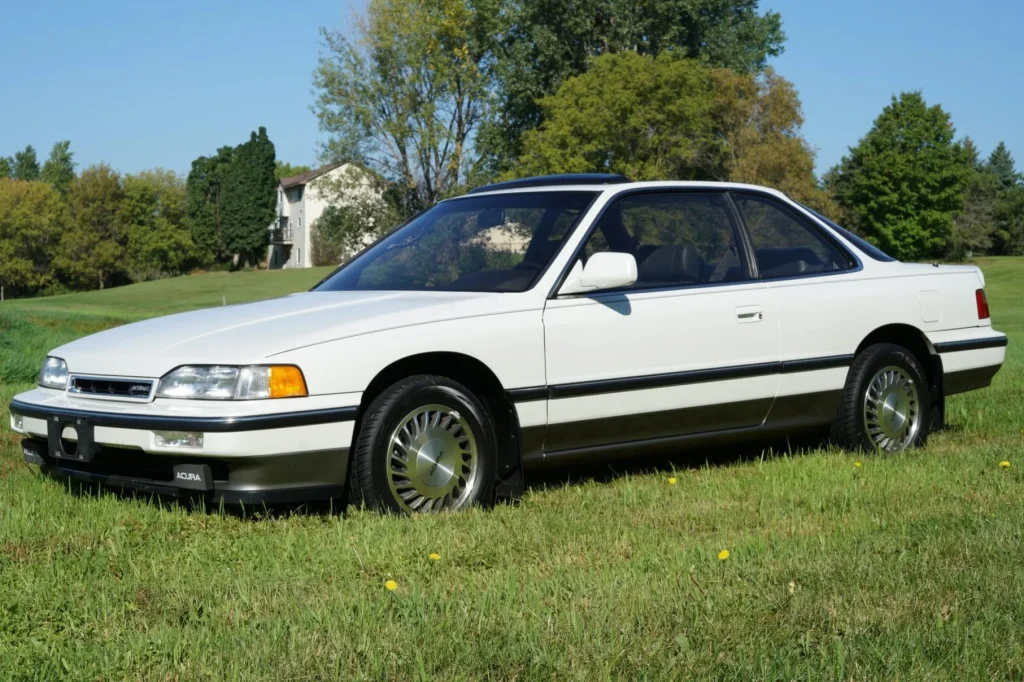
So what could it do better than some modern cars? Its physical controls and relatively straightforward cabin layout may be easier for certain drivers to understand than a newer vehicle that buries common functions inside touchscreens. That is a usability advantage, not proof of superior crash protection.
The Legend deserves a place on this list for bringing useful passive safety equipment to a luxury car of its time. It demonstrates how safety technology was advancing in 1990 while also showing how much protection modern vehicles have added since then.
2. 1990 Volvo 740: A Strong Focus on Occupant Protection
The Volvo 740 reflected the company’s long-standing emphasis on protecting occupants through seat belts, cabin structure, and carefully designed interior components. In the United States, the 1990 model could be equipped with a driver’s airbag and a knee bolster.
Volvo’s owner’s manual describes the airbag as a supplemental restraint intended to work alongside the three-point seat belt, not replace it.
That emphasis on restraint systems was important in an era when airbags were not yet universal across every model and trim. A properly worn three-point belt helps restrain the upper and lower body, while a driver’s airbag provides additional protection in certain frontal crashes.
The knee bolster was designed to help manage lower-body movement in a collision. These features show that occupant protection was more than a matter of making a car feel solid or heavy.
The 740 also illustrates why old safety reputations need careful handling. Volvo built its identity around crash protection, but a brand’s reputation cannot substitute for comparable crash-test data.
Modern vehicles benefit from decades of improvements in crash structures, airbags, side-impact protection, and electronic stability control. NHTSA notes that electronic stability control became mandatory on new passenger vehicles in the United States beginning with the 2012 model year.
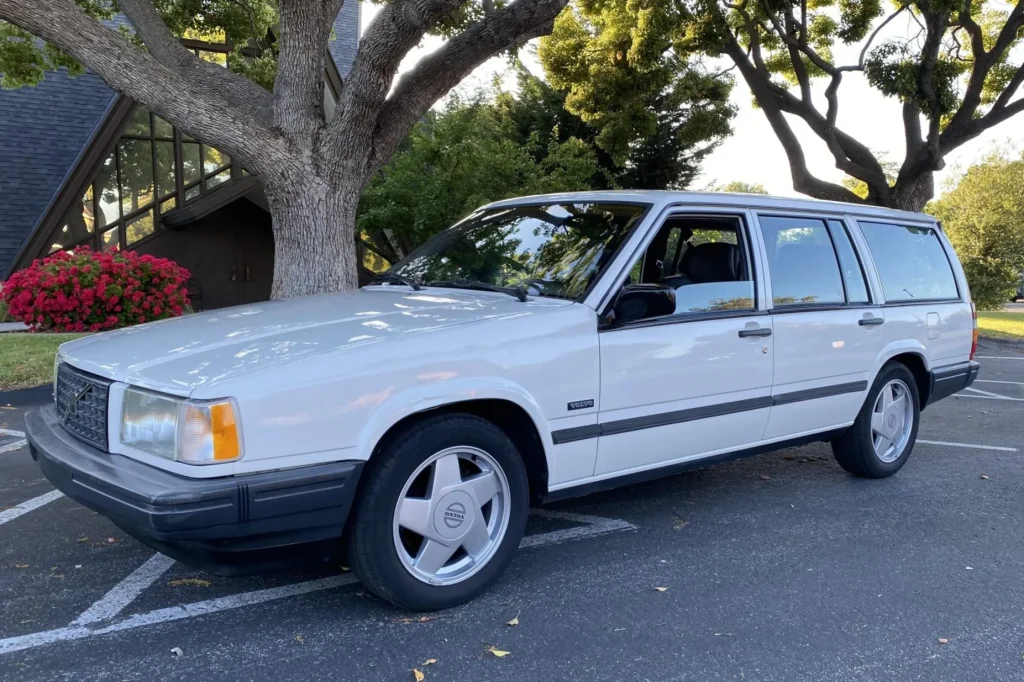
Where might the 740 feel preferable today? Its relatively conventional dashboard and physical controls can be simpler to operate than some touch-heavy modern interiors. Large windows and a traditional seating position may also suit drivers who value direct visibility, although visibility varies by vehicle and driver.
The 740 is therefore best understood as a car that took occupant protection seriously for its era, not one proven safer than modern vehicles. Its restraint equipment was meaningful, but modern crash protection and crash avoidance have moved substantially beyond what a 1990 design could offer.
3. 1990 Saab 900: Anti-Lock Brakes and a Driver’s Airbag
The 1990 Saab 900 distinguished itself in the US market by including two key safety features as standard equipment across all American models, namely anti-lock brakes and a driver’s-side airbag.
Saab’s historical model information confirms that ABS became standard on all 1990 US-market 900s, including entry-level versions, while the driver’s airbag replaced the earlier motorized seat-belt arrangement.
ABS was particularly valuable during emergency braking. By helping prevent the wheels from locking, the system could allow the driver to retain steering control while slowing down. That did not guarantee a shorter stopping distance on every surface, but it gave drivers a way to steer around an obstacle while braking hard.
The airbag provided another layer of protection in certain frontal collisions, working alongside the seat belt.
The Saab’s combination is noteworthy because many cars from this period relied on automatic seat belts to meet federal occupant-protection requirements.
NHTSA records explain that the 1990 requirement allowed manufacturers to use automatic belts, airbags, or other qualifying restraint systems. Airbags were not mandatory in every car at that point.
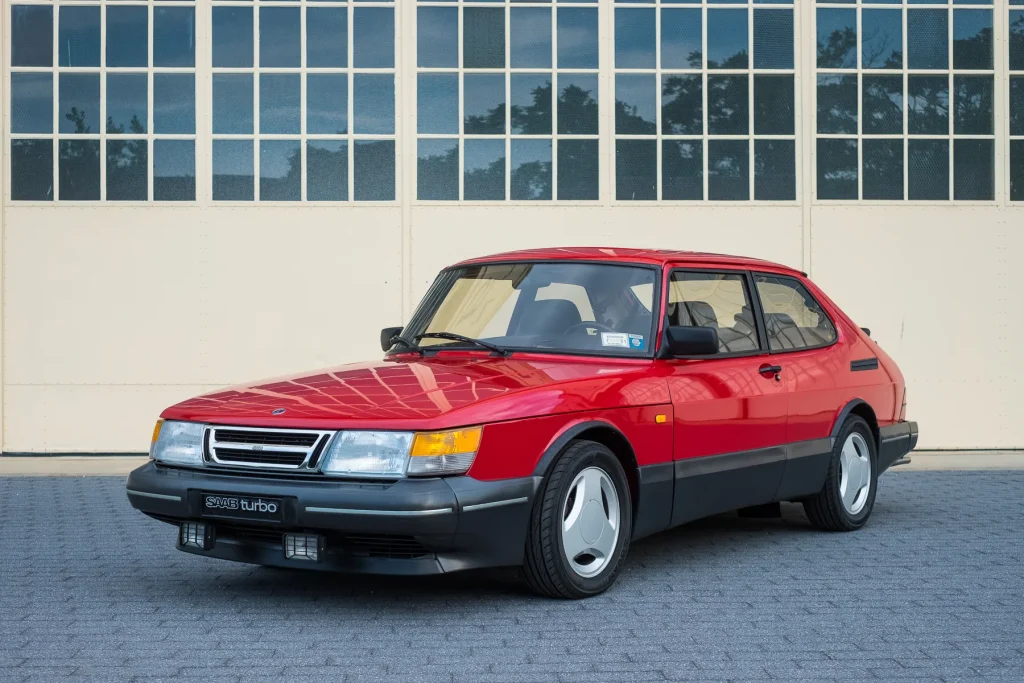
Still, the 900 cannot reasonably be described as safer than a modern vehicle in a crash. It lacked today’s widespread side-curtain airbags, electronic stability control, and automatic emergency braking. Its importance lies in offering useful crash-avoidance and occupant-protection technology at a time when these features were not universal.
For a 1990 car, the Saab 900 was well equipped. Its combination of ABS and a driver’s airbag shows that meaningful safety advances were already reaching production cars, even though modern vehicles now offer much broader protection.
4. 1990 Volvo 240: A Driver’s Airbag in a Traditionally Built Sedan
The 1990 Volvo 240 retained its traditional rear-wheel-drive design while offering a significant safety improvement for US buyers, with a driver’s-side airbag included as standard equipment. Volvo’s historical records and contemporary documents clarify that the airbag was designed to work alongside the three-point seat belt rather than replace it.
That distinction matters because airbags work as part of a restraint system. The seat belt helps keep an occupant positioned during a crash, while the airbag cushions certain movements of the upper body in qualifying frontal impacts.
The 240’s driver’s airbag was an important step for a model whose basic design dated back much further than modern vehicles.
The car’s upright cabin and relatively simple dashboard may also appeal to drivers who prefer straightforward controls. But these characteristics should not be confused with proven crash superiority.
A vehicle’s safety depends on its crash structure, restraint systems, occupant protection in different impact directions, and ability to help prevent a collision in the first place.
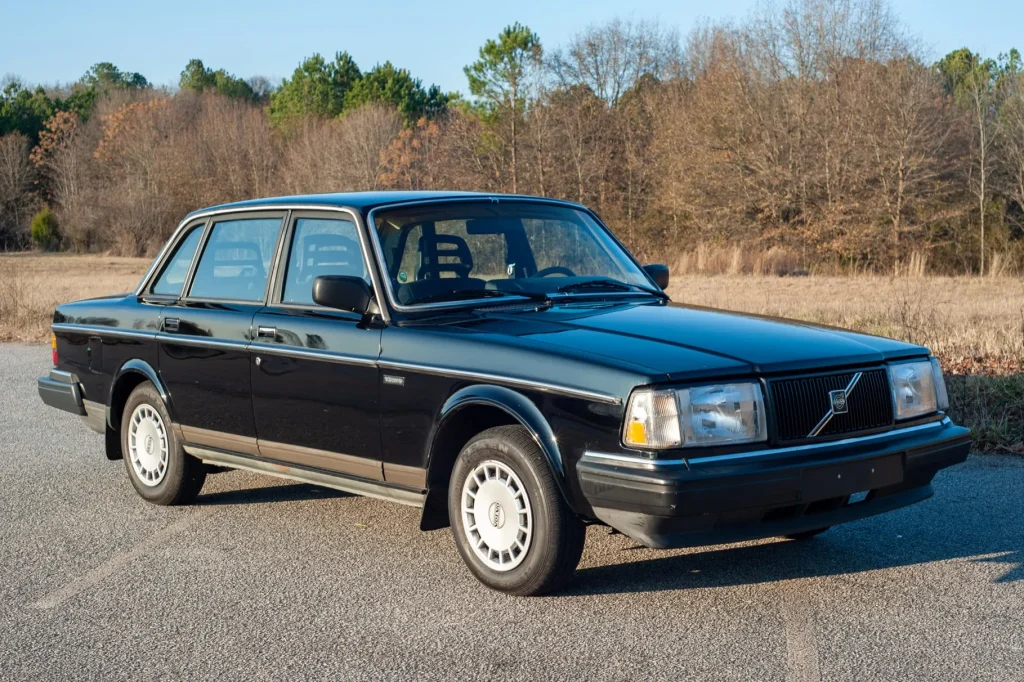
The 240 did not offer the full range of modern safety equipment. Side-curtain airbags, electronic stability control, and automatic emergency braking were not part of its 1990 package. Its older crash structure also cannot be assumed to perform as well as a modern passenger compartment designed using decades of additional crash research.
The Volvo 240 deserves recognition for bringing a driver’s airbag to its US lineup in 1990. It represents a meaningful milestone in the evolution of restraint systems, but it is not evidence that older cars provide better protection than modern vehicles.
5. 1990 Mercedes-Benz 190E: Engineering Focused on Crash Protection
The Mercedes-Benz 190E represented the German manufacturer’s approach to building a compact luxury sedan around structural engineering, controlled occupant movement, and carefully designed restraints.
Its relatively small footprint made it easier to maneuver than a full-size luxury car, while its conventional dashboard and physical controls kept everyday operation straightforward.
Mercedes had invested heavily in occupant protection well before 1990. The 190E belonged to a generation of cars developed with attention to the passenger compartment, seat-belt geometry, and the management of crash forces.
However, buyers should not assume that every example came with the same safety equipment. The 1990 US model did not offer modern side-mounted or head-protection airbags, and equipment varied by configuration.
One potential advantage today is the car’s relatively uncomplicated interface. Drivers who dislike navigating touchscreens may find conventional buttons and controls easier to operate without taking their eyes off the road. That is a practical usability benefit, not evidence of superior crash performance.
The 190E also lacks technologies that have become important in modern accident prevention. Electronic stability control can help correct a developing skid, while automatic emergency braking can intervene when a collision appears imminent. Neither feature was part of the 1990 sedan’s safety package.
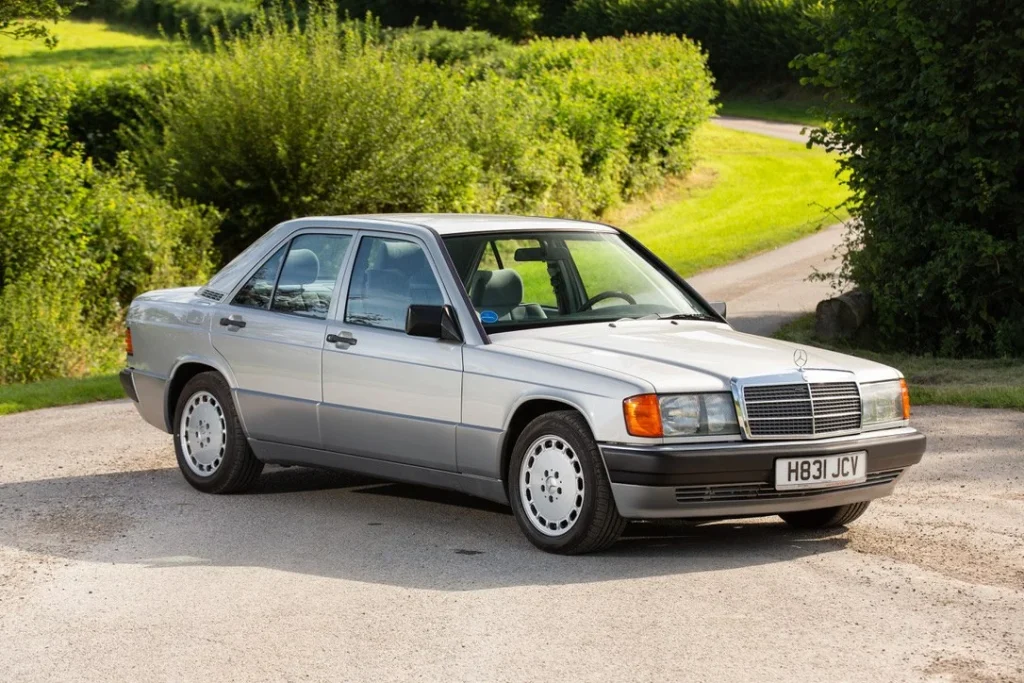
The 190E deserves recognition for bringing Mercedes-Benz engineering to a smaller vehicle, but its age remains a serious consideration. A used example’s condition, functioning restraints, tires, and brake maintenance matter enormously.
Its engineering heritage cannot compensate for missing modern protection, and it should not be described as safer than a contemporary sedan without comparable crash-test evidence.
6. 1990 Audi 100: A Distinctive Seat-Belt Pretensioning System
The 1990 Audi 100 featured an unusual safety system known as procon-ten in some markets, designed to use movement of the engine and transmission during a severe frontal collision to tighten the front seat belts.
US-market documentation for the Audi 100 also describes a driver’s-side supplemental airbag on equipped vehicles. The precise equipment depends on the individual car, so buyers should verify the original specification rather than assume every example had an airbag.
The principle behind procon-ten was to reduce slack in the restraints and limit how far the front occupants moved forward in a crash. It represented a different engineering approach from the electrically triggered pretensioners widely used in later vehicles.
The system is an interesting reminder that automakers experimented with mechanical solutions to occupant protection before modern electronic restraint systems became commonplace.
That innovation did not make the Audi 100 safer than a current car in every type of collision. It lacked side-curtain airbags, modern electronic stability control and contemporary automatic crash-avoidance systems. Its older body structure also was not designed around the same crash-test requirements and occupant-protection targets used for today’s vehicles.
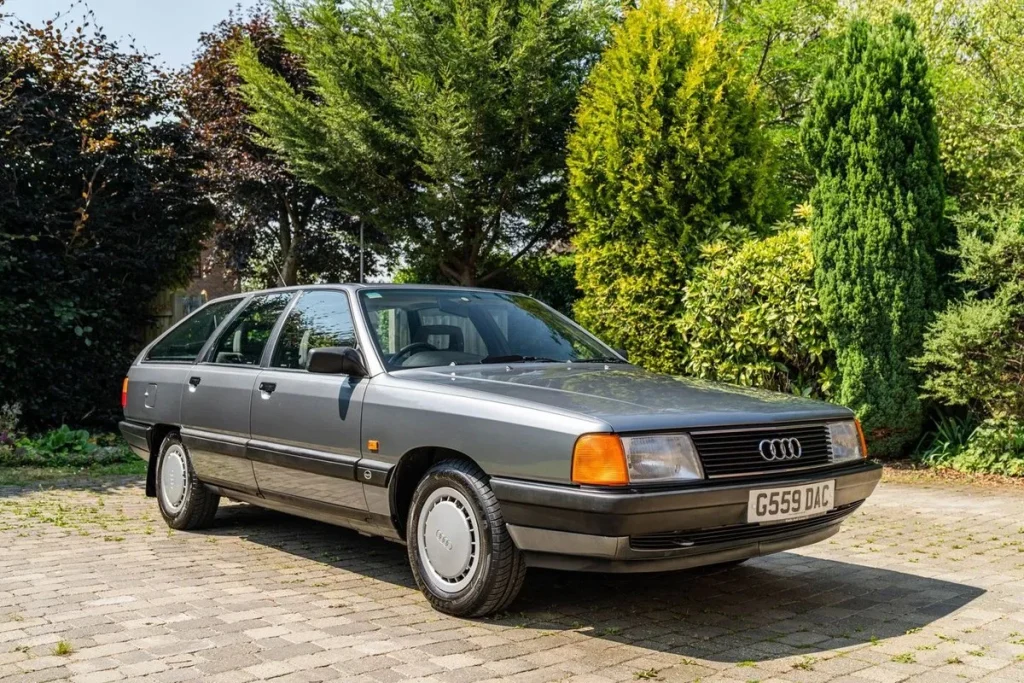
The Audi’s relatively conventional controls may be easier for some drivers to use than a modern interface dominated by touchscreen menus. But familiar controls cannot offset the advantages of newer crash structures and more extensive airbags.
For a collector, the Audi 100 offers an intriguing piece of automotive safety history. For someone considering one as everyday transportation, the more important questions are whether its restraint system remains functional, whether it has outstanding recalls and whether its aging mechanical components are in sound condition.
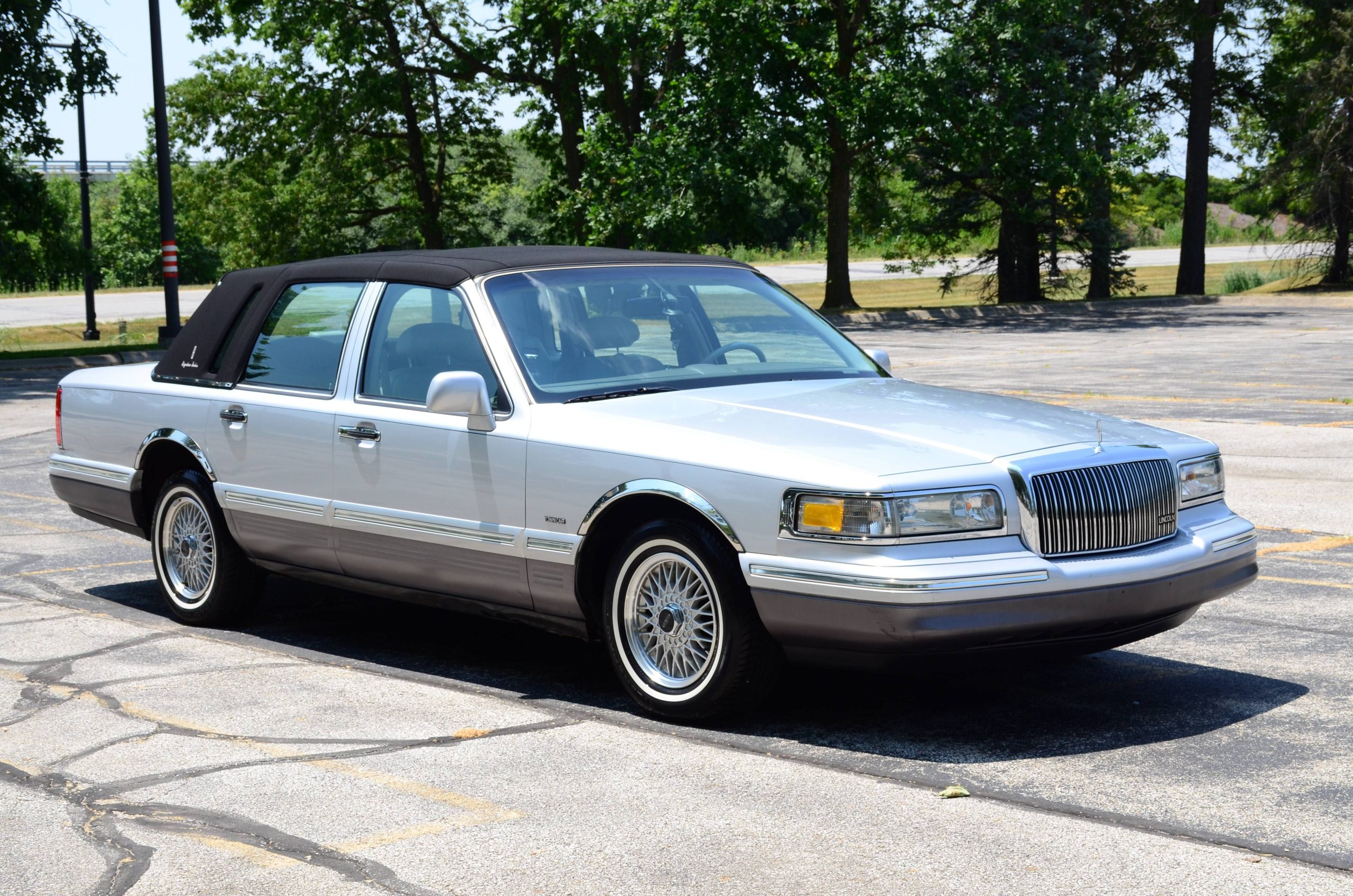
7. 1990 Lincoln Town Car: A Large Sedan With Early Airbag Technology
The Lincoln Town Car represented American luxury in a distinctly different way from smaller European sedans. Its large cabin, long wheelbase and traditional controls made it a comfortable vehicle for long-distance driving.
For 1990, it also marked an important moment in the spread of airbags across the American market, although its exact equipment requires careful qualification.
The Town Car initially offered dual front airbags, but a fire at a supplier’s facility disrupted the supply of passenger-airbag propellant.
As a result, some 1990 vehicles were delivered without the passenger airbag, with a credit applied to the window sticker. Anti-lock brakes were also available as an option in 1990, rather than standard on every example.
That history makes the Town Car a useful illustration of how safety equipment was becoming more common but was not yet consistent across every vehicle.
Its large dimensions and substantial curb weight may influence how it behaves in a collision, but size alone does not prove that it provides better protection. Crash compatibility, structural integrity and restraint performance are also crucial.
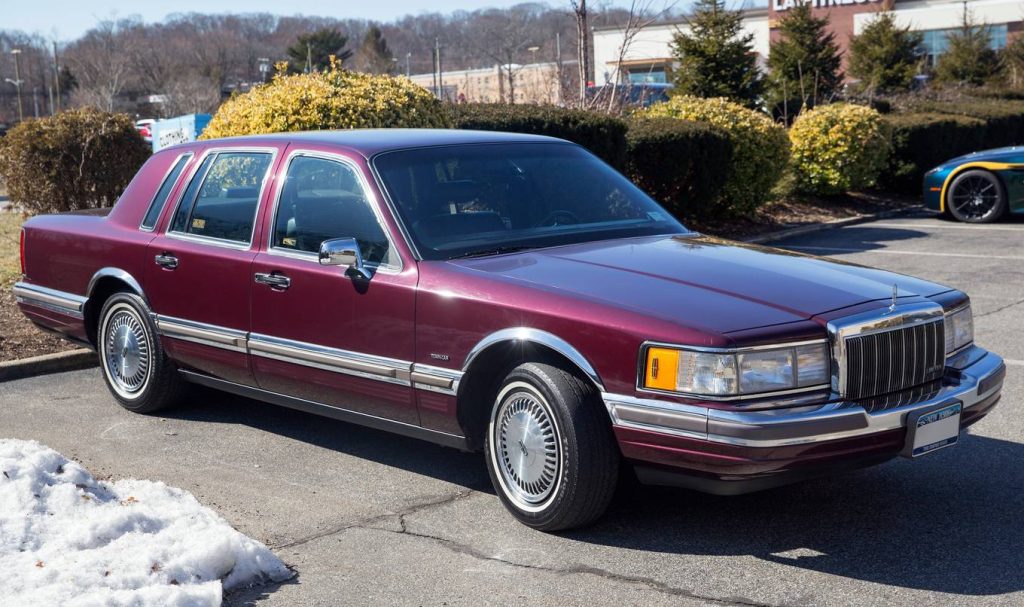
The Town Car’s physical buttons and traditional instrument panel can be easier to operate than some modern touch-based systems. However, it lacks today’s widespread side-curtain airbags, electronic stability control and automatic emergency braking.
Its safety significance lies in its early adoption of frontal airbags, not in a claim that it outperforms modern luxury sedans. Anyone considering one should verify whether the passenger airbag is present, confirm that all restraints function correctly and inspect the car’s maintenance and recall history before relying on it for regular driving.
8. 1990 Subaru Legacy: A Practical Design With All-Wheel-Drive Availability
The Subaru Legacy entered the US market around 1990 as a new family-car option, offering sedan and wagon body styles and, depending on configuration, all-wheel drive. Its practical packaging and available drivetrain made it appealing to drivers who regularly encountered rain, snow or other conditions that reduce tire grip.
All-wheel drive can help a vehicle accelerate more effectively when the road surface is slippery because engine torque can be distributed to more than two wheels. But it does not automatically shorten braking distances or guarantee better control in every situation.
Tire quality, speed and road conditions remain decisive, and a car with all-wheel drive can still lose traction.
US-market Legacy models from this period used automatic seat belts to meet federal passive-restraint requirements. A driver’s airbag was not introduced as standard equipment across the lineup until later model years, so the 1990 car should not be described as having a modern airbag package.
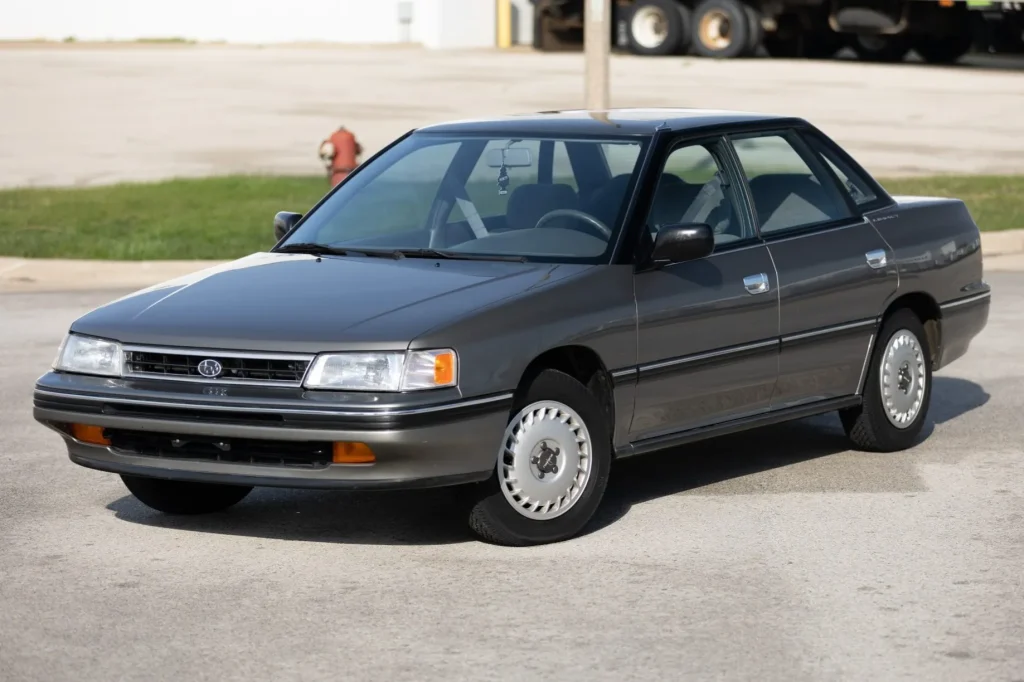
The Legacy’s conventional cabin and straightforward controls may appeal to drivers who prefer fewer electronic interfaces. Yet its older restraint system does not offer the same coverage as a modern car equipped with front, side and curtain airbags. It also lacks contemporary stability control and collision-avoidance features.
The Legacy is worth including because it shows how automakers were improving traction and everyday usability while safety technology continued to develop.
Its all-wheel-drive availability could be useful in specific driving conditions, but that is not proof that the vehicle is safer than modern cars. Buyers should inspect the tires, brakes, seat belts and any aging drivetrain components before putting an old example back on the road.
9. 1990 Ford Taurus: Clear Controls and a Family-Focused Layout
The Ford Taurus helped redefine the American family sedan with its aerodynamic styling, front-wheel-drive layout and practical interior. In 1990, it offered a relatively modern cabin for its time, with conventional controls and a broad windshield that could provide a useful view of the road.
Those characteristics may appeal to drivers who prefer a straightforward interface over the multiple screens and menus found in some newer vehicles.
Its safety equipment, however, reflects the limits of the period. The 1990 Taurus did not offer side-curtain airbags, electronic stability control or automatic emergency braking.
Like many US-market cars of the era, it relied on the restraint systems required under federal regulations, including automatic occupant protection such as motorized seat belts. The specific equipment varied with the model and trim.
The Taurus’s front-wheel-drive layout could provide predictable behavior in many everyday situations, but drivetrain configuration is not a substitute for electronic stability control. A driver can still lose control during abrupt steering, excessive speed or slippery conditions.
Modern stability systems can apply braking at individual wheels to help correct certain skids, giving newer cars a significant advantage in accident avoidance.
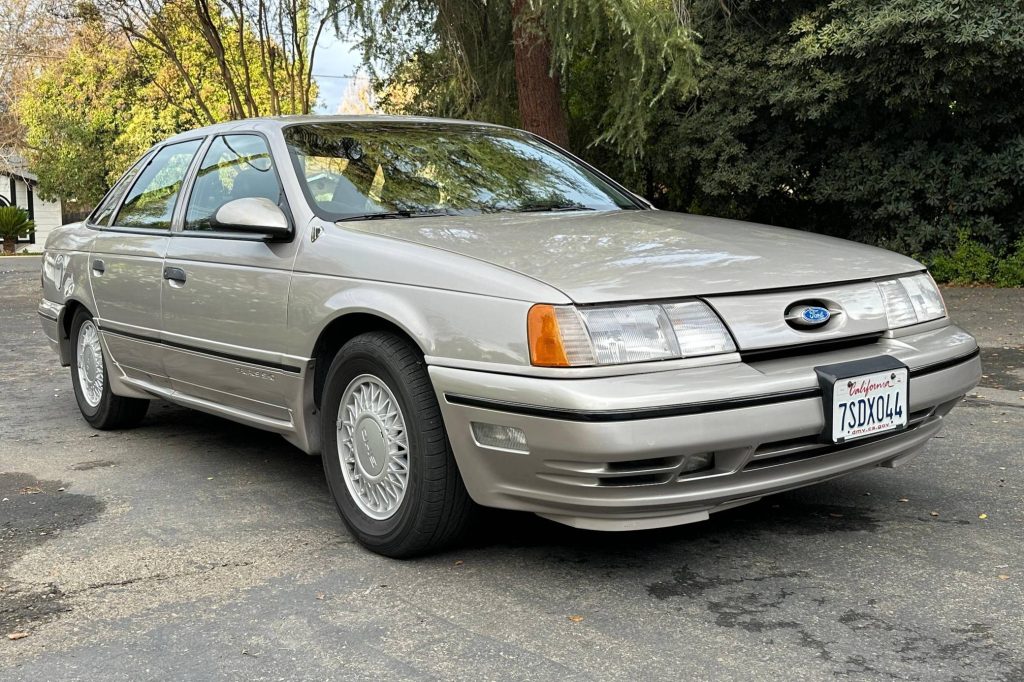
The car’s familiar controls might reduce the need to navigate touchscreen menus, but this benefit is subjective. Newer vehicles can also offer steering-wheel controls and voice commands, while adding blind-spot monitoring, rearview cameras and automatic braking.
The Taurus deserves a place here as an example of a practical, well-packaged family sedan from 1990. Its usability may suit some drivers, but its older restraints and lack of modern crash-avoidance technology prevent any sound conclusion that it is safer than a contemporary car.
10. 1990 Chevrolet Caprice: A Large Body and Traditional Controls
The Chevrolet Caprice was a substantial American sedan designed for spaciousness and a comfortable ride. Its large cabin, conventional dashboard and broad seating layout made it a familiar choice for families, fleets and drivers who preferred full-size cars.
The 1990 model also had a substantial curb weight, with some sedan configurations listed at roughly 3,700 pounds.
It is tempting to assume that a heavier vehicle with a large body must be safer than a smaller modern car. That conclusion is too simple.
Weight can affect the forces involved in a collision, but the way the passenger compartment manages crash energy, the restraint systems and the type of vehicle struck all matter. A large vehicle without modern structural engineering and airbags may offer less protection in certain crashes than a newer, smaller vehicle.
The 1990 Caprice did not have the same safety package as later models. Chevrolet’s 1991 information kit lists standard four-wheel ABS and a driver’s-side airbag for that model year, illustrating how equipment developed around this period. Those features should not be retroactively assumed to be standard on every 1990 Caprice.
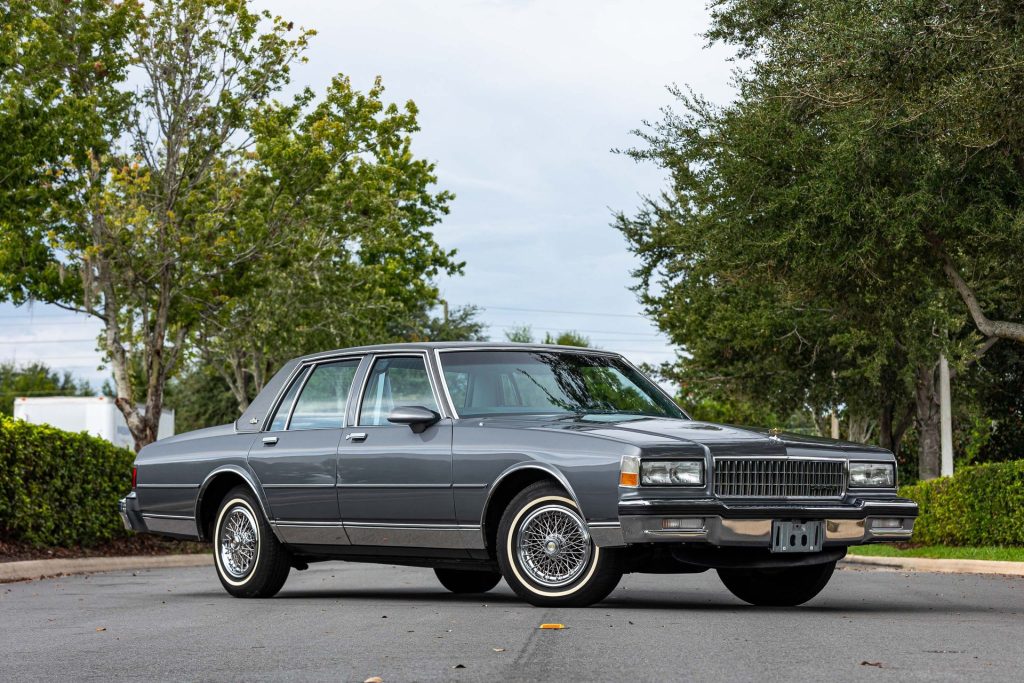
The Caprice’s straightforward controls can be appealing to drivers who want familiar buttons and switches. However, it lacks modern side-curtain airbags, electronic stability control and automatic emergency braking.
Its large body and traditional layout may create a feeling of solidity, but that feeling is not a safety rating. For anyone considering a 1990 Caprice, working seat belts, brake condition, tire quality and the exact restraint equipment are more useful indicators than size alone.