Motor-oil prices are putting additional pressure on American drivers’ maintenance budgets, prompting some vehicle owners to buy their own lubricant and take it to repair shops for an oil change.
Reporting by The Wall Street Journal, cited by The Auto Channel, links rising costs and supply disruptions associated with the conflict involving Iran to more expensive motor oil and higher service bills.
Retailers and repair businesses are also facing increased costs, making routine maintenance harder to price consistently.
Bringing customer-supplied oil can appear to be a straightforward way to save money, especially for vehicles that require full synthetic lubricant. But the savings depend on the price of the oil, the shop’s labor charge, and whether the business accepts outside products.
Drivers should also verify that the engine oil meets the specifications set by their vehicle manufacturer. This reflects a wider shift in car ownership, where even routine maintenance has become an expense that requires careful comparison and budgeting.
Why Motor-Oil and Oil-Change Costs Are Rising
The cost pressure begins well before oil reaches a vehicle’s engine. Motor oil depends on base oils, additives, blending, packaging, and transportation.
Disruptions affecting specialized base-oil production and shipping can tighten supplies and raise costs for lubricant manufacturers and retailers. The conflict involving Iran has disrupted supply chains linked to the Persian Gulf, putting pressure on some synthetic-oil products.
The effect is not necessarily identical across every product. Conventional and synthetic motor oils use different formulations, and individual grades can face different supply conditions.
Modern engines may require particular viscosity grades and industry or manufacturer approvals, meaning drivers cannot simply switch to whichever oil happens to be cheaper. If the specified product becomes more expensive or difficult to obtain, both the customer and the service provider may have fewer economical alternatives.
Repair shops face a separate challenge because they must pay for supplies before charging customers for completed work. If a distributor raises prices or changes availability, a shop may have to adjust its service menu, absorb some of the increase, or source another approved product.
A report from automotive service industry outlet CBT News says dealers were paying an additional $5 to $7 per oil change compared with March, illustrating how even a modest increase in material costs can affect a service department that handles many vehicles.
Retailers are feeling the pressure as well. The Drive reported in September that Costco’s Kirkland motor oil had increased in price by roughly $36 over four months, while oil-change costs at major retailers and independent service businesses were also rising.
That example shows why purchasing oil separately is not automatically a cheaper option than it was earlier in the year. Drivers who compare current shelf prices with an older service receipt may be working from outdated assumptions.
The resulting price increases affect more than the oil itself. An oil-change bill can include the lubricant, filter, labor, disposal fees, and additional inspection services.
When a shop’s material costs rise, the final price may increase even if the labor procedure remains unchanged. The amount a customer pays depends on the vehicle’s oil capacity, the required oil specification, and the service provider’s pricing structure.
That creates a particular problem for owners of vehicles requiring several quarts of premium synthetic oil. Their lubricant bill can represent a substantial share of the service total. Yet using a cheaper oil that does not meet the required specification is not a sensible response.
The correct comparison is between approved products and complete service prices, not simply between the cheapest bottles on a store shelf.
Bringing Your Own Oil: Savings, Shop Policies, and Warranty Questions
Buying oil independently gives drivers more control over the product and its price, but it does not eliminate the cost of professional service. A repair shop still has to drain the old lubricant, replace the filter, refill the engine correctly, and handle used oil responsibly.
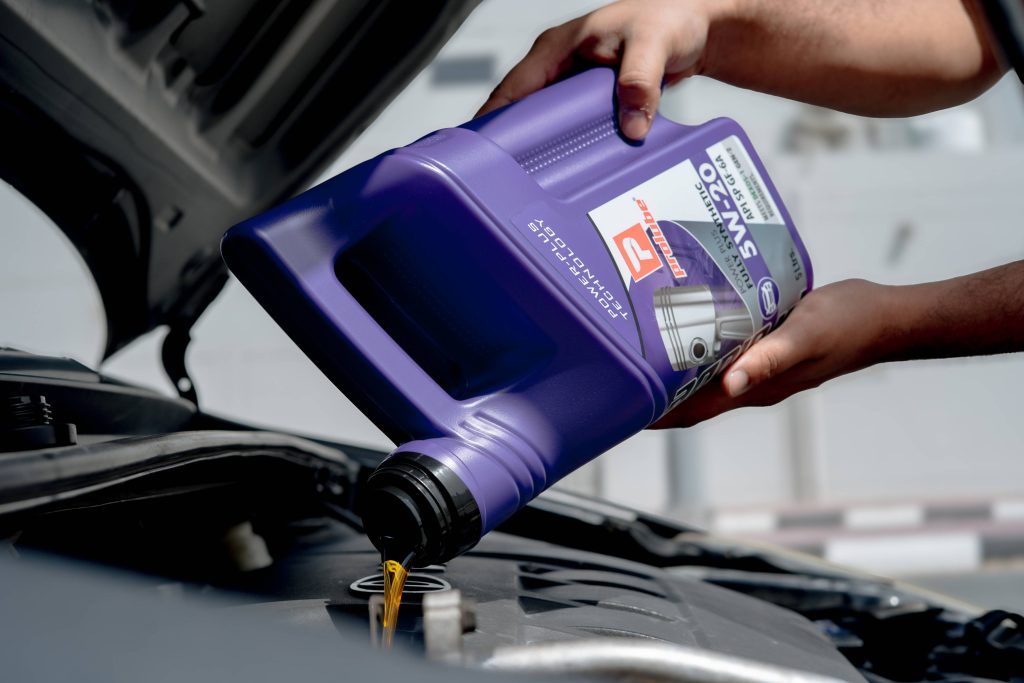
Some businesses will perform that work with customer-supplied materials, while others refuse because their service packages and guarantees are built around products they provide. Policies vary, so drivers should call before buying oil or arriving at the workshop.
The potential savings depend on the difference between retail prices and the shop’s own lubricant charges. A driver who finds the correct synthetic oil on sale may pay less for the product than the amount included in a service package.
However, the shop may charge a higher labor fee for customer-supplied oil, and the customer still needs to buy the correct quantity and potentially a compatible filter. After those costs are included, the savings may be modest or disappear entirely.
Some national quick-lube chains generally do not accept customer-supplied oil, while independent repair shops may be more flexible. Certain retailers and service providers make the decision at the location level.
Before buying supplies, drivers should confirm whether the shop allows customer-provided oil, how much it charges for labor and disposal, and whether bringing their own materials affects the service warranty. Knowing these details helps them compare the actual cost against a complete oil-change package and determine which option offers better value.
A complete service package can offer convenience because the shop selects the lubricant and filter, supplies the materials, and takes responsibility for carrying out the service according to its stated procedures.
Some packages also include inspections or other maintenance checks. Bringing your own oil can make sense for drivers who already know the required specification and have found a genuinely lower price, but it transfers more of the product-selection responsibility to the vehicle owner.
Warranty concerns also deserve a careful distinction. In the United States, manufacturers generally cannot require routine maintenance to be performed exclusively at a dealership as a condition of keeping a vehicle warranty.
Owners should keep itemized records showing when maintenance was performed and which products were used. However, a manufacturer may dispute coverage for an engine problem if it can establish that incorrect oil or improper maintenance caused the damage.
A repair shop may also limit its own service guarantee for customer-supplied materials while remaining responsible for its workmanship under the terms it offers.
The safest approach is to consult the owner’s manual before buying anything. The correct oil must meet the required viscosity grade and the relevant API, ILSAC, or manufacturer-specific specification.
Matching viscosity alone is not always enough, especially for newer engines that require particular approvals. Drivers should also buy from reputable sellers and keep the receipt and product details in case questions arise later.
How Drivers Can Control Maintenance Costs Without Cutting Corners
The first step is to compare complete service prices rather than focusing only on the cost of a bottle of oil. Ask a dealership, an independent mechanic, and a quick-lube business for quotes that specify the oil grade, filter, labor, and any additional fees.
If a shop accepts customer-supplied oil, compare its labor charge with the price of a complete service package. A lower advertised price may exclude extra quarts, synthetic oil, or other items required by the vehicle.
Drivers should also avoid extending oil-change intervals simply because lubricant has become more expensive. The recommended interval depends on the vehicle, engine, driving conditions, and maintenance schedule.
Frequent short trips, extreme temperatures, towing, and heavy traffic can affect maintenance requirements. Follow the manufacturer’s guidance rather than using a longer interval to offset a higher bill.

Buying oil during a legitimate sale can help, particularly when a vehicle requires several quarts, but the product must meet the exact specification. Store oil properly, keep containers sealed, and retain receipts. If a vehicle requires an oil filter as well, confirm whether the shop permits customer-supplied filters before purchasing one.
For drivers who prefer not to manage separate supplies, a complete service package may still be the more convenient choice. It provides one quoted price and reduces the risk of arriving with the wrong oil or insufficient quantity. For others, an independent shop willing to install approved customer-supplied lubricant may provide a useful alternative.
Rising motor-oil prices are changing the economics of a routine service, but the best response is careful comparison rather than cutting maintenance. Bringing your own oil can save money when the retail price is lower and the shop’s labor fee is reasonable.
It is not automatically cheaper, and not every business will accept it. With the correct specification, a clear quote and documented service records, drivers can manage the added expense without compromising the engine’s lubrication requirements.