
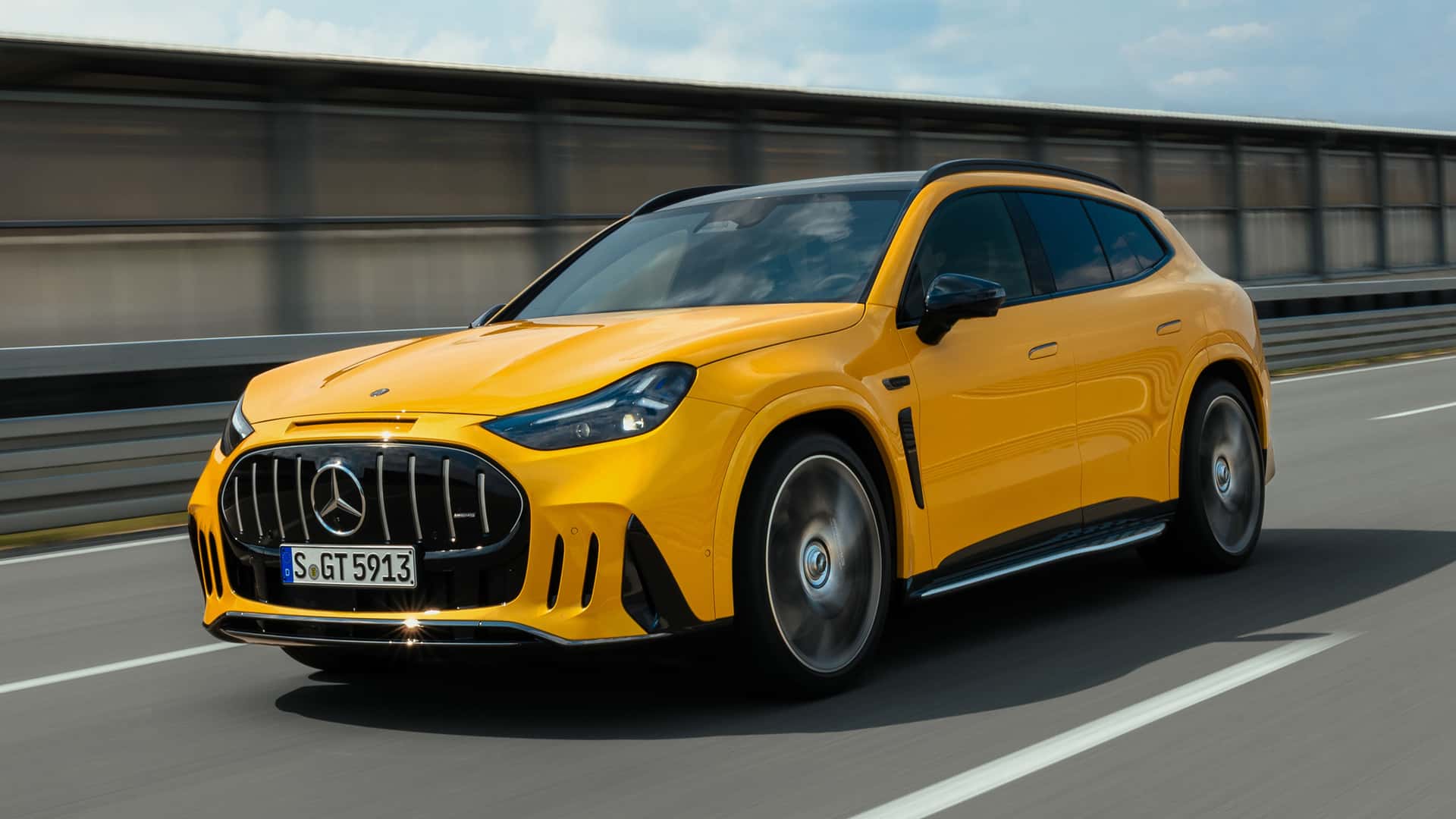
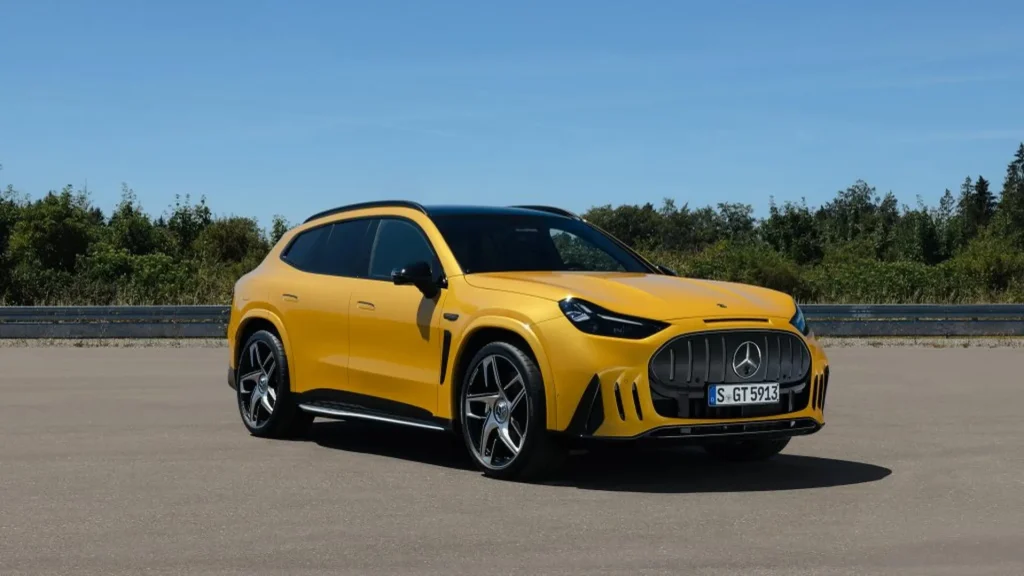
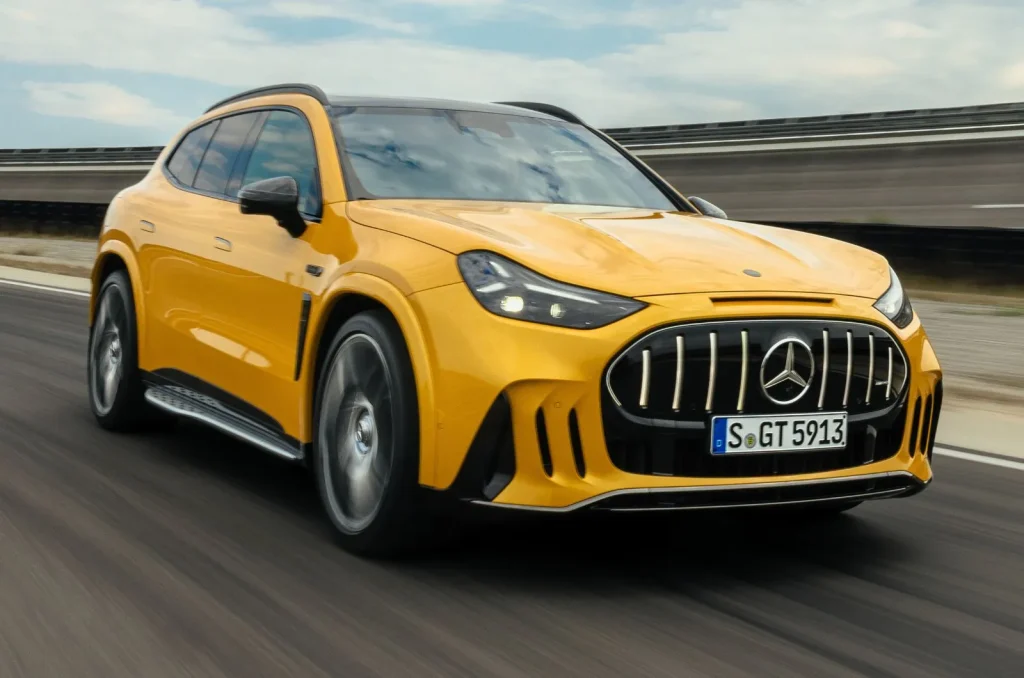
Mercedes-AMG is taking its electric performance ambitions into full-size SUV territory with the new GT SUV, a model developed from the ground up by the brand rather than adapted from an existing Mercedes-Benz vehicle.
Revealed on October 17, 2026, the all-electric SUV will launch in three versions, with the flagship GT 63 delivering a claimed peak output of 1,153 horsepower and DC fast-charging capability reaching 710 kW.
The vehicle also introduces a new combination of active suspension, advanced battery cooling, and performance-focused software designed to bring sports-car responses to a larger, more practical package.
A Ground-Up AMG SUV With Supercar-Level Power
The GT SUV represents a significant step for Mercedes-AMG. The company says it is the first full-size SUV in its 59-year history to be developed entirely in-house, using the dedicated AMG EA high-performance electric architecture. EA high-performance electric architecture.
That distinction matters because the vehicle was not simply created by adding more power and sportier styling to an existing Mercedes SUV. Its underlying platform was developed specifically for high-performance electric vehicles.
At the top of the lineup, the AMG GT 63 SUV uses three axial-flux electric motors. Two are integrated into the rear drive unit, while the third powers the front axle.
Mercedes-AMG quotes peak output of 1,153 horsepower and torque of 1,475 lb-ft, delivered through the brand’s fully variable AMG Performance 4MATIC+ all-wheel-drive system.
The manufacturer estimates a 0-to-60-mph time of 2.4 seconds when measured using a one-foot rollout, or 2.6 seconds without that allowance. Its electronically limited top speed is listed at 168 mph. These are manufacturer estimates, not independently verified test results.
The three-motor configuration is not standard across the entire range. The GT 55 SUV also uses three axial-flux motors and is rated at up to 805 horsepower in Mercedes-Benz USA’s announcement.
The entry-level GT 53 SUV takes a different approach, pairing two permanently excited synchronous motors, one at each axle, for a combined 536 horsepower. This gives the lineup a broader spread of performance while retaining an electric all-wheel-drive layout.
Peak horsepower, however, tells only part of the story. High-performance electric vehicles can produce enormous bursts of power, but repeated acceleration and sustained hard driving place considerable demands on battery and motor temperatures.
Mercedes-AMG says the GT SUV’s powertrain and battery cooling systems are designed to manage heat so the vehicle can deliver performance repeatedly, rather than relying on a brief peak figure that becomes difficult to reproduce once components warm up.
The GT 63 is listed with 711 horsepower of continuous output, considerably below its headline peak but still a substantial figure for sustained driving. The distinction is important for buyers interested in fast highway runs, mountain roads, or repeated acceleration, where consistency can matter as much as a short maximum-power burst.
A 710-kW Charging System and Battery Built for Repeated Performance
The GT SUV’s battery technology is central to its performance claims. The GT 63 uses a usable 128-kWh battery operating on an 800-volt electrical architecture. Mercedes-AMG says the battery uses tall, narrow cylindrical cells with direct cooling, allowing heat to be drawn away efficiently during high-power charging and discharging.
The cell design also incorporates a full-tab construction intended to reduce internal resistance, while the battery’s chemistry is designed to combine energy density with rapid power delivery.
Its maximum DC charging rate of 710 kW is an especially striking specification. That figure is a peak capability, not the charging power a vehicle will necessarily sustain throughout a session.
Actual charging speed depends on factors such as the charging station’s output, battery temperature, state of charge, and the vehicle’s charging curve. Owners would also need access to compatible infrastructure capable of supplying power at the required level to approach the advertised maximum.
Mercedes-AMG estimates that the GT 63 can charge from 10 to 80 percent in approximately 12 minutes under the specified conditions. The company also says a 10-minute charging stop can add up to 454 kilometres, or roughly 282 miles, of range under the European WLTP test cycle.
That is not a U.S. EPA range estimate, and it should not be treated as a promise of the distance drivers will gain in everyday American conditions.
The SUV is also designed to work with 400-volt charging stations, automatically adapting its charging system from 800-volt to 400-volt operation. That flexibility should broaden the range of stations it can use, although compatibility does not mean every charger will provide the same speed.
Mercedes-Benz says the vehicle supports multiple charging standards for different markets, including NACS and CCS1 for North America.
Battery size and charging speed are only part of the ownership equation. Mercedes-Benz has not yet provided an official U.S. EPA driving-range figure in the launch announcement.
The WLTP figures published for European markets use a different test procedure, so American buyers will need to wait for EPA estimates before making a meaningful comparison with rival electric SUVs. Nor does a high peak charging rate alone establish how efficiently the vehicle will use energy during highway driving.
The hardware also reflects the performance goals of the GT SUV. Mercedes-AMG aims to tackle two major challenges associated with high-performance electric vehicles, reducing charging time during long journeys and maintaining consistent performance under demanding driving conditions.
Whether the SUV meets those ambitions in real-world use will depend on independent testing, including charging sessions, repeated acceleration runs, and longer highway journeys.
Active Suspension, Everyday Space, and a Distinctive AMG Cabin
Performance is not limited to the motors. The GT SUV introduces AMG ACTIVE RIDE CONTROL+, a suspension system that uses active hydraulic elements to help control body movement.
Mercedes-AMG says it can counteract both pitch and roll, meaning the system is designed to manage the vehicle’s fore-and-aft movement under acceleration and braking as well as its side-to-side lean in corners. The GT 63 gets the system as standard, while it is optional on the GT 55.
That technology is particularly relevant in a full-size SUV. A tall, heavy vehicle faces different physical challenges from a low sports car, especially during rapid direction changes or hard braking.
Active control of body movement can help the vehicle feel more composed, but it does not eliminate mass or the limits of tire grip. The GT 63’s published DIN curb weight is approximately 5,941 pounds, underscoring the engineering challenge involved in making such a large electric vehicle respond sharply.
Aerodynamics also play a role. Mercedes-AMG lists an active AEROKINETICS roof spoiler and an Airpanel system among the vehicle’s features.
These elements are intended to manage airflow according to driving conditions, balancing aerodynamic efficiency with the cooling and stability requirements of a high-performance vehicle.
The company also describes a low center of gravity and a sporty seating position as part of the SUV’s design, aiming to give the driver a closer connection to the vehicle than its size might suggest.
The cabin and cargo area need to make the vehicle useful beyond performance driving. Mercedes-Benz lists approximately 21.4 cubic feet of rear cargo volume for the GT 63, along with a 2.8-cubic-foot front storage compartment.
Those figures suggest room for everyday bags and smaller items, though the rear cargo capacity is not especially generous for a vehicle described as full-size. Buyers who regularly carry bulky luggage, sports equipment, or family gear will want to assess the actual cargo opening and rear-seat configuration before deciding whether it suits their needs.
The interior is also built around the brand’s latest digital systems. Mercedes-Benz says the SUV uses its MB.OS operating system and an AI-integrated interface, with AMG-specific display themes and controls intended to give drivers access to vehicle functions and performance settings.
Mercedes-AMG is also working to preserve the emotional appeal of driving by offering simulated engine sounds, including a V8 soundtrack or, in the GT 53, a six-cylinder sound. The experience is further enhanced with simulated gear shifts and effects delivered through the seats.
These features are electronically generated rather than produced by a combustion engine, making them a deliberate part of the vehicle’s character rather than a mechanical necessity.
Mercedes-Benz says the 2028 GT SUV is scheduled to reach U.S. dealerships in summer 2027. The launch lineup will consist of the GT 53, GT 55, and GT 63, but U.S. pricing has not yet been announced.
That leaves important questions unanswered, including how much the three versions will cost, what EPA range ratings they will receive, and how the charging system performs on public networks.
The GT SUV stands out for the range of technologies Mercedes-AMG has integrated into a single vehicle. These include a three-motor powertrain, a battery designed for fast charging, advanced active suspension systems, and an interior built to accommodate everyday driving needs.
Its eventual appeal will depend on more than the 1,153-horsepower headline. Pricing, real-world range, passenger comfort, and independent driving tests will determine whether this electric flagship can deliver on its promise of combining luxury SUV practicality with the intensity of an AMG performance car.
