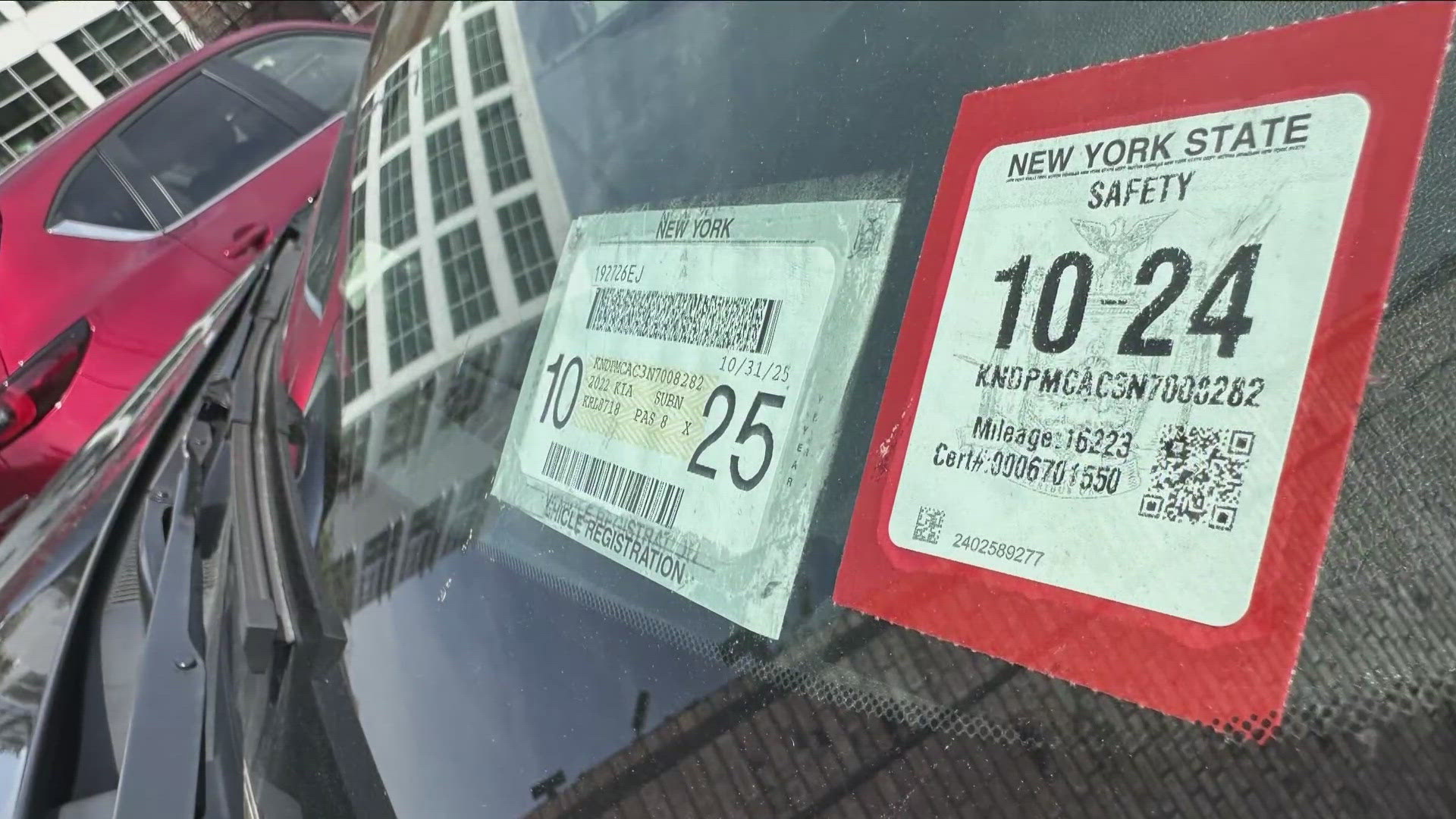
Vehicle registration costs can change at the start of a new year when states introduce new transportation fees, adjust electric-vehicle surcharges, or revise charges for particular license plates. For drivers, these changes can affect the amount due when registering a vehicle or renewing an existing registration.
However, not every increase applies to every car, and some charges are limited to electric vehicles, plug-in hybrids, or specialty plates. Several states have enacted changes scheduled for January 1, 2027, while other proposals remain unconfirmed.
Understanding which vehicles are affected, how much the fees will change, and when the new rules begin can help motorists plan their registration expenses.
1. Tennessee: Annual Registration Fee for Electric Cars Rises to $274
Tennessee has an established increase for battery-electric vehicle registration renewals beginning January 1, 2027. Under the state’s Transportation Modernization Act, the additional annual registration fee for fully electric vehicles rises from $200 to $274 for renewals during the 2027 fee year.
This is separate from the standard vehicle registration charge, so electric-car owners must account for both amounts.
The increase is $74, equivalent to a 37% rise in the supplemental fee. It does not mean every vehicle registered in Tennessee will incur the same increase. Under the existing schedule, conventional hybrid vehicles and plug-in hybrids remain subject to a $100 supplemental fee through December 31, 2027.
Tennessee’s approach reflects a wider challenge for transportation funding. Drivers of gasoline-powered vehicles contribute to road maintenance through fuel taxes, while electric vehicles use little or no gasoline. Additional registration charges provide another way to collect transportation revenue from electric-car owners.
For someone renewing an electric vehicle’s registration in January 2027, the timing of the renewal matters. The new amount applies to qualifying renewals on or after the effective date, rather than retroactively changing a registration already completed under the earlier schedule.

Owners should check their renewal notice and confirm whether any local charges or other registration costs also apply. The $274 figure is the supplemental annual electric-vehicle fee, not the total cost of registering a car in Tennessee.
Because the schedule is established in state law and published by the Department of Revenue, this is a confirmed change rather than a proposal.
2. New Mexico: New Annual Fee for Battery-Electric Vehicles
New Mexico will introduce an additional annual registration fee for qualifying battery-electric vehicles on January 1, 2027. The enacted legislation sets the fee at $70 for the 2027 calendar year, rising to $80 in 2028 and $90 in 2029.
The charge applies to covered electric vehicles with a gross vehicle weight of 26,000 pounds or less and is collected alongside existing registration fees.
For drivers who previously budgeted only for standard registration charges, the additional amount will need to be included when registering or renewing an eligible electric vehicle. The fee is annual, so it is not simply a one-time payment attached to the vehicle’s original purchase.
Plug-in hybrid owners face a separate schedule. Their additional annual registration fee will be $35 in 2027, increasing to $40 in 2028 and $45 in 2029. These amounts should not be confused with the fee for a fully electric vehicle, which is higher under the enacted schedule.
The distinction between battery-electric and plug-in hybrid vehicles matters when estimating costs. A plug-in hybrid combines an electric powertrain with an engine that can use gasoline, whereas a battery-electric vehicle relies on its battery-powered electric drivetrain.

New Mexico’s fee structure also provides a defined path for future increases. Rather than leaving the 2028 and 2029 amounts uncertain, the law specifies the scheduled charges for those years.
Drivers should confirm their vehicle’s classification and registration period before calculating the amount due. The new charge is a state registration fee, not a sales tax or a dealership charge, and it applies in addition to other applicable registration costs.
3. New Hampshire: Weight-Based Fees for Electric Vehicles
New Hampshire will introduce an annual electric-vehicle registration fee schedule on January 1, 2027. The state’s enacted law sets different amounts according to a battery-electric vehicle’s gross vehicle weight rating, while plug-in hybrids face a separate flat fee. The charges are additional to other registration fees required by state law.
For battery-electric vehicles, the annual fee will be $50 for vehicles rated between 1,001 and 3,000 pounds, $100 for those rated between 3,001 and 8,000 pounds, and $150 for vehicles above 8,000 pounds.
The schedule lists no fee for the lowest category, covering battery-electric vehicles rated between 1 and 1,000 pounds. Plug-in hybrid electric vehicles will pay $50 annually regardless of weight.
These figures concern gross vehicle weight rating, not necessarily the vehicle’s actual weight on a particular day. Owners should use the manufacturer’s specifications and registration records to determine the applicable category.
The change matters because electric vehicles can contribute less directly to gasoline-tax revenue than conventional cars. A separate registration charge provides an alternative way to collect funds for highway needs.

For buyers comparing electric models, the weight-based system means the supplemental registration charge may differ between vehicles. A heavier battery-electric vehicle could face a higher annual fee than a lighter one, even if both are registered for private use.
The fees are established in state law and are scheduled to take effect on January 1, 2027. Drivers should nevertheless check the current DMV guidance before renewal to confirm vehicle classification, applicable fees, and any administrative instructions.
4. Vermont: New Road-Usage Charges for Certain Electric Vehicles
Vermont is introducing a different approach to transportation funding through a mileage-based user fee program. Under legislation enacted in 2026, covered vehicles will enter the new system during 2027 and 2028.
For a covered vehicle’s initial reporting period, the transition rules establish a one-time road-usage charge of $89 for a one-year registration or $178 for a two-year registration, subject to the law’s eligibility and transition provisions.
This is not a universal registration increase for every Vermont motorist. The program applies to defined covered vehicles, and the amount ultimately due under the mileage-based system depends on the rules governing eligible vehicles and reported mileage. The transition payment is used before the initial reporting period is complete.
Vermont’s policy addresses a funding challenge faced by states as more drivers move away from gasoline-powered vehicles. Fuel taxes traditionally help pay for transportation infrastructure, but electric vehicles do not consume gasoline in the same way as conventional cars.
Under the new framework, the state can collect a road-use contribution that is connected more directly to vehicle use. Drivers should pay attention to when their first reporting period begins, because the transition charge applies to qualifying registrations and renewals before the initial mileage-based calculation is completed.

Owners should not assume that $89 or $178 is the permanent annual fee for every electric vehicle. The figures are specific to the initial transition period and registration length. The ongoing charge follows the statutory mileage-based rules.
Before renewing, motorists should consult Vermont’s official transportation and DMV instructions to confirm whether their vehicle is covered and how the first reporting period will be calculated.
5. Kansas: Vehicle Registration Transaction Fees Could Reach $10
Kansas has enacted legislation allowing certain county vehicle-registration transaction fees to increase beginning January 1, 2027, subject to local approval. The change does not automatically raise every driver’s registration bill statewide. Instead, it gives qualifying counties the option to increase the transaction charge under specified conditions.
Under the relevant provision, a county treasurer may recommend increasing the transaction fee, with approval required from the county board of commissioners.
During the period from January 1, 2027, through December 31, 2029, the authorized fee can exceed the previous $5 cap but cannot exceed $10 per vehicle registration or renewal. The local decision determines whether a motorist actually encounters the higher charge.
This distinction is important for Kansas drivers. A state law can authorize a higher maximum without requiring every county to charge it. Some motorists may continue paying a lower transaction fee, while others could see an increase if their county approves the change.
The transaction charge is also separate from the underlying vehicle registration fee. The amount a driver pays can include other state charges and applicable taxes, so the maximum transaction fee should not be mistaken for the total registration bill.

For motorists, the best way to determine the effect is to check with the county treasurer responsible for their registration. Drivers who renew online should also review the itemized amount before submitting payment.
Kansas therefore belongs on a list of possible January registration-cost changes, but the precise impact depends on local implementation. The legislation creates the authority for an increase rather than establishing a uniform statewide fee of $10 for every vehicle owner.
6. Alabama: Firefighter License Plate Fees Increase
Alabama has approved a change affecting two specialty motor vehicle license plates associated with firefighting.
According to a June 2026 memorandum from the Alabama Department of Revenue, Legislative Act 2026-243 increases the fee for firefighter and professional firefighter distinctive plates from $1 to $10. The change takes effect January 1, 2027.
The increase is limited to those specific plate categories. The department’s notice states that the fee for retired professional firefighter distinctive plates remains $1, so it would be inaccurate to suggest that every firefighter-related plate is becoming more expensive.
For an eligible motorist ordering or renewing one of the affected plates, the plate fee will rise by $9. That is a tenfold increase in the stated charge, although the actual effect on a person’s total registration expense will depend on other applicable fees and taxes.
The legislation also addresses how proceeds are distributed and how the commission associated with these plate fees is handled. Those administrative provisions affect the way the state accounts for the revenue, but the immediate issue for drivers is the amount charged for the distinctive plate itself.

Specialty plates often carry fees separate from standard registration costs. As a result, an increase in a particular plate’s price does not necessarily mean the base registration charge for an ordinary passenger vehicle has changed.
Alabama motorists who want one of these plates should check the Department of Revenue’s current instructions before ordering it after the effective date. The state has published the legislation and its effective date, making this a documented change rather than a proposed fee increase.
7. New Mexico: Additional Fees for Plug-In Hybrid Vehicles
Plug-in hybrid owners in New Mexico will face an additional annual registration charge beginning January 1, 2027.
Under the state’s enacted fee schedule, qualifying plug-in hybrid electric vehicles with a gross vehicle weight of 26,000 pounds or less will pay $35 annually during 2027. The fee is separate from the vehicle’s regular registration charges.
The amount will increase to $40 in 2028 and $45 in 2029. These scheduled amounts give owners a clear view of the additional cost over the next several years rather than leaving the future fee entirely uncertain.
A plug-in hybrid differs from a conventional hybrid because its battery can be charged from an external electricity supply. It can operate using electric power for some driving and use gasoline when required. New Mexico’s legislation assigns plug-in hybrids their own fee category rather than charging them the same amount as battery-electric vehicles.
The distinction can matter when buyers compare the long-term costs of different powertrains. A plug-in hybrid’s annual registration expense includes the additional $35 charge in 2027, while an eligible battery-electric vehicle faces a $70 additional annual fee under the same law.
These amounts are not the complete registration bill. Standard registration fees and other applicable charges remain separate, and the vehicle’s classification determines which supplemental fee applies.
For owners planning a January renewal, the main task is to confirm the powertrain category recorded for the vehicle and review the itemized charges. The enacted schedule makes the new fee a documented change, rather than a proposal that may or may not take effect.
8. Federal Motor Carrier Registration: Higher Unified Carrier Registration Fees
Commercial trucking businesses should also account for a separate registration-cost increase in 2027. The Federal Motor Carrier Safety Administration has adopted higher fees under the Unified Carrier Registration Plan and Agreement, which applies to covered motor carriers, motor private carriers, brokers, freight forwarders, and leasing companies.
The revised schedule applies to the 2027 registration year. The federal agency’s final rule states that the 2027 increase averages approximately 20% over the fee schedule used for 2025 and retained for 2026.
The dollar increase varies substantially by registration bracket, ranging from $9 to $9,329 per entity, depending on the applicable category. These are commercial registration charges, not ordinary passenger-car registration fees.
The program is important because qualifying businesses operating commercial vehicles must register and pay according to the applicable UCR requirements. The amount due depends on the business’s category and the number of commercial motor vehicles it operates.

For a small carrier, even a comparatively modest fee increase adds to recurring operating expenses alongside insurance, fuel, maintenance, and licensing. Larger fleets may face a substantially higher total payment because their registration bracket differs.
The agency also notes that the revised 2027 fees remain below those that applied during the 2019 through 2022 registration years. Therefore, the change should be understood as an increase relative to the 2025 and 2026 schedule, not as a return to the highest historical fee levels.
Commercial operators should consult the official UCR fee schedule for their specific bracket before budgeting for the 2027 registration year.
9. New Hampshire: Annual Fee for Midweight Battery-Electric Vehicles
New Hampshire’s new electric-vehicle registration schedule creates a $100 annual supplemental charge for battery-electric vehicles with a gross vehicle weight rating between 3,001 and 8,000 pounds. The fee takes effect January 1, 2027, and is added to other registration fees required under state law.
This weight category covers a range of electric passenger vehicles and other qualifying light-duty vehicles, although the correct classification must be established from the manufacturer’s specifications and registration records. Drivers should not rely on a vehicle’s curb weight alone when determining the applicable statutory category.
The fee forms part of New Hampshire’s broader approach to collecting transportation revenue from electric vehicles.
Because battery-electric vehicles do not use gasoline in the same way as conventional vehicles, their owners contribute less through traditional gasoline taxes. Supplemental registration fees provide another means of supporting the state’s highway fund.
A $100 annual charge can become a meaningful ownership expense when combined with insurance, charging costs, maintenance, and ordinary registration fees. Buyers comparing an electric vehicle with a gasoline-powered alternative should consider these recurring charges when estimating their total cost of ownership.

The new schedule also means that vehicle weight can affect the amount an owner pays. A qualifying electric vehicle rated above 3,000 pounds falls into a different fee category from one rated at 3,000 pounds or less.
The $100 figure is a confirmed statutory amount for the specified weight range. It is not a universal electric-vehicle fee for every model registered in New Hampshire. Owners should check the applicable category and current DMV instructions before renewing their registration after the effective date.
10. New Hampshire: Higher Supplemental Fee for Heavier Electric Vehicles
New Hampshire’s January 2027 registration changes also establish a $150 annual supplemental fee for battery-electric vehicles with a gross vehicle weight rating above 8,000 pounds. The amount is part of the state’s enacted weight-based registration schedule and applies in addition to other required fees.
This category carries the highest listed battery-electric vehicle charge in the schedule. The law also establishes a $50 fee for vehicles rated between 1,001 and 3,000 pounds and a $100 fee for those rated between 3,001 and 8,000 pounds.
Battery-electric vehicles in the lowest listed category, between 1 and 1,000 pounds, are assigned a $0 fee, while plug-in hybrids face a separate $50 annual charge.
The weight-based structure matters because electric vehicles vary considerably in size and construction. Battery packs add weight, and larger electric vehicles may fall into higher registration categories than smaller models. The fee is determined by the vehicle’s official classification, not by how much cargo or how many passengers it carries on a particular trip.

For owners of heavier electric vehicles, the $150 annual charge should be included in registration budgeting from the start of 2027. The amount is a supplemental fee, so it does not replace standard registration charges, local assessments, or other applicable costs.
This is an enacted change with a defined effective date. However, the available evidence supports specific fee categories rather than ten separate states raising ordinary passenger-car registration fees in January.
For an accurate registration budget, owners should check the current New Hampshire DMV schedule and confirm the gross vehicle weight rating recorded for their vehicle.