Your car’s air conditioning may deliver cold air while driving but start blowing warm air when the engine is idling at a traffic light or parked in a driveway. This problem can make summer journeys uncomfortable and may indicate an issue with the cooling system.
Several factors can cause this behavior, including a weak radiator fan, low refrigerant, a failing compressor, or poor airflow through the condenser. Understanding why your car’s AC works while driving but not at idle can help you identify the likely cause, avoid unnecessary repairs, and restore reliable cooling.
1. A Faulty Radiator or Condenser Cooling Fan
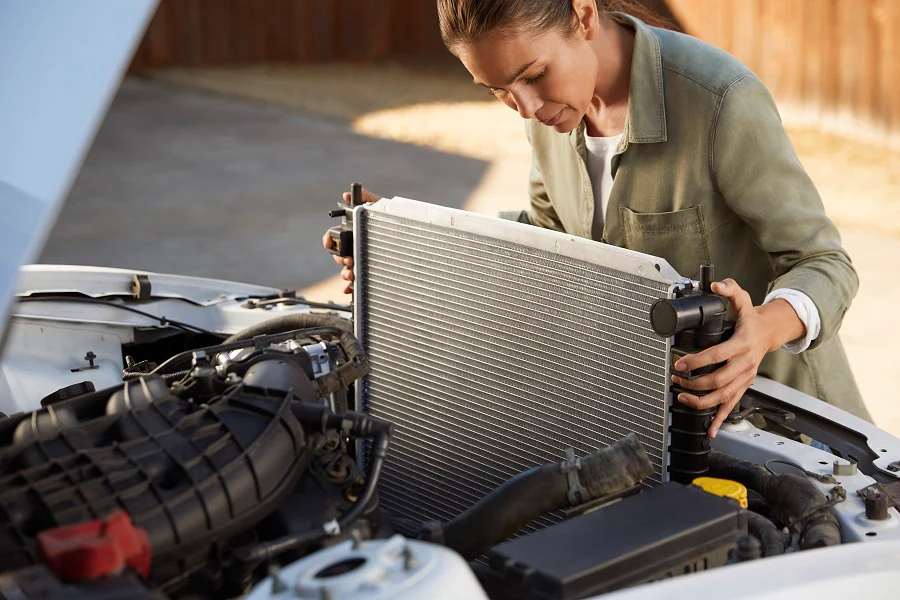
One of the most common reasons a car’s air conditioning stops cooling at idle is a faulty radiator or condenser cooling fan. The condenser is responsible for releasing heat from the refrigerant before it returns to the rest of the AC system.
When your car moves at higher speeds, outside air passes through the condenser naturally, helping it release heat efficiently. At low speeds, the cooling fan must provide much of this airflow. If the fan is damaged or fails to operate, the condenser may become too hot to maintain effective cooling, causing the air from your vents to turn warm.
A cooling fan can fail for several reasons, including a damaged electric motor, a blown fuse, a faulty relay, damaged wiring, or a defective temperature sensor.
In some vehicles, the fan may operate at different speeds depending on engine temperature and air conditioning demand. If the fan works at high speed but fails at low speed, the problem may be less obvious. You might notice that the AC performs normally on the highway but becomes ineffective when you are waiting at a traffic signal or driving slowly through congested streets.
You can perform a basic visual check by parking the car safely, engaging the parking brake, and switching on the air conditioning. Observe whether the cooling fan operates, keeping your hands, clothing, and tools away from moving components.
Some vehicles control their fans differently, so a fan that remains off briefly does not automatically indicate a fault. Never reach into the engine bay to test a fan while the engine is running. If the fan does not operate when required, a mechanic can inspect its electrical supply, control circuit, motor, and related sensors.
Ignoring a faulty cooling fan can affect more than cabin comfort. When the engine is stationary, insufficient airflow can also contribute to rising engine coolant temperatures, particularly in hot weather or heavy traffic.
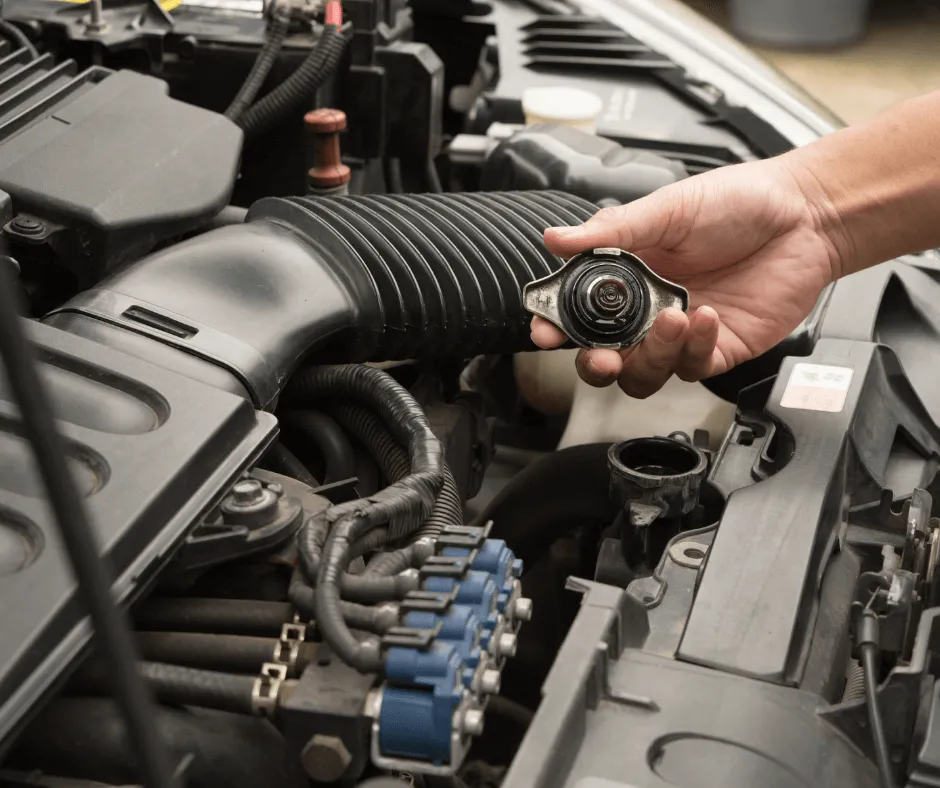
If the temperature gauge rises above its normal range, a warning light appears, or you see steam coming from under the hood, stop in a safe place and switch off the engine. Do not open a hot radiator cap because pressurized coolant can cause serious burns. Continuing to drive with an overheating engine can lead to expensive mechanical damage.
The appropriate repair depends on the actual fault. A blown fuse may need replacement, but it is important to identify why it failed rather than simply fitting another one. A worn fan motor, damaged connector, faulty relay, or defective control module may require repair or replacement.
After the repair, the technician should confirm that the fan operates correctly when the air conditioning is switched on and that cooling remains consistent during stationary operation. Fixing the airflow problem can restore AC performance without requiring an unnecessary compressor replacement or refrigerant recharge.
2. Low Refrigerant Levels in the Air Conditioning System
Refrigerant is the working fluid that absorbs heat from the passenger compartment and transfers it outside the vehicle. When the refrigerant charge falls below the specified level, the air conditioning system may struggle to provide consistent cooling. You might notice cold air while driving, followed by warmer air when the engine returns to idle.
Higher road speeds can improve condenser airflow, helping the system release heat more effectively. However, low refrigerant can reduce cooling capacity under many operating conditions, and the symptoms depend on the vehicle’s design and the severity of the refrigerant loss.
Refrigerant does not normally get consumed like engine oil or fuel. A low charge usually indicates a leak somewhere in the sealed AC circuit. Common leak locations include rubber hoses, service ports, O-rings, condenser connections, the compressor shaft seal, and the evaporator.
Small leaks can develop gradually, making the decline in cooling performance difficult to notice at first. If your car’s AC has become progressively weaker over several weeks or months, a refrigerant leak deserves attention, particularly if the system was previously cooling properly.
Low refrigerant can also affect compressor operation. Many modern vehicles use pressure sensors and electronic controls to prevent the compressor from operating when refrigerant pressure falls outside an acceptable range. As a result, the compressor may cycle on and off frequently, reducing the time available for effective cooling.
Some systems use variable-displacement compressors or electronically controlled valves, so the symptoms may not resemble those of older vehicles. A driver may interpret this behavior as an idle-related fault when the underlying issue is insufficient refrigerant or a related pressure-control problem.
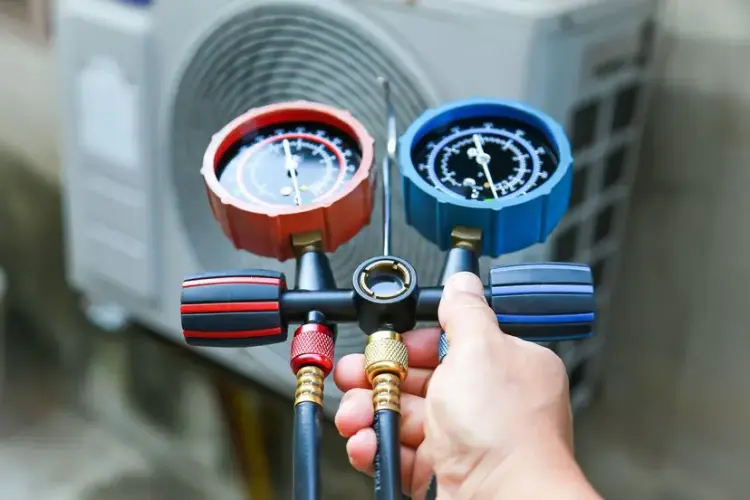
The correct way to diagnose low refrigerant is to measure system pressures and temperatures using suitable equipment and follow the manufacturer’s diagnostic procedure. A qualified technician may use an electronic leak detector, ultraviolet dye where appropriate, or another approved leak-testing method.
Simply adding refrigerant without investigating the cause can provide temporary relief while allowing the leak to continue. Overcharging the system can also reduce cooling performance and increase operating pressures. Refrigerants must be handled with appropriate equipment because they can cause cold burns and present environmental or safety risks if released improperly.
3. A Weak or Failing AC Compressor
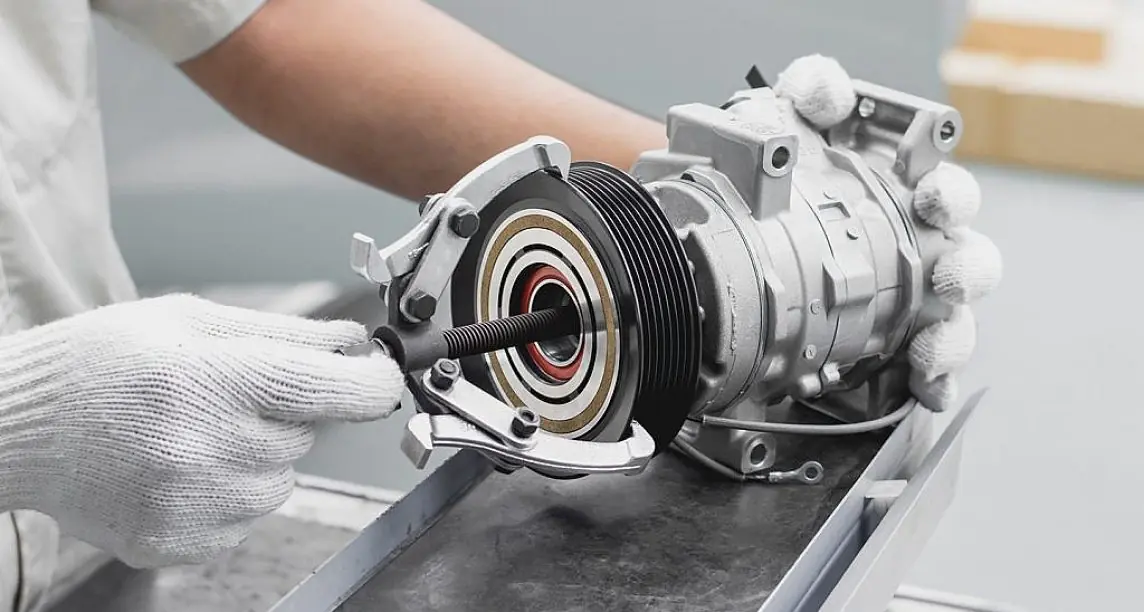
The air conditioning compressor circulates refrigerant through the system and helps establish the pressure difference needed for heat transfer. If the compressor is worn or unable to produce adequate pressure at low engine speeds, the AC may cool poorly when the car is stationary.
As engine speed increases during driving, compressor output may improve enough to produce colder air. This pattern can occur with certain worn compressors, but it is not proof that the compressor itself has failed. Poor condenser airflow, incorrect refrigerant charge, and control-system faults can produce similar symptoms.
The type of compressor installed in your vehicle influences how this problem appears. Older cars commonly use compressors with an electromagnetic clutch that engages when cooling is requested. If the clutch slips, fails to engage consistently, or has an excessive air gap, compressor operation may become unreliable.
Many newer vehicles use variable-displacement compressors that adjust output to match cooling demand. These units may rely on electronic control valves, pressure sensors, and engine management signals. A problem with any of these components can affect cooling without requiring a complete compressor replacement.
Unusual sounds may provide useful clues. A worn compressor bearing can produce grinding, rumbling, or whining noises, while a damaged clutch may create rattling or squealing sounds when the AC engages. In some cases, the compressor cycles repeatedly or the cooling changes noticeably as engine speed varies.
However, noises from the belt, tensioner, alternator, or other engine accessories can be mistaken for compressor trouble. A proper inspection should identify the source of the noise before any expensive parts are ordered.
A technician can assess compressor performance by checking high-side and low-side pressures, vent temperatures, clutch operation where applicable, control signals, and the condition of the drive belt.
Pressure readings must be interpreted alongside ambient temperature, engine speed, refrigerant type, and the manufacturer’s service information. Replacing a compressor based on a single pressure reading can lead to unnecessary expense.
The diagnostic process should also check for restrictions, incorrect refrigerant charge, and problems with the condenser fan because these faults can place excessive demands on the compressor.
4. An Overheating or Restricted AC Condenser
The condenser plays a major role in keeping the air conditioning system effective. Usually positioned near the front of the vehicle, close to the radiator, it transfers heat from hot, high-pressure refrigerant to the surrounding air.
When the condenser cannot release enough heat, refrigerant pressure and temperature may rise, reducing the system’s ability to cool the cabin. At highway speeds, moving air can improve heat transfer. At idle, reduced airflow may expose an existing condenser problem, causing vent temperatures to increase even when the AC initially works well.
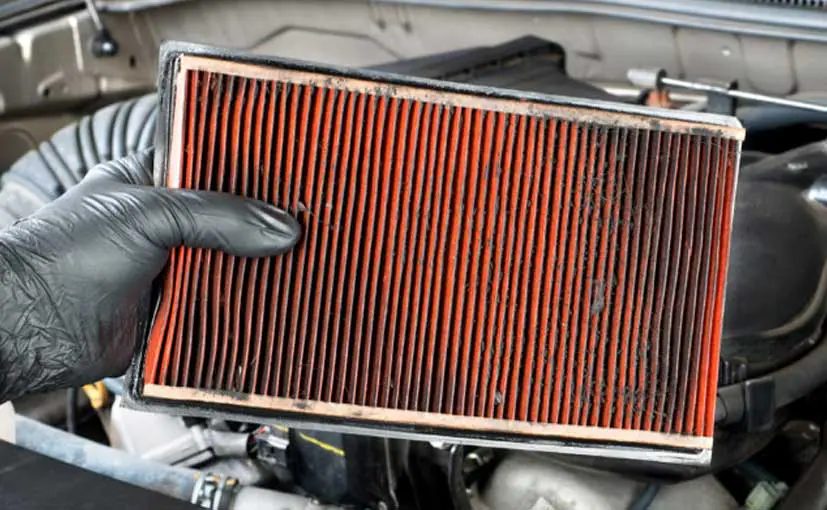
Physical blockage is a common cause of restricted condenser airflow. Dust, insects, leaves, road debris, and accumulated dirt can collect between the condenser and radiator. Bent fins can also reduce airflow across the heat-exchange surface.
In some vehicles, the condenser may be difficult to inspect because other components obstruct the view. A dirty exterior does not automatically mean the condenser needs replacement, but substantial blockage should be addressed carefully. Cleaning must be performed without damaging delicate fins or forcing debris deeper into the cooling stack.
Internal restrictions can cause similar performance problems. Refrigerant passages may become obstructed by contamination, debris from a failing compressor, or deterioration within the system. These restrictions can interfere with normal refrigerant flow and create unusual temperature differences across the condenser.
Because internal blockage cannot always be identified through a visual inspection, a technician may need to examine pressure readings, temperature patterns, and the condition of other AC components. If the system contains contamination, the repair may require more than simply cleaning the condenser’s exterior.
A useful diagnostic step is to compare AC performance under consistent conditions. Note the outside temperature, the temperature of the air from the vents, and whether cooling improves when the vehicle moves. A technician can also inspect condenser airflow, verify fan operation, and measure refrigerant pressures according to the manufacturer’s procedure.
High system pressure at idle may support the suspicion of inadequate heat rejection, but it can also result from overcharging, non-condensable gases, or other faults. Measurements should be interpreted as a complete set rather than treated as independent proof of a single problem.
5. A Loose or Worn Drive Belt
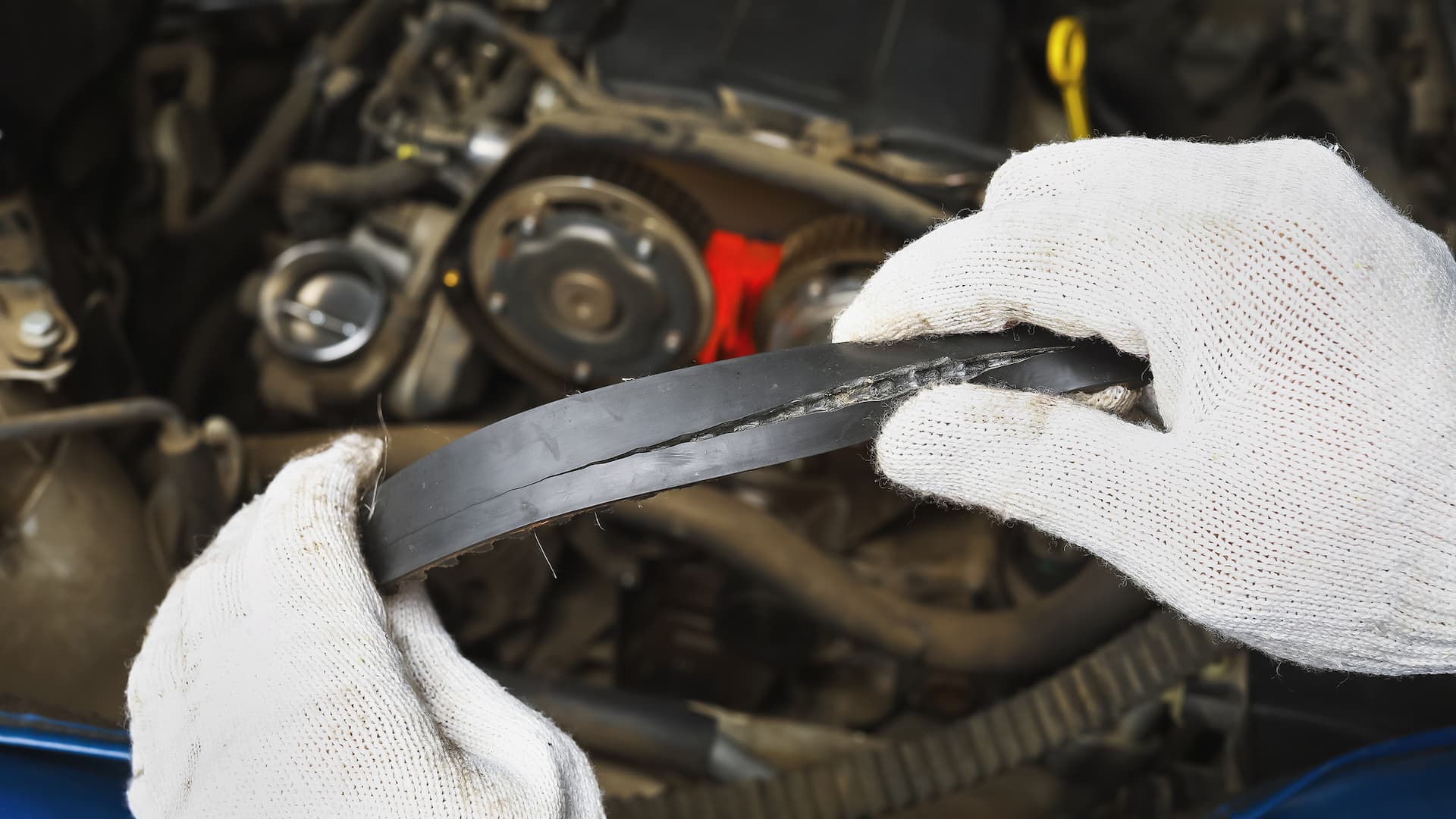
In vehicles that use an engine-driven AC compressor, the drive belt transfers rotational power from the engine to the compressor. If the belt becomes worn, stretched, contaminated, or incorrectly tensioned, it may slip under load and prevent the compressor from operating efficiently. The air conditioning may seem to improve when engine speed increases, while cooling becomes weaker at idle.
This is more likely in vehicles with belt-driven compressors than in vehicles using electric compressors, which operate differently. Understanding your vehicle’s compressor design helps determine whether the drive belt could be responsible for the cooling problem.
A worn belt may produce a squealing noise when the AC switches on, particularly when the compressor places additional load on the engine. You may also notice visible cracking, frayed edges, glazing, or other signs of deterioration. In some cases, the belt appears acceptable but slips because the tensioner has weakened or a pulley is damaged.
Belt problems can affect other engine accessories too, depending on the belt arrangement. For this reason, an inspection should include the belt, tensioner, pulleys, and compressor drive mechanism rather than focusing on the belt alone.
The relationship between engine speed and compressor performance can help a mechanic narrow down the cause. When the engine idles, a belt with insufficient tension may struggle to transmit the required power.
Increasing engine speed can temporarily change belt grip and compressor output, making the AC feel colder. However, this symptom can also occur with a weak compressor, poor condenser airflow, or a refrigerant-related fault. A squealing belt is a useful clue, but it should not be treated as a complete diagnosis without further checks.
Inspecting the belt safely requires the engine to be switched off and the key removed or the vehicle powered down according to the manufacturer’s instructions. Never place your hands near a moving belt to check its tension or condition. Some vehicles use automatic tensioners that require special tools, while others have different belt arrangements.
A qualified technician can check belt condition, alignment, tension, and pulley movement. If the belt appears damaged or makes persistent noise, avoid delaying the inspection because a complete belt failure may affect essential engine accessories.
6. A Faulty AC Pressure Sensor or Control System
Modern automotive air conditioning relies on electronic controls to regulate refrigerant pressure, compressor output, cooling fan operation, and cabin temperature. A faulty pressure sensor, temperature sensor, wiring connection, relay, or control module can interfere with these functions.
For example, the system may reduce compressor output or switch the compressor off when the engine is idling, even when cooling is needed. When the car starts moving, changing operating conditions may allow the system to resume normal cooling. This can create a confusing pattern that resembles a mechanical compressor failure.
The AC pressure sensor monitors refrigerant pressure and sends information to the vehicle’s control system. If the sensor provides an incorrect signal, the computer may interpret normal pressure as too high or too low. Depending on the vehicle’s design, the compressor may disengage, a cooling fan may fail to activate, or the system may limit cooling capacity.
Damaged wiring, corroded connectors, poor electrical grounds, and intermittent faults can produce similar behavior. These problems may occur only after the engine compartment becomes hot, making the fault harder to reproduce during a brief inspection.
Some vehicles use electronic compressor control rather than a conventional clutch that simply switches the compressor on and off. In these systems, a control valve adjusts compressor displacement to meet the cooling demand. If the valve sticks or receives an incorrect command, compressor performance may become inconsistent across different engine speeds.
Other vehicles use automatic climate control, which can change fan speed, air distribution, and compressor operation based on cabin and outside temperatures. A fault in the control system may therefore affect cooling even when the major mechanical components remain functional.
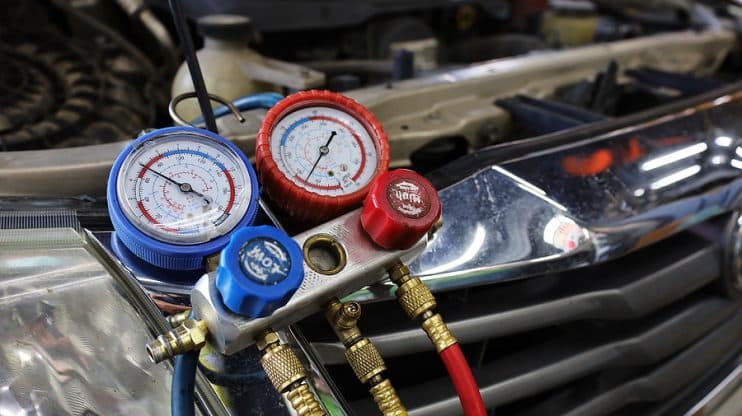
Professional diagnosis usually involves scanning the vehicle for diagnostic trouble codes, reviewing live sensor readings, and testing electrical circuits. A technician may compare the pressure sensor’s reported value with readings from suitable service equipment.
The inspection may also include checking fan commands, compressor control signals, power supply, grounds, and connector condition. Not every sensor problem triggers a warning light or stored code, so the absence of a fault code does not automatically rule out an electrical issue. Testing under the conditions that produce the symptom is especially important.
7. An Idle Speed Problem or Engine Performance Issue
Your car’s engine speed at idle can influence AC performance, especially when the vehicle uses an engine-driven compressor. When the air conditioning is switched on, the compressor adds mechanical load to the engine.
The engine management system normally compensates for this load by adjusting throttle control, fuel delivery, ignition timing, or other operating parameters. If the engine cannot maintain the correct idle speed, compressor performance may become less consistent. The air conditioning may feel colder when you accelerate because the compressor and engine are operating at a higher speed.
A low or unstable idle can result from several engine-related problems. A dirty throttle body, intake air leak, faulty idle control component on vehicles that use one, or an incorrect sensor reading may prevent the engine from maintaining its intended idle speed. Ignition misfires, fuel delivery issues, and certain engine management faults can also make the engine run unevenly.
You may notice the engine shaking, the RPM fluctuating, or the headlights dimming briefly when the AC compressor engages. These symptoms suggest that the engine may be struggling to manage its load rather than having a problem confined to the air conditioning system.
Some vehicles are designed to increase idle speed when the AC is activated. If this compensation does not occur, the engine may run below the speed needed for normal compressor performance. An idle that is too low can also affect charging-system output in some vehicles, particularly when several electrical accessories are operating at the same time.
However, the correct idle speed varies by engine, temperature, transmission setting, and vehicle design. It is important to compare actual readings with the manufacturer’s specifications instead of assuming that every car should idle at the same RPM.
A mechanic can inspect the engine’s idle behavior with the AC switched off and on, check for diagnostic trouble codes, and review live data from the engine management system. Depending on the symptoms, the inspection may include the throttle body, air intake system, ignition components, fuel system, charging system, and engine mounts.
If the idle drops sharply only when the compressor engages, the compressor load and AC control system should also be evaluated. This helps distinguish a genuine engine performance issue from an air conditioning fault that happens to appear at low engine speed.