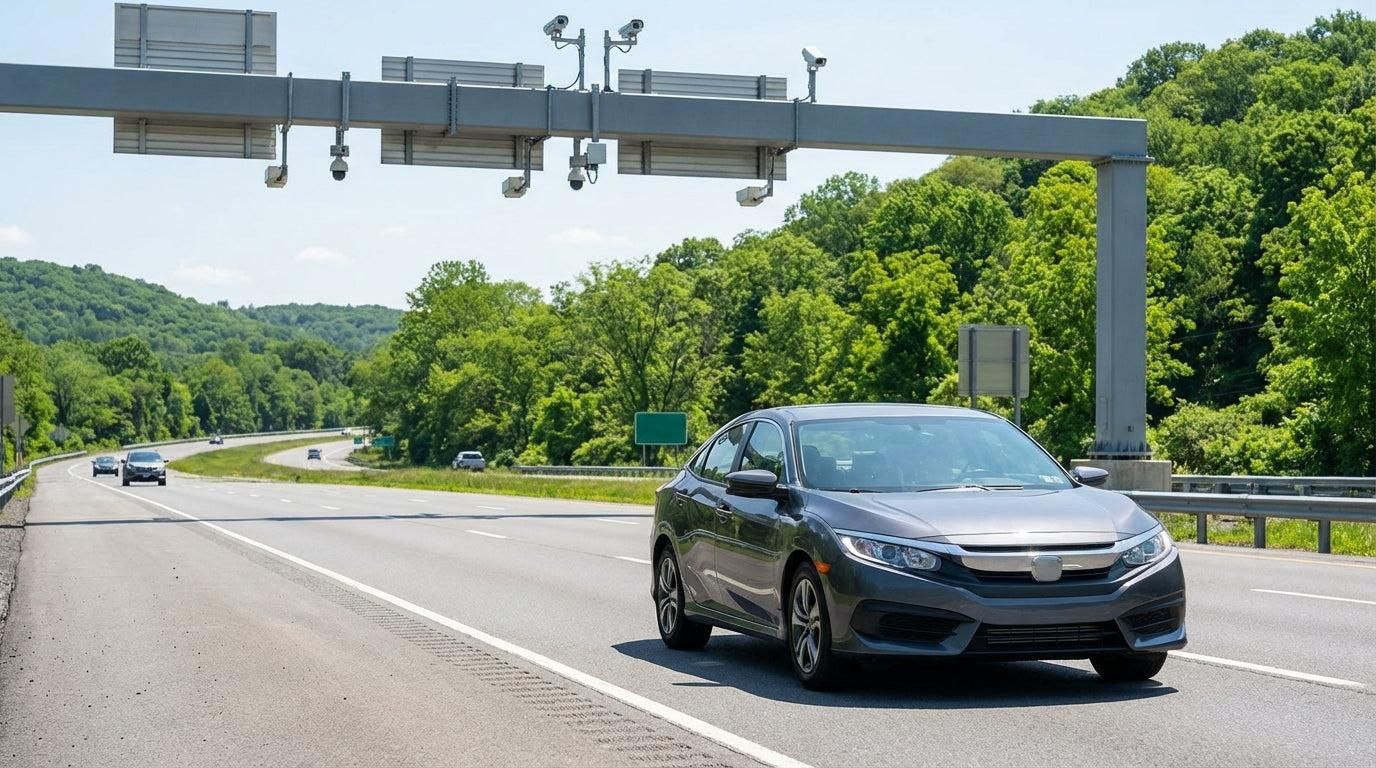
A forgotten toll feels like a small problem. Then renewal season arrives. The state tells you your registration is on hold. Cashless tolling changed how drivers get billed. Bills now come by mail, not at a booth. Many drivers never see them. An old address makes it worse.
Toll agencies have found a strong tool. They ask the state motor vehicle agency to block your renewal. You cannot renew until you pay. That costs them far less than court. It can cost you a great deal.
The rules differ sharply by state. Some act after just two unpaid tolls. Others wait until the balance passes a dollar threshold. Some place a simple hold. Others issue a formal suspension, and driving on a suspended registration can be a crime.
This guide explores eight states, including Florida, Texas, North Carolina, Virginia, Maryland, Pennsylvania, New Jersey, and New York. Each state has specific circumstances that can lead to the issue, along with its own rules and options for resolving it.
I checked state statutes, agency pages and recent reporting. Thresholds change often. Confirm the current numbers with your toll agency before you act. Here is how each state works.
1. Florida
Florida runs one of the broadest toll hold systems in the country. It covers SunPass, E-PASS and other toll operators. The legal basis sits in Section 320.03(8) of the Florida Statutes.
Under that section, the state cannot issue a plate or revalidation sticker until you show proof that the toll was paid. The hold targets renewal directly. You find out when you try to renew.
The toll agency starts the process. The tolling authority asks the state to place the hold when an account tied to your plate falls behind. The tax collector then enforces it at the counter.
The state report on holds is revealing. Florida law sets a threshold only for parking violations, at the third unpaid one. It sets no number for toll violations. That leaves toll agencies a lot of room.
Enforcement has shifted in recent years. The state transportation department moved away from license suspensions for most toll violators. Instead, a hold goes on the tag if the bill stays unpaid after 90 days. Most of those drivers owed under $150.

The registered owner takes the blame. A parent whose child drives the car full time is still responsible if the registration is in the parent’s name. Many families learn this the hard way.
Paying is the only fix. The hold lifts once you show proof of payment to the agency that requested it. Pay that agency, not the tax office. Keep the receipt. Hold releases do not always appear instantly. A tax collector may need the agency’s confirmation first.
Be careful with multiple agencies. Florida has several operators. A balance with one does not show up on another’s website. Check each one that covers roads you drive.
Online renewal is where most people hit the wall. The system simply refuses the transaction. A cancelled order is often the first warning. Selling the car is a separate matter. Third-party reporting says an unpaid balance does not follow the vehicle to a new owner. Confirm that with the toll agency before relying on it.
The practical lesson is simple. Keep your plate and address current in your transponder account. Check your toll balances a month before renewal. A $12 toll should never cost you a registration.
2. Texas
Texas takes a regional approach. The big toll agencies can bar renewal for habitual violators. The North Texas Tollway Authority, or NTTA, is the most active.
The tool came from state law. A law that took effect years ago let NTTA work with county tax offices to block nearly 80,000 toll dodgers. Dallas County was among the first to sign on.
The threshold is high but real. Owners with 100 or more delinquent tolls cannot register their vehicles until the bill and related fees are paid. The cited rule is Chapter 372 of the Transportation Code.
NTTA frames it as a habitual violator test. Nonpayment over a year can trigger the block. Notices warn people before it happens. The block shows up on paper. The state renewal notice carries a remark flagging the toll issue. That is your first clue.
Here is the confusing part. The county tax office has no information on NTTA balances and fees. Clerks cannot tell you what you owe. You must deal with NTTA directly.

The fix has a clear order. You pay or set up a payment plan, then bring NTTA’s stamped release document to the county tax office. Without that paper, the clerk cannot proceed.
Payment plans help. A TollTag account can open one. That can clear the block without paying everything at once. Some counties offer a kiosk. If your county has one on site, you can pay the full balance there. Not every office has this.
The state transportation department has similar power. It can report habitual violators to county tax offices to potentially block renewal. It can also ban vehicles from its toll roads and publish a list of the worst violators. Its target group was owners with at least 100 unpaid tolls in 12 months.
Public shaming is part of the toolkit. Names, cities and amounts owed can appear online. For a business, that can hurt. Texas stands out because of scale.
Toll roads here are dense. A commuter can rack up many transactions fast. A broken transponder or an unlinked plate can add up in weeks. Read your mail from toll agencies. Update your plate on every account. Do it before the count gets near triple digits.
3. North Carolina
North Carolina writes the rule into statute. G.S. 136-89.217 is titled for exactly this purpose. It covers open road tolls on the state’s toll roads. The law is direct.
Failure to pay a billed toll, a processing fee or a civil penalty is grounds for withholding registration renewal. There is no minimum balance in that language.
The process runs through two agencies. The toll authority notifies the Commissioner of Motor Vehicles, who must then withhold renewal of any vehicle registered in that person’s name. Note the phrase “any vehicle.” A second car in your name can be caught too.
Out-of-state debt counts as well. The block also covers tolls owed to another tolling jurisdiction that has a reciprocal enforcement agreement with the authority. Your debt can follow you across a state line.

The timing is specific. The state’s registration stop list says registration is blocked when payment is more than 60 days past due. That is a short window.
North Carolina lists the stop under its own category. The stop list names unpaid tolls next to county taxes and other registration blocks. Each stop has its own fix.
That matters for how you clear it. The DMV does not take your toll payment. You pay the toll authority, which then tells the DMV the matter is settled. Expect a delay between payment and release.
Many drivers hit this after a move. Toll bills go to the address on file. An outdated address means no notice. The 60-day clock runs anyway. The state’s toll system is newer than those in the Northeast.
Several roads are fully cashless. There is no booth, so no chance to pay on the spot. Missing a bill is easy. A transponder account is the easiest shield. It ties the plate to a payment method. Keep the card current. A lapsed card turns normal tolls into violations.
Check your registration status before the renewal month. The DMV portal shows stops on your record. If you see one, call the toll authority first. Keep proof of payment. Take screenshots. Save emails. If the DMV cannot see your release, you will need them.
North Carolina is a good example of a clean legal trigger. The law does not need a big balance. It needs a billed toll, a fee or penalty that went unpaid, and a 60-day lapse.
4. Virginia
Virginia routes toll holds through its general withholding program. The DMV says this program helps government entities collect overdue money. Toll operators are among those who use it.
The threshold is low. After an invoice for two or more unpaid tolls, toll operators can restrict renewal for the vehicle involved. Two is a small number.
You have one chance to head it off. If you fail to pay the tolls and fees, or fail to file a notice contesting liability, the operator can block renewal. Contesting on time matters.
Virginia also handles drivers who were not the owner. If a court identifies you as the driver and the tolls stay unpaid, you cannot renew registrations for all vehicles you own or co-own. That reaches beyond the car involved.
Relief is limited. The DMV’s one-month registration extension is not available for toll violations. A 2018 news report described a short paid extension for toll cases. The DMV’s current page says otherwise, so do not count on it.

Virginia also enforces other states’ toll debts. A 2016 law set this up. Under it, the DMV must refuse to issue or renew registration when a state with an agreement reports that a Virginia resident owes tolls there.
There are guardrails. The DMV must send notice of the intent to deny renewal at least 30 days before your registration expires. Read that notice closely.
It also adds a charge. The commissioner collects a $40 fee to cover processing and withholding. Expect that on top of the toll debt. The money can balloon. A Richmond driver’s story shows how. Her unpaid fines were $447, but she was told she owed nearly $13,000 once court and collection fees were added. Court notices had gone to an old address.
That case is a warning. Virginia toll debt can move from invoice to court to collections. Each step adds cost. The registration hold sits in the middle of it.
Northern Virginia drivers face high exposure. Express lanes use dynamic pricing and are fully electronic. An unregistered E-ZPass or a plate typo can create a violation fast.
Treat any toll invoice as urgent. Pay it or contest it in writing within the deadline. Update your address with the DMV whenever you move. If the hold is already on, contact the toll operator that reported it. The DMV will not clear it for you. Only the operator can release it.
5. Maryland
Maryland uses the term “flag.” The Maryland Transportation Authority, or MDTA, asks the Motor Vehicle Administration to flag your registration. A flagged registration cannot be renewed.
The process starts with a notice. Those who do not pay within 30 days receive a civil citation, with a $50 penalty for each unpaid video toll, on top of the toll. That figure comes from MDTA’s own announcement, so check the current penalty.
Two paths follow. Under $1,000 in unpaid tolls and penalties, the vehicle is referred for a non-renewal flag. At $1,000 or more, it is referred for suspension. The line is clear.
The law backs this up. State law requires the MVA to refuse renewal or suspend registration when MDTA reports an owner who has been served with a toll citation. The MVA has no discretion once notified.
MDTA gives a last warning. In one large campaign, it mailed final notices to owners of about 116,000 vehicles. The notice gave them 15 days to pay before referral.

There is a bridge for people who owe a lot. Customers with more than $300 in unpaid tolls and civil penalties may be eligible for an installment plan. Ask before the flag lands.
Out-of-state drivers face a different tool. MDTA cannot flag a non-resident’s registration. But the state’s central collection unit can intercept a federal tax refund. That was a 2013 comment, so confirm how it works today.
The fix has two parts. You owe all tolls and penalties to Maryland E-ZPass, and the MVA charges a restoration fee collected with payment. Third-party guides put the MVA flag fee at $30 per flag. Confirm the current amount.
Timing causes trouble. Drivers often pay MDTA, then try to renew within the hour. The flag can still show. The MVA needs MDTA’s release first. Plan for a day or two of lag. Pay early. Do not wait until the last week of your expiration month.
Maryland’s cashless roads add risk. The Intercounty Connector and the Hatem and Nice bridges all use video tolling. A missing transponder triggers a video bill.
Mailed bills are the weak point. The notice goes to the address on your registration. If you moved and did not update it, you may never see the first bill. The lesson is to treat any MDTA letter as final. Each stage adds a penalty. The flag is only one of the steps, and it arrives after two warnings.
6. Pennsylvania
Pennsylvania took a harder line after going cashless. The Pennsylvania Turnpike lost more than $100 million in a single year during the shift. Lawmakers responded with stronger enforcement.
The key change came in a 2022 law. It cut the suspension trigger from $500 to $250 and from six violations to four invoices. It also extended the look-back period from three years to five.
The rules took effect in January 2023. Four or more unpaid toll invoices, $250 or more in unpaid invoices and fees, or a defaulted payment plan can lead to suspension. Any one of the three is enough.
The state’s process gives you time. If you do not respond within 30 days, the turnpike commission may notify PennDOT, which sends a suspension notice. Officials have also said PennDOT gives about six weeks’ notice.
If you ignore it, the penalty hardens. An indefinite suspension takes effect, with an administrative hold on the registration, and a restoration fee is required. You pay that fee to the Turnpike Commission along with the tolls.
Suspensions can stack. If you rack up more unpaid tolls while suspended, the state can impose an additional suspension. Driving on the turnpike without paying makes it worse.
This is a suspension, not only a renewal block. Your registration is invalid right away. Police can stop you for it. That is a bigger risk than a denied renewal.
The numbers are large. Unpaid turnpike charges reached about $170 million, with 61.6% of toll-by-plate bills going to Pennsylvania residents. The in-state group is the main target.
Out-of-state drivers are harder to reach. The turnpike had no agreements to suspend out-of-state registrations when this report was written, though it was finalizing one with Delaware and talking with New York. That may have changed, so check.
Pennsylvania has no front plate requirement. That limits camera reads. Missed plates mean missed bills. But the turnpike can still bill you through the rear plate.
Undeliverable mail used to stop collection. The 2022 law gave the turnpike explicit authority to track people down when automatically generated bills come back undeliverable. A bad address is no longer a safe harbor.
Open an E-ZPass account if you drive the turnpike. Mount the transponder correctly. Check your plate number on the account. If you receive a notice, call within the 30-day window. A payment plan may stop the suspension. After the suspension, the path is costlier.
7. New Jersey
New Jersey has several toll agencies. The Turnpike Authority, the South Jersey Transportation Authority and the Port Authority all feed the Motor Vehicle Commission, or MVC. The state also honors requests from reciprocal agencies.
The rule was updated recently. Regulations effective in May 2025 allow suspension when an owner has $500 or more in unpaid tolls and fees over three years. That is the main dollar test.
There are two other triggers. Six or more unpaid toll violations, with at least one after January 16, 2024, can also lead to suspension. So can failing to follow a payment agreement. The newer date matters. Old violations alone may not count.
The agency has a clock. The tolling entity must submit its request within three years of the violation. After that, the suspension route closes. Penalties are capped in the rule. Penalties, not counting the tolls, cannot exceed $100 for the first violation or $600 for each later one. That limit protects drivers from runaway fees.
Evidence favors the agency. The documents the tolling entity submits count as prima facie proof of the facts. You must bring proof to rebut them.

A court case shows how this plays out. One driver faced reinstatement conditions after a suspension. The MVC required payment of $912.30 in unpaid tolls, other fees and a $100 registration restoration fee. The dispute turned on notice and address records.
Suspension carries real risk. Fines for driving with a suspended registration can reach $1,000. That figure came from 2013 reporting, so verify the current amount.
Enforcement has grown over time. The Turnpike Authority began with a pilot for large debts. The program became permanent, with agency staff saying the threshold could drop below $1,000 to any significant sum. The rule is now much lower.
Reciprocal agencies add reach. The Port Authority has asked the MVC to suspend registrations of chronic violators. Its crossings are among the most heavily used in the region.
Non-payment is often accidental here. Many drivers have E-ZPass but an expired card. Others have a new plate not added to the account. The toll posts as a violation anyway.
Mail matters too. State law requires you to report an address change to the MVC within one week. Many drivers do not. The bills go to the old address.
If you get a Notice of Pending Registration Suspension, act fast. Pay it, set up an agreement, or contest it. Do not let the effective date pass. Check your E-ZPass account twice a year. Confirm the plate, the card and the address. Ten minutes of checking can avoid a $100 restoration fee.
8. New York
New York’s program has the longest track record. It began in 2016. It has tightened since. The state now suspends registrations through the DMV for unpaid toll debt owed to several authorities.
The first version was narrower. It allowed suspension for failing to pay five tolls within 18 months. Officials said they had found nearly 35,000 such cases.
The rule got stricter. Today the DMV can suspend a registration for unpaid tolls or fees tied to three or more violations within five years. That is a far lower bar.
Commercial vehicles face a dollar test. A commercial vehicle registrant can be suspended for $200 or more in unpaid tolls and fees within five years. Fleet owners should note this.
Several agencies can refer you. They include the Thruway Authority, the MTA, the Port Authority of New York and New Jersey and the State Bridge Authority. Debt with any of them can trigger a suspension.

The stakes are criminal. Operating a vehicle with a suspended registration is a misdemeanor that can bring a fine, jail, or both. This goes beyond a failed renewal.
You have a right to be heard. The registrant may request a hearing before a DMV administrative law judge, and the suspension waits until the hearing ends. That protection is time-sensitive.
Paying clears it, but the timing is tight. If payment arrives at least five days before the suspension date, the pending suspension is cleared. Later payments may not stop it in time.
Some defenses are listed. They include selling the vehicle before the violation dates, surrendering the plate beforehand, or reporting the plate stolen before the violations. Keep records of each.
The state’s E-ZPass center handles the paperwork. Once it receives payment for the violations, it notifies the DMV and the suspension is cleared. Ask for confirmation in writing.
Be careful with other violations. Your record may hold more than the ones in the notice. Ask for a full list. A second suspension can follow if other tolls stay open.
Scam texts are an issue. Several states warn about fake messages claiming you owe tolls. Do not click links in texts. Go to the official E-ZPass site yourself.
Cashless tolling is now standard in the New York area. Henry Hudson Bridge and Tappan Zee crossings moved to electronic billing. Drivers without E-ZPass receive bills by mail. Keep your E-ZPass tag valid. Update your plate whenever you change cars. Read every notice from the authorities, however small the toll.