
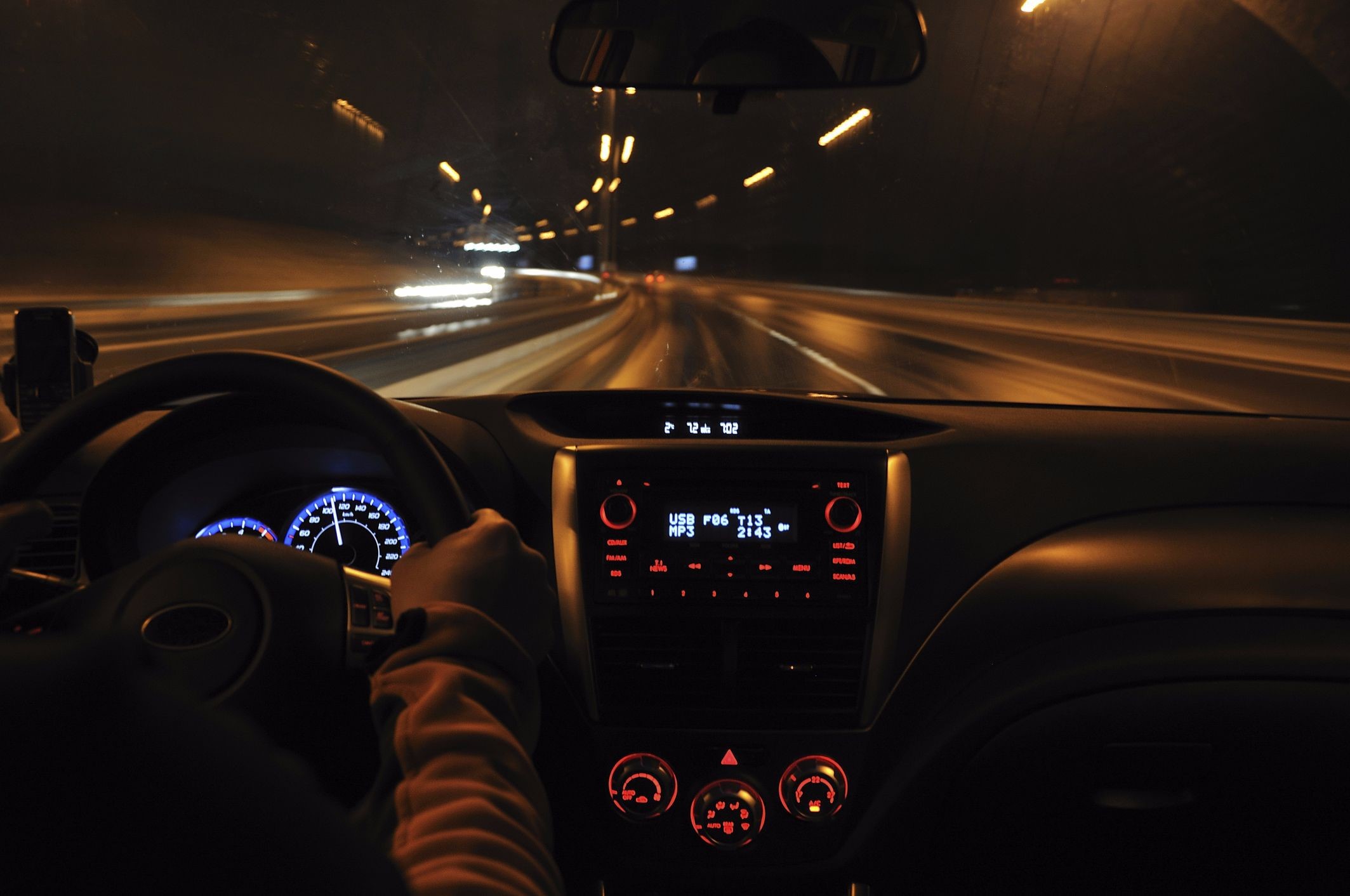
Driving after dark can be challenging because of headlight glare, limited visibility, and difficulty spotting pedestrians or animals. Modern vehicle technology offers features that help drivers illuminate dark roads, monitor surrounding traffic, and reduce distractions.
Some systems automatically adjust lighting, while others provide additional warnings about potential hazards. Understanding how these features work can help American drivers make informed decisions when choosing their next vehicle.
However, technology alone cannot eliminate nighttime driving risks. Good visibility, appropriate speed, regular vehicle maintenance, and an alert driver remain essential for safer journeys.
1. Adaptive Headlights That Illuminate Curves
Adaptive headlights help drivers see around bends by adjusting the direction of the light beam as the vehicle turns.
Unlike conventional headlights that primarily illuminate straight ahead, these systems can swivel in response to steering input, sometimes accounting for vehicle speed and other driving conditions. This directs more light toward the road the driver is entering.
The benefit becomes especially noticeable on unlit rural roads, winding highways, and mountain routes.
A fixed headlight beam may leave part of a curve in darkness, making it harder to identify an animal, fallen branch, or unexpected change in the road surface. Adaptive lighting helps reveal more of that area before the vehicle reaches it.
Research published by the Insurance Institute for Highway Safety (IIHS) found that drivers detected difficult-to-see targets on the inside of curves as much as one-third of a second earlier with adaptive high-intensity discharge headlights than with conventional fixed headlights. At 30 mph, that represents approximately 15 feet of additional travel distance.
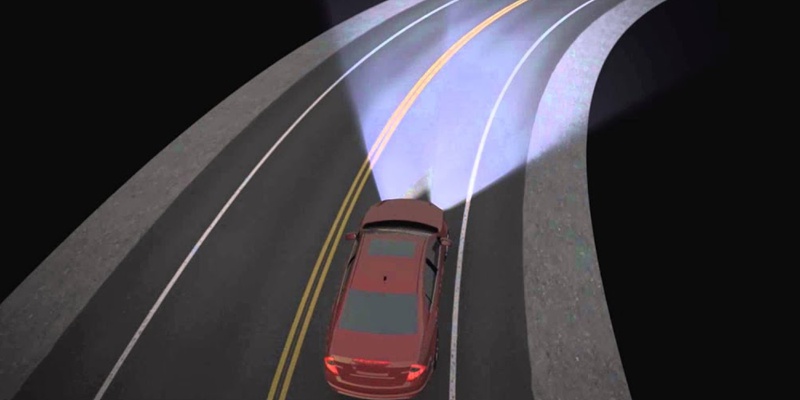
However, the advantage depends on road geometry and lighting conditions. The same research did not find a significant adaptive-lighting benefit for targets on straight sections or the outside of curves.
When evaluating this feature, check whether the headlights actually adjust their direction or beam pattern. Ordinary LED headlights do not automatically include adaptive functionality. Even with adaptive lighting, drivers must reduce speed before bends and remain alert for hazards outside the illuminated area.
2. Automatic High Beams That Adjust to Traffic
Automatic high-beam assistance helps drivers benefit from stronger headlight illumination without repeatedly switching between high and low beams themselves. The system generally uses a forward-facing camera to detect other vehicles and assess surrounding light conditions.
When the road ahead is dark and traffic is not detected, it can activate the high beams. When another vehicle approaches, or the car catches up with traffic, it can switch to low beams.
This feature is particularly useful on rural highways, where streetlights are scarce, and high beams can reveal obstacles much earlier than low beams. Drivers may otherwise forget to activate high beams or hesitate to use them because they are unsure whether another vehicle is close enough to be affected.
The IIHS reports that drivers frequently underuse high beams when conditions permit their use. Research involving General Motors and the University of Michigan Transportation Research Institute also associated high-beam assist with reductions in nighttime crashes.
Despite these benefits, automatic systems are not perfect. Sharp curves, road crests, rain, fog, and street lighting can affect detection or switching decisions. Fog is particularly important because high beams can reflect off water droplets and make visibility worse.
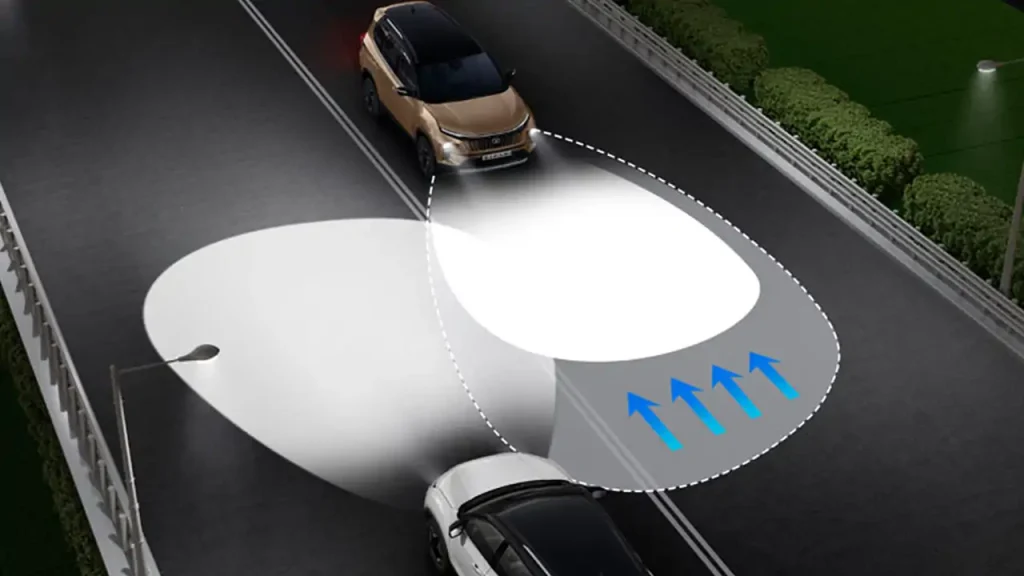
Drivers should understand that automatic high beams are different from automatic headlights. The latter turn exterior lighting on or off based on ambient light, while high-beam assistance manages the beam setting.
When using this feature, remain attentive and override the system whenever its behavior is unsuitable. Always dim high beams when they could dazzle other road users. Automation can reduce repetitive work, but the driver remains responsible for appropriate lighting and safe operation.
3. Adaptive Driving Beams That Help Control Glare
Adaptive driving beams improve nighttime illumination by changing specific portions of the headlight beam rather than simply switching between high and low beams. Cameras and electronic controls identify surrounding vehicles, allowing the system to reduce light directed toward occupied areas while preserving stronger illumination elsewhere.
For example, when an oncoming vehicle approaches on a dark highway, conventional high beams may need to be switched off completely.
An adaptive driving beam system can instead create a darker section around the detected vehicle while continuing to illuminate roadside areas. This can help drivers see pedestrians, animals, and obstacles without directing the full high-beam intensity toward other motorists.
The technology differs from curve-adaptive headlights. Curve-adaptive systems redirect light as the vehicle turns, whereas adaptive driving beams modify the beam pattern to manage illumination around other road users. Some advanced systems can combine different lighting functions.
In February 2022, the National Highway Traffic Safety Administration authorized adaptive driving beam headlamps under updated US federal lighting standards. The agency identified improved visibility for drivers, pedestrians, and cyclists as potential benefits.
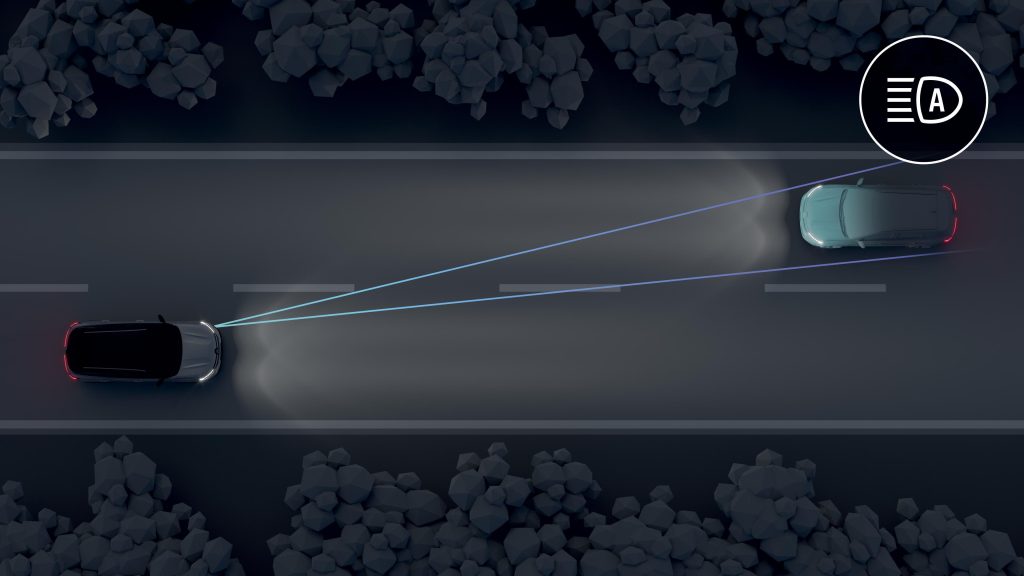
However, performance varies by manufacturer, and not every vehicle advertised with matrix LED headlights necessarily provides the same adaptive functions in the United States. Drivers should verify the equipment available on the exact trim.
These systems also depend on accurate detection and cannot eliminate every glare situation. They are an additional visibility aid, not a substitute for careful driving, appropriate speeds, or properly maintained headlights. When comparing vehicles, ask whether the lighting system selectively modifies the beam or simply changes between conventional high and low beams.
4. Automatic Dimming Mirrors That Reduce Glare
Headlights from a vehicle following closely behind can create distracting reflections in the rearview mirror. On dark roads, that glare may make it uncomfortable to monitor traffic behind while maintaining attention on the road ahead. Automatic dimming mirrors help manage this problem by reducing reflected brightness when intense light is detected.
Many systems use light sensors to measure incoming glare and ambient illumination. An electrochromic layer within the mirror changes its optical properties, making the reflective surface darker when necessary.
Once the bright light disappears, the mirror gradually returns toward its normal state. This process happens automatically, so the driver does not need to operate a manual day-night lever.
The feature is particularly useful during nighttime highway commuting, when vehicles may follow closely for long periods. It can also improve comfort in stop-and-go traffic, where the brightness of surrounding headlights changes frequently.
Some vehicles offer automatic dimming for the driver’s side exterior mirror as well as the interior mirror. However, exterior mirror dimming is not universal, and buyers should confirm the equipment on the specific vehicle.
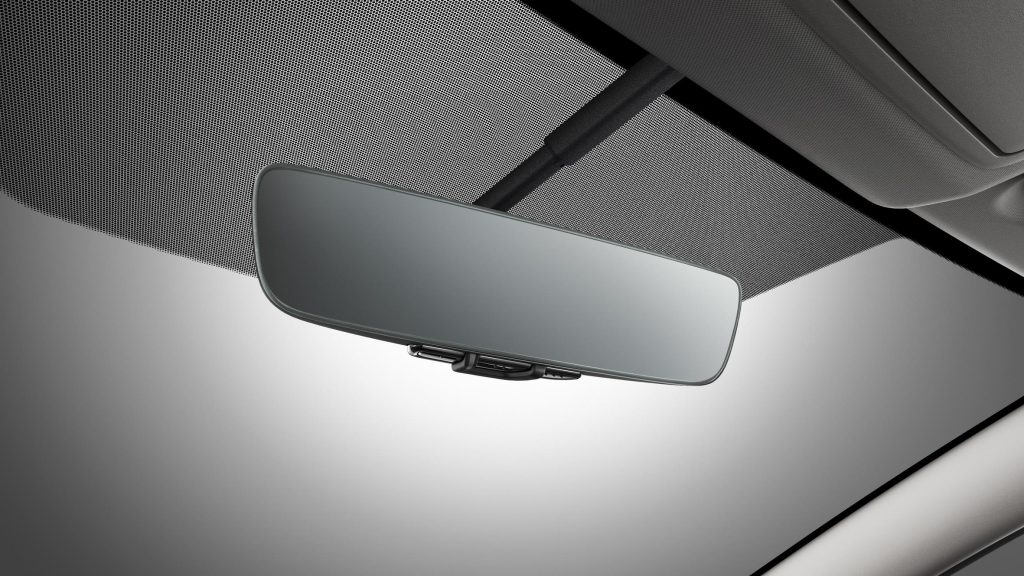
An important limitation is that these mirrors reduce glare from behind, not from oncoming headlights shining directly through the windshield. They also cannot correct incorrectly aimed headlights or compensate for dirty glass.
For drivers who regularly travel after sunset, automatic dimming can reduce an irritating distraction without requiring constant adjustment. Before purchasing a vehicle, check whether the feature is standard or optional and whether it covers the exterior mirrors. Proper mirror positioning and a clean windshield remain essential, regardless of the technology fitted.
5. Night Vision Systems That Reveal Difficult-to-See Hazards
Night vision systems provide drivers with an additional view of the surroundings when conventional headlights offer limited visibility. Depending on the design, these systems use thermal imaging or infrared illumination to detect and display objects in low-light conditions.
Thermal cameras identify differences in heat radiation, which can help distinguish a warm-bodied animal or person from a cooler background.
Infrared-based systems use illumination that is not readily visible to the human eye to produce an image of the scene. Information is displayed on an instrument panel or central screen, and some systems highlight potential hazards or provide warnings.
This technology can be particularly helpful on unlit rural roads, where deer, pedestrians, and other obstacles may be difficult to identify in time. It can also provide useful information when a hazard lies near the edge of the headlight beam.
Nevertheless, night vision systems have important limitations. Detection range varies, and rain, fog, obstructions, camera quality, and the characteristics of the target can affect performance. Not every object will be detected, and a warning may not arrive early enough for the driver to avoid a collision.
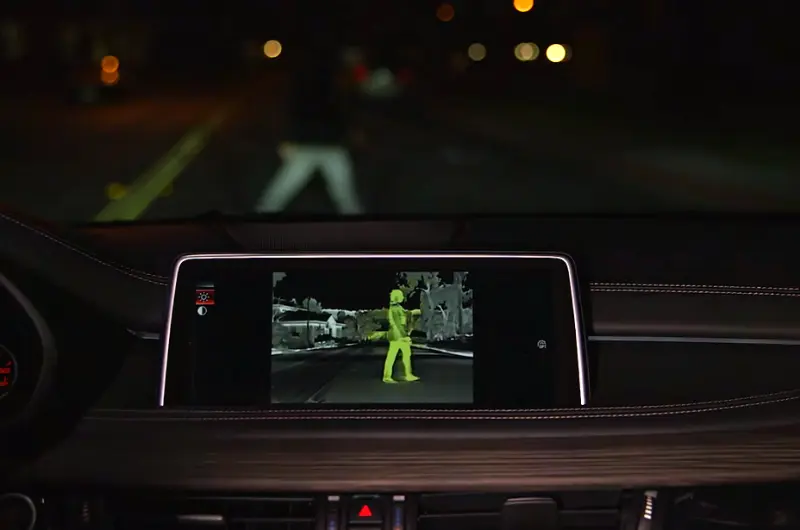
These systems do not replace conventional headlights or direct observation through the windshield. Drivers should continue watching the road rather than focusing on the displayed image. Specialized cameras may also increase repair costs if damaged.
For buyers who frequently travel on dark rural roads, night vision may provide useful additional awareness. However, its value depends on driving conditions, system capabilities, and cost. Before purchasing a vehicle with this equipment, check what it detects, how alerts are presented, and whether the technology is included in the exact configuration.
6. Head-Up Displays That Keep Information Within View
A head-up display, commonly called a HUD, projects selected driving information into the driver’s forward field of view. Depending on the vehicle, it can show speed, navigation directions, speed-limit information, and certain driver-assistance alerts. Some systems project information onto the windshield, while others use a separate transparent panel.
At night, this feature can reduce the need to look down repeatedly at the instrument cluster. A driver following an unfamiliar route may need to monitor speed, check navigation instructions, and watch surrounding traffic. Displaying essential information closer to the driver’s natural sightline can make these tasks more convenient.
Advanced HUD systems may provide navigation arrows or additional graphics, while simpler versions show only basic information. The exact functions depend on the vehicle’s equipment and software.
However, a head-up display does not improve the brightness of the road or detect every hazard. If the display is too bright, poorly positioned, or crowded with information, it can become distracting, particularly on dark roads. Reflections, seating position, and individual vision can also affect readability.
Drivers should adjust the display before setting off and avoid changing complicated settings while moving. The windshield should remain the primary focus of attention, and projected graphics should not encourage drivers to rely on automation.
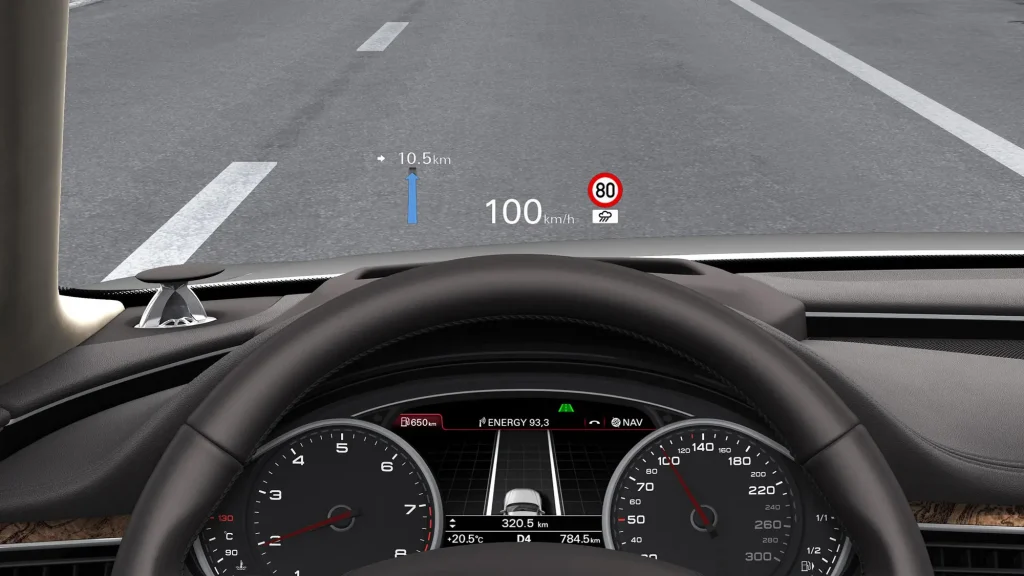
When comparing vehicles, check which information the HUD presents and whether its brightness and position can be adjusted.
For frequent nighttime travelers, navigation directions and speed information may be especially convenient. The main benefit is reduced need for downward glances, rather than improved illumination or a guarantee of safer driving.
7. Lane Departure Warning and Lane-Keeping Assistance
Lane departure warning systems help drivers recognize unintended movement across lane markings. Cameras or other sensors monitor the vehicle’s position, and the system may issue an audible alert, steering-wheel vibration, or dashboard warning when the car begins drifting out of its lane without an appropriate signal.
Lane-keeping assistance can provide an additional response by applying limited steering input to guide the vehicle back toward the lane. Depending on the system, this intervention may be brief or available only under certain operating conditions.
These features can be useful during nighttime highway travel, when drivers must maintain lane position for extended periods. A timely alert may draw attention to an unintended drift before it becomes more dangerous.
However, lane systems depend on visible road markings. Faded paint, rain, snow, glare, and construction zones can prevent reliable detection. Some systems may also stop operating when lane markings disappear or driving conditions fall outside their intended range.
Drivers should understand the difference between a warning and steering assistance. Neither system makes a vehicle self-driving, and neither can reliably identify every obstacle or respond appropriately to every emergency.
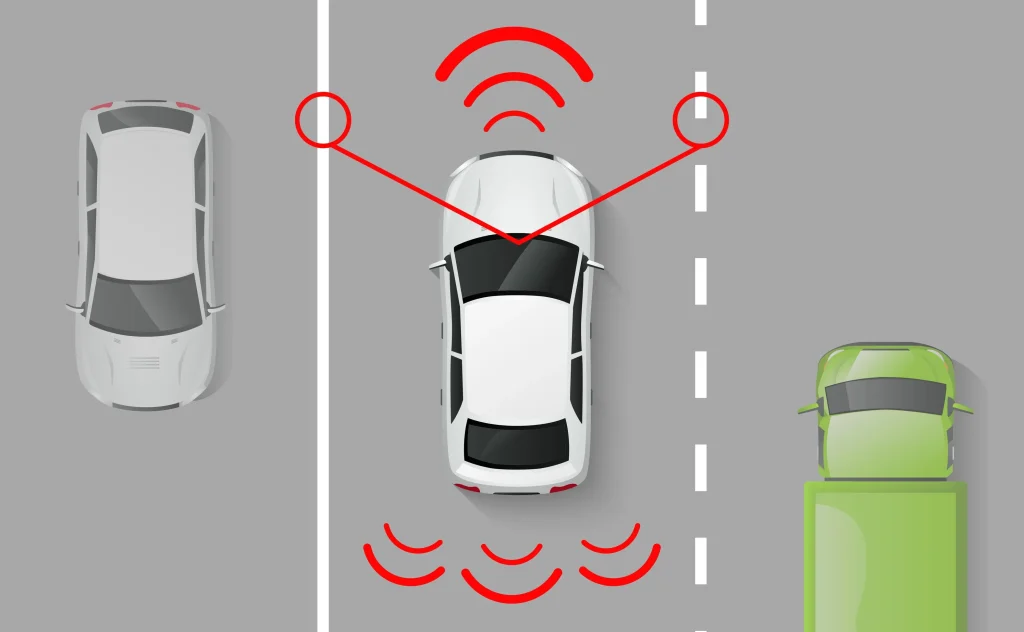
When shopping for a vehicle, check which functions are included and whether warning sensitivity can be adjusted. Keep your attention on the road, remain appropriately engaged with steering, and never rely on lane assistance to compensate for fatigue.
The technology is best treated as an additional layer of awareness. It can help drivers notice unintended movement, but safe lane positioning still depends on observation, judgment, and proper control of the vehicle.
8. Blind-Spot Monitoring for Nighttime Lane Changes
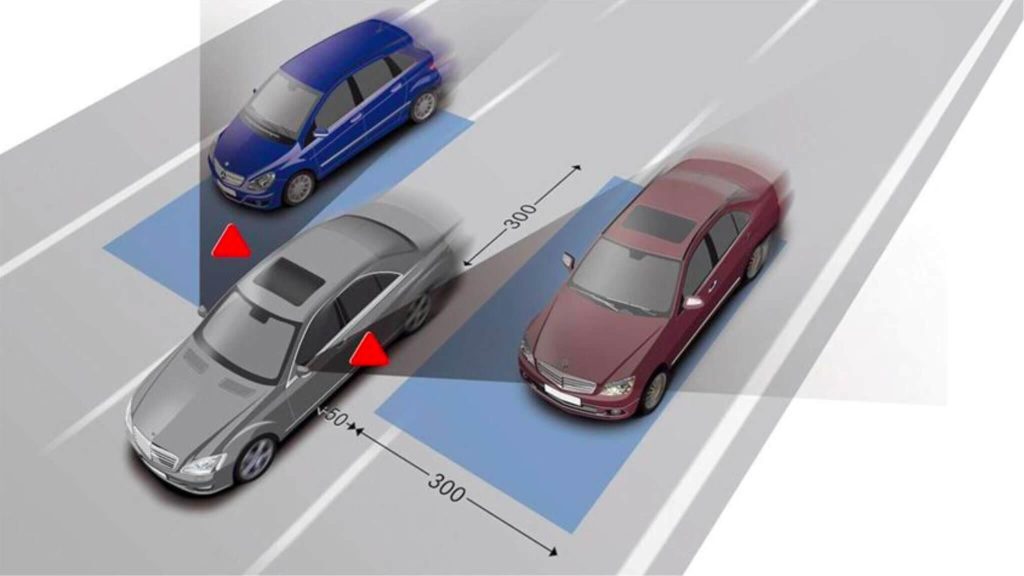
Changing lanes after dark can be challenging because nearby vehicles may be difficult to distinguish in mirrors, especially when traffic is moving quickly or headlights create glare. Blind-spot monitoring helps by detecting vehicles in designated areas alongside the car and alerting the driver when a potential conflict is identified.
Many systems use radar sensors positioned near the rear of the vehicle. When another vehicle enters the monitored area, a warning light typically appears in the corresponding side mirror or nearby display. Some systems provide a more noticeable alert if the driver activates the turn signal while a vehicle occupies that area.
This technology can be useful on multilane highways, where vehicles approach from behind or remain beside the rear quarter of the car. It may also help when passing trucks or merging into traffic near busy interchanges.
However, blind-spot monitoring cannot detect every vehicle in every situation. Detection zones vary, and weather, road geometry, or rapidly approaching traffic may affect performance. The absence of a warning does not guarantee that the lane is clear.
Drivers should continue checking mirrors, looking over their shoulders when appropriate, signaling in advance, and leaving enough space to complete a lane change safely. Blind-spot monitoring supplements these habits rather than replacing them.
Buyers should also distinguish between blind-spot warning and blind-spot collision-avoidance assistance. The former alerts the driver, while the latter may provide limited steering or braking intervention under certain conditions.
For regular nighttime highway driving, a well-designed system can provide useful additional awareness. Its greatest value comes from helping drivers notice nearby traffic they might otherwise overlook, while leaving the final decision and responsibility for a safe maneuver with the person behind the wheel.
9. Rain-Sensing Wipers and Automatic Headlights
Nighttime rain combines several visibility problems. Water on the windshield scatters light, reflections become more distracting, and spray from surrounding traffic can obscure lane markings. Rain-sensing wipers and automatic headlights help manage two routine tasks when conditions change.
Rain-sensing wipers use a sensor, commonly positioned near the windshield, to detect moisture and adjust wiping activity. Depending on the vehicle, drivers can adjust sensitivity to suit drizzle or heavier rainfall.
Automatic headlights use an ambient-light sensor to activate exterior lighting when surrounding illumination falls. Some vehicles also coordinate lighting with other functions, although the exact behavior depends on the manufacturer’s design.
These features are convenient when entering a tunnel, driving into an unexpected shower, or moving from illuminated streets onto darker roads. They reduce the need for repeated manual adjustments, allowing drivers to concentrate on traffic.
Nevertheless, automation has limitations. Rain sensors may respond differently when the windshield is dirty, and automatic headlights may not activate at the ideal moment in every situation. Daytime running lights do not necessarily illuminate the rear lamps, so drivers should not assume their vehicle is fully lit simply because its front lights are visible.
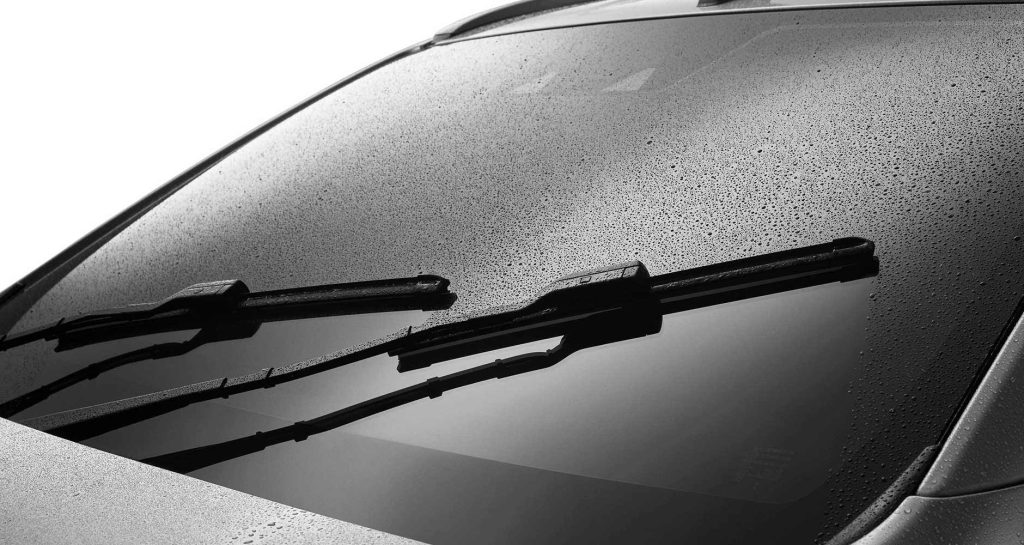
Drivers should switch on headlights whenever conditions require them, even if the automatic system has not activated. Worn wiper blades and dirty glass can also reduce visibility.
For buyers, these features offer practical everyday convenience, especially in regions with frequent rainfall or changing weather. They cannot eliminate the dangers of wet roads, so reducing speed and maintaining a safe following distance remain essential.
10. Driver Attention Monitoring That Warns About Fatigue
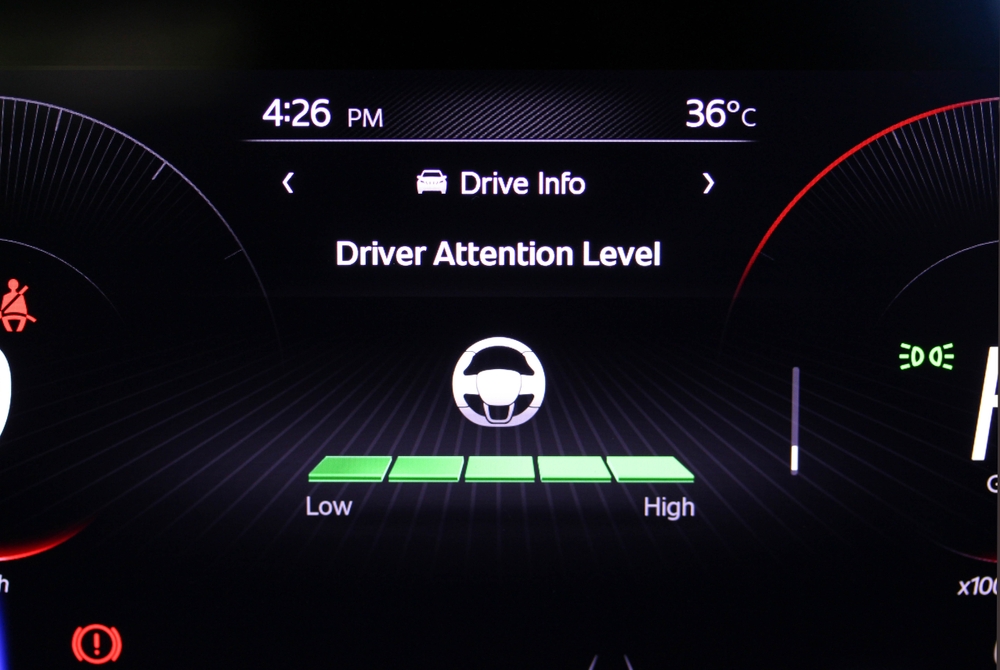
Fatigue can make nighttime driving dangerous by reducing concentration, slowing reactions, and making it harder to maintain a consistent lane position. Driver attention monitoring systems are designed to identify certain signs of inattention or possible fatigue and encourage drivers to take a break.
The technology varies between vehicles. Some systems analyze steering patterns and driving behavior, looking for movements that may indicate reduced concentration. More advanced driver-monitoring systems use an interior camera to assess factors such as gaze direction or visible signs of inattention.
When a system detects a concerning pattern, it may display a warning recommending rest. Certain systems can also alert the driver when attention appears to be directed away from the road for too long. However, fatigue monitoring and distraction monitoring are not identical functions, so buyers should check what a particular system actually detects.
These technologies have limitations. Steering-based systems infer possible problems from driving patterns rather than directly measuring sleepiness. Camera-based systems may also be affected by sunglasses, lighting conditions, or an obstructed view. No system can reliably identify every instance of fatigue before driving becomes unsafe.
Drivers should never depend on electronic alerts to decide whether they are too tired to continue. Heavy eyelids, repeated yawning, difficulty remembering recent miles, or unintended lane drifting are reasons to stop somewhere safe and rest.
Adequate sleep remains essential. Caffeine may temporarily increase alertness, but it cannot reliably overcome serious sleep deprivation. Attention monitoring can provide a useful reminder, yet it cannot make drowsy driving safe. Treat this technology as a supporting safety feature, not a substitute for proper rest and responsible trip planning.
