An engine associated with an expensive performance car does not always belong exclusively to luxury brands. Automakers frequently share engine designs, components, or entire powertrain families across different models to control development costs and improve manufacturing efficiency.
Consequently, an affordable sports car may feature an engine derived from one used in a premium coupe, luxury sedan, or performance SUV. However, sharing the same engine family does not necessarily mean the vehicles have identical components, software, or power output.
These eight examples highlight documented connections between U.S.-market vehicles, with attention to engine specifications and differences in tuning.
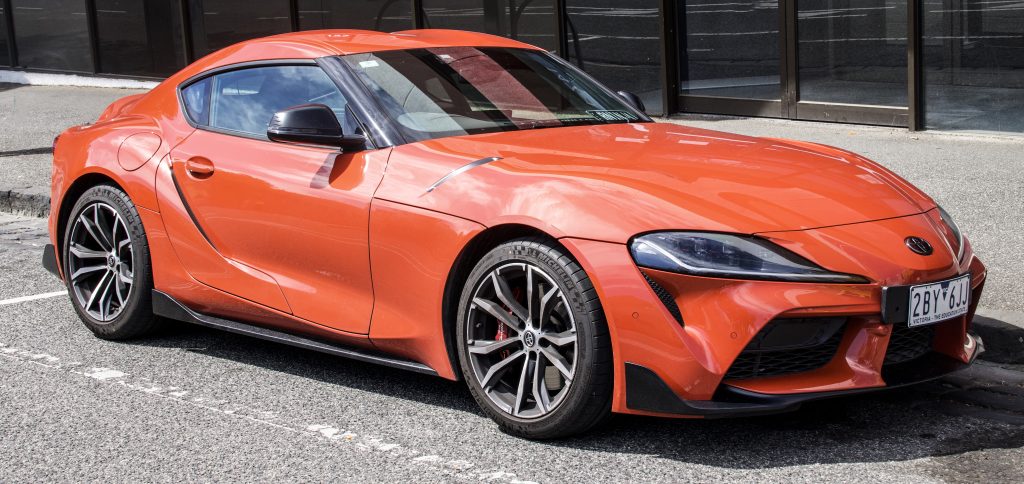
1. Toyota GR Supra 3.0
The Toyota GR Supra 3.0 delivers a distinctly German engineering connection beneath its Japanese badge. Its turbocharged 3.0-liter inline-six belongs to BMW’s B58 engine family, which also powers the BMW Z4 M40i, a more expensive luxury roadster.
The connection goes beyond similar engine designs, as both models use BMW-developed powertrain architecture. However, their tuning and equipment may vary depending on the vehicle.
In the 2025 U.S. Supra 3.0, the engine produces 382 horsepower and 368 lb-ft of torque. The BMW Z4 M40i uses a B58 inline-six rated at 382 horsepower and 369 lb-ft of torque in comparable U.S. model years. Those near-identical outputs illustrate how two brands can use closely related powertrains while delivering different driving experiences.
The Supra is a fixed-roof sports car with a compact cabin and a focus on responsive handling. The Z4, by contrast, is a convertible designed to combine performance with open-air touring. Their body structures, suspension tuning, styling, and cabin layouts give each car a distinct character, even though their engines have a common origin.
This connection is useful for buyers because it shows that the Supra’s six-cylinder performance does not depend on Toyota developing an entirely separate engine from scratch. It also explains why technical discussions of the Supra frequently reference BMW engineering.
The important qualification is that shared architecture does not mean every internal component or software calibration is identical across every model year.
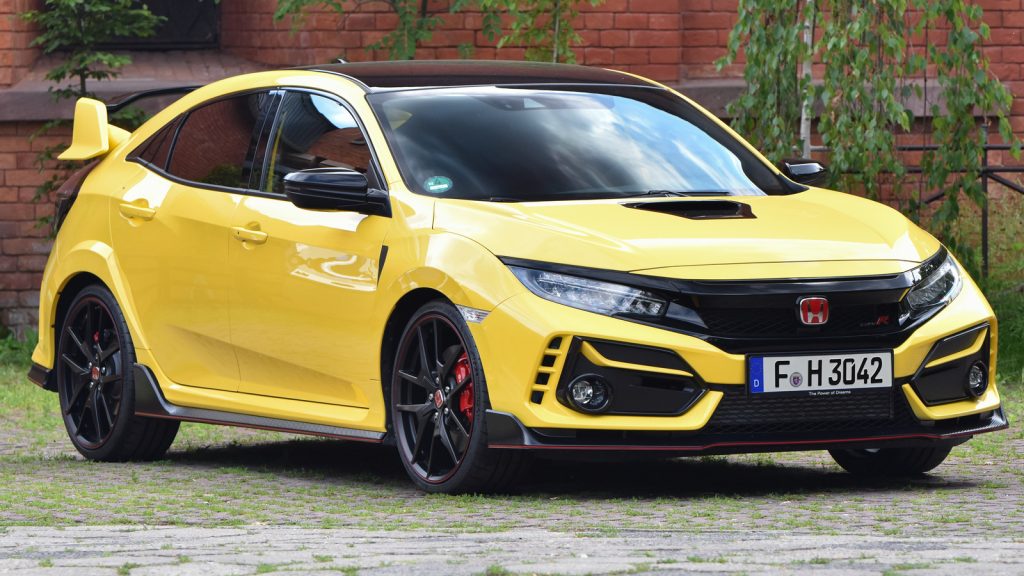
2. Honda Civic Type R
The Honda Civic Type R provides a more direct example of performance engineering shared with a premium-brand relative. Its turbocharged 2.0-liter K20C1 engine is closely related to the powerplant used in the Acura Integra Type S, which costs more and occupies the premium end of the compact performance-car market.
Honda’s own information confirms that the K20C engine used in the Integra Type S is built at the same Ohio engine plant that produces the engine powering the Civic Type R.
For the 2026 U.S. Civic Type R, Honda rates the engine at 315 horsepower and 310 lb-ft of torque. The 2026 Acura Integra Type S produces 320 horsepower and the same 310 lb-ft of torque. That small horsepower difference reflects vehicle-specific tuning rather than a completely unrelated engine design.
The Civic Type R pairs its engine with a six-speed manual transmission, a helical limited-slip differential, adaptive dampers, and a front-wheel-drive layout. These components help it put power down on winding roads and race circuits.
The Integra Type S also uses a six-speed manual, but Acura gives it a different body, cabin presentation, sound tuning, and suspension calibration.
This is a particularly relevant comparison because the less expensive Honda is not simply borrowing an engine from a distant luxury brand. It shares a high-performance powertrain with a premium sibling from the same corporate family.
Buyers should still compare the complete cars, since equipment, chassis tuning, and interior finishes account for much of the price difference.
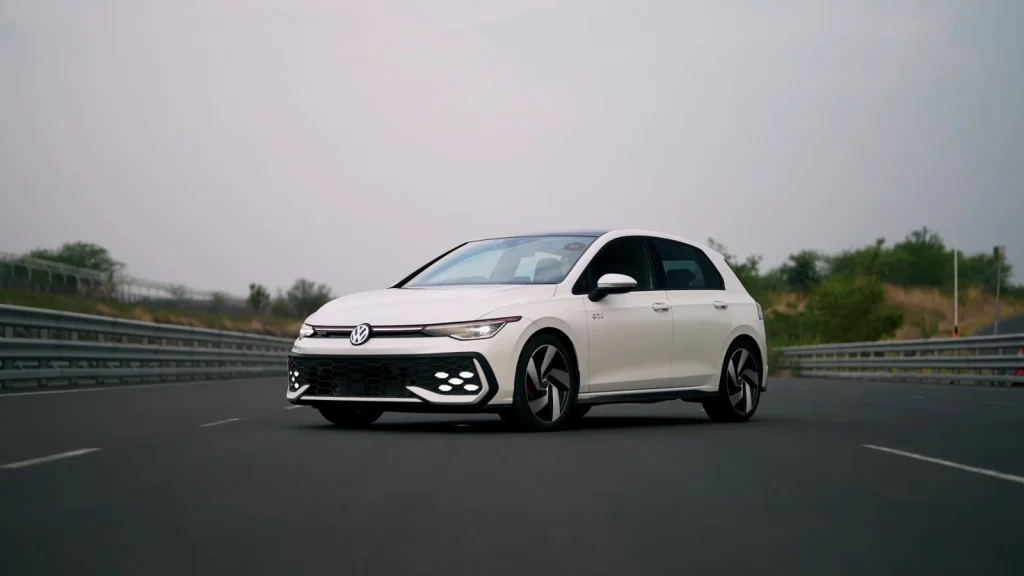
3. Volkswagen Golf R
The Volkswagen Golf R uses a turbocharged 2.0-liter four-cylinder from the Volkswagen Group’s EA888 engine family, a design that also underpins the Audi S3.
Audi positions the S3 as a premium compact sports sedan, while the Golf R delivers high performance in a hatchback body. Their relationship demonstrates how a shared engine family can serve different brands and vehicle formats without making the finished cars identical.
For the 2025 U.S. model year, both cars deliver 328 horsepower, but their torque figures differ. The Volkswagen Golf R produces 295 lb-ft, while the Audi S3 generates 310 lb-ft. Both feature a seven-speed dual-clutch automatic transmission and all-wheel drive, though their tuning and supporting systems vary.
The Golf R’s hatchback body provides a practical cargo area and a more understated appearance. The Audi S3 offers a traditional sedan shape and a more premium presentation. Suspension calibration, interior materials, infotainment features, and brand positioning also influence their prices, so the engine alone does not explain the difference between them.
The 2025 Volkswagen Golf R had a starting MSRP of $47,100, while the Audi S3 started at $48,700 in the cited U.S. comparison. Although the price difference is relatively small, it shows how a more affordable vehicle can share powertrain engineering with a more expensive model from the same automotive group.
For buyers who want strong performance without needing a luxury badge, the Golf R makes the shared-engine connection especially clear. Just remember that the EA888 name covers multiple generations and configurations, not one identical engine specification across every Volkswagen and Audi.
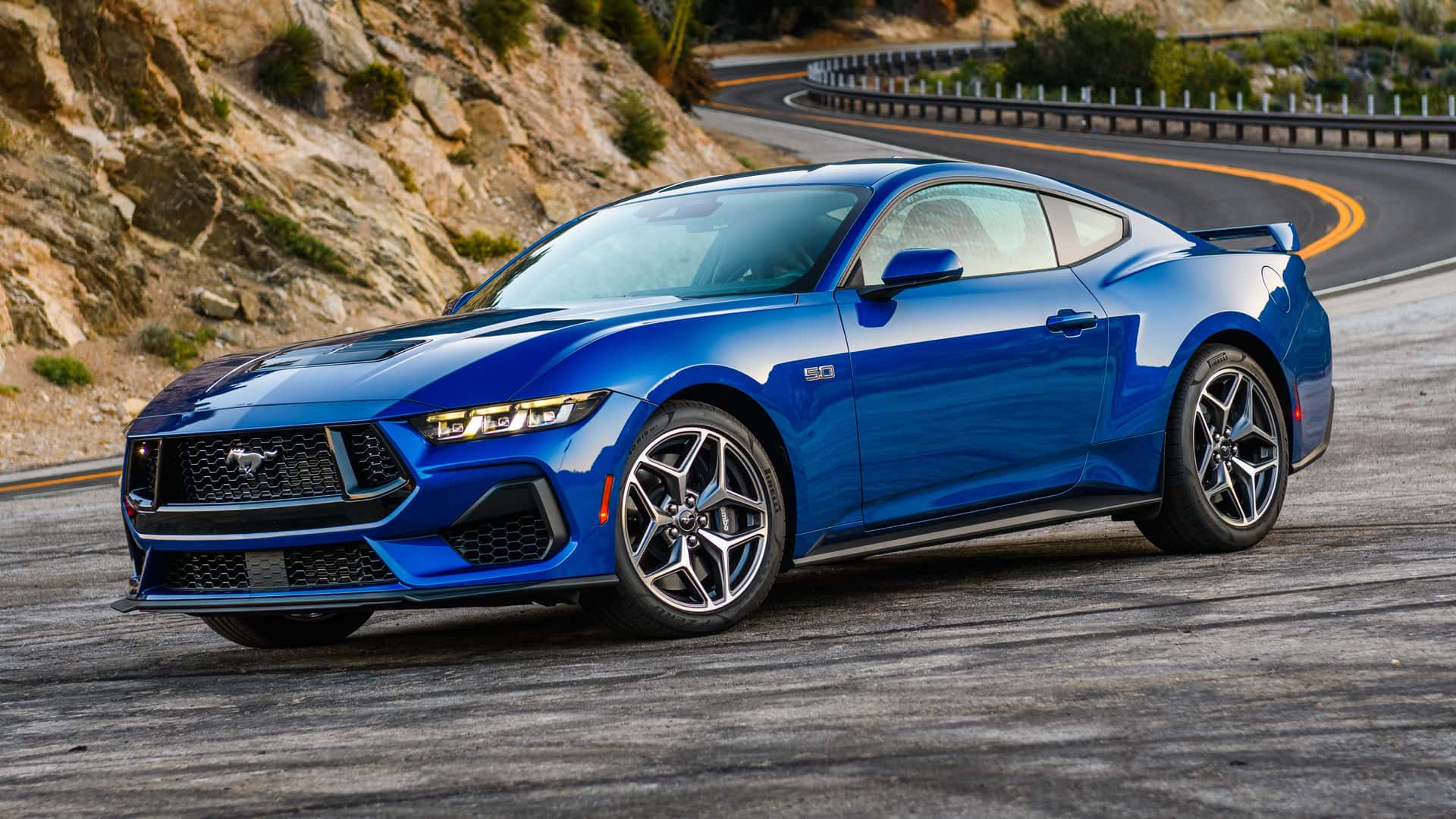
4. Ford Mustang GT
The Ford Mustang GT’s 5.0-liter Coyote V8 shares its engine family with the available 5.0-liter V8 in the Ford F-150. This demonstrates how the same engine architecture can serve different purposes, with the Mustang prioritizing high-rpm performance and the F-150 focusing on towing, hauling, and everyday utility.
The basic family connection is genuine, but the two applications are not identical in calibration or output.
Ford rates the 2026 Mustang GT’s standard 5.0-liter V8 at 480 horsepower and 415 lb-ft of torque. With the available active-valve performance exhaust, output rises to 486 horsepower and 418 lb-ft.
The 2026 F-150’s 5.0-liter V8 is rated at 400 horsepower and 410 lb-ft. The Mustang’s higher horsepower rating reflects its performance-oriented setup, while the truck’s configuration is designed around a different duty cycle.
The contrast goes beyond numbers. The Mustang uses a rear-wheel-drive sports-car layout and offers a six-speed manual transmission, while the F-150 pairs its V8 with a ten-speed automatic transmission. Cooling, intake and exhaust arrangements, software, gearing, and vehicle packaging are adapted to each model’s intended use.
A well-equipped F-150 can cost considerably more than a Mustang GT, particularly in higher trims or with additional equipment. That does not mean a pickup contains the exact Mustang engine transplanted unchanged. It means Ford applies the same broader Coyote architecture to vehicles with different priorities.
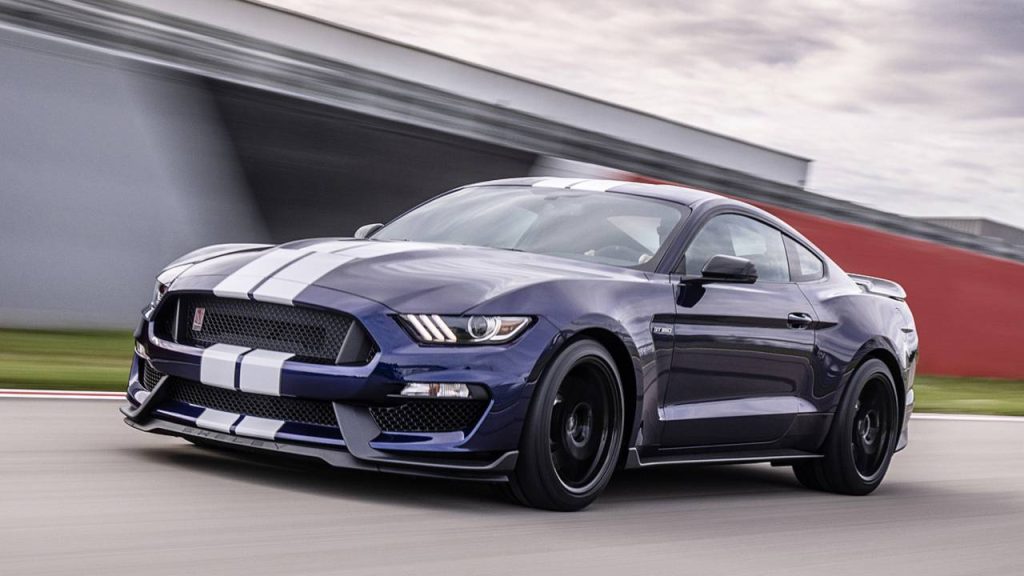
For shoppers, this shared engineering shows how a familiar V8 family can serve both recreational performance and practical truck ownership. It also highlights why horsepower figures alone cannot establish that two engines are identical.
5. Nissan Z
The Nissan Z shares its twin-turbocharged V6 engine family with the more expensive Infiniti Q50 Red Sport 400. Both use Nissan’s VR30DDTT 3.0-liter twin-turbo V6, designed to deliver strong performance in both rear-wheel-drive and all-wheel-drive vehicles.
The Infiniti Q50 is no longer in production, but its Red Sport version remains a relevant used-car comparison for buyers looking at performance vehicles.
The Q50 Red Sport 400 was rated at 400 horsepower and 350 lb-ft of torque. The 2025 Nissan Z also offered 400 horsepower and 350 lb-ft in its standard twin-turbo configuration, while the Z NISMO version received a different calibration, producing 420 horsepower and 384 lb-ft.
This shows the importance of distinguishing an engine family from the precise specification installed in each model.
The Nissan Z is a two-seat sports coupe with a focus on direct driver engagement. Depending on configuration, it is available with a six-speed manual or a nine-speed automatic transmission. The Infiniti Q50 was a four-door luxury sedan, offering rear passenger space and comfort features that the two-seat Z does not try to provide.
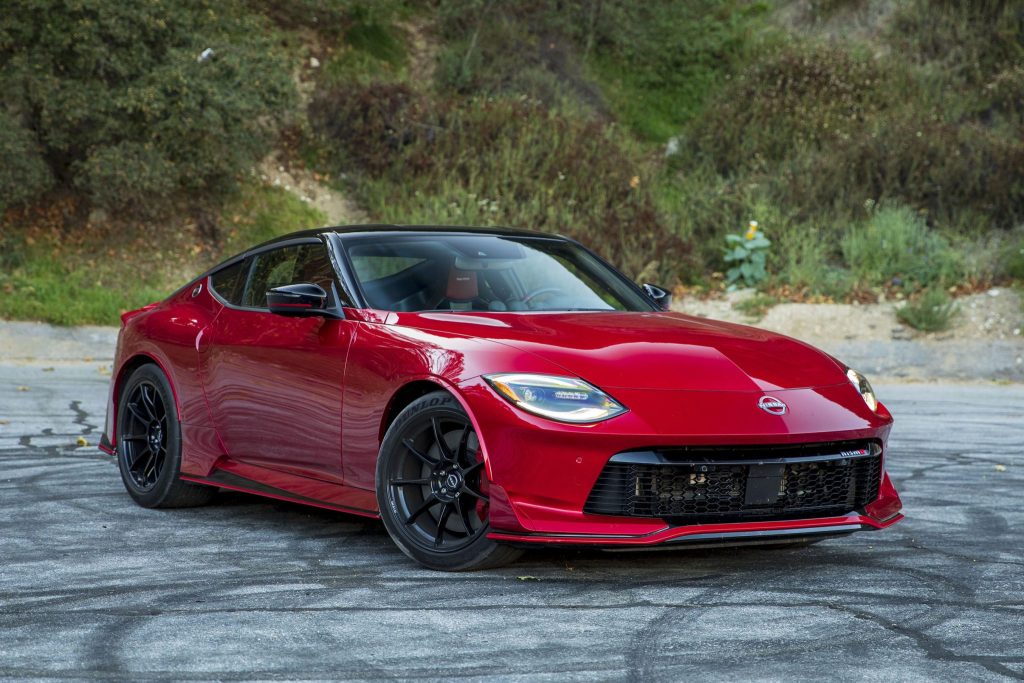
The shared engine family gives both vehicles strong turbocharged performance, but their intended roles are very different. The sedan’s engine calibration and supporting components were developed for luxury-sport use, while the Z’s package is shaped around a lighter coupe and its handling balance.
For used-car shoppers, this is a useful reminder that a powertrain associated with a premium performance sedan can also appear in a Nissan-badged sports car. When comparing listings, verify the model year and trim, since not every Q50 used the 400-horsepower version, and the Z’s outputs vary by version.
6. Chevrolet Camaro SS
The Chevrolet Camaro SS and seventh-generation Corvette Stingray both use GM’s 6.2-liter LT1 small-block V8. In the relevant factory configurations, each engine was rated at 455 horsepower and 455 lb-ft of torque.
The Corvette is the more expensive sports car, but the Camaro SS delivers the same headline output from the same basic engine designation.
The LT1 uses direct fuel injection and continuously variable valve timing, combining modern engine controls with the traditional pushrod V8 layout.
Chevrolet Performance’s published engine catalog identifies the LT1 as a 6.2-liter Gen V small-block rated at 455 horsepower and 455 lb-ft of torque. That documentation supports the engine connection without requiring assumptions based solely on displacement or sound.
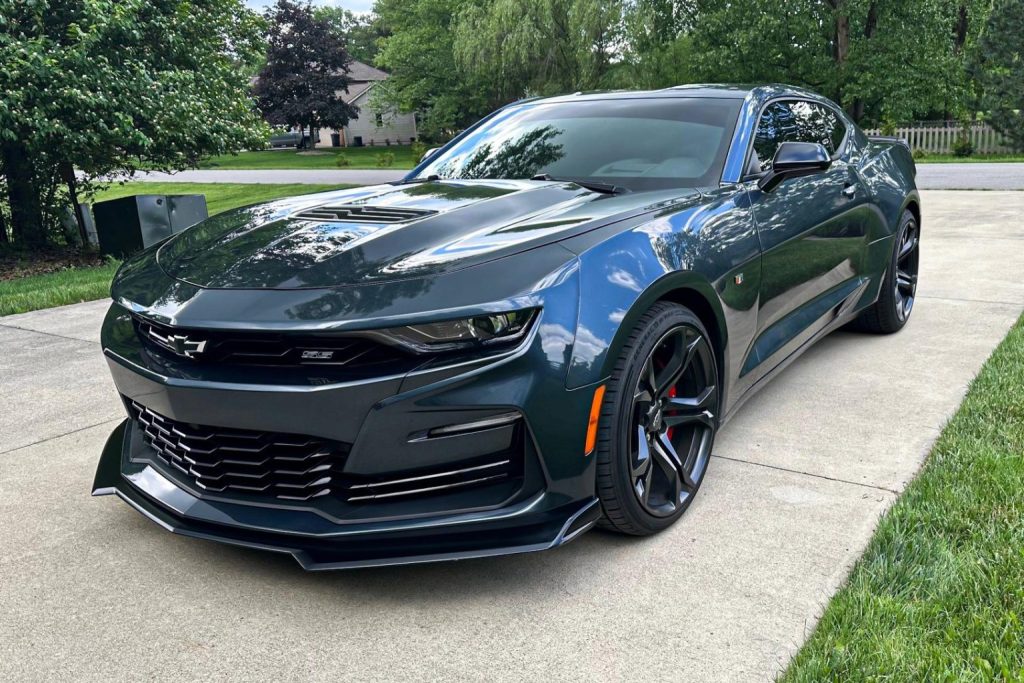
Despite the shared engine, the two cars are engineered for different purposes. The Camaro SS is a front-engine, rear-wheel-drive muscle coupe with a rear seat and a range of everyday usability compromises typical of the class. The C7 Corvette Stingray is a two-seat sports car with a front-mid-engine layout and a focus on handling balance and track performance.
Their chassis, weight distribution, cooling systems, suspension setups, and available transmissions affect how the power reaches the road. The shared LT1 does not make them interchangeable, nor does it mean every Camaro or Corvette uses the same engine. The connection applies to the relevant SS and Stingray configurations.
Because the Camaro ended production after the 2024 model year, this comparison now mainly concerns used vehicles.
For buyers shopping the pre-owned market, the LT1 connection shows that an American muscle car can share a celebrated V8 with a more expensive sports car, even though the driving experience and packaging remain distinct.
7. BMW 330i
BMW’s 330i uses a 2.0-liter TwinPower Turbo four-cylinder engine that is part of the company’s broader modular engine family. That family includes engines used across several BMW sedans and SUVs, although displacement, hardware details, and tuning can vary by model.
The 330i itself is a compact luxury sedan, while the larger 530i sits higher in BMW’s lineup and costs substantially more. Both use a 2.0-liter turbocharged four-cylinder, but the shared displacement and branding should not be mistaken for proof that every component is identical.
For the 2026 U.S. model, BMW rates the 330i’s engine at 255 horsepower and 295 lb-ft of torque. BMW lists a starting MSRP of $48,000 for the rear-wheel-drive 330i and $60,500 for the 530i sedan.
That creates a meaningful price difference between the compact 3 Series and the larger 5 Series, even though both use a 2.0-liter BMW TwinPower Turbo inline-four.
The cars are built for different buyers. The 330i emphasizes a smaller footprint and sporty handling, while the 530i offers a larger body and a more spacious luxury-sedan experience. Equipment, chassis tuning, sound insulation, and cabin materials also contribute to the price difference.
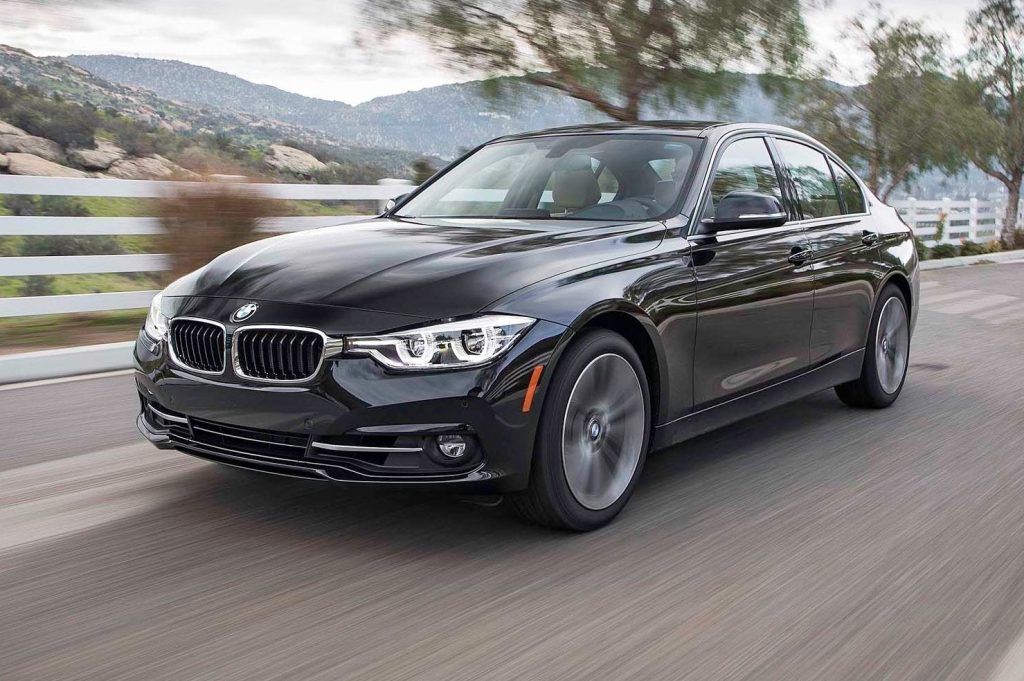
This is a more careful example of engine sharing than claiming two cars have completely identical powerplants. BMW identifies the same broad engine type for both models, but exact component and calibration commonality should be verified by model year and part number.
For shoppers, the takeaway is that engine displacement alone does not determine a car’s market position. A smaller BMW can deliver turbocharged performance from the same general engine architecture used in a more expensive sedan, while the bigger vehicle justifies its price through a broader package.
8. Kia Stinger GT
The Kia Stinger GT is a discontinued sport sedan whose twin-turbocharged 3.3-liter V6 belongs to the Lambda II engine family also used in the Genesis G70 3.3T. Genesis is Hyundai Motor Group’s luxury brand, and the G70 uses this engine family in a more premium package.
Kia’s official U.S. specifications identify the Stinger GT’s 3.3-liter twin-turbo V6 as a Lambda II engine, rated at 368 horsepower and 376 lb-ft of torque.
The Stinger was designed as a practical performance sedan, combining a fastback body with rear-seat accommodation and a liftback-style cargo opening.
The Genesis G70 takes a more traditional luxury-sport sedan approach, with an emphasis on premium cabin materials, design, and brand positioning. Both vehicles offer performance-oriented powertrains, but their equipment, chassis tuning, and packaging are not identical.
The shared engine family helps explain the mechanical relationship between the two vehicles. However, buyers should not assume that every part, software calibration, or performance figure is identical across the Stinger GT and G70 3.3T. Model year, drivetrain, and trim can affect the final specification.
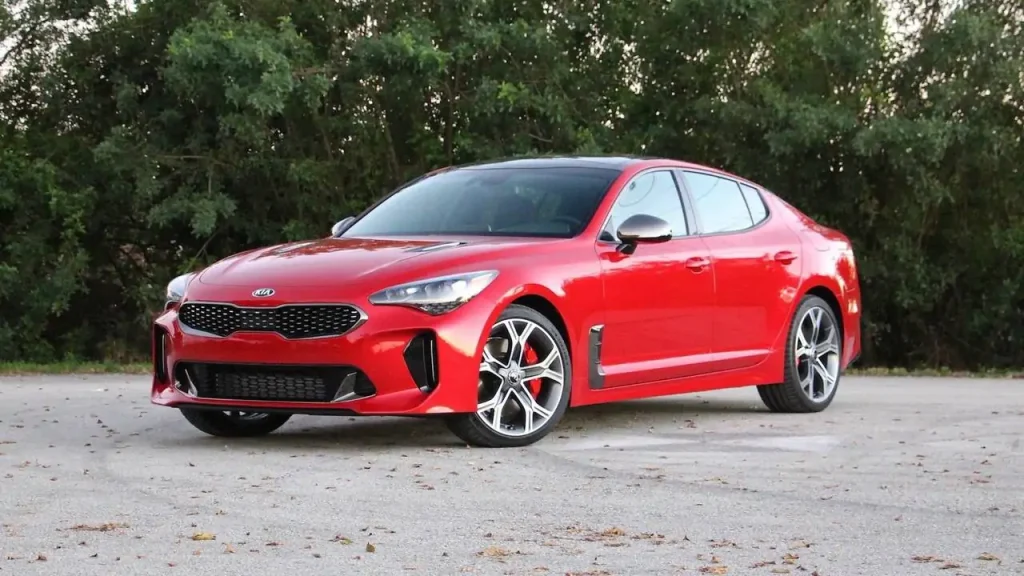
Because Kia discontinued the Stinger after the 2023 model year, this comparison is now most useful for used-car shoppers. The Stinger GT can offer a route into a twin-turbo V6 sport sedan without buying a new luxury-branded vehicle, while the Genesis G70 provides a more premium alternative with its own distinct setup.
The key point is not that the Kia is a Genesis with a different badge. It is that both vehicles draw on the same broader V6 engine family, demonstrating how performance engineering can cross brand boundaries within an automotive group.