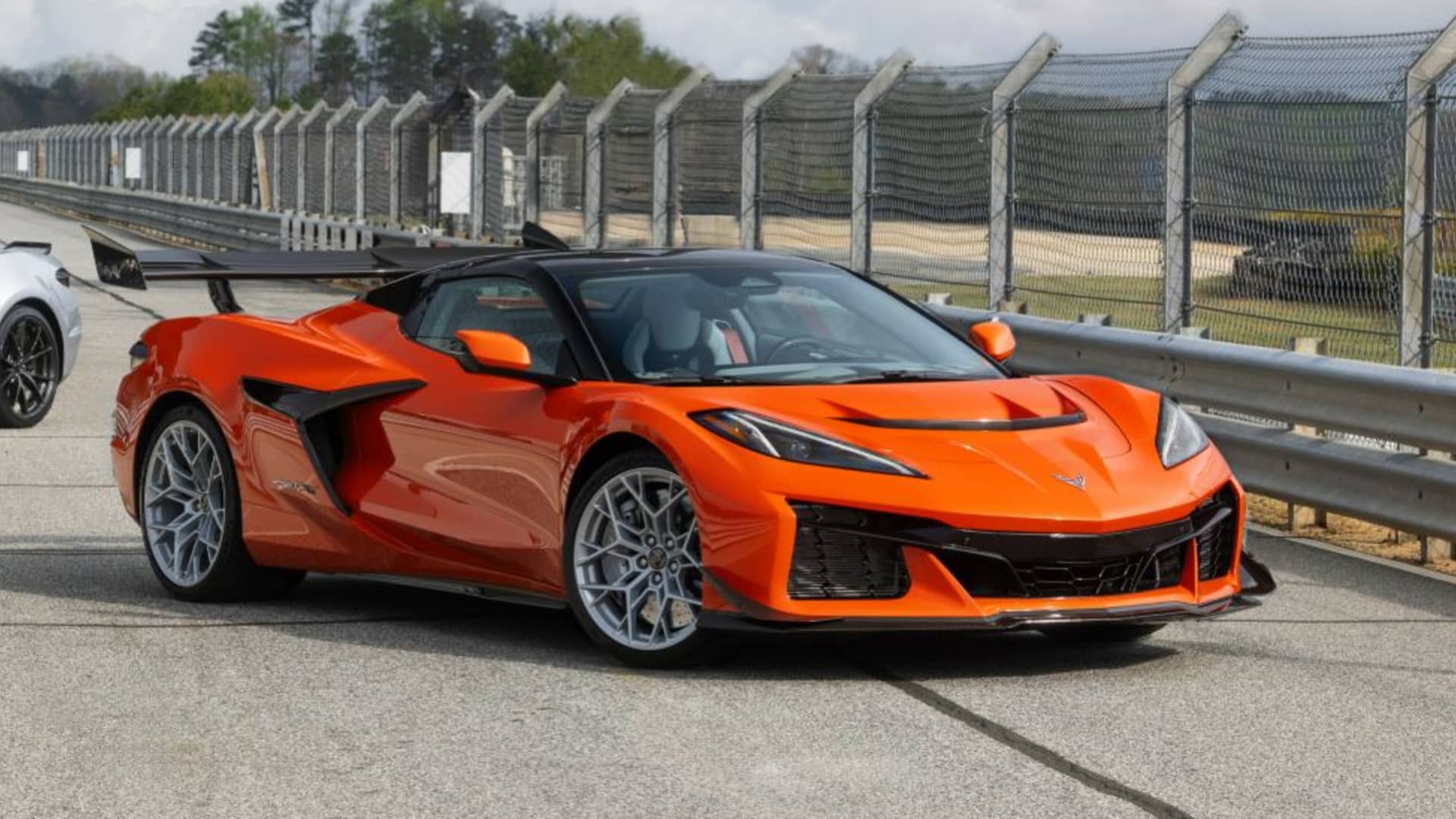
The Chevrolet Corvette ZR1X demonstrates how hybrid technology can serve a very different purpose from improving fuel economy. Combining a twin-turbocharged V8 with an electric motor powering the front wheels, Chevrolet’s flagship performance car produces a combined 1,250 horsepower and sends power to all four wheels.
In its October 21, 2026, review, WardsAuto praised the engineering behind the ZR1X, highlighting how effectively its combustion engine and electric propulsion system work together.
The ZR1X represents a major step for America’s best-known sports-car nameplate. It uses electrification to increase output, improve traction, and deliver acceleration associated with much more expensive exotic cars.
With a starting price listed at $227,800 for the 2027 model year, it also brings extraordinary performance into a price category well below many European hypercars. Its engineering shows that hybrid powertrains can be designed around speed and driver engagement rather than efficiency alone.
A Twin-Turbo V8 and Electric Motor Produce 1,250 Horsepower
At the heart of the Corvette ZR1X is Chevrolet’s 5.5-liter LT7 twin-turbocharged V8. The engine produces 1,064 horsepower at 7,000 rpm and 828 lb-ft of torque at 6,000 rpm. An electric motor mounted at the front axle contributes another 186 horsepower and 145 lb-ft of torque, bringing the combined system output to 1,250 horsepower.
The arrangement gives the ZR1X a distinctive power delivery strategy. The V8 drives the rear wheels through the car’s eight-speed dual-clutch transmission, while the electric motor powers the front axle.
Together, the two propulsion sources create an electrically assisted all-wheel-drive system without requiring a conventional mechanical driveshaft connecting the engine to the front wheels.
This layout builds on the architecture of the mid-engine C8 Corvette and the hybrid Corvette E-Ray. The E-Ray established the idea of combining a gasoline engine at the rear with electric drive at the front. The ZR1X takes that concept into a much higher performance category by pairing front-axle electric assistance with the more powerful twin-turbo V8 from the ZR1.
The electric motor is not simply an efficiency device. It can deliver torque to the front wheels independently of the rear combustion engine, helping the car put its power down when accelerating. That additional traction is particularly valuable when a vehicle produces more than 1,000 horsepower, since managing wheelspin becomes a major engineering challenge.
Chevrolet estimates that the ZR1X can accelerate from zero to 60 mph in under two seconds under suitable conditions. Its quarter-mile target is under nine seconds at a trap speed above 150 mph. Those are manufacturer estimates, and results depend on factors such as road surface, tires, temperature, and launch conditions.
Testing has demonstrated the car’s capability. Chevrolet reported a quarter-mile run of 8.675 seconds at 159.57 mph on a prepared surface, with the vehicle also reaching 60 mph in 1.68 seconds. Those results were achieved under specific test conditions and should not be confused with everyday road performance.
The powertrain’s importance extends beyond the headline numbers. Combining a combustion engine with electric drive requires careful coordination of torque, transmission behavior, traction control, and battery output.
The car must deliver power smoothly while maintaining stability and predictable responses. WardsAuto’s review highlighted the refinement of this integration, an important achievement for a hybrid system designed to operate at such an extreme performance level.
How Hybrid All-Wheel Drive Changes the Driving Experience
The ZR1X’s electric front axle changes how Chevrolet can distribute power to the road. In a conventional rear-wheel-drive sports car, the rear tires must handle acceleration forces while also supporting the vehicle’s handling demands. With the ZR1X, the front motor adds another source of propulsion, helping the car accelerate with more traction when conditions allow.
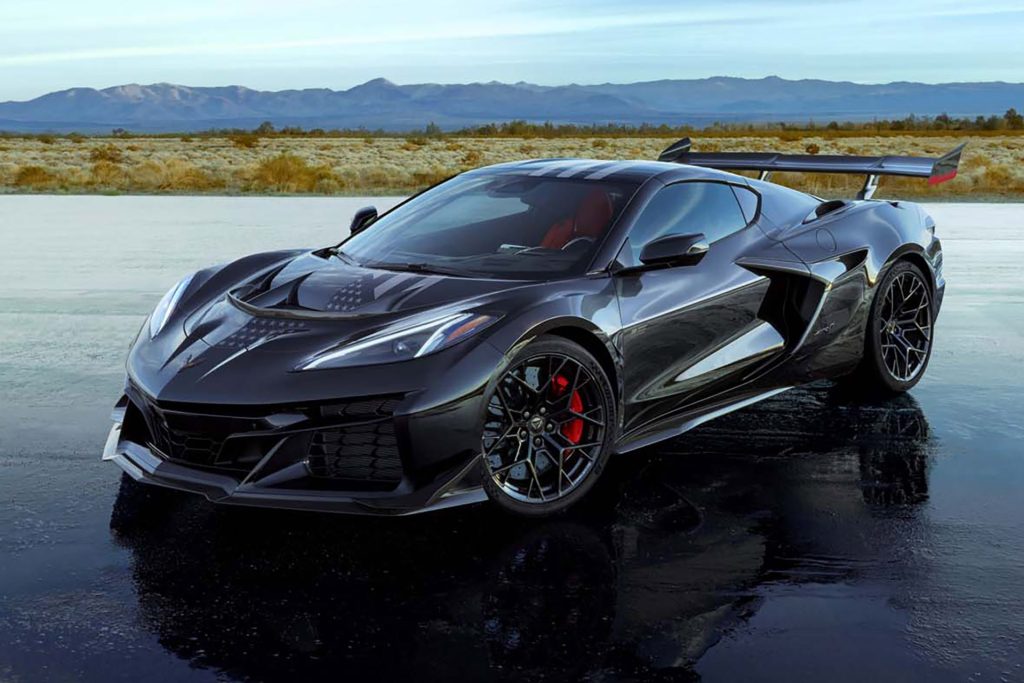
The system can also respond quickly because electric motors deliver torque without waiting for engine speed to rise. This complements the twin-turbo V8, which provides the combustion engine’s substantial output across its operating range.
The two systems must work together, with software coordinating how much power reaches each axle as grip and driving conditions change.
This is particularly important when accelerating out of a corner. Too much power sent to the rear tires can cause wheelspin, while an all-wheel-drive system can use the front axle to help move the car forward. The benefit depends on tire grip, road conditions, and the car’s control systems, but the arrangement gives engineers more options for managing acceleration.
The hybrid system also adds complexity. Engineers must coordinate the electric motor with the V8 and dual-clutch transmission while accounting for battery charge, temperature, and driver inputs.
The system’s performance depends not just on peak horsepower but on how consistently it delivers power and how naturally the different components respond to the driver’s commands.
Weight is another consideration. Electric motors, batteries, cooling systems, and power electronics add components that a conventional combustion-only sports car does not need.
Chevrolet has used the mid-engine architecture and integrated powertrain controls to develop the ZR1X around its combined output, but the car’s performance cannot be judged by horsepower alone. Chassis balance, brakes, tires, and aerodynamic stability are essential when a vehicle accelerates and travels at these speeds.
The ZR1X is also equipped with performance-focused hardware to manage the demands of road and track use. Available aerodynamic components and carbon-fiber options help support high-speed stability, while its braking and chassis systems are designed for the substantial forces associated with extreme acceleration.
Buyers considering track driving should pay close attention to tire choice, brake equipment, and the specifications of any selected performance package.
Chevrolet calls the ZR1X the most advanced and powerful Corvette ever produced. Its design reflects a wider shift in performance-car engineering, where electrification is increasingly used to boost power and performance rather than simply improve fuel efficiency.
It can also be used to add power, improve traction, and broaden the range of conditions in which a high-output car can deliver its performance.
The distinction matters because the ZR1X is not a plug-in hybrid designed around extended electric-only commuting. Its electric motor is integrated primarily to enhance performance and provide front-axle drive.
Chevrolet’s approach shows how manufacturers can use the same broad technology category for very different purposes, from efficiency-focused family vehicles to high-performance machines.
The ZR1X Challenges Far More Expensive European Supercars
The ZR1X’s price is central to its position in the performance market. Chevrolet lists the 2027 model with a starting price of $227,800 for the 1LZ coupe, while the 3LZ coupe starts at $238,800. The convertible is also available, with higher starting prices depending on trim. Taxes, title, license, dealer fees, and optional equipment can increase the final cost.
Those prices place the ZR1X firmly in exotic-car territory, but below several European hypercars with comparable performance ambitions. Ferrari’s F80 and McLaren’s W1, for example, occupy a substantially higher price category.
Their powertrains and vehicle designs differ, so comparisons based only on horsepower or acceleration do not capture the full ownership or driving experience. Nevertheless, the Corvette’s output makes it a serious participant in a market traditionally associated with much more expensive vehicles.
The ZR1X also offers a choice between coupe and convertible body styles, along with different equipment levels. The 1LZ includes features such as a visible carbon-fiber roof panel, head-up display, and Bose premium audio.
The 3LZ adds a more extensive cabin specification, including a 14-speaker Bose Performance Series audio system, heated and ventilated leather seats, and additional interior trim features.
Its place in the Corvette lineup is equally important. The Stingray provides a more accessible entry point, while the Z06 emphasizes naturally aspirated V8 performance, and the ZR1 focuses on the twin-turbocharged engine. The ZR1X sits at the top of that range by adding front-axle electric propulsion and all-wheel drive to the high-output twin-turbo platform.
That positioning gives Chevrolet a different answer to the challenge facing premium performance brands. Rather than relying on a luxury badge and an exceptionally high price, the Corvette combines American V8 character with hybrid technology and a mid-engine layout.
Its appeal rests on the balance of performance, engineering, and price, even though ownership costs, insurance, tires, and maintenance will remain significant considerations.
The car’s long-term reputation will depend on more than its acceleration figures. Track consistency, braking performance, handling, reliability, and the ability to deliver predictable power across repeated runs all matter to serious performance buyers.
The hybrid system also needs to demonstrate that its added complexity contributes meaningfully to the driving experience.
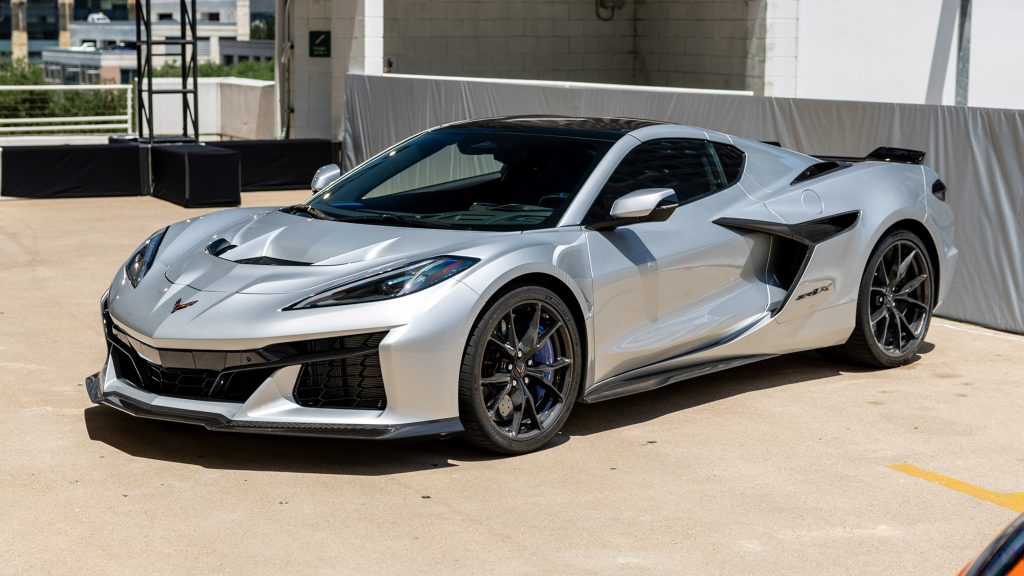
The Corvette ZR1X shows how far hybrid performance technology has advanced. Its combination of a 1,064-horsepower twin-turbo V8, a 186-horsepower front electric motor, and all-wheel drive produces a 1,250-horsepower system that can compete with far more expensive exotic cars.
Rather than treating electrification as a compromise, Chevrolet uses it to increase traction and expand the car’s performance potential.
For American sports-car buyers, the ZR1X represents a new level of Corvette capability. Its price remains substantial, but its engineering offers a different route into supercar performance.
The model’s significance lies not only in its headline output, but in demonstrating how electric assistance can complement a traditional V8 to create a more capable high-performance car.