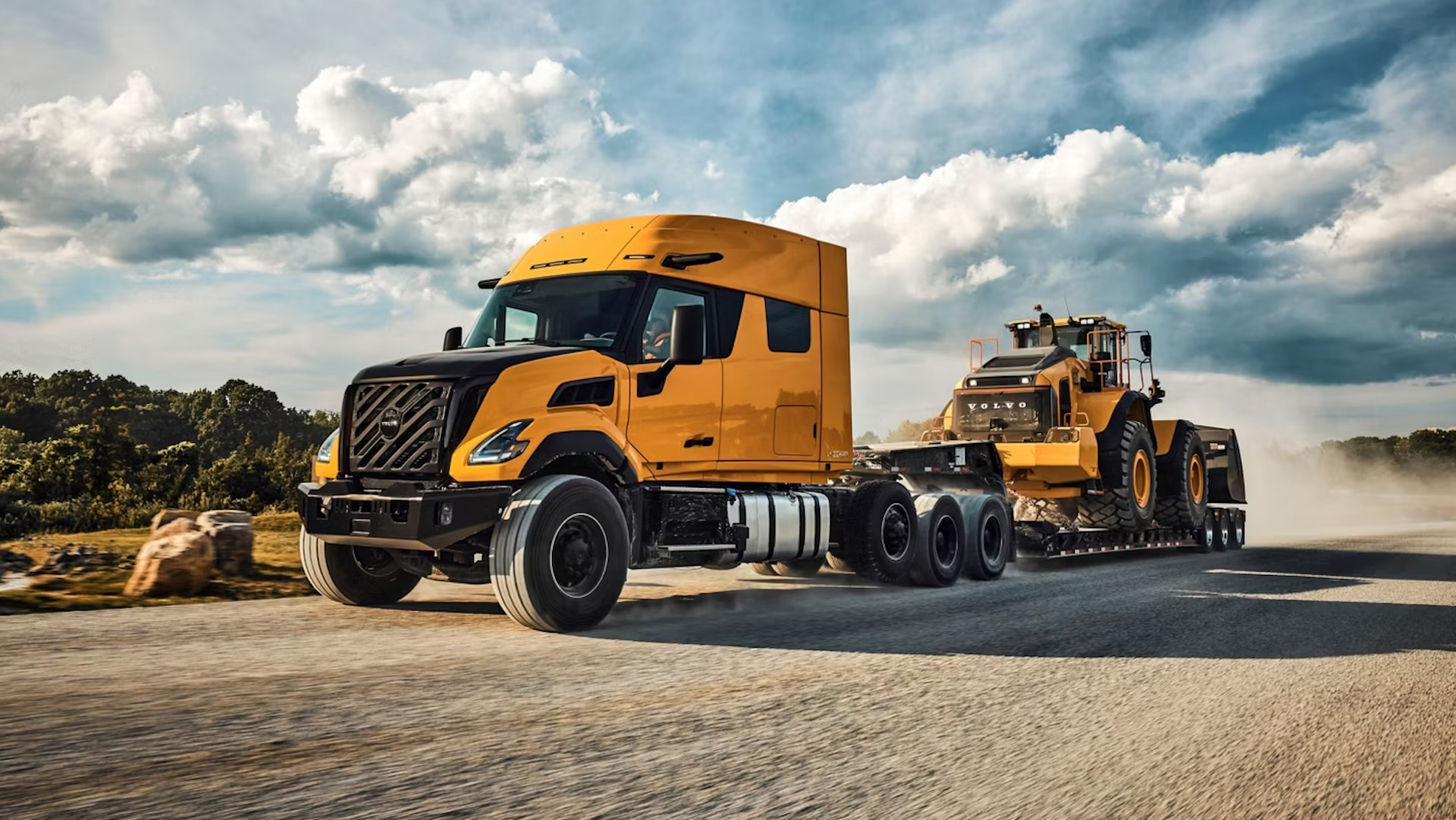
Volvo Trucks North America has introduced the all-new Volvo VNX, a heavy-duty truck designed for demanding applications across construction, logging, agriculture, concrete hauling, and heavy-haul transportation.
Revealed on October 14, 2026, the truck combines a reinforced chassis, a 540-horsepower engine, and new driver-assistance technologies tailored to challenging jobsites. Sales are scheduled to begin October 26, with production expected to start in mid-2027.
The VNX expands Volvo’s North American lineup beyond long-distance and regional freight operations. It targets businesses that need a truck capable of handling heavy loads, uneven terrain, and frequent low-speed maneuvers.
For American trucking companies, the new model promises durability, driver comfort, safety technology, and connected services designed to keep vehicles running.
A New Heavy-Duty Platform Built for Vocational Work
Vocational trucks face different demands from conventional highway tractors. They may operate on gravel roads, enter construction sites, carry specialized equipment, or repeatedly maneuver around workers and machinery.
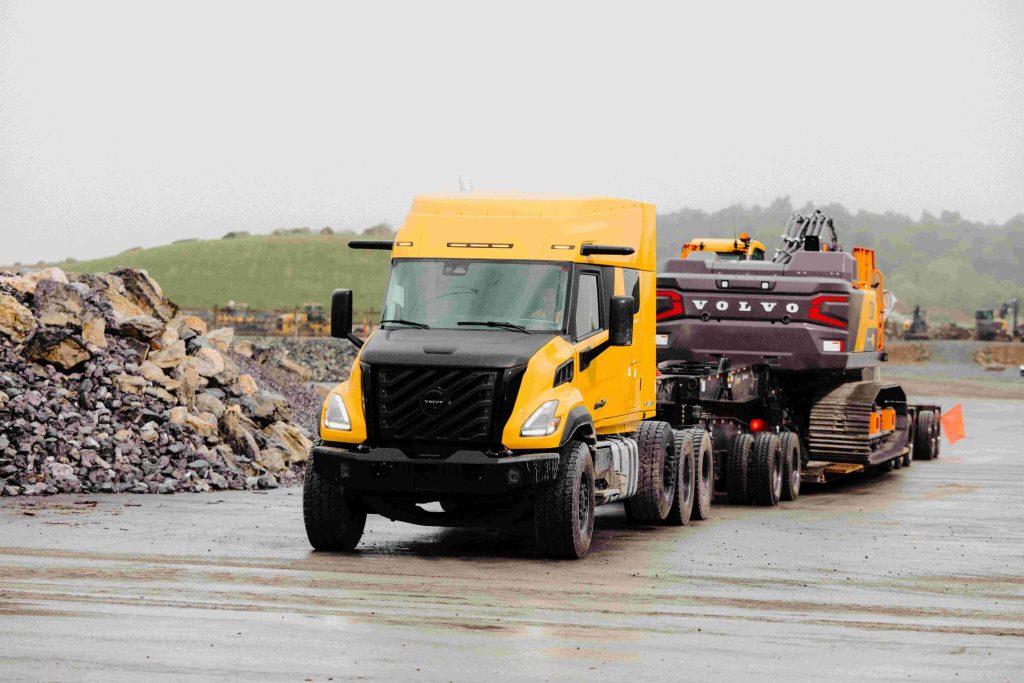
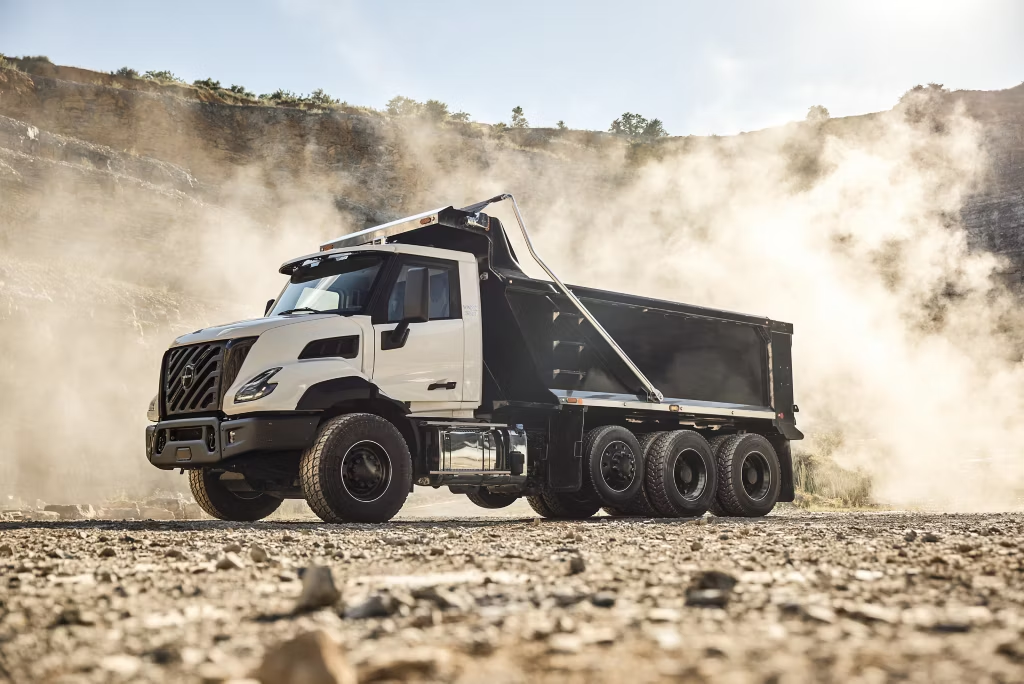
Volvo designed the VNX for these conditions, targeting construction, concrete, logging, agriculture, waste and refuse, municipal plowing, and specialized heavy-haul work.
The truck shares a common platform with Volvo’s latest VNL long-haul and VNR regional-haul models. Those vehicles were introduced in 2024 and 2025, respectively, as part of a wider product-development and manufacturing investment of approximately $3 billion.
The VNX completes that renewal with a truck adapted specifically for demanding work on and off paved roads.
Buyers can choose from three principal configurations. The VNX 300 is a day-cab model available as a tractor or straight truck. The VNX 440 adds a 42-inch sleeper and is offered in both formats. The VNX 640 is a tractor equipped with a 62-inch midroof sleeper for operations where drivers need additional space.
All three models are available in axle-forward or axle-back configurations, allowing fleets to tailor the truck to their operating requirements. Straight-truck versions are particularly useful for businesses installing specialized bodies or equipment instead of pulling a conventional semitrailer.
Durability is central to the design. Volvo uses high-tensile, heat-treated steel frame rails rated for a gross vehicle weight of 160,000 pounds, with approval available for higher ratings in specific applications.
The all-metal grille incorporates a steel-mesh backing to protect engine components while allowing airflow. Buyers can also select among three bumper configurations designed to accommodate different attachments, frame extensions, and center tow pins.
The windshield is designed to resist impacts, thermal shock, and scratching, addressing hazards associated with gravel, debris, and demanding job sites. Inside, the cab uses durable surfaces that are easier to clean after work in muddy or dusty conditions.
Buyers can choose a practical Core interior or an Edge Black finish featuring Fathom Blue and Brushed Satin Metallic accents, soft-touch surfaces, and a leather-wrapped steering wheel.
These choices allow operators to prioritize function or a more premium appearance without changing the truck’s vocational purpose.
A 540-HP Engine and Technology for Challenging Jobsites
Power comes from Volvo’s D13 engine, rated at up to 540 horsepower and 1,950 lb-ft of torque. The engine meets EPA 2027 emissions standards, while its engine-braking system delivers up to 630 braking horsepower.
That additional braking capability can help drivers control speed on steep descents and reduce reliance on service brakes, although appropriate driving technique remains essential.
The VNX’s most distinctive features focus on low-speed control. Remote Steer allows an operator to steer the truck from outside the cab at speeds of up to 5 mph. This is intended for precise positioning around equipment and restricted work areas, including sites where a concrete mixer, crane, or vacuum truck must fit into a tight space.
Remote operation could reduce the need for a second person to guide certain maneuvers, but it does not eliminate jobsite risks. Operators must still monitor nearby workers, obstacles, and equipment and follow established safety procedures.
Terrain Brake addresses unwanted movement on uneven or sloping ground. Volvo designed the system to help stop a truck from rolling forward or backward when the driver releases the accelerator. This can be valuable on construction sites where changes in ground level and traction complicate vehicle control.
The truck also offers a direction-change function that allows drivers to switch between forward and reverse without pressing the brake pedal. This may simplify repetitive movements for dump-truck operators shuttling between loading and unloading areas. Its practical value will depend on the application and the vehicle’s operating conditions.
Safety technology is another major focus. Forward pedestrian detection is standard, with Volvo reporting a detection range of 23 to 230 feet. Optional blind-spot detection provides visual and audible alerts when pedestrians move alongside the truck and trailer.
A 360-degree camera system offers a top-down view of the vehicle’s surroundings, helping drivers maneuver in confined areas.
Volvo says the new cab uses one-third more ultra-high-strength steel than its legacy vocational trucks. Driver-side curtain airbags are standard, which the company identifies as a first for a North American vocational truck manufacturer.
These protections complement the detection systems, but drivers must continue to check their surroundings and operate cautiously.
Connected Services, Fleet Efficiency, and Availability
The VNX also incorporates connected technology intended to help fleets manage maintenance and vehicle availability. Every truck comes with a factory-installed 4G telematics gateway supporting Volvo Remote Diagnostics and Remote Programming.
Diagnostics monitor vehicle systems around the clock and can flag potential issues, while Remote Programming delivers software and vehicle-parameter updates over the air.
These features may help maintenance teams identify problems earlier and reduce certain workshop visits. For a contractor, a truck taken out of service can delay deliveries, interrupt a project, or leave other equipment and workers waiting.
Connected monitoring can support maintenance planning, although it cannot prevent every failure or eliminate the need for physical repairs.
Volvo Connect also gives fleet managers access to information about fuel efficiency, vehicle location, and safety. Businesses can use those insights to review vehicle utilization and operating performance across their fleets. Actual savings will depend on how the information is used, the truck’s workload, and the maintenance practices already in place.
The launch is strategically important for Volvo because vocational trucks serve a substantial part of North America’s heavy-duty market. These customers have different needs from long-haul carriers, often prioritizing chassis strength, maneuverability, specialized equipment, and reliability over highway-focused features alone.
Volvo’s experience with vocational trucks in other markets, alongside the wider group’s construction-equipment expertise, provides background for its renewed push into this segment.
Pricing has not been announced in the initial reveal. Buyers will need to compare purchase costs, configuration choices, maintenance support, fuel use, and expected downtime before deciding whether the VNX fits their operations. The benefits of features such as Remote Steer and connected diagnostics will depend on how frequently a business can use them.
Sales are scheduled to begin October 26, 2026, while production is expected to start in mid-2027. Industry reporting indicates the order book is expected to open by the end of 2026, so sales availability should not be confused with immediate production or delivery.
Fleet operators should confirm ordering and delivery timelines with Volvo Trucks North America or a participating dealer.
The VNX gives Volvo a more focused offering for construction, agriculture, logging, and heavy-haul operators. Its high-output D13 engine, reinforced chassis, terrain-oriented controls, and connected services address practical challenges that affect productivity and vehicle availability.
Its success will ultimately depend on real-world performance, pricing, reliability, and dealer support. For American fleets seeking a vocational truck that combines heavy-duty engineering with modern safety and connectivity, the VNX marks a significant expansion of Volvo’s capabilities in this demanding market.