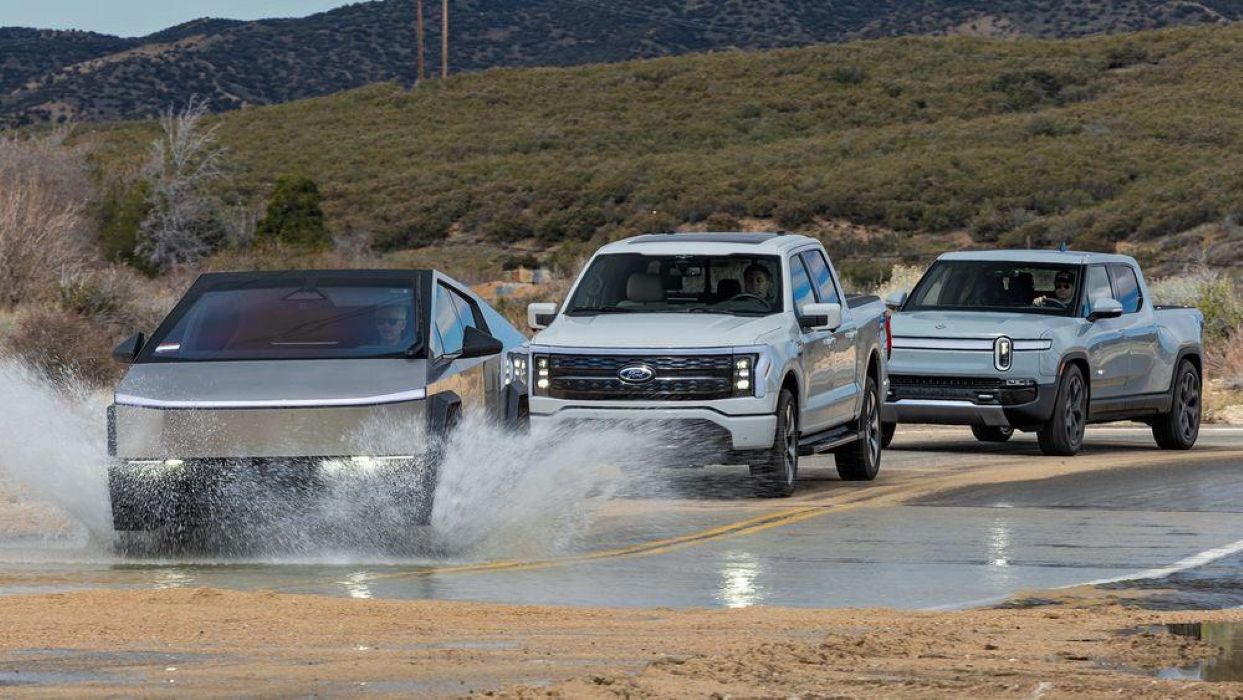
The arrival of electric pickups gave truck buyers a fresh set of options. Among the most talked-about models are the Tesla Cybertruck, Ford F-150 Lightning, and Rivian R1T.
Each truck takes a different path to the same goal. One is a stainless steel experiment, one is a familiar workhorse, and one is an adventure machine.
The market has changed a lot in the past year. Ford has ended production of the all-electric F-150 Lightning after the 2026 model year. That matters for any buyer reading this.
So this guide looks at what you can actually buy today. It also covers used and upcoming options where they matter. We will compare price, range, charging, towing, and performance. We will also look at comfort, reliability, and ownership costs.
Prices here are approximate US figures for the 2026 model year. They change quickly, so always confirm before buying. No single truck wins for every person.
The right pick depends on how you tow, travel, and park. Think of this as a practical buyer’s guide, not a hype piece. Let us start with the numbers that matter most.
Price, Range, and Charging
Let us begin with price, because it shapes every decision. The three trucks sit in a similar band, but the details differ. The Cybertruck now starts at $69,990 for a stripped base trim with the same 325-mile range as the Premium. The Premium AWD sits near $79,990, and the Cyberbeast near $99,990.
The Rivian R1T starts at $70,990 for the dual-motor model. Higher trims climb past $100,000 with tri-motor and quad-motor setups. The 2026 F-150 Lightning started at $56,975, with the Platinum near $87,190. On paper, that made it the budget choice.
But the low sticker price hid a problem. Ford lost money on every Lightning it sold. That is why Ford changed direction. The replacement is an extended-range Lightning that uses a gas generator and promises over 700 miles of total range.
It is still driven only by electric motors. Production is slated to begin in 2027. Until then, buyers can only find leftover new units or used ones. Used Lightnings can be smart buys because prices have softened.
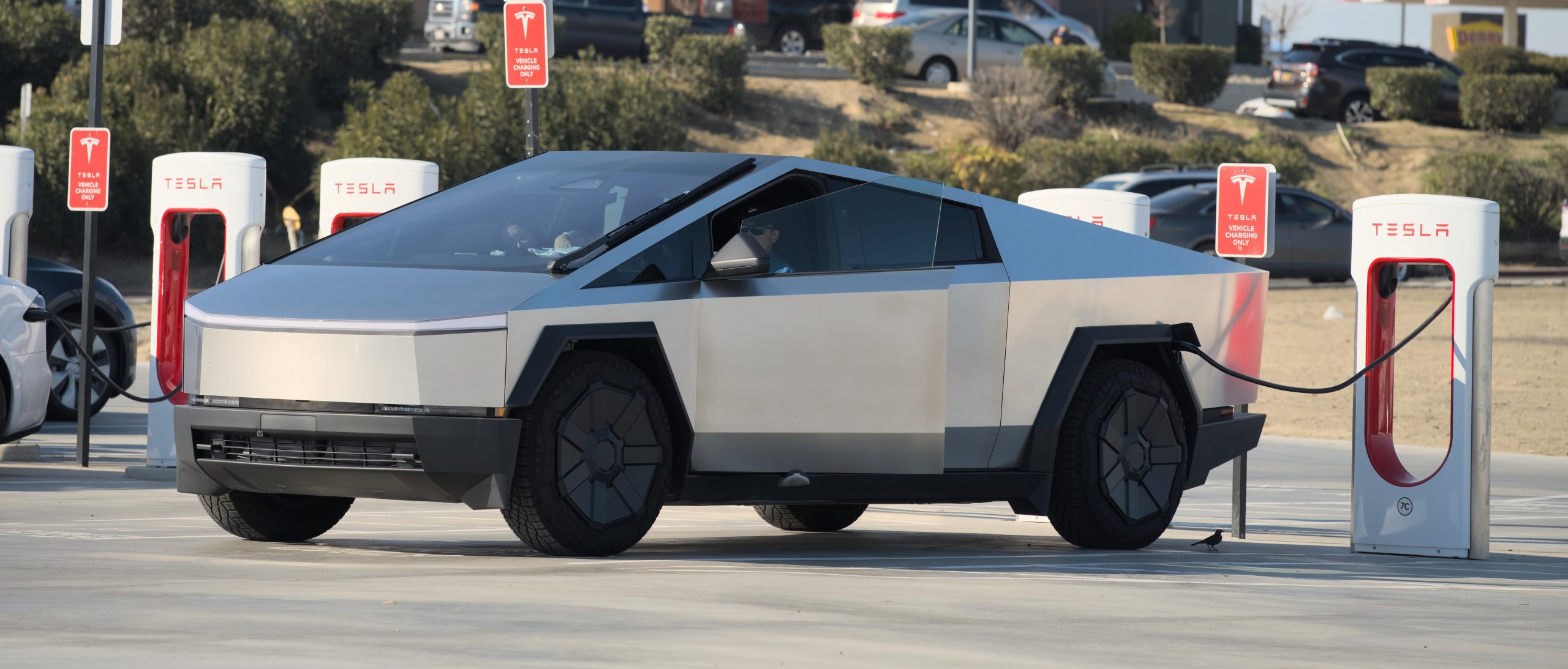
Now let us talk about range, where most buyers feel anxious. Real-world numbers matter more than brochure numbers. The Cybertruck AWD uses a 123 kWh battery and is rated for about 325 miles. Highway driving usually trims that number noticeably.
The R1T offers the widest range spread. Trims run from about 270 miles up to 420 miles with the Max pack. That top figure is the longest of any electric truck on sale. It gives the R1T a real edge on road trips.
The Lightning ranged from roughly 240 to 320 miles depending on the battery. The extended-range pack was the one most buyers wanted. Cold weather cuts range on all three trucks. Expect a loss of 20 percent or more in freezing conditions.
Speed on the highway matters too. Driving at 80 mph instead of 65 mph can drain a battery far faster. Charging speed matters as much as range. A fast charger can turn a long stop into a short coffee break.
The Cybertruck uses an 800-volt system, the fastest charging setup Tesla builds. A 10 to 80 percent charge takes about 33 minutes. The R1T now has a native NACS port, giving it direct access to Tesla Superchargers. Its 10 to 80 percent charge takes about 30 to 36 minutes.
The Lightning could also use the Supercharger network through an adapter. Its charging speeds were generally a little slower than the other two. Home charging is where you will do most of your fueling. A 240-volt outlet in your garage is the best investment you can make.
Most owners wake up to a full battery every morning. That convenience is something gas trucks simply cannot match. Public charging is improving every year. Still, rural routes can have gaps, so plan long trips ahead. For range and charging together, the R1T leads the pack. The Cybertruck follows closely, helped by Tesla’s huge network.
Towing, Performance, and Everyday Practicality
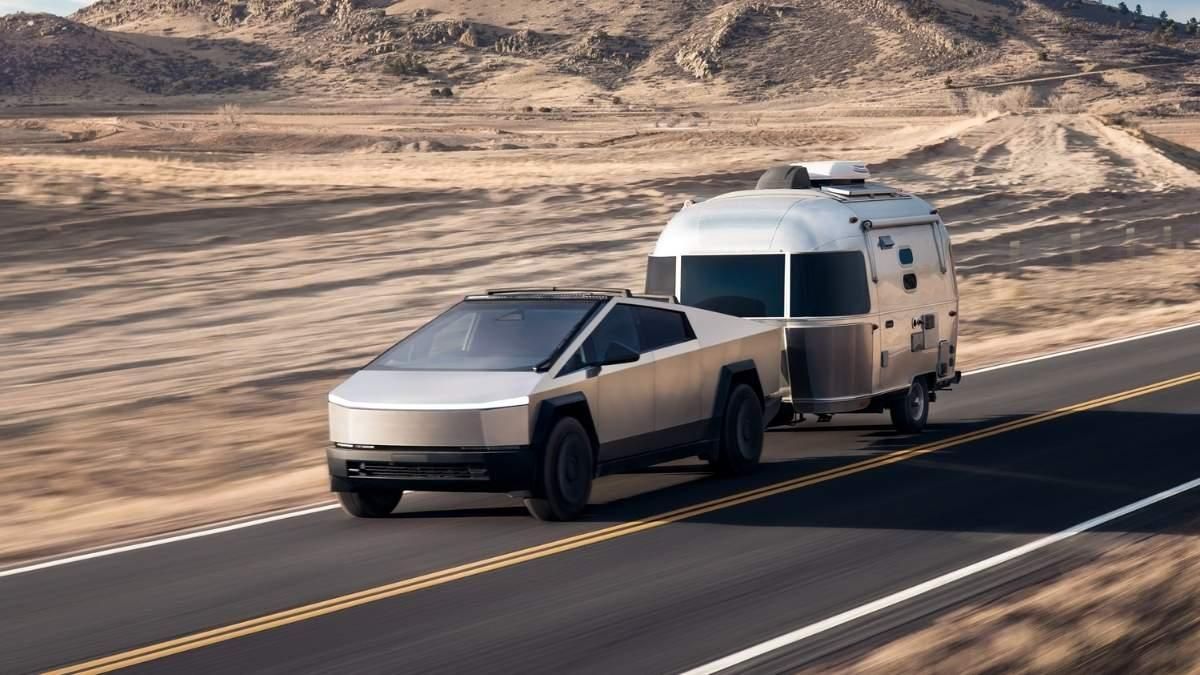
Towing is where electric trucks get tested hard. All three can pull heavy loads, but the fine print matters. The base Cybertruck AWD tows 7,500 pounds. The Premium AWD and Cyberbeast reach 11,000 pounds.
The R1T reaches 11,000 pounds only with the Max battery pack, while Dual Standard and Dual Large trims are capped at 7,700 pounds. Check the trim carefully.
The Lightning could tow up to 10,000 pounds with the extended-range battery. That was close to its rivals. Every one of these trucks loses a lot of range when towing. Plan for a drop of 40 to 60 percent with a big trailer.
For constant long-distance towing, a diesel truck still wins. Electric trucks suit short hauls, boats, and weekend campers best. Performance is where electric trucks feel almost unfair. Instant torque makes them quick in any trim.
The Cybertruck AWD hits 60 mph in about 4.1 seconds. The Cyberbeast produces up to 845 horsepower and reaches 60 in roughly 2.6 seconds. The R1T makes between 533 and 1,025 horsepower depending on the trim. The quad-motor version is shockingly fast for a truck.
The Lightning’s top Platinum trim made about 580 horsepower. It reached 60 mph in around four seconds. Off-road ability separates these trucks more than straight-line speed. The R1T is the clear leader here.
It has air suspension, generous ground clearance, and an optional quad-motor setup. Each wheel gets its own motor for precise control. The Cybertruck is capable too, with adjustable air suspension and strong traction. But its width makes tight trails stressful.
The Lightning is great for dirt roads and job sites. It is not built for serious rock crawling. Practicality is where each truck shows its personality. Storage, bed design, and power features all differ.
The Rivian has a gear tunnel behind the cab and a front trunk. These spaces keep muddy gear away from your seats. The Cybertruck has a vault-style bed with a power cover. It includes bed outlets for tools and camping gear.
The Lightning has the biggest front trunk of the three. It also offers onboard power that can run tools or even a home. Interior and tech follow very different philosophies. The cabins feel like they come from three different companies.
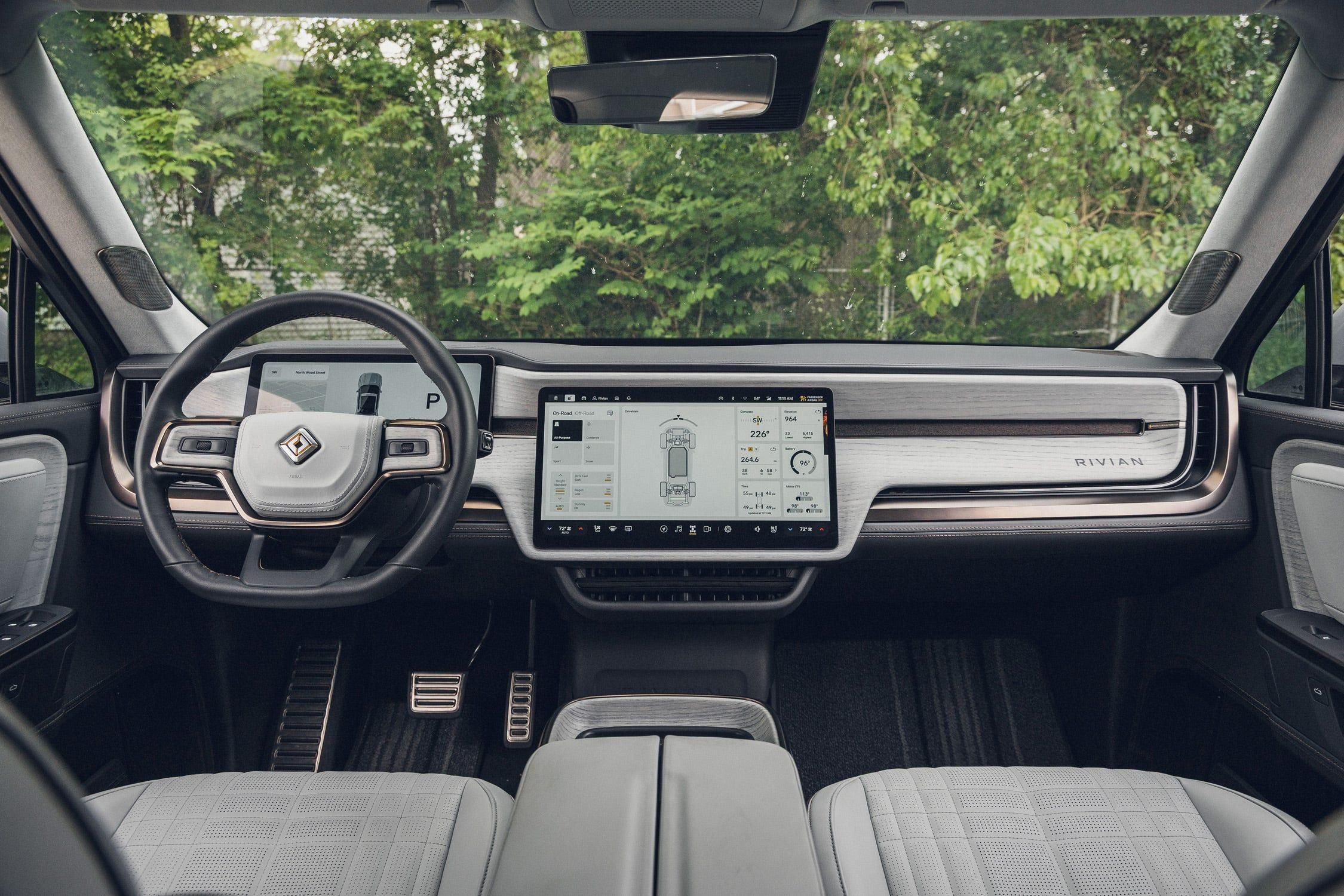
The Cybertruck cabin is minimal, with one big central screen. Nearly every control lives inside that touchscreen. The R1T feels warmer and more premium. It uses soft materials and a clean, readable layout.
The Lightning has the most traditional cabin. It feels familiar to anyone coming from a gas F-150. Daily driving feels different in each truck. The Cybertruck is wide, the R1T feels agile, and the Lightning feels familiar. Parking matters more than people expect. Test each truck in a tight lot before you decide.
Reliability, Ownership Costs, and the Final Verdict
Reliability needs an honest discussion. New technology often brings new problems. The Cybertruck has had multiple recalls covering items like the accelerator pedal, wiper firmware, and frunk latch. Owners should check service access before buying.
The stainless steel body resists dents and rust. But repairs and insurance can cost more than on a normal truck. Rivian is a young company, and recalls, limited service access, and software bugs are still part of its story. Ask about service centers near you.
Safety is another factor. The Gen-2 R1T earned a 2025 Top Safety Pick+ award, though the 2026 criteria were tougher and it was not re-awarded this cycle.
Ford’s dealer network is its biggest advantage. Almost every town has a Ford service center ready to help. Ownership cost also deserves a close look. The sticker price is only part of the story.
Charging at home costs far less than buying gasoline. Many owners save hundreds of dollars per year on fuel. Maintenance is lower, since there are no oil changes. Tires and brakes still wear out, though.
Insurance can be high on all three trucks. Get quotes before you commit to a purchase. Depreciation is the hidden cost. Electric trucks have lost value quickly, so used buyers often win.
Incentives have also changed. The federal $7,500 EV tax credit expired at the end of the third quarter of 2025. Check state and local programs before buying. Some still offer rebates or reduced registration fees.
Now for the verdict. If you want the best all-round electric truck today, the Rivian R1T is our pick. It balances range, comfort, capability, and charging better than the others. Its 420-mile top range is class-leading.
Its weaknesses are price and service. Higher trims get expensive fast, and service centers are still limited. The Cybertruck is best for people who want something bold. It offers huge speed, strong towing, and a body unlike anything else.
The cheaper AWD trim makes it easier to afford. But you give up some towing and some in-cabin features. The Cybertruck also divides opinion sharply. Some people love the design, while others cannot stand it.
The F-150 Lightning is the practical, no-drama choice. It looks like a normal truck and drives like one. But it is no longer built as an all-electric model. Buyers must hunt for leftover or used units.
If you buy used, the Lightning can be a bargain. Check battery health and remaining warranty before signing. The extended-range Lightning due in 2027 may suit heavy users better. It removes charging worries during long tows.
Let us match each truck to a buyer. For adventure and road trips, choose the R1T. For speed, tech, and attention, choose the Cybertruck. For work and simple ownership, choose the Lightning.
For heavy towing, look at the Cybertruck Premium or the R1T Max pack. Both reach 11,000 pounds when properly equipped. Before you decide, test drive every truck you can. Seat comfort and visibility are personal things.
Also look at service access near you. A great truck is frustrating if repairs take weeks. Think honestly about your real towing needs. Most people tow rarely, so range matters more than max tow numbers.
Our ranking is simple. The R1T is the best, the Cybertruck is the most exciting, and the Lightning is the most practical. The best truck is the one that fits your life. Drive them, compare them, and trust your own needs.