

A car advertised online for thousands of dollars below market value can look like an opportunity worth pursuing. But the price displayed in a search result may not be the amount a buyer actually has to pay.
Dealer-imposed charges, mandatory add-ons, special financing conditions, and trade-in requirements can turn an attractive listing into a much more expensive purchase. That problem is now at the center of a major consumer-protection case involving CarGurus, one of America’s best-known online automotive marketplaces.
On October 15, 2026, New York City’s Department of Consumer and Worker Protection announced a lawsuit accusing CarGurus of promoting misleading bargain prices while failing to make certain mandatory costs and conditions sufficiently clear.
The city says its investigation identified more than 2,000 violations. The case offers a timely reminder that shoppers should look beyond the large advertised number and examine the full terms before visiting a dealership or paying a deposit.
1. Documentation Fees
A documentation fee, often called a doc fee, is one of the most familiar additional charges in a vehicle purchase. Dealers generally describe it as compensation for preparing and processing the paperwork needed to complete a sale. That can include preparing contracts, handling title documents, and coordinating registration-related paperwork. The charge may appear ordinary, but its amount can vary significantly between dealerships.
The problem for online shoppers is not simply that a documentation fee exists. It is whether the advertised vehicle price includes it. A listing might show an attractive figure in its headline while disclosing the doc fee in a separate section near the bottom of the page. Someone comparing several cars may assume the displayed prices are directly comparable without realizing that one dealer has added a separate charge.

New York City’s lawsuit against CarGurus raises precisely this kind of concern. The city argues that shoppers were shown favorable deal ratings based on advertised prices that did not fully reflect mandatory dealer charges. A fee disclosed somewhere on a listing does not necessarily solve the problem if the headline price and the platform’s bargain rating still give shoppers a misleading impression of the actual cost.
CarGurus’ October 2026 dealer pricing policy says mandatory dealer-imposed charges, including documentation fees, must be included in the displayed vehicle price to qualify for a Deal Rating. Government charges such as tax, title, license, and registration are treated separately.
Before contacting a dealer, buyers should ask for the full out-the-door price in writing. A documentation fee may be legitimate under applicable rules, but it should not appear as an unexpected addition after the shopper has already committed time and money to the deal.
2. Vehicle Reconditioning Fees
Reconditioning fees are another charge that can make an online listing look cheaper than the vehicle actually is. Dealers may use the term to describe work performed before a used car is offered for sale. This can include cleaning, detailing, minor repairs, inspections, replacing worn components, or preparing the vehicle for display.
Some preparation is a normal part of operating a used-car dealership. The concern arises when a dealer adds a separate mandatory reconditioning charge after advertising a lower vehicle price. A buyer may reasonably assume that a used car listed for a particular amount is ready to be sold at that price, especially when the listing describes it as inspected or dealer-prepared.

In its October 2026 pricing policy, CarGurus specifically identifies vehicle reconditioning fees as mandatory dealer charges that must be included in the advertised price when they are required to purchase the vehicle. That is an important distinction. A dealer should not be able to advertise a low figure and then make the buyer pay an additional mandatory preparation charge to complete the transaction.
The NYC lawsuit illustrates why this matters. In one example involving a 2018 Honda advertised by Elite Mitsubishi, the city said the listing carried a favorable price rating even though additional mandatory charges made the actual purchase price substantially higher. The complaint argues that the advertised figure created a misleading impression of the deal.
Shoppers should ask whether a reconditioning charge is optional or mandatory. They should also request an explanation of the work it supposedly covers. If the dealer insists that the fee is required, it should be included in the total advertised price rather than presented as a surprise at the finance office.
3. Dealer Processing and Conveyance Fees
Dealership processing fees may be listed under different names, such as processing, conveyance, administrative, or dealer service charges. Although the terminology varies, these fees generally cover the dealership’s handling of paperwork and other parts of the vehicle purchase process.
These fees can be confusing because buyers may not know exactly what they cover. A dealer might describe a charge as the cost of processing paperwork, coordinating the sale, or completing administrative work. Yet those tasks are already part of the dealership’s normal business operations. A separate mandatory fee can therefore make a vehicle’s advertised price look lower than the amount the buyer must actually pay.

The CarGurus lawsuit provides a specific example. According to the city’s allegations, a 2018 Honda listed by Elite Mitsubishi carried a $995 conveyance fee and a $695 administration fee, in addition to other charges. The city said the vehicle was advertised as a Great Deal based on its lower listing price, even though the mandatory additions changed the financial picture.
The distinction between a dealer’s asking price and its actual selling price is central to the case. A shopper comparing two vehicles might choose the one with the lower headline price without knowing that the dealership plans to add several hundred or even thousands of dollars in mandatory charges.
Buyers should not assume that a fee becomes reasonable simply because it has a professional-sounding name. Ask what the charge covers, whether it is mandatory, and whether it is already included in the online price. If the dealer refuses to provide a clear breakdown, that is a good reason to compare another listing.
4. Electronic Filing Fees
Electronic filing fees are often presented as charges for submitting paperwork or vehicle information through electronic systems. Dealers may use electronic services to process title and registration documents, communicate with government agencies, or handle other administrative tasks associated with a vehicle purchase.
Unlike a government registration charge, however, an electronic filing fee imposed by a dealership is not automatically a government fee. Buyers should establish who receives the money and whether the amount is required by the dealer, a third-party service provider, or a government agency. The distinction matters because a dealer-imposed charge should not be presented as though it were an unavoidable government tax.

CarGurus’ October 2026 dealer pricing policy lists electronic filing fees among the mandatory dealer-imposed charges that must be included in the advertised price when required to purchase the vehicle. That policy reflects a broader push toward showing consumers the actual price rather than separating mandatory charges from the figure used to attract attention.
For shoppers, the issue is easy to overlook. An online listing may appear to include dealer fees, while a separate electronic processing charge only becomes visible after opening a disclosure section or speaking with the dealership. Even a relatively small charge can make price comparisons inaccurate when several dealers use different fee structures.
Before agreeing to a purchase, ask whether the electronic filing charge is mandatory and whether it is included in the advertised price. Request an itemized buyer’s order that identifies dealer charges separately from government taxes and registration costs. If a fee is being described as a government requirement, ask for the specific agency or rule that requires it.
5. Market Adjustment Fees
A market adjustment fee is an additional amount a dealership may add when it believes a vehicle can command more than its manufacturer-recommended price or normal advertised value. These charges are often associated with vehicles in high demand, limited-production models, popular new SUVs, and cars with restricted inventory.
The term itself is not particularly complicated. The dealership is asking the buyer to pay more because it believes market conditions allow it to charge a premium. The problem occurs when that premium is not clearly reflected in the online price. A shopper may see a vehicle advertised at an attractive amount, only to discover that the dealer expects an additional payment before completing the sale.
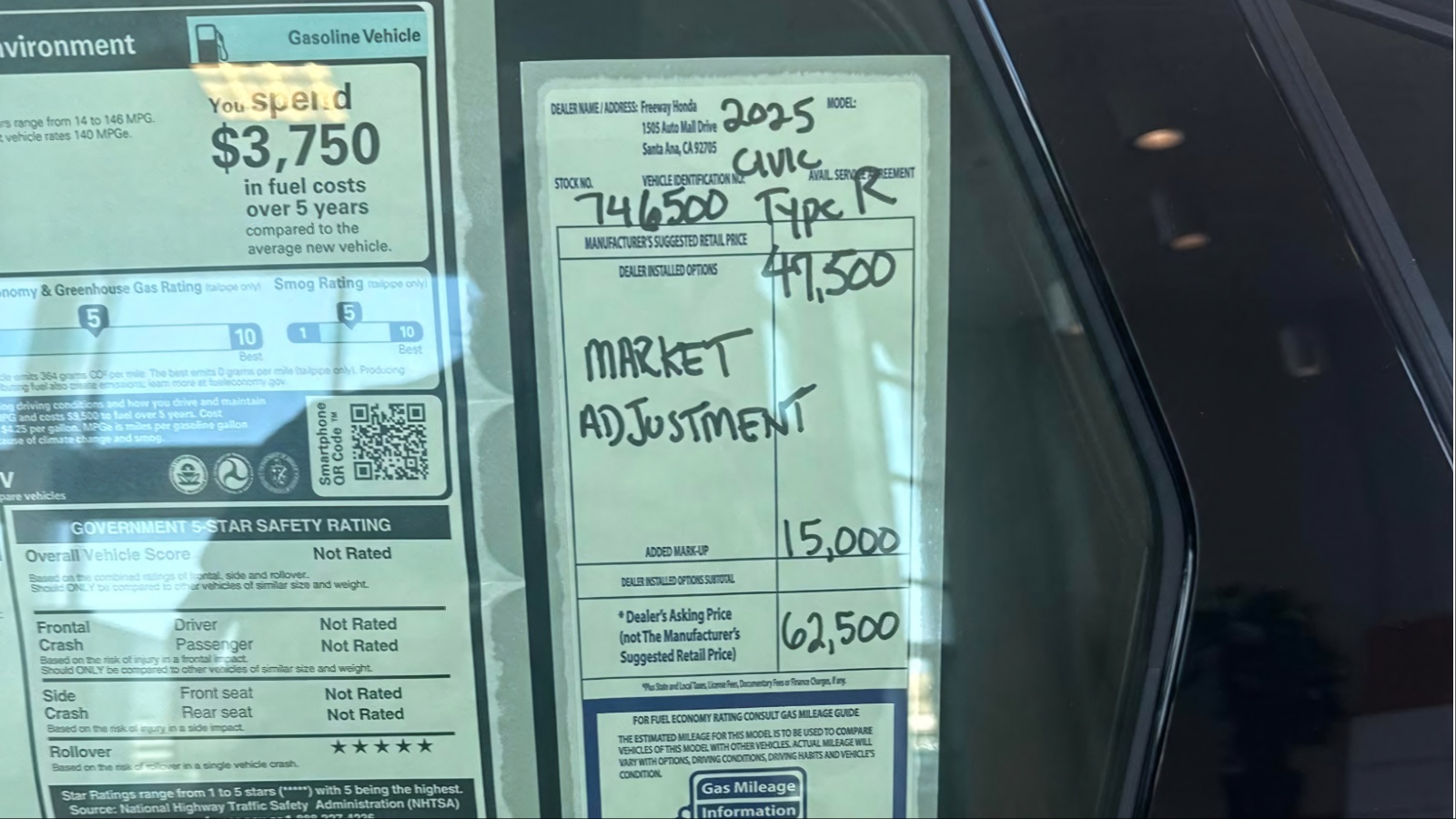
CarGurus specifically lists market adjustment fees as mandatory dealer-imposed charges that must be included in the advertised price under its October 2026 policy. If a dealer requires the buyer to pay the adjustment to purchase the vehicle, it cannot simply be treated as an optional extra hidden elsewhere in the listing.
This is especially important when shoppers use online platforms to compare prices. A vehicle that appears thousands of dollars cheaper than competing listings may not actually be cheaper once a market adjustment is added. It can also distort the way a platform’s price comparison or deal-rating system evaluates the vehicle.
Buyers should ask whether the listed price is available to every shopper and whether the dealership plans to add a market adjustment. If the answer is yes, request the final selling price in writing. A dealer may choose its asking price, but customers should know the complete amount before deciding whether the vehicle represents good value.
6. Mandatory Dealer-Installed Accessories and Protection Packages
Some dealerships advertise vehicles with additional products already installed or added to the purchase package. These may include paint protection, fabric treatments, window tint, wheel locks, nitrogen-filled tires, security systems, tracking devices, or other accessories.
There is nothing inherently wrong with buying useful accessories. The issue is whether the buyer can decline them. If a dealer insists that a customer must pay for a package to purchase the vehicle at the advertised price, the package is effectively a mandatory charge rather than an optional upgrade.

These additions can be particularly difficult to spot in online listings. A shopper may focus on the vehicle’s advertised price and overlook a description stating that a protection package or accessory bundle is required. The extra cost may only become obvious after contacting the dealership or reviewing the purchase paperwork.
CarGurus’ October 2026 dealer pricing policy specifically includes mandatory dealer-installed or pre-installed products and packages among the charges that must be reflected in the advertised price when they are required for the sale. Its guidelines also prohibit dealers from requiring buyers to purchase additional products or services to obtain the listed price.
The practical lesson is to ask whether every accessory is optional. If a package is mandatory, its cost should be included in the total advertised figure. Buyers should also ask for an itemized description of the products rather than accepting a vague label such as dealer protection package.
A vehicle advertised at $25,000 may not be a $25,000 purchase if the dealer requires another $1,500 in accessories. Knowing that before visiting the showroom can save time and prevent an uncomfortable negotiation.
7. Down Payment Requirements Hidden Behind the Advertised Price
Not every hidden cost appears as a separate fee. Sometimes, the problem is a condition attached to the advertised price. A listing may display a low figure that only applies if the buyer makes a particular down payment or qualifies for a specific financial arrangement.
This can create a misleading impression because the shopper may believe the vehicle itself is being offered at the advertised price. In reality, the dealer may be promoting a price that depends on money the buyer must contribute upfront. The amount could be presented in a disclaimer, financing description, or promotional section rather than clearly beside the main price.

New York City’s lawsuit against CarGurus specifically accuses the platform of displaying prices that allegedly concealed down-payment requirements and other conditions. The city argues that such terms could make a vehicle appear less expensive than it actually was for an ordinary shopper.
CarGurus’ dealer pricing policy now states that listed prices cannot be conditioned on a down payment, trade-in, or trade equity. It also says a dealer cannot require a particular payment method or financing source to obtain the advertised price.
Buyers should ask whether the advertised price is available without requiring a special down payment. If the dealer says the price is conditional, ask for the full selling price with no special requirements.
A down payment is a normal part of many vehicle purchases, but it should not be used to disguise the actual cost of the car. The advertised price should represent an amount available to shoppers generally, not a promotional figure that depends on hidden qualifications.
8. Trade-In Requirements and Trade-In Equity Conditions
Trade-in offers can make a vehicle purchase more complicated when the advertised price depends on the customer exchanging another car. A dealership may promote a low price that is only available if the buyer trades in a qualifying vehicle or has sufficient equity in an existing loan.
For shoppers who already plan to trade in a car, this may initially seem attractive. However, the arrangement can make it difficult to determine whether the dealership is offering a genuine discount or simply moving money between the vehicle price and the trade-in valuation.

Consider a buyer who sees a vehicle advertised for $22,000. After contacting the dealership, the buyer discovers that the price requires a trade-in worth a certain amount. Someone without a qualifying vehicle may be asked to pay more. The headline figure therefore does not represent the same offer for every customer.
The NYC lawsuit includes trade-in requirements among the conditions it says were not sufficiently disclosed in certain CarGurus listings. The city’s concern is that buyers could be drawn to a supposedly attractive deal without realizing that the advertised price depended on additional qualifications.
CarGurus’ published dealer pricing policy says a listed price cannot be conditioned on a trade-in or trade equity. That is intended to prevent dealers from using a conditional figure to make a vehicle appear cheaper in online searches.
Buyers should negotiate the vehicle price and trade-in value separately. Ask for the selling price without a trade-in, then obtain a separate written valuation for the old vehicle. This makes it easier to see what the dealer is actually offering and prevents a generous-looking trade-in allowance from hiding an inflated purchase price.
9. Mandatory Financing and Preferred-Lender Conditions
Some advertised vehicle prices are connected to financing arrangements. A dealer may suggest that the displayed price is available only if the customer uses its preferred lender, obtains financing through a particular institution, or qualifies for a specific promotional offer.
These conditions can make online prices difficult to compare. A buyer may see a low advertised amount and assume it is available regardless of how the purchase is financed. Only later does the dealership explain that the price depends on accepting a particular loan arrangement.

The financing itself may involve a higher interest rate, different loan terms, or additional requirements. Even if the vehicle’s advertised price looks attractive, the total amount paid over the life of the loan could be considerably higher than expected.
New York City’s case against CarGurus focuses on misleading advertised prices and hidden conditions, including the requirements attached to some listings. CarGurus’ dealer pricing policy also states that a listed price cannot require financing through the dealership, a preferred lender, or another specified financing source.
That distinction is important because shoppers should be able to evaluate the vehicle’s price separately from the financing offer. A low price that is only available through a particular lender does not provide a fair comparison for someone who intends to pay cash or arrange financing independently.
Before signing, request the vehicle’s unconditional selling price and a separate financing breakdown. Compare the annual percentage rate, loan term, total interest, and any additional products included in the loan. A dealer’s advertised price should not depend on accepting financing terms that the shopper has not independently evaluated.
10. Government Charges Presented Alongside Dealer Fees
Taxes, title costs, registration charges, and other government-required payments are legitimate parts of many vehicle transactions. They are not automatically hidden junk fees. However, they can still confuse shoppers when a listing combines them with dealer-imposed charges or describes every additional amount as a government requirement.
The difference matters. A state or local government may require sales tax or registration payments, while a dealership may separately impose a documentation, processing, or electronic filing fee. Those charges do not have the same origin, and buyers should be able to identify which organization receives each payment.

CarGurus’ October 2026 pricing policy requires mandatory dealer-imposed charges to be included in the displayed price, while excluding tax, title, license, registration, and other mandatory government fees from that particular requirement. That distinction does not mean dealers can use government charges to disguise unrelated costs.
The NYC lawsuit also highlights the wider problem of confusing headline prices with the actual amount a customer needs to pay. The city’s investigation of more than 40,000 online listings found that advertised vehicle prices were marked up by an average of approximately $1,100 in mandatory fees. That figure illustrates how small additions can become substantial when repeated across thousands of listings.
Shoppers should request an itemized out-the-door quote that separates the vehicle price, dealer charges, taxes, and government costs. If a dealer describes a charge as mandatory, ask who requires it and where the money goes.
The goal is not to eliminate legitimate taxes or registration expenses. It is to make sure buyers know which costs are imposed by the government and which ones are being added by the dealership.
