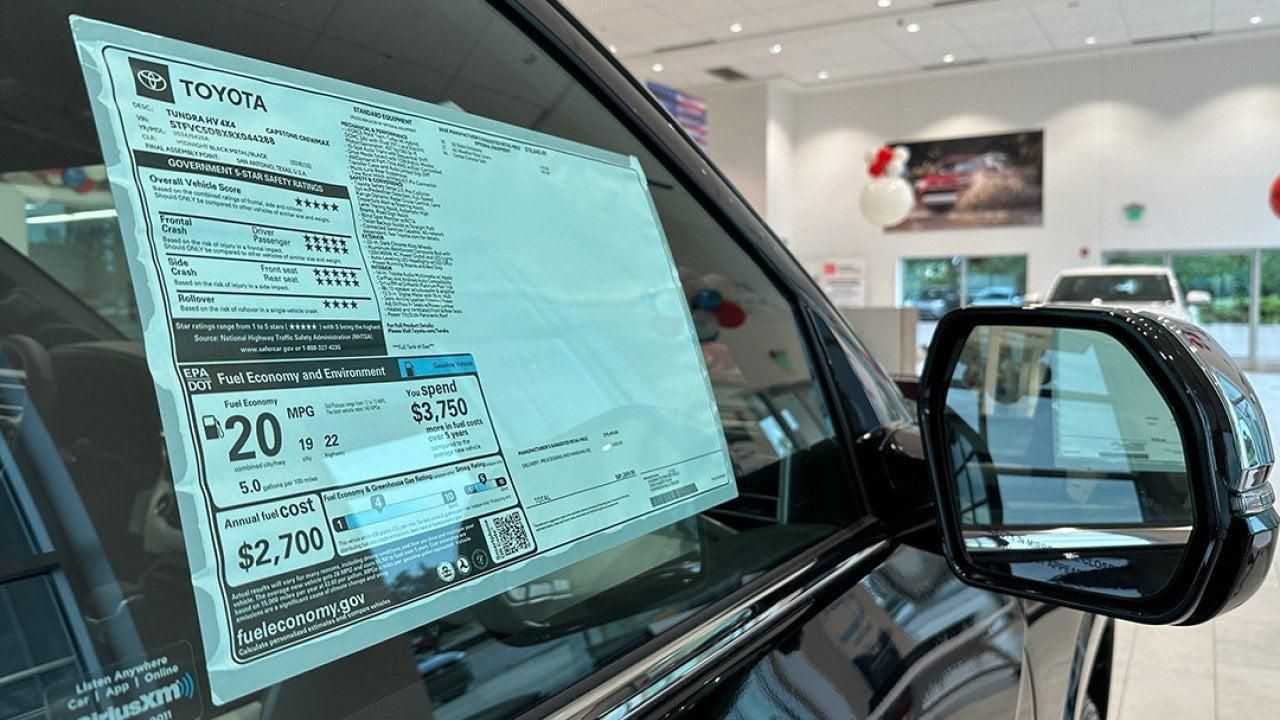
You found the car. The sticker said one number. Then the finance office handed you a monthly payment that looked nothing like it. This gap confuses almost every buyer. It is not a math mistake. It is the result of many small costs stacking up.
The sticker price is only a starting point. It covers the vehicle itself. It rarely covers the full cost of owning and financing it. Taxes, fees, interest, add-ons, and loan structure all sit between that number and your bill. Each one looks small alone. Together they can add thousands.
Lenders and dealers also shape how the payment is presented. A lower monthly figure can hide a higher total cost. Buyers often focus on the wrong number.
Rules differ by country and state. But the patterns repeat almost everywhere. Once you know them, you can spot them. Below are ten reasons your payment runs higher than expected. Each one comes with what to check and what to ask. Read them before you sign anything.
1. Interest Is Built Into Every Payment
The sticker price is the cash price. A loan is not cash. You pay for the privilege of borrowing. Interest is charged on the balance, month after month. Early payments are mostly interest. Principal shrinks slowly at first.
Take a loan of 30,000 at 7% over 60 months. The payment is about 594. Total interest is roughly 5,650. Push the rate to 11% on the same loan. The payment climbs to about 652. Total interest rises to around 9,100.
That is a 3,450 difference from the rate alone. The sticker never changed. Only the financing did. Your credit profile drives the rate. Lenders group borrowers into tiers. Small score differences can move you between tiers.

Dealers may also add a markup to the lender’s rate. This is often called dealer reserve. You may pay more than the lender required. Promotional rates exist. But they usually require strong credit. They may also replace a cash rebate.
Always compare the rebate against the low rate. Sometimes taking the rebate and a regular loan is cheaper. Do the math both ways. Get a pre-approval from a bank or credit union first. It gives you a benchmark. The dealer then has to beat it.
Ask for the APR, not just the payment. APR includes certain fees and shows the true yearly cost. It is the fairest comparison tool. Interest is the highest hidden cost for most buyers. It never appears on the sticker. It always appears on your statement.
2. Sales Tax and Government Charges
Sticker prices exclude taxes. Almost nowhere is the final price equal to the sticker. Government charges come on top. In the United States, sales tax varies by state and city. Combined rates can reach 8% to 10% in some places. On a 35,000 car, that is 2,800 to 3,500.
Other countries use different systems. India applies GST plus a compensation cess on some vehicles. Buyers also pay road tax and registration. Registration is a separate charge. It covers plates, title, and paperwork. Costs rise with vehicle value in many regions.
Some places add luxury taxes. Others add emissions or environmental levies. Electric vehicles may get relief, or may not. Many buyers roll these costs into the loan. That feels painless at the counter. But you then pay interest on the tax too.
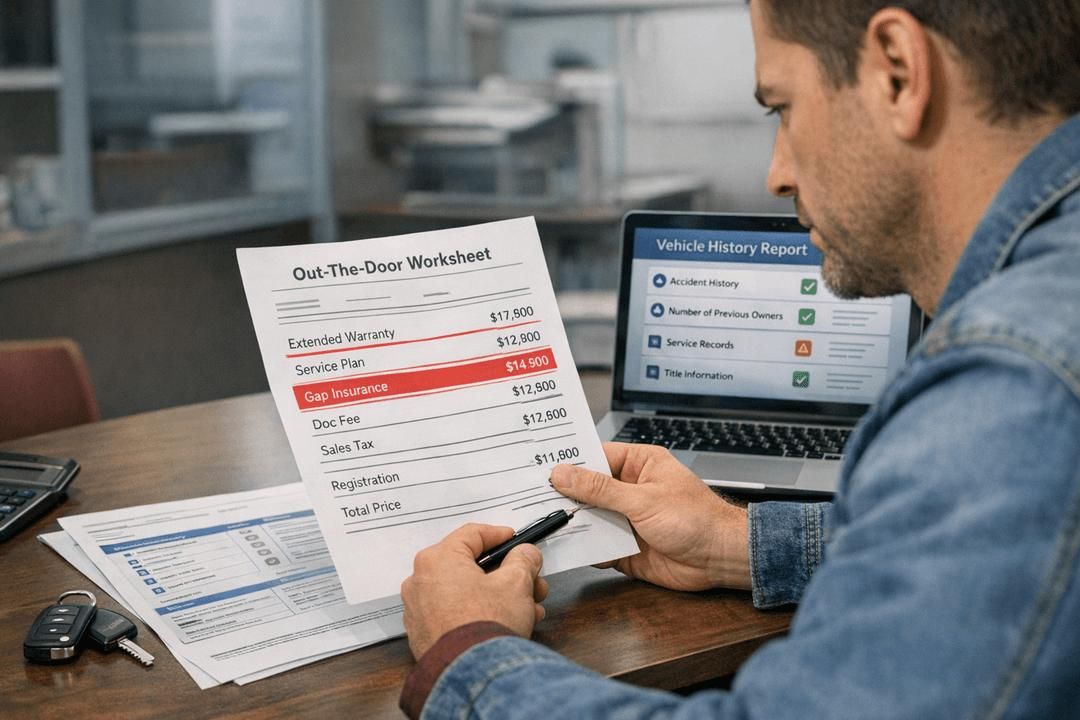
Rolling in 3,000 of tax at 7% over five years costs about 570 extra in interest. That is a quiet surcharge on a surcharge. It rarely gets mentioned. Tax treatment of trade-ins also matters. Some states tax only the difference after trade-in credit. Others tax the full price.
Rebates can change the taxable amount too. In some places, a manufacturer rebate is taxed. In others, it is not. Ask for an out-the-door price. That figure includes every tax and fee.
It is the only number that really matters. Check your local rules before you shop. A short search saves a long argument. Then no charge catches you off guard.
3. Dealer Documentation and Processing Fees
Dealers charge fees for handling paperwork. These are often called doc fees or processing fees. They appear after you agree on a price. Some states cap these fees. Others do not. The range can run from under 100 to several hundred, and in some places over 800.
The service is mostly clerical. The cost to the dealer is small. The fee is largely profit. Dealers often say the fee is fixed. They claim it cannot be negotiated. That is usually about policy, not law.
You can still negotiate the car price to offset it. Lower the price by the amount of the fee. The result is the same. Other fees hide under different names. Look for dealer prep, delivery handling, or reconditioning. Some are legitimate. Many are padding.
Be wary of nitrogen tire fills, VIN etching, and paint sealant. These are common add-ons. They are often overpriced for what they do. Advertising fees are another one. Some dealers pass regional ad costs to the buyer. Check whether this appears on the buyer’s order.
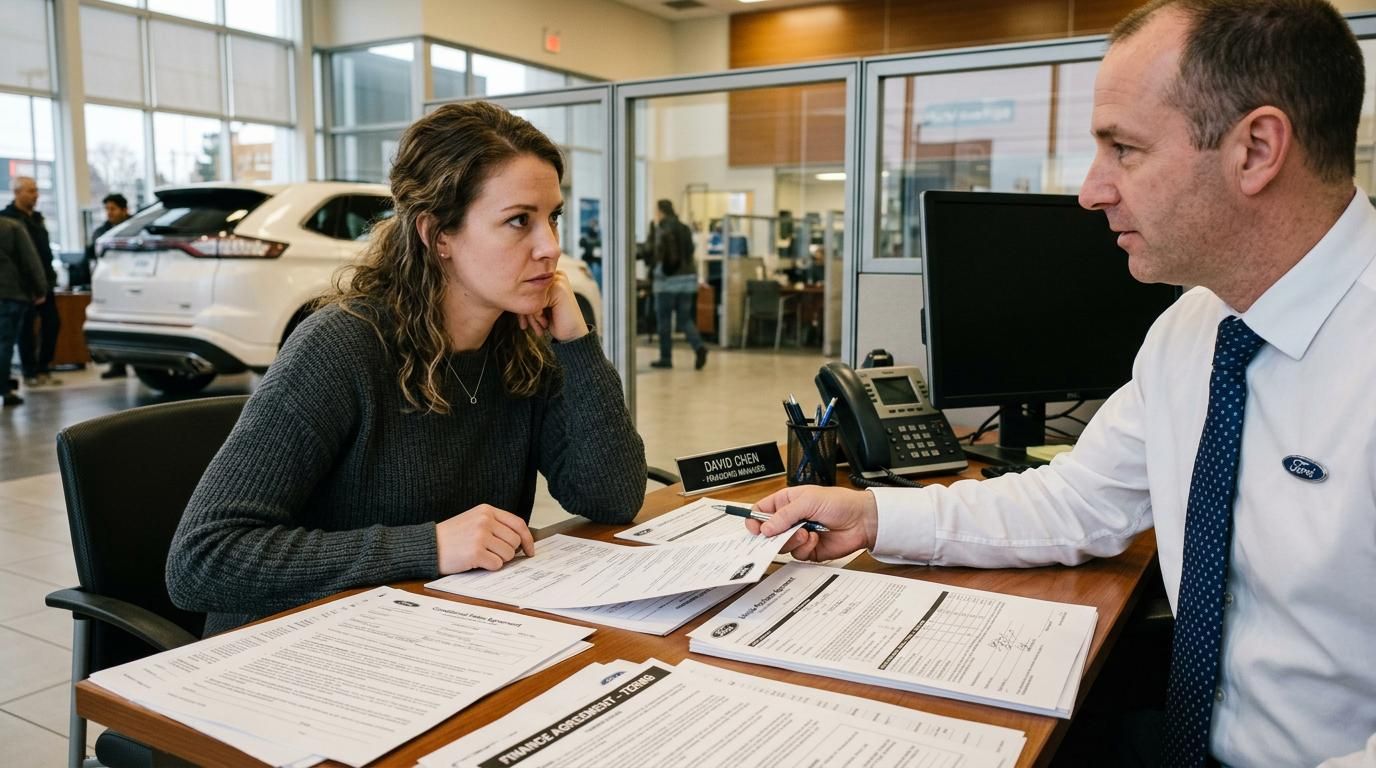
Each fee gets folded into the loan. A 700 fee at 7% over 60 months adds about 130 in interest. Small items grow when financed. Always request an itemized buyer’s order in writing. Read each line. Ask what it covers and whether it is optional.
Compare the order to the advertised price. If the gap is large, ask why. A clear answer is a good sign. A vague answer is not. You can walk away. Another dealer may charge less. Fees vary widely between sellers.
4. Destination and Freight Charges
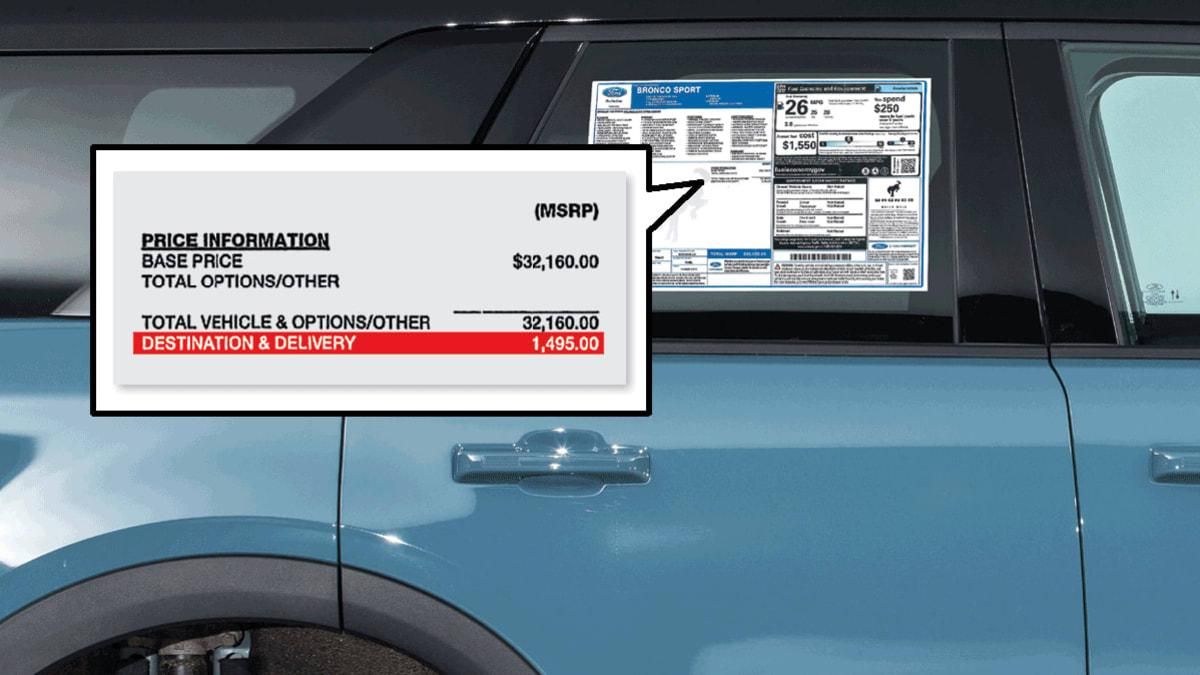
The sticker lists a base price. It also lists a destination charge. That charge covers shipping the car from the factory. The fee is the same at every dealer for a given model. It is not negotiable. It is also not optional.
Destination charges have risen over the years. Many mainstream vehicles now carry fees of 1,300 to 1,500 or more. Trucks and luxury models can cost more.
Some buyers see the base price in an ad. They never notice the freight line below it. The monthly payment then surprises them. Advertised prices often exclude this fee. The fine print usually says so. Read it closely.
The charge applies even if the car sits on the lot. It applies even if it was built nearby. The fee is averaged across a model, not tied to real distance.
This matters when you compare prices. A car from one brand may list lower but charge more freight. Always compare totals. Freight also gets taxed in many states. That means the effective cost is higher than the fee itself. A 1,400 fee at 8% tax becomes about 1,510.
Then interest applies. Financing the full amount adds more. By the end of the loan, the freight can cost nearly 1,800. There is one useful trick. Compare the invoice price, which includes freight, to what the dealer offers. This shows how much margin remains. Do not try to negotiate the destination line itself. Negotiate the selling price instead. That is where you have room.
5. Dealer Markups and Market Adjustments
The sticker is the manufacturer’s suggested price. It is only a suggestion. Dealers can charge more. When demand outruns supply, markups appear. They are called market adjustments or additional dealer markup. They can run from a few hundred to tens of thousands.
These surged during the supply shortages after 2020. Many buyers paid well over sticker. Some markups lingered into later years on popular models.
The markup is often printed on a second sticker. It sits beside the official one. It is easy to miss in a rush. Markups are legal in most places. Dealers argue that they set their own prices. Buyers still pay the difference.

A 5,000 markup on a financed car costs more than 5,000. At 7% over 60 months, you pay roughly 940 in interest on it. Taxes add more on top. Scarcity creates leverage for the seller. Waitlists and allocation systems reward patient buyers. Impatient buyers pay more.
You can reduce the impact. Contact several dealers and ask for written quotes. Some will charge sticker or less. Consider similar models that sit unsold. Less popular trims often sell below sticker. Flexibility is worth real money.
Ordering from the factory is another option. Some brands allow customer orders. This can lock a price before markups apply. Beware of forced add-ons used as hidden markup.
A dealer may bundle accessories to reach the same profit. Ask for them to be removed. If a markup feels unfair, walk. There are other cars and other dealers. Your patience is your strongest tool.
6. Bundled Add-Ons in the Finance Office
The finance office is where profit gets made. After the price is agreed, a second sales pitch begins. The products can add thousands to your loan. Common items include extended warranties, GAP coverage, tire and wheel protection, and paint protection. Some have real value. Many are priced far above cost.
Extended warranties are the biggest. They can run from 1,500 to over 4,000. Dealers often mark them up heavily. Prices are negotiable. The first number quoted is rarely the lowest. Some buyers cut it in half.
You are also not required to buy at the dealership. Many warranties can be bought later. Some can be purchased online at lower prices. GAP coverage pays the difference between loan balance and car value after a total loss. It is useful with a small down payment. But dealers often charge much more than your insurer would.
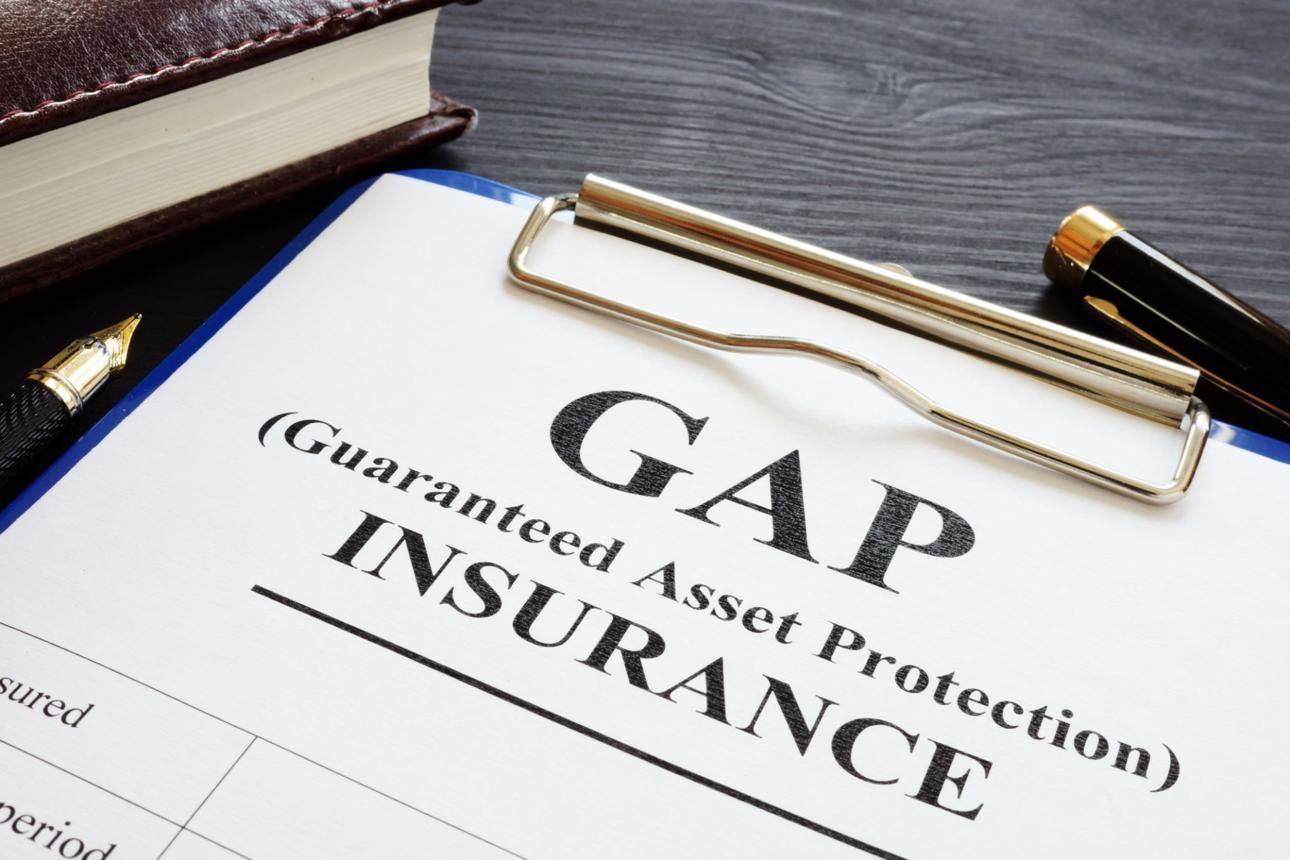
Credit life and disability insurance are also pitched. These are rarely good value. Their payouts are limited. The monthly effect is easy to hide. A 3,000 package adds about 59 per month on a 60-month loan at 7%. Salespeople present it as “just 59 a month.”
That framing hides the total. You pay about 3,540 for a 3,000 product. The interest quietly adds more. Say no to anything you did not research. You can always decline. Ask to see the contract with each product removed.
Read what is covered and what is excluded. Many warranties have strict conditions. Know the deductible and the claim process. Take time. Do not decide in a pressured office. A clear head saves a lot of money.
7. Longer Loan Terms Stretch the Cost
Dealers love to ask what monthly payment you want. The answer shapes everything. A longer loan makes any car fit that number. Loan terms of 72, 84, even 96 months are now common. They lower the monthly payment. They raise the total you pay.
Compare a 30,000 loan at 7%. Over 60 months, you pay about 5,650 in interest. Over 84 months, the interest reaches about 8,300. The payment drops from 594 to about 453. That feels like a win. It costs you an extra 2,650.
Longer loans also carry higher rates. Lenders see more risk over a longer time. So the rate often climbs with the term. Depreciation makes it worse. Cars lose value fast. A long loan keeps you owing more than the car is worth.
This is called negative equity. It traps you if you need to sell or trade. An accident can leave you with a gap. The ownership timeline also matters. Many people trade cars within six years. A long loan may outlast your interest in the car.
Repairs add up late in the loan. By years seven and eight, warranties end. You may pay a loan and repair bills together. Choose the shortest term you can afford. A good guide is 60 months or less. Shorter loans build equity faster.
If the payment is too high at 60 months, consider a cheaper car. The problem is the price, not the term. Stretching hides it only for a while. Ask to see payment options at several terms. Compare the total cost on each. The number to watch is total interest.
8. Negative Equity Rolled From a Trade-In
Many buyers owe more on their current car than it is worth. This is negative equity. Dealers often offer to roll it into the new loan. It sounds convenient. The old debt vanishes at the counter. In truth, it simply moves.
Suppose you owe 18,000 on a car worth 14,000. That leaves 4,000 of negative equity. It gets added to your new loan. Now your new car costs 4,000 more than its sticker. You also pay interest on that amount. The payment rises right away.
You start the new loan underwater. The car depreciates the moment you drive off. The gap can become much larger. Dealers sometimes hide this by inflating the trade-in value. They give you a high number for your old car. They raise the new car’s price to match.

The result looks like a good trade offer. But the math nets out the same. You still pay the debt, plus interest. Cycles of negative equity are hard to break. Each trade adds the old balance. Buyers can carry debt through several cars.
Check your payoff before shopping. Call your lender and ask for the exact number. Compare it to the car’s market value. Use trusted valuation tools. Look at trade-in value, not retail value. The two differ by a lot.
If you are underwater, consider waiting. Extra payments can close the gap. Selling privately may also fetch more. A larger down payment can offset the debt. Put cash toward the shortfall if you can. Avoid financing it.
9. Small Down Payments and Hidden Down Payment Math
The sticker is the full price. The down payment reduces what you borrow. A small one leaves a large balance. Many ads promise low monthly payments with little down. They usually assume ideal credit. Real offers often differ.
A down payment affects three things. It lowers the loan amount. It can improve your rate. It reduces your risk of negative equity. Consider a 35,000 car with 2,000 down. You borrow 33,000 plus taxes and fees. Versus 7,000 down, you borrow 28,000.
At 7% over 60 months, that 5,000 difference changes the payment by about 99. It also saves roughly 940 in interest. Larger down payments pay off twice.
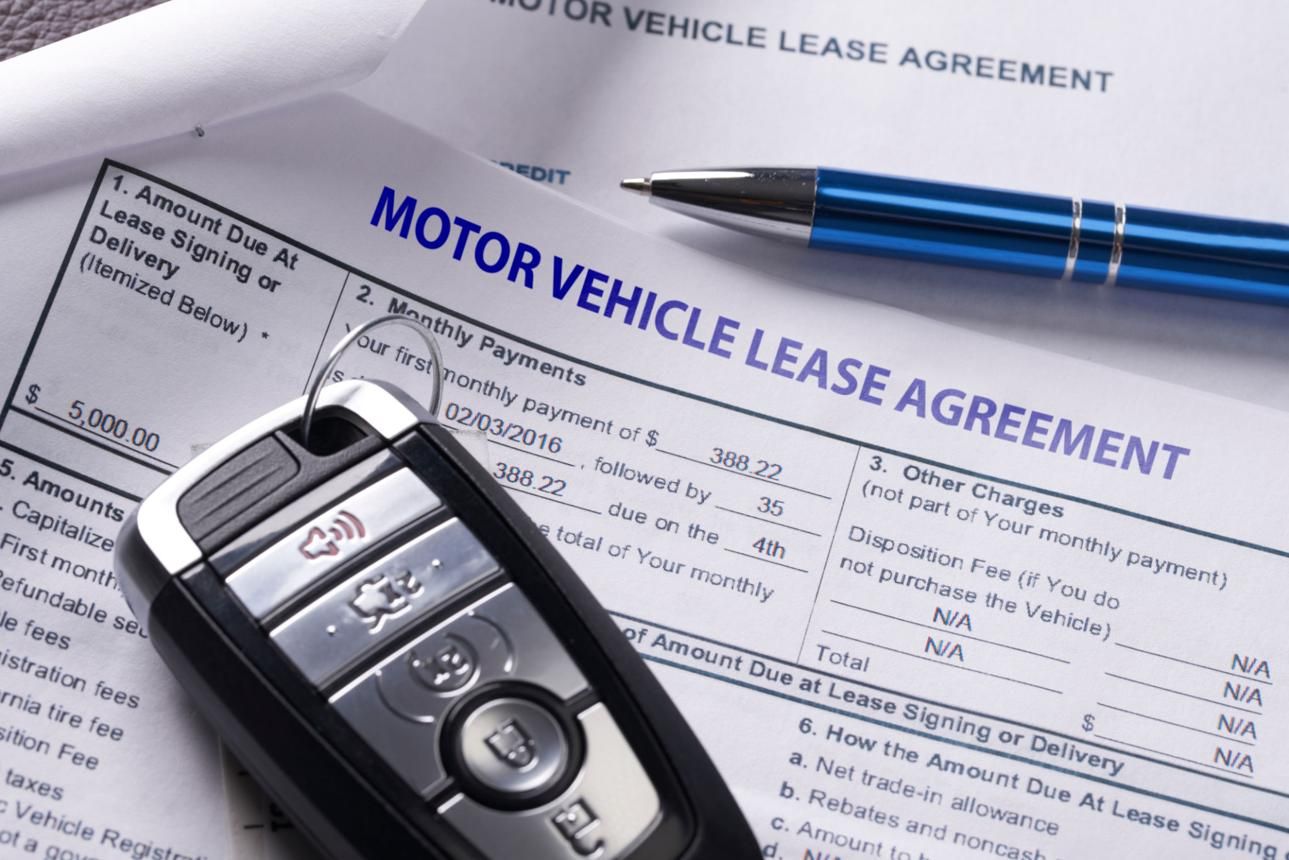
Some offers hide the down payment inside the lease or loan terms. “Due at signing” can include fees, first payment, and taxes. It is not always a true down payment.
Lease ads are the worst for this. They show a low monthly figure. The fine print requires thousands upfront. Cap cost reductions in leases are a down payment by another name. If the car is totaled, that money is gone. Gap protection often does not return it.
Rebates may count as part of your down payment in the dealer’s math. But they come with conditions. Not everyone qualifies. Read the deal sheet carefully. Separate the down payment from fees and taxes. Know exactly what goes toward the car.
A good rule is to put down at least 10% to 20%. This helps offset the first year of depreciation. It also gives you a safer cushion. If you cannot, consider a cheaper vehicle. The sticker must fit the budget, not just the payment.
10. Insurance, Taxes on Loans, and Ownership Costs
Your payment is not only the loan. Lenders require full coverage. That insurance raises your monthly cost of owning the car. Newer and more expensive cars cost more to insure. A car that is 5,000 pricier can add 20 to 40 per month. Young drivers and some locations pay far more.
Check insurance quotes before buying. Rates vary a lot between models. Safety ratings, repair costs, and theft rates all affect them. Registration renewal and annual taxes continue. Some regions charge yearly fees based on value. These add up over time.
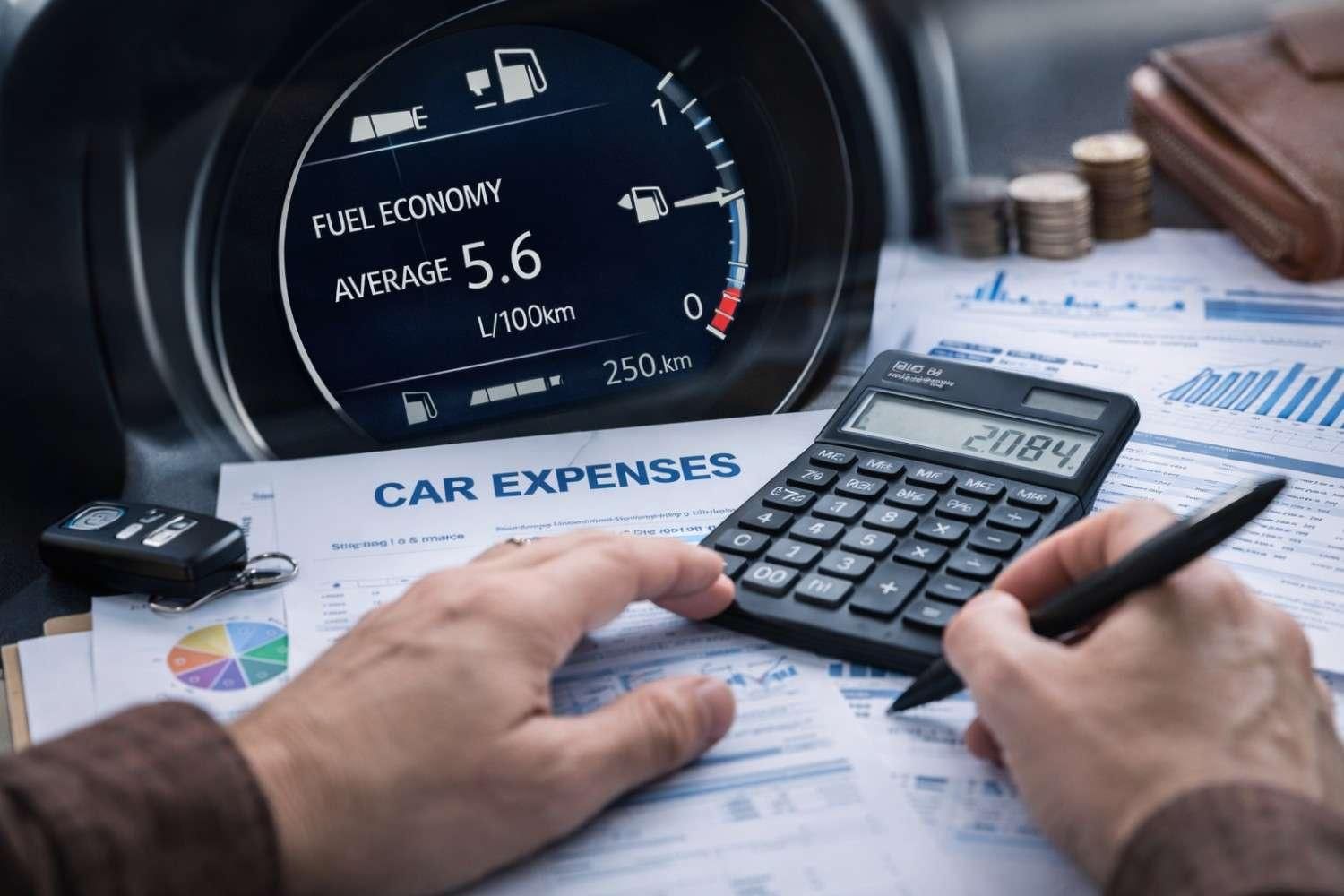
Fuel is another cost. A thirsty engine can cost hundreds more each year. A cheaper sticker may not stay cheaper. Maintenance matters too. Tires, brakes, and fluids are guaranteed expenses. Premium brands cost more to service.
Electric vehicles shift the math. They often cost more upfront. But charging and maintenance can be cheaper. Tariffs and supply costs have pushed prices upward in recent years. Parts and repairs followed. Ownership costs are not static.
Lenders may also require higher coverage limits. They want the car protected. This is not optional. Some buyers forget about parking, tolls, and fees. In cities, these are real. They belong in your budget.
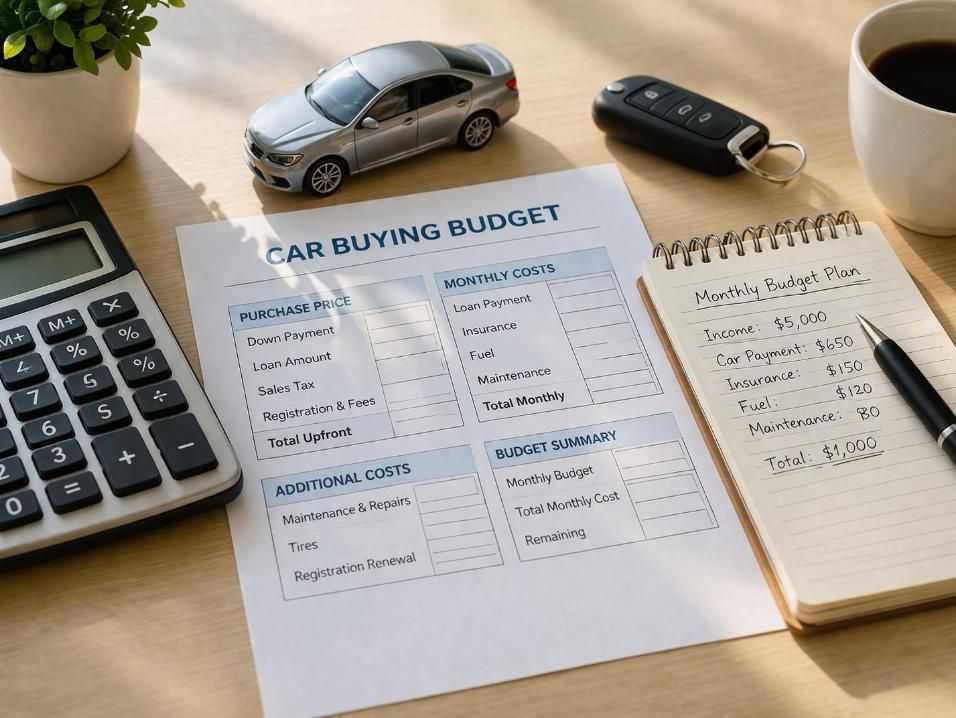
Think in terms of total cost of ownership. Add the loan, insurance, fuel, and upkeep. That is your real monthly number. A common guideline is to keep total car costs under 15% to 20% of take-home pay. If you exceed that, other goals suffer. A lower sticker price may be the smarter choice.