
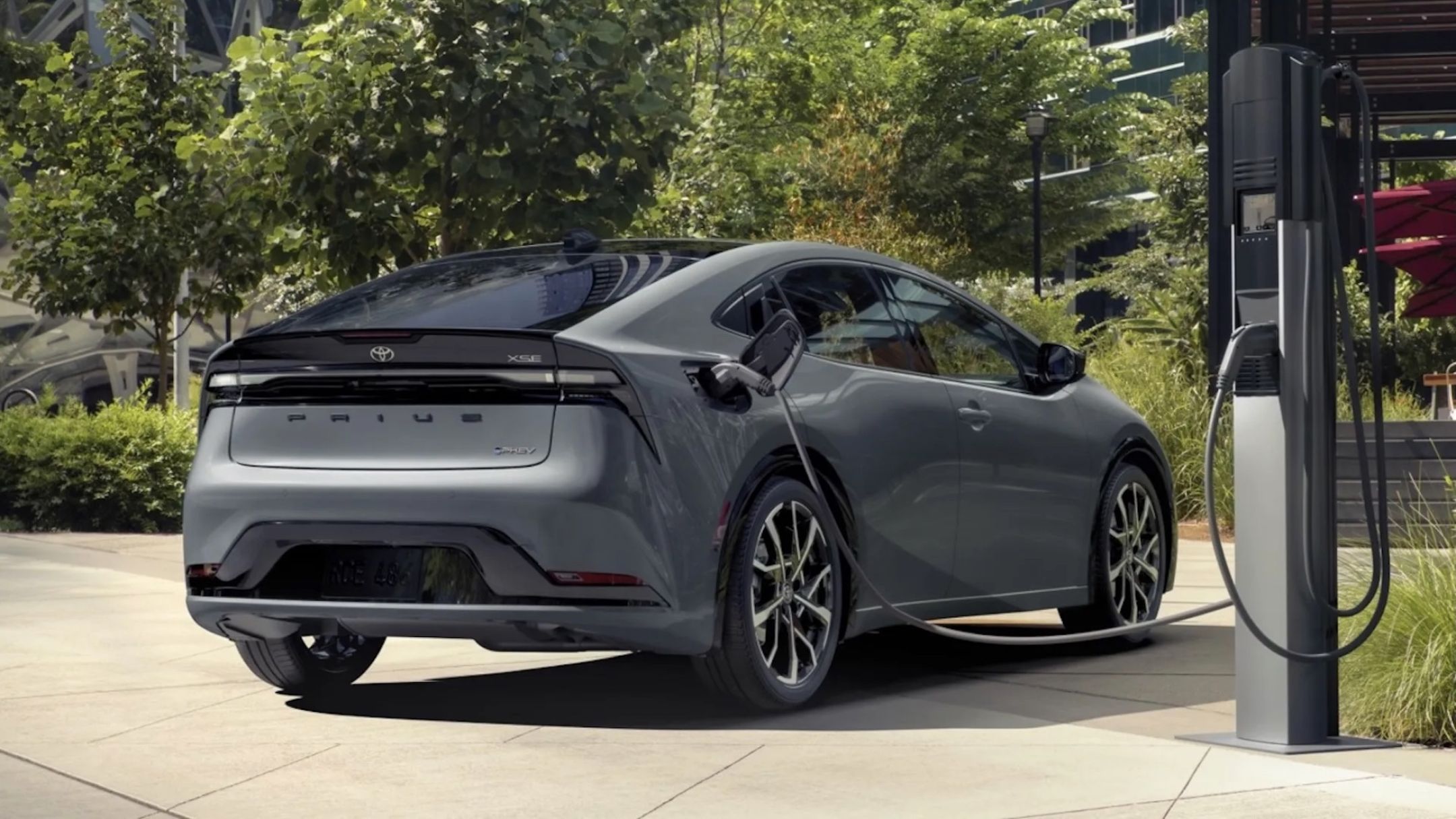
The Toyota Prius has changed considerably from the practical but unremarkable hybrid that built its reputation on fuel savings. Its latest generation pairs a sleek, low-slung design with stronger acceleration, sharper road manners, and a more technology-focused cabin.
The 2026 model retains the outstanding fuel efficiency that has long defined the Prius. However, it’s worth noting that this year’s version is largely a carryover from the previous model rather than a completely redesigned vehicle.
Its more engaging personality comes from the fifth-generation car introduced for 2023, which continues to give buyers a different reason to consider a hybrid hatchback.
A Sharper Design Gives the Prius a Different Identity
For years, the Prius wore its efficiency-first mission on the outside. Earlier generations favored unusual proportions and aerodynamic shapes that made the car instantly recognizable, although not always conventionally attractive.
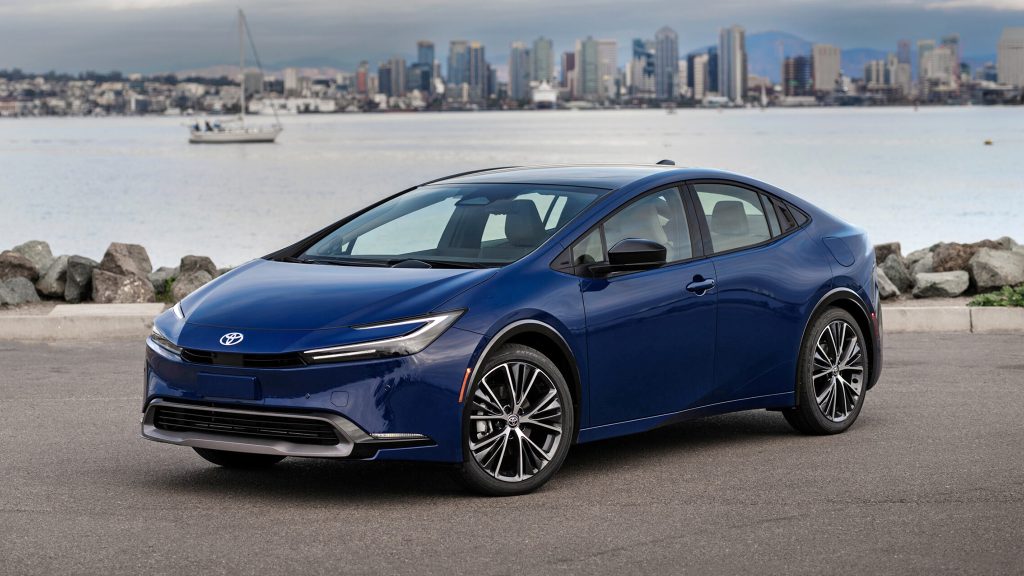
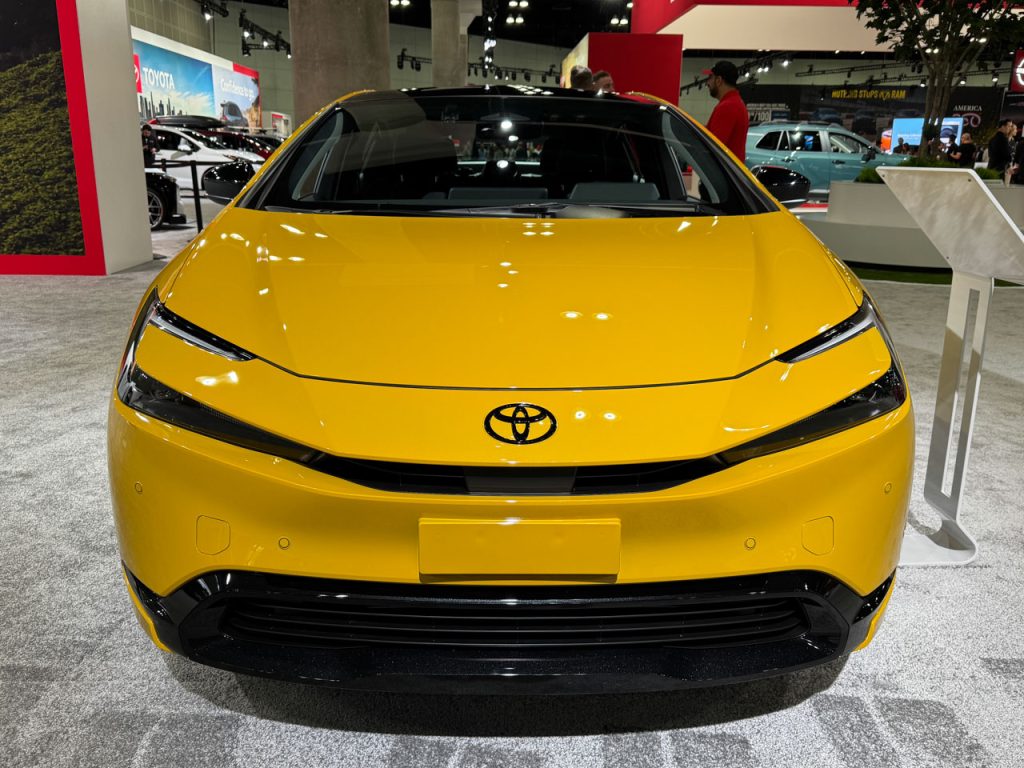
The fifth-generation model changed that conversation with a lower roofline, a more sharply tapered nose, a clean body surfacing, and a fastback-like profile.
Available 19-inch alloy wheels on higher trims fill the wheel arches and add visual impact. The Nightshade Edition takes a darker approach with black exterior accents and black-finished wheels. At the top of the range, the Limited adds a fixed glass roof and a power liftgate, helping it feel more premium than a basic commuter car.
Toyota places the driver in a cockpit with a digital instrument display and a central touchscreen, rather than relying on the unusual instrument placement associated with older Prius models. The entry LE uses an 8-inch multimedia screen, while the Limited receives a larger 12.3-inch display.
Wireless Apple CarPlay and Android Auto compatibility, multiple USB-C ports, and available wireless charging make the car easier to integrate into daily routines. The Limited also offers an eight-speaker JBL audio system, heated and ventilated front seats, and additional comfort equipment.
The equipment difference matters because the Prius range now stretches beyond a single-minded low-cost purchase. Toyota lists the 2026 LE at $28,550, the XLE at $31,995, the Nightshade Edition at $32,800, and the Limited at $35,565 before destination charges and options.
The Limited, tested by CBT News, was described as approaching $39,000 with equipment. That price moves the car into territory where buyers may compare it with larger hybrids, so the styling and technology need to justify more than fuel savings alone.
More Power Makes Everyday Driving Less of a Compromise
The Prius’ personality change is most apparent in its powertrain. Every conventional 2026 Prius uses a 2.0-liter four-cylinder engine paired with Toyota’s fifth-generation hybrid system. Front-wheel-drive versions produce 194 net combined horsepower, while models equipped with electronic on-demand all-wheel drive produce 196 hp.
That is a substantial step beyond the modest output associated with older Prius generations, and it gives the current car enough response for everyday traffic.
Toyota quotes a 0-to-60-mph time of 7.2 seconds for front-wheel-drive models and 7.0 seconds for all-wheel-drive versions. The electric motor contributes immediate low-speed response, while the gasoline engine supplies power as speed and demand rise.
Power is managed through an electronically controlled continuously variable transmission. Its smooth operation suits stop-and-go commuting, but the engine can become noticeably louder when the driver demands strong acceleration.
This is a common characteristic of hybrid vehicles, as their powertrains are engineered to maximize efficiency rather than replicate the distinct gear changes and engine sounds associated with conventional automatic transmissions.
The chassis also helps the car feel more composed. Toyota points to the low center of gravity and revised platform characteristics as part of the model’s handling appeal. In independent testing, Edmunds found the Prius stable through turns and smooth over broken pavement, although its economy-oriented tires did not provide especially strong grip.
Edmunds recorded 7.7 seconds from zero to 60 mph for a front-wheel-drive test car, a result that confirms useful pace without placing it among the quickest compact hybrids.
Available electronic on-demand all-wheel drive adds a motor to the rear axle. It can send power to the rear wheels when the system detects a need for additional traction, then rely primarily on the front wheels when conditions do not require it.
The Prius remains a low-slung road car, and all-wheel drive also brings a small fuel-economy penalty.
Fuel Economy Remains the Prius’ Strongest Argument
The biggest achievement is that the Prius has become more powerful and visually appealing without abandoning its efficiency advantage. Toyota estimates that the front-wheel-drive LE returns 57 mpg combined, with ratings of 57 mpg in the city and 56 mpg on the highway.
The front-wheel-drive XLE, Nightshade, and Limited trims each deliver an EPA-rated 52 mpg combined. Fuel economy varies with all-wheel drive, with the LE AWD achieving 54 mpg combined and higher-trim AWD models rated at 49 mpg combined.
Those differences are important when comparing trims. The larger wheels and tires fitted to higher grades, along with added equipment and weight, contribute to lower official mileage than the base LE.
Buyers focused on minimizing fuel costs should therefore compare the exact configuration rather than assuming every Prius delivers the headline 57-mpg figure. Edmunds’ front-wheel-drive Limited test returned 52.3 mpg in real-world driving, closely matching its 52 mpg combined estimate.
The conventional Prius should also be distinguished from the separately sold Prius Plug-in Hybrid. The plug-in version has a larger battery and can travel on electric power for a limited distance before operating as a hybrid.
Its efficiency is reported using both MPGe and gasoline-only mpg, so those figures cannot be directly compared with the conventional Prius’ combined mpg rating.
For 2026, Toyota rates the plug-in hybrid SE at up to 127 MPGe, with certain versions offering an estimated 39 miles of all-electric range. By comparison, the standard hybrid achieves a combined 52 mpg in SE trim and 48 mpg in higher trims. Claiming that the plug-in model delivers 57 mpg combined mixes up two different powertrain versions and fuel-efficiency measurement categories.
Toyota Safety Sense 3.0 is standard equipment, bringing a suite of driver-assistance functions that includes pre-collision support, lane assistance, and adaptive cruise control.
These systems do not replace attentive driving, but they strengthen the Prius’ appeal as a commuter. The standard safety technology also means buyers do not need to move to the limited trim simply to obtain the core driver aids.
Practicality remains a mixed part of the package. But the low roofline that makes the car look sleek also restricts rear headroom and makes entry and exit less convenient for some passengers.
Edmunds also notes limited cargo utility compared with roomier rivals, a display that can be obscured by the steering wheel for some drivers, and increased cabin noise when the engine is working hard.
That makes a test drive particularly important. A shopper who values fuel economy, distinctive styling, and a compact footprint may find the Prius unusually well balanced. Someone who regularly carries tall adults in the back, needs maximum cargo room, or prioritizes a quiet ride may prefer a roomier hybrid sedan or crossover.
For 2026, Toyota has not reinvented the car. It has carried forward a generation that already changed the Prius’ image, combining nearly 200 horsepower, all-wheel drive, and a more desirable design with fuel economy that can reach 57 mpg.
That combination gives the hatchback a broader appeal than earlier versions, even as the Limited’s price and the cabin’s space constraints remind buyers that a more stylish Prius is not automatically the right choice.
