
General Motors employees represented by the United Auto Workers (UAW) could receive profit-sharing checks of approximately $13,000 in 2027, following a strong year for the automaker’s North American operations.
The projected payment would rank as the second-largest in GM’s history, behind the $14,500 payout tied to 2024 earnings and distributed in 2025. Ford workers may also be in line for record payments, with current estimates pointing to at least $10,500.
The figures are projections based on results through September and company earnings guidance, not confirmed employee payments. Final amounts will depend on full-year financial performance and the rules in each automaker’s labor agreement.
GM’s North American Earnings Put a $13,000 Payment in Reach
GM’s UAW-represented employees could receive approximately $13,000 each in profit sharing in 2027. The estimate reflects the automaker’s North American adjusted earnings before interest and taxes (EBIT), the financial measure used in its agreement with the union.
Under the 2023 UAW-GM national contract, eligible employees receive $1,000 for every $1 billion in annual North American adjusted EBIT. Actual checks can vary according to each employee’s compensated hours.
GM generated $10.7 billion in North American adjusted EBIT during the first nine months of 2026. That figure had already exceeded the approximately $10.5 billion recorded for the entire 2025 financial year.
North America contributed about 87% of GM’s adjusted earnings during the first three quarters, making the region particularly important to the potential payout.
GM has narrowed its full-year 2026 adjusted EBIT guidance to between $14.5 billion and $15.5 billion, although that figure covers the company rather than North America alone. The final profit-sharing calculation will use the contractual regional measure, not simply the companywide guidance.
If North American earnings finish near the level implied by current estimates, the payout could approach $13,000. That would be below the record $14,500 payment distributed in 2025, but significantly above the $10,500 maximum payment announced for eligible GM workers in 2026, based on 2025 earnings.
The 2026 payment had fallen because GM’s North American pretax profit declined from the previous year. The latest projection therefore represents a substantial recovery in the earnings base used for employee profit sharing.
The distinction between a forecast and a confirmed check is important. GM still has to complete the final months of 2026, and operating results can change because of vehicle pricing, production costs, incentives, warranty expenses, tariffs, and market demand.
The estimate also assumes that the current earnings trend is sustained. Employees should therefore treat $13,000 as an indicative figure rather than a guaranteed payment.
Ford Workers Could Receive at Least $10,500
Ford employees represented by the UAW are also expected to receive a sizeable profit-sharing payment in 2027. The automaker raised the lower end of its 2026 adjusted EBIT forecast to $10.5 billion, while keeping the upper end at $11 billion.

Based on the company’s latest outlook, eligible workers could receive at least $10,500, potentially setting a new record.
Ford’s profit-sharing formula differs from GM’s. GM’s UAW agreement bases the calculation on North American adjusted EBIT, while Ford’s formula uses the company’s global earnings.
That means the two automakers’ projected payouts cannot be compared by simply looking at their North American results. Their contracts use different financial measures, and individual payments also depend on compensated hours.
Ford’s potential payment would exceed its previous record of $10,416, distributed in 2024 based on 2023 earnings. That is a notable change from the $6,780 maximum payout Ford announced for eligible UAW hourly employees in 2026, which reflected weaker 2025 North American results.
The improvement in the current forecast indicates a stronger earnings outlook, even as the company faces higher commodity costs and an evolving vehicle market.
Ford reported third-quarter 2026 revenue of $49.5 billion and net income of $2 billion. Adjusted earnings before interest and taxes reached $2.7 billion, slightly higher than a year earlier.
The company also increased the lower end of its full-year adjusted EBIT guidance after its third-quarter results. However, higher costs for commodities, including steel and copper, along with supply and production challenges, remain pressures on the business.
A strong annual result will depend on maintaining vehicle output and demand through the end of the year.
Stellantis Faces a Different Profit-Sharing Outlook
The outlook is less encouraging for UAW-represented employees at Stellantis. The automaker’s North American profit margin stood at 1.2% through the first nine months of 2026, below the 2% threshold required for profit-sharing payments under its labor agreement.
Unless regional performance improves sufficiently, employees could face another year without a payment.
Stellantis uses a different formula from both GM and Ford. Under its UAW agreement, eligible workers receive $900 for each percentage point of North American profit margin, provided the contractual threshold is reached.
With the margin currently below 2%, the company is not on track to qualify for a payment based on the reported nine-month performance. The final result will depend on the full-year numbers and the contract’s calculation rules.
The contrast between the three automakers highlights how profit-sharing arrangements connect employee compensation to different measures of company performance. GM workers benefit when North American adjusted earnings rise.
Ford’s calculation reflects global earnings, while Stellantis employees are tied to a regional profit-margin threshold. A company can therefore report strong results in one area and still produce a different outcome for its workers depending on the contract.
For employees, these payments can be meaningful additions to annual compensation, but they are not guaranteed bonuses of a fixed amount. Hours worked, eligibility rules, and final audited financial results all affect what an individual receives.
The projected GM and Ford figures should also not be interpreted as permanent increases in base wages. Profit sharing fluctuates with company performance from one year to the next.
The potential payouts also arrive after a mixed period for the Detroit manufacturers. GM’s strong North American earnings have been supported by its truck and SUV business, while the company continues to invest in new models, software, and manufacturing operations.
Ford has reported solid quarterly profitability despite commodity inflation and disruption to production of some high-volume vehicles. These factors show why a single quarter cannot determine the final payment.
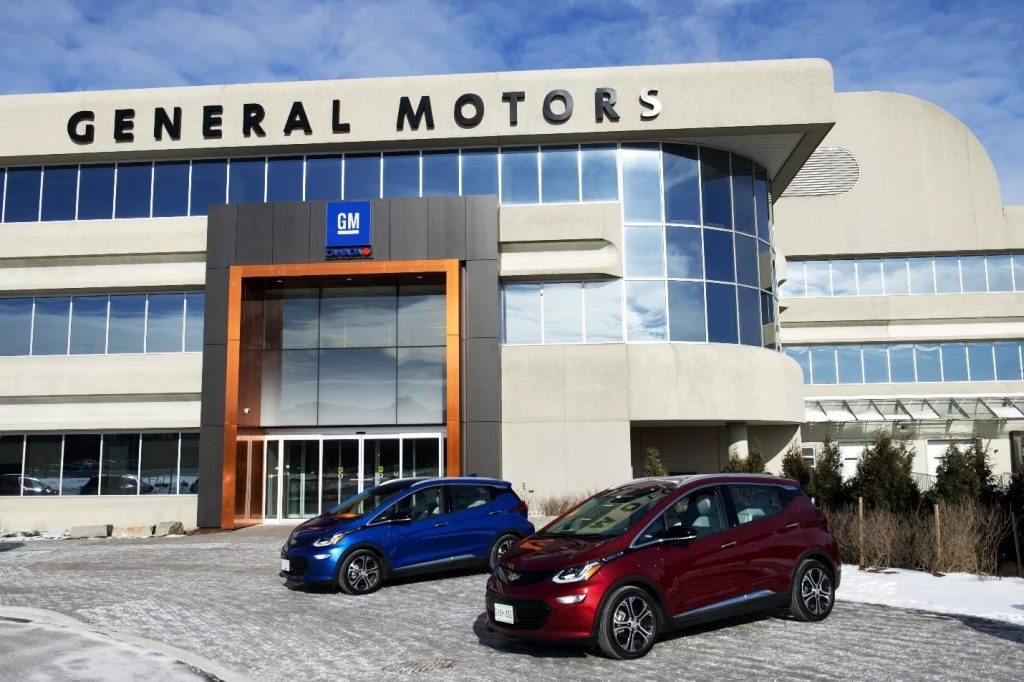
Profit sharing is calculated using the annual financial measure specified in each agreement, so results late in the year can still change the amount workers ultimately receive.
For the automakers, the payments provide a direct link between financial results and the workforce that builds their vehicles. Strong earnings can reward employees while also reflecting healthy production, pricing, and demand.
However, the companies must balance those payments against investment needs, product development, factory spending, and the costs of transitioning to new technologies.
GM appears positioned for one of its strongest UAW profit-sharing payments, while Ford could set a new record if its earnings outlook holds. Stellantis faces a more difficult path because its North American margin remains below the contractual threshold.
None of the figures is final until the 2026 financial year closes and the automakers complete the calculations required by their labor agreements. For now, the estimates point to a significant difference in the potential 2027 payments across Detroit’s three major automakers.