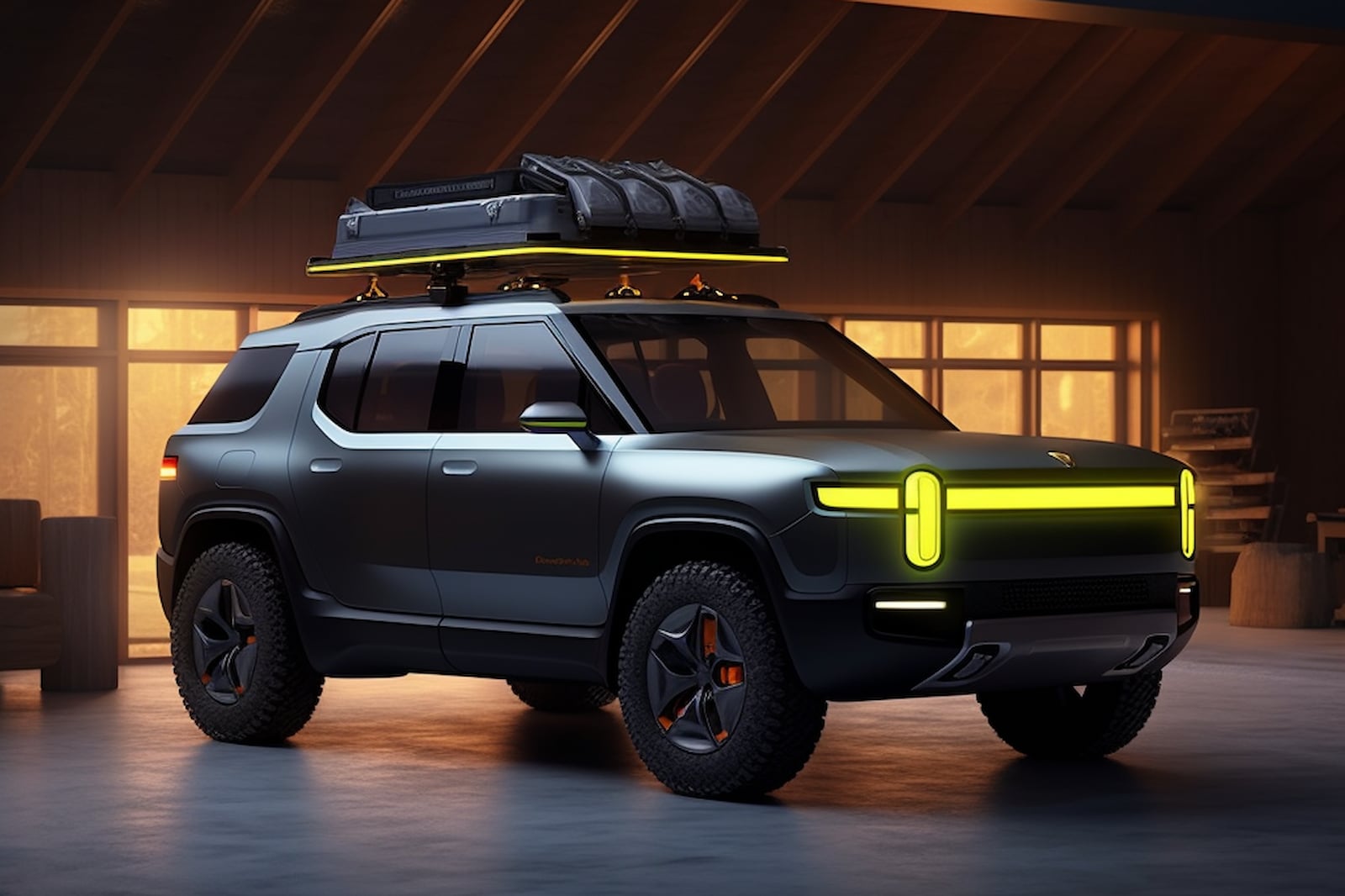
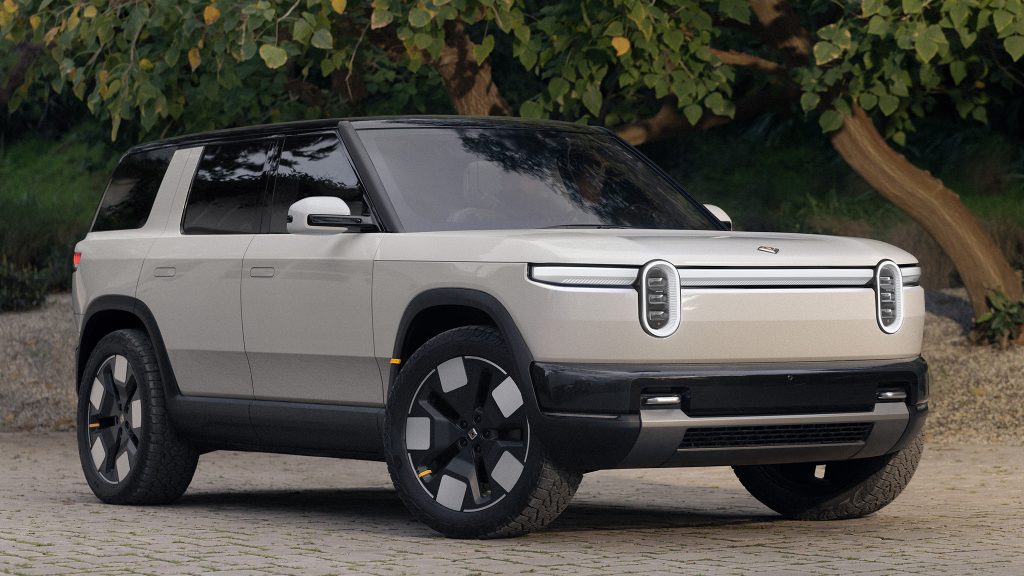
Rivian’s more affordable R2 SUV is already changing the company’s sales mix. During the third quarter of 2026, its first full quarter of deliveries, the R2 became Rivian’s best-selling vehicle by volume, outselling the more expensive R1S SUV, R1T pickup, and electric delivery van.
The milestone comes as the company increases production at its Normal, Illinois, factory and adds a second manufacturing shift dedicated to the new model. For Rivian, the R2 is more than another SUV.
It is central to reaching a wider customer base, improving factory utilization and building a path toward sustainable profitability. However, strong early sales do not yet mean the vehicle is profitable to manufacture.
R2 Becomes Rivian’s Best-Selling Vehicle in Its First Full Quarter
Rivian’s third-quarter results confirm that the R2 has quickly become the company’s most important vehicle by sales volume. The automaker delivered 19,248 vehicles between July and September 2026, a 46% increase compared with the same period in 2025.
The R2 accounted for the largest share of that delivery performance, moving ahead of both R1 models and the commercial electric delivery van. Rivian did not disclose an exact R2 unit breakdown in its headline results, but CEO RJ Scaringe confirmed that it was the company’s best-selling model by volume during the quarter.
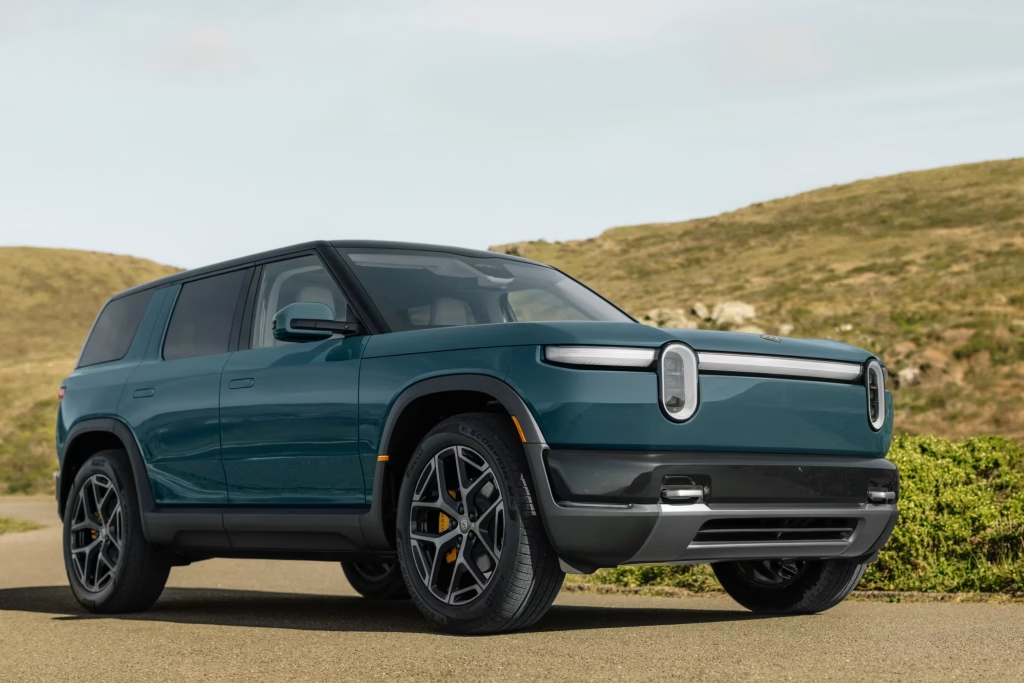
The result is significant because the R2 occupies a different position from the vehicles that established Rivian’s reputation. The R1T pickup and R1S SUV are premium electric vehicles with prices and equipment aimed at buyers willing to spend considerably more than mainstream SUV customers.
The R2 is designed to bring Rivian’s technology, software, and adventure-oriented identity into a smaller, more accessible package.
Rivian began R2 production in April 2026 at its Normal, Illinois, manufacturing facility, with customer deliveries starting in June. The company initially launched a more expensive performance version rather than introducing its lowest-priced configuration immediately.
This approach allows the automaker to begin production with a higher-specification vehicle while it continues preparing the factory and supply chain for more affordable versions.
The launch has generated encouraging customer interest. Rivian reported more than 103,000 R1 and R2 demonstration drives during the third quarter, setting a company record. It also said reservation conversion rates for the launch-edition Performance model remained above expectations.
These figures suggest that potential customers are actively considering the vehicle, although demonstration drives and reservations should not be confused with completed sales.
The R2’s importance is also reflected in Rivian’s production figures. The Normal facility produced 19,751 vehicles during the quarter, another company record. Deliveries were slightly lower at 19,248, reflecting the normal difference between vehicles manufactured and those handed over to customers.
The production increase shows that Rivian is beginning to move beyond the limited volumes associated with its earlier launch phases.
A Second Production Shift Supports the R2 Ramp-Up
To keep up with demand and increase output, Rivian has started a second R2 production shift at its Normal factory. The additional shift is an important manufacturing development because the company needs to increase production without depending entirely on new factory construction.
It can use its existing assembly infrastructure more intensively while improving the processes required to build the R2 at higher volumes.
The Normal facility is particularly important to Rivian because it produces the company’s existing R1 vehicles, commercial delivery vans, and the new R2.
Managing multiple vehicle programs at one location requires careful coordination of assembly lines, suppliers, components, and labor. The R2’s smaller platform and different production requirements also mean that the factory must adapt its operations as output increases.
Rivian’s strategy is to introduce less expensive R2 configurations after establishing production of the launch version. The initial performance model starts around $58,000, while more affordable versions are expected to begin at approximately $45,000 in 2027, according to Reuters.
The more affordable starting price is a key part of the R2’s mission, as it aims to reach buyers who are interested in Rivian vehicles but find the R1S and R1T too expensive.
The timing of those versions will matter. Launching a vehicle at a premium price can help establish early demand, but reaching a much larger customer base requires affordable configurations to arrive without excessive delays.
Rivian will also need to maintain quality and production consistency as it increases output. A second shift can raise manufacturing capacity, but it also introduces additional staffing, training, and operational requirements.
The R2’s success could therefore change Rivian’s business beyond the number of vehicles it sells. Higher production volumes can spread factory-related costs across more units, while a more affordable model could improve the company’s ability to compete in the mainstream electric SUV market.
The challenge is achieving those benefits without allowing manufacturing expenses to rise faster than sales.
Higher Sales Have Not Yet Made Rivian’s Automotive Business Profitable
Rivian’s third-quarter financial results show both the progress and the risks associated with the R2 launch. Revenue reached $2.155 billion, up 38% from the third quarter of 2025. Automotive revenue increased 36% to $1.55 billion, while software and services revenue rose 45% to $605 million.
The increase was supported by higher vehicle deliveries and growth in the company’s software-related business.
Consolidated gross profit was $176 million, a $152 million improvement from the same period a year earlier. However, the automotive division still recorded a gross loss of $80 million.
Rivian attributed approximately $120 million in incremental cost of revenue to the R2 production ramp, compared with manufacturing at more normalized levels. This illustrates the financial pressure that can accompany a new vehicle launch, even when customer demand is encouraging.
The distinction between consolidated and automotive profitability is important. Rivian’s software and services business generated $256 million in gross profit during the quarter, helping offset losses in vehicle manufacturing.
A significant portion of that revenue came from its joint venture with Volkswagen Group, which provides electrical architecture and software development services. Consequently, the company’s positive consolidated gross profit does not mean that selling vehicles has become profitable on its own.
There are signs of manufacturing progress. Rivian said automotive cost of goods sold per vehicle fell by more than $12,000 compared with the previous quarter. A higher proportion of R2 deliveries and better utilization of manufacturing resources contributed to the improvement.
However, the company still needs to reduce production costs further before the lower-priced R2 can deliver attractive automotive margins.
Rivian also reported an adjusted EBITDA loss of $435 million for the quarter. Despite the improvement compared with the $602 million loss recorded a year earlier, the company continues to spend heavily on product development, manufacturing expansion, sales and service operations, and autonomous-driving technology.
Its future financial performance will depend on whether increasing R2 volumes can eventually outweigh those expenses.
The company has responded to its stronger operating performance by improving its full-year 2026 guidance. It now expects to deliver between 67,000 and 70,000 vehicles, compared with its previous forecast range of 65,000 to 70,000.
That adjustment reflects confidence in its production and delivery momentum, although the upper end remains dependent on how successfully the R2 ramp continues.
For Rivian, the R2’s first full production quarter is an encouraging start, but the more important test is still ahead. The company must move from an expensive launch configuration toward lower-priced versions, maintain production quality, and improve the economics of every vehicle it builds.
Its Normal, Illinois, factory is now central to that effort. If Rivian can increase output while steadily reducing costs, the R2 could become the model that takes the company beyond its premium electric vehicle niche and into a much larger part of the U.S. market.