Dashboard warning lights are designed to alert drivers before a mechanical problem turns into an expensive repair or a dangerous situation. However, not every illuminated symbol requires the same reaction.
Some warnings indicate minor faults that can wait until the next service appointment, while others signal problems that can destroy an engine, compromise braking, or cause a sudden loss of vehicle control.
Knowing the difference matters because continuing to drive with certain warnings can make a manageable problem much worse. Here are 10 dashboard warnings that deserve immediate attention, including what triggers them, why they are dangerous, and what drivers should do.
1. Red Oil Pressure Warning Light
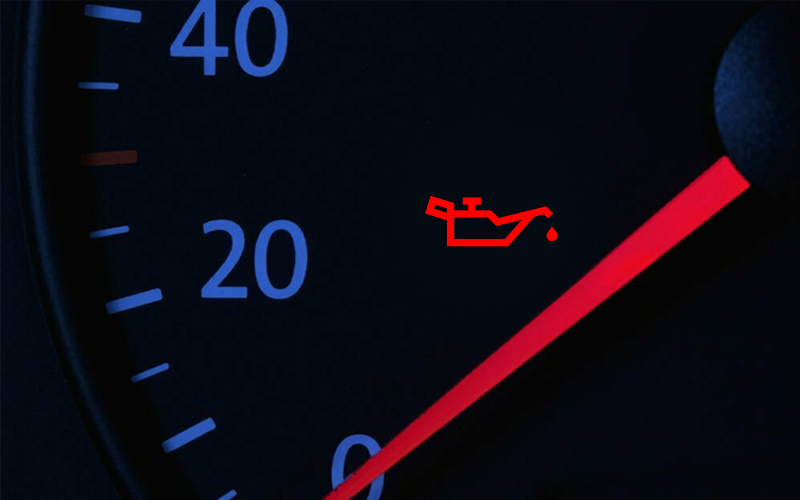
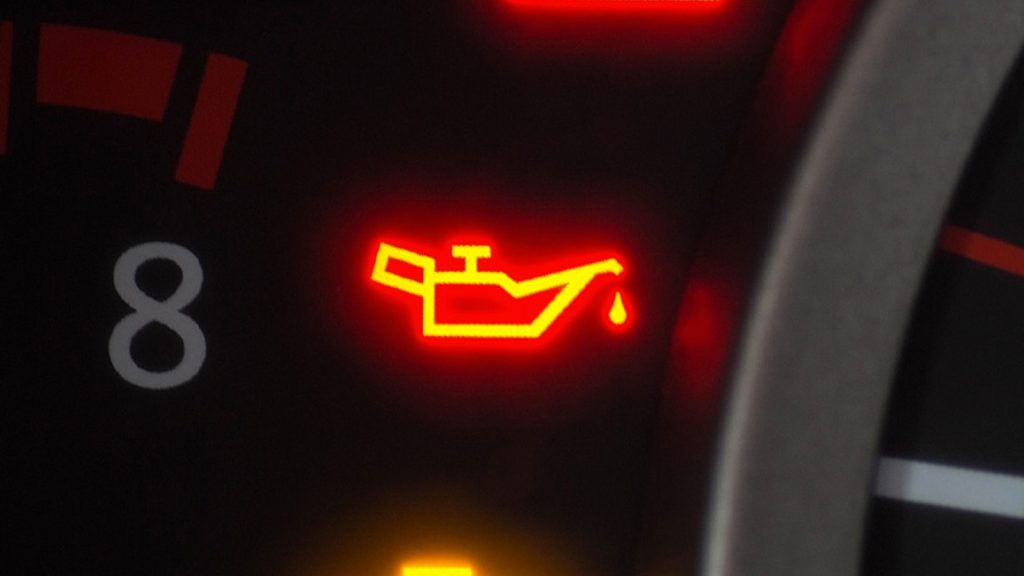
The red oil pressure warning light is one of the most serious alerts a driver can encounter. It usually appears as an oil can symbol with a dripping drop and indicates that the engine is not receiving adequate oil pressure.
This is different from a routine oil change reminder or a low oil level notification. The distinction matters because an engine can have sufficient oil in its sump but still suffer from dangerously low oil pressure.
Engine oil creates a protective lubricating film between moving components such as crankshaft bearings, camshafts, pistons, and other internal parts. When pressure drops, that protective supply may become inadequate. Continued operation can cause metal-to-metal contact, excessive heat, bearing damage, and potentially complete engine failure.
Several problems can trigger this warning, including insufficient oil, a leaking oil system, a failing oil pump, a blocked pickup screen, or excessive internal engine wear. A defective pressure sensor is another possibility, but drivers should never assume that the warning is merely an electrical fault.
Mopar’s official dashboard warning guidance specifically instructs drivers to pull over safely and stop when the oil pressure warning appears while driving.
What should you do?
- Find a safe location and switch off the engine immediately.
- Check the oil level after allowing the vehicle to sit safely.
- If the level is low, add the manufacturer-specified oil if appropriate.
- If the warning remains illuminated, do not restart or continue driving.
- Arrange professional assistance or a tow.
Do not attempt to drive several miles to reach a repair shop. Even a short journey with genuinely low oil pressure can cause serious internal damage. A towing expense is considerably cheaper than replacing an engine.
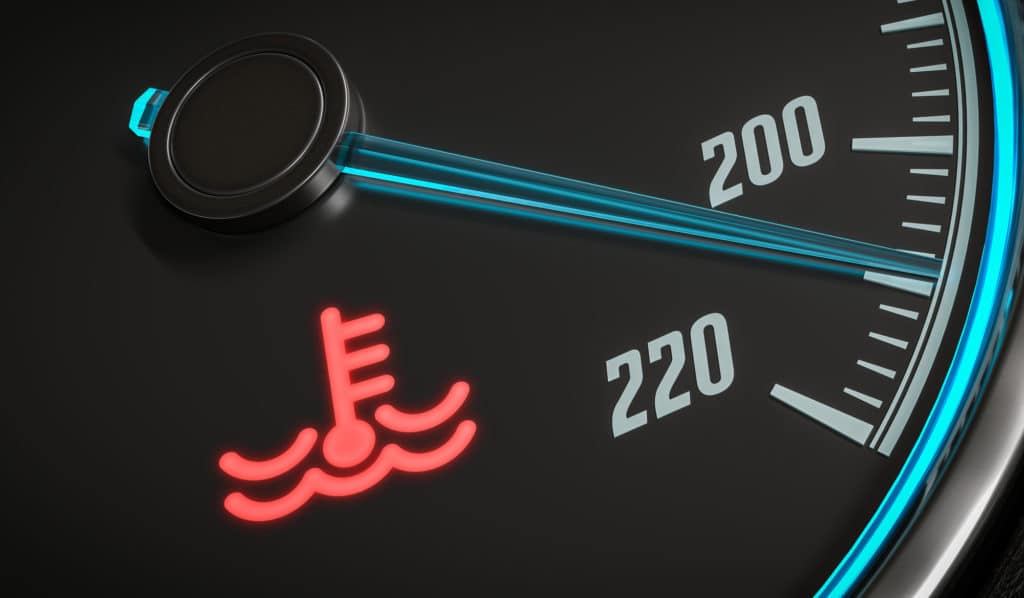
2. Red Engine Coolant Temperature Warning Light
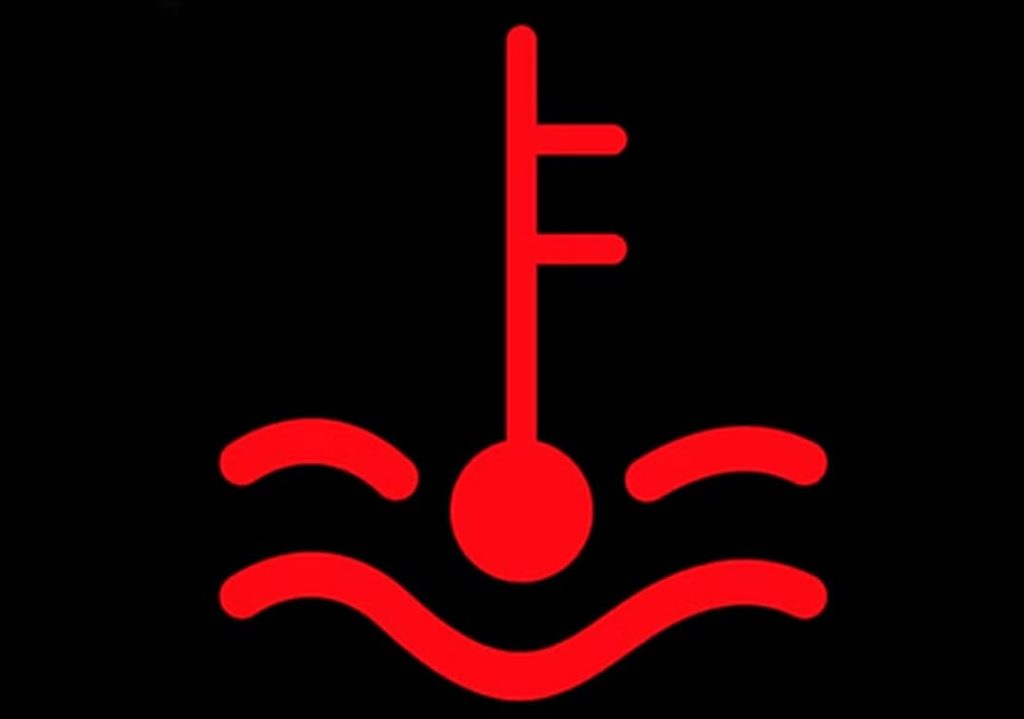
An engine temperature warning is another alert that should never be ignored. The symbol generally resembles a thermometer sitting above wavy lines and indicates that the engine coolant temperature has exceeded its permitted operating range.
Some vehicles display a red warning message instead of a traditional symbol, while others use a temperature gauge that moves into the red zone.
Engines generate substantial heat during normal operation, and the cooling system must remove that heat consistently. The radiator, coolant pump, thermostat, cooling fan, and hoses all contribute to maintaining the correct temperature. If one of these components fails, the engine can overheat.
A coolant leak is a common cause, but it is not the only possibility. A malfunctioning thermostat can restrict coolant circulation, a damaged water pump can reduce flow, and a failed cooling fan can prevent sufficient heat removal when the vehicle is stationary or travelling slowly.
The consequences of continuing to drive can be severe. Excessive temperatures can damage cylinder head gaskets, distort cylinder heads, and compromise internal engine components. In extreme situations, an overheated engine can seize.
Mopar specifically instructs drivers to pull over and stop when the engine temperature warning appears while driving.
What should you do?
- Pull over somewhere safe as soon as possible.
- Switch off the engine and allow it to cool.
- Do not remove the radiator cap while the system is hot.
- Look for visible coolant leaks only when it is safe to do so.
- Arrange assistance if the warning remains or the coolant level is dangerously low.
Never pour cold water directly into an extremely hot engine or open a pressurized cooling system. The escaping steam and hot coolant can cause serious burns.
A temperature warning is not an invitation to finish your journey. Stop safely before overheating turns into a major engine repair.
3. Red Brake System Warning Light
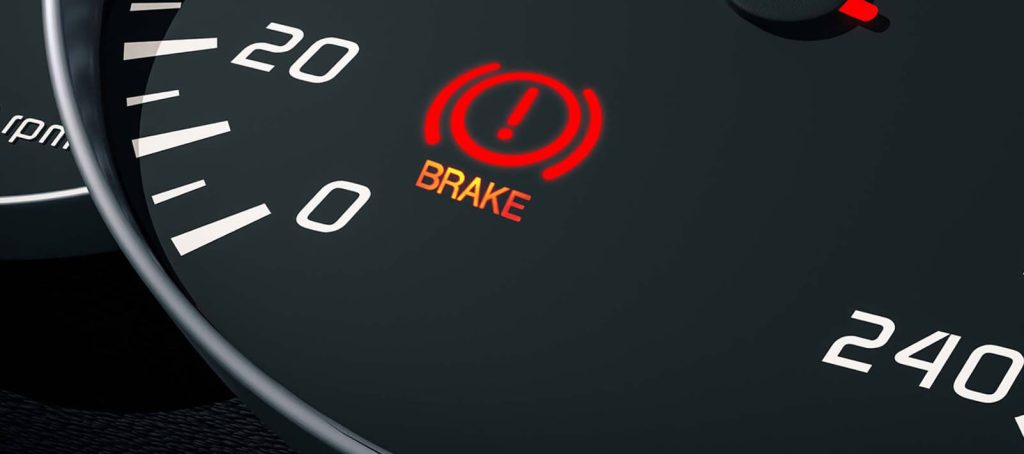
A red brake warning light deserves immediate attention because it can indicate a problem with one of the vehicle’s most important safety systems. Depending on the manufacturer, the symbol may appear as an exclamation mark inside a circle, the word BRAKE, or a similar warning message.
There are several possible explanations. The parking brake might still be engaged, the brake fluid could be below the recommended level, or the hydraulic braking system may have developed a fault. Some vehicles also illuminate the warning when the brake system detects a serious malfunction.
A low brake fluid level is particularly concerning because it can indicate a leak or excessive brake component wear. Hydraulic pressure is essential for transferring force from the brake pedal to the braking components at the wheels. If the system cannot maintain the required pressure, braking performance may deteriorate.
The danger increases when the warning appears alongside a soft pedal, a pedal that sinks toward the floor, unusual noises, or a noticeable reduction in stopping ability.
Mopar explains that a brake warning light remaining illuminated when the parking brake is released can indicate a brake system malfunction or low brake fluid.
What should you do?
- Stop in a safe location and apply the parking brake appropriately.
- Check whether the parking brake has been fully released.
- If the warning remains, do not continue driving.
- Look for visible fluid beneath the vehicle without crawling underneath it.
- Arrange professional inspection and towing if a hydraulic problem is suspected.
Do not assume that the vehicle is safe simply because it still stops when you press the pedal. Some braking systems can retain partial braking ability even when a serious fault is present.
Also, never treat adding brake fluid as a permanent solution to an unexplained loss. The underlying cause must be identified and repaired before the vehicle returns to regular use.
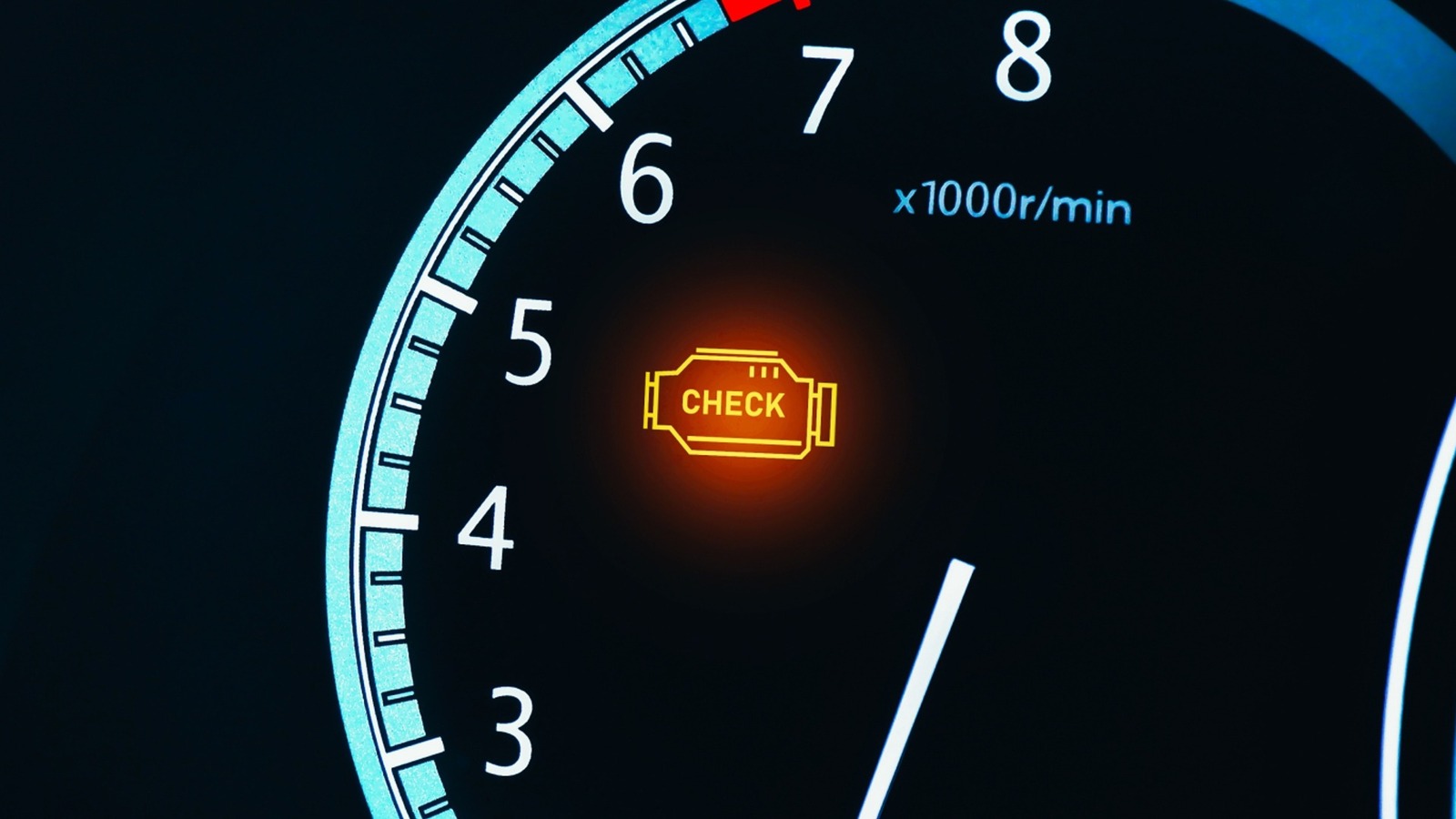
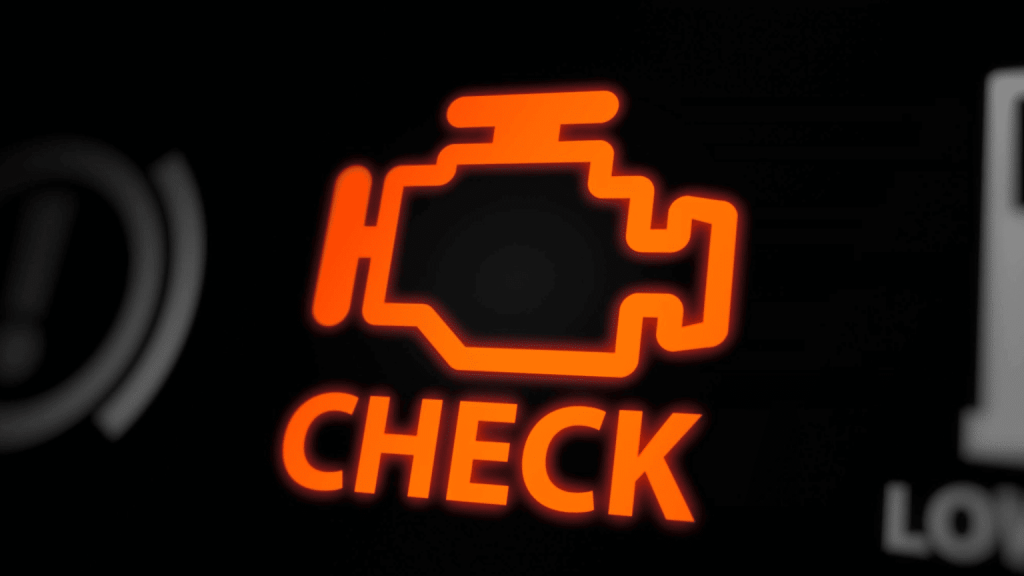
4. Flashing Check Engine Light
A steady check engine light and a flashing check engine light do not communicate the same level of urgency. While a continuously illuminated malfunction indicator can sometimes indicate a fault that allows cautious driving to a repair facility, a flashing light usually signals a more serious engine problem.
One common cause is an active engine misfire. This occurs when one or more cylinders fail to burn their air-fuel mixture correctly. Faulty ignition coils, damaged spark plugs, fuel delivery problems, and certain mechanical faults can trigger this condition.
Why is it dangerous? An engine misfire can allow unburned fuel to enter the exhaust system. That fuel may ignite inside the catalytic converter, producing excessive temperatures and potentially damaging the emissions system. Continued operation can also cause poor engine performance, increased vibration, and further mechanical complications.
The problem is not necessarily limited to the catalytic converter. A severe misfire can indicate an underlying ignition, fuel, or engine condition that requires immediate diagnosis.
Mopar’s owner guidance warns that a flashing malfunction indicator light can signal conditions that may cause immediate power loss or severe catalytic converter damage. It recommends immediate service.
What should you do?
- Reduce acceleration and avoid putting additional load on the engine.
- Move to a safe location as soon as possible.
- Switch off the engine.
- Arrange a diagnostic inspection or roadside assistance.
- Avoid repeatedly restarting the vehicle if the warning continues flashing.
- Pay attention to accompanying symptoms such as shaking, rough idling, loss of power, or an unusual exhaust smell.
A flashing check engine light should not be treated like a routine maintenance reminder. Even if the vehicle still moves under its own power, continuing the journey can turn an ignition repair into an expensive catalytic converter replacement.
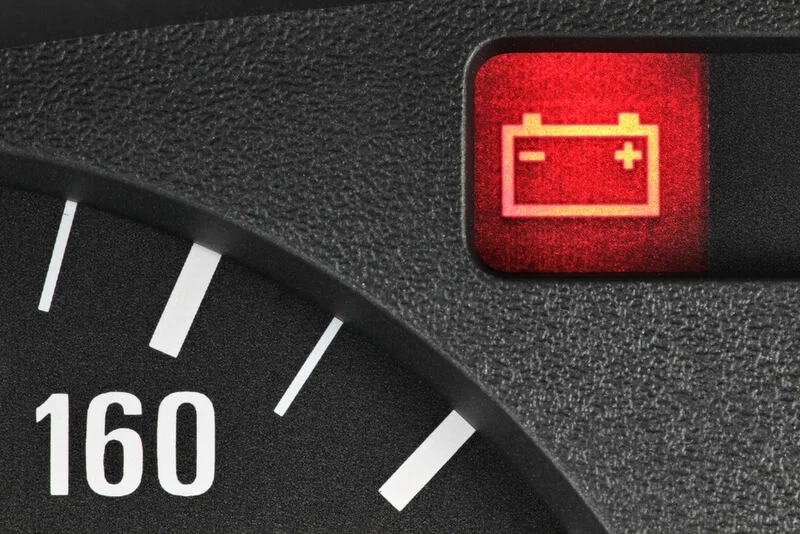
5. Red Battery or Charging System Warning Light
The red battery warning light is often misunderstood because many drivers assume it means the battery itself has failed. In reality, this warning generally indicates a problem with the vehicle’s charging system. The alternator, voltage regulator, wiring, drive belt, and battery connections can all contribute to the issue.
In a conventional gasoline vehicle, the alternator supplies electrical power while the engine is running and replenishes the battery. If the alternator stops charging, the vehicle may continue operating temporarily using the remaining battery power. However, that reserve is limited, and essential electrical systems can eventually lose power.
The situation can become particularly dangerous if the vehicle’s electrical supply deteriorates while driving. Depending on the vehicle, the engine management system, fuel delivery equipment, exterior lighting, and other important electronics may be affected.
A broken or slipping accessory belt can also trigger the warning. On certain engines, that same belt drives the water pump, meaning a charging system fault could be accompanied by an overheating problem.
Mopar’s warning light guidance identifies charging system faults as an issue requiring attention, while AAA explains that alternator, wiring, and belt problems can cause battery warning indications.
What should you do?
- Switch off unnecessary electrical accessories if doing so is safe.
- Avoid assuming that the vehicle will continue running indefinitely.
- Find a safe location and arrange professional assistance.
- Do not disconnect the battery while the engine is running to test the alternator.
- Have the alternator, battery, wiring, and belt inspected.
If the light appears alongside an overheating warning, stop the vehicle promptly because the belt failure may have affected coolant circulation.
Electric vehicles require a different interpretation. Their 12-volt charging systems and high-voltage battery warnings are not identical to a conventional alternator warning. Always follow the specific message in the owner’s manual.
6. Red Transmission Temperature Warning Light
A transmission temperature warning can appear as a thermometer symbol, a gear-shaped icon, or a dashboard message identifying excessive transmission temperature. Whatever the design, it should be treated seriously because excessive heat can damage transmission fluid and internal components.
Automatic transmissions depend on fluid to lubricate moving parts, transfer hydraulic pressure, and manage operating temperatures.
When the fluid becomes excessively hot, its ability to protect internal components can deteriorate. Prolonged overheating can contribute to clutch damage, seal deterioration, and accelerated transmission wear.
Several driving conditions can increase transmission temperatures. Towing heavy trailers, climbing long inclines, driving in demanding stop-and-go conditions, or operating with an unsuitable transmission fluid level can place additional stress on the system.
A transmission cooler leak or restricted cooling passage can also contribute to the problem. In some vehicles, a defective cooling fan or radiator-related issue may affect transmission temperature management.
Mopar identifies a high transmission fluid temperature warning as a condition that can occur during strenuous use, including towing. Its dashboard guidance highlights the need to respond to the warning rather than continuing to operate the vehicle under excessive load.
What should you do?
- Safely leave heavy traffic or a demanding driving situation.
- Stop towing or carrying unnecessary additional load.
- Pull over when it is safe and follow the vehicle’s temperature warning instructions.
- Allow the transmission to cool as directed by the manufacturer.
- Arrange an inspection if the warning remains or returns.
- Do not repeatedly accelerate, shift between gears, or attempt to force the transmission to operate normally.
Some vehicles have specific procedures for cooling an overheated transmission, including whether the engine should remain running. Follow the owner’s manual rather than applying a universal procedure.
A transmission temperature warning is particularly important because continuing to drive can transform a temporary overheating condition into a major transmission repair.
7. Red Electric Vehicle High-Voltage Battery or Electrical System Warning
Electric vehicles have their own dashboard alerts, and some require an immediate response even though they do not involve an engine or conventional transmission. A red high-voltage battery warning or serious electrical system warning can indicate a problem affecting the vehicle’s propulsion or battery safety systems.
The message displayed depends on the manufacturer. Some vehicles identify a high-voltage battery fault, while others display warnings such as STOP SAFELY, ELECTRICAL SYSTEM FAULT, or a message instructing the driver to stop the vehicle.
Potential causes include battery management faults, high-voltage isolation problems, overheating, damaged electrical connections, or failures involving power electronics. Not every warning means the battery cells themselves are defective, but the vehicle may restrict propulsion or shut down certain functions to protect the system.
Battery-related problems deserve particular caution because high-voltage components can present electrical and fire hazards when damaged.
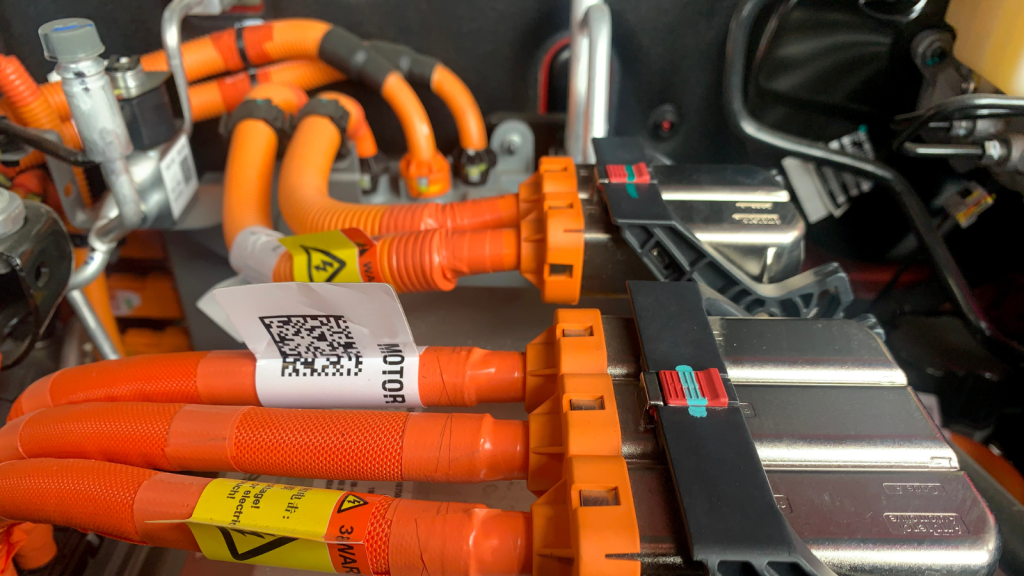
NHTSA’s guidance for electric and hybrid vehicles warns that damaged high-voltage batteries can create electric shock, chemical, and fire risks. It also highlights the possibility of delayed battery hazards following physical damage.
What should you do?
- Follow any red STOP or pull-over instruction immediately.
- Find a safe location away from traffic.
- Switch off the vehicle if instructed by the manufacturer.
- Do not touch exposed orange high-voltage cables.
- Do not attempt to open, inspect, or repair the battery enclosure.
- Contact roadside assistance or the manufacturer’s emergency support service.
If you notice smoke, unusual heat, hissing, or a burning smell, move away from the vehicle and contact emergency services.
There is an important distinction between a routine low-charge notification and a serious high-voltage fault. A low battery percentage generally means you need to recharge, not that the vehicle has developed an electrical emergency.
However, a red high-voltage system warning accompanied by a stop instruction should never be ignored.
8. Red Power Steering or Steering System Failure Warning
Steering system warnings can be particularly dangerous because they may indicate that the vehicle’s ability to respond to driver input has been compromised. Depending on the vehicle, the warning may display a steering wheel symbol, an exclamation mark, or a message identifying a power steering system fault.
Most modern vehicles use electric power steering, although some older models and certain vehicle designs use hydraulic assistance. When the assistance system fails, steering effort can increase considerably. The vehicle may still be mechanically steerable, but controlling it becomes more difficult, particularly at low speeds or during sudden manoeuvres.
A power steering warning can result from electrical supply problems, a failed steering motor, damaged wiring, sensor faults, or problems involving the steering control module. In hydraulic systems, low fluid levels, pump failures, and leaks can produce similar symptoms.
The danger is not limited to inconvenience. Sudden loss of steering assistance can surprise a driver, especially when turning into traffic, navigating a tight corner, or avoiding an obstacle.
What should you do?
If steering becomes unexpectedly heavy, unstable, or inconsistent, reduce speed carefully and move toward a safe stopping location. Avoid abrupt steering movements and do not continue a long journey simply because the vehicle still responds to the steering wheel.
Once stopped, consult the owner’s manual for the specific warning message. Some vehicles permit limited driving after an electric steering fault, while others instruct drivers to stop immediately.
Do not attempt to diagnose electrical steering components yourself. These systems can involve safety-critical sensors and control modules that require specialized diagnostic equipment.
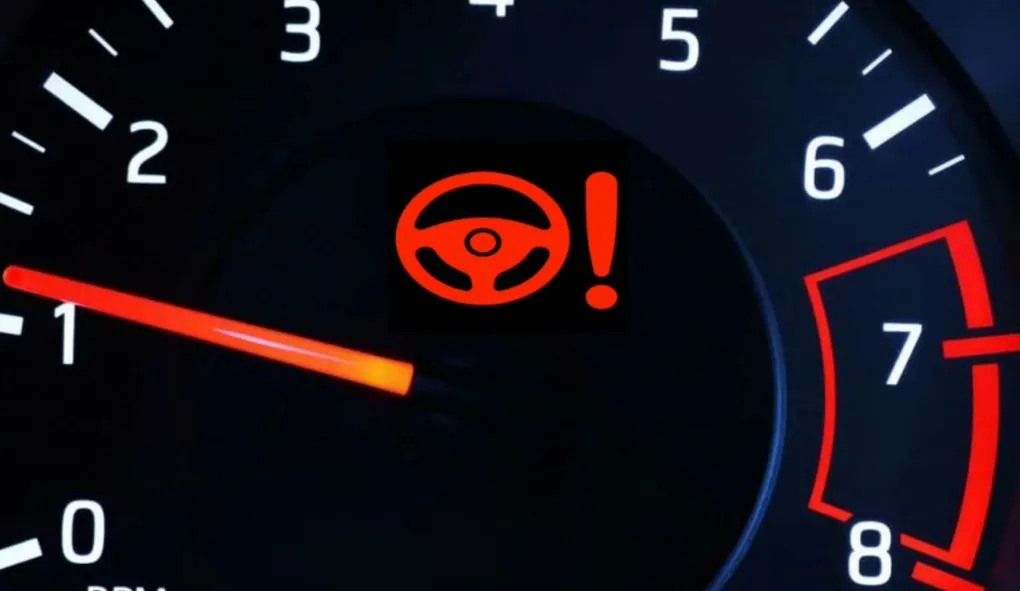
A steering warning accompanied by unusual noises, binding, sudden loss of assistance, or difficulty maintaining direction should be treated as an urgent safety issue.
If the vehicle cannot be steered predictably, arrange a tow rather than risking a longer journey. The ability to control the direction of travel is fundamental to safe driving, and no destination justifies continuing with an unreliable steering system.
9. Red Engine Oil Temperature Warning
The engine oil temperature warning is different from the low oil pressure warning, although both can indicate conditions capable of causing serious engine damage. This symbol generally appears as an oil can with a thermometer or as a dashboard message stating that engine oil temperature is too high.
Engine oil performs several important functions. It lubricates moving components, helps remove heat from internal engine parts, and reduces friction between surfaces operating under considerable mechanical stress. When oil temperature becomes excessive, its ability to maintain effective lubrication can deteriorate.
There are several possible reasons for excessive oil temperature. Driving under heavy loads, towing, operating in extreme heat, inadequate oil levels, restricted oil cooling, and certain mechanical problems can all contribute. A vehicle with a damaged oil cooler or an underlying lubrication issue may also experience repeated temperature warnings.
The danger is that excessively hot oil can lose viscosity and provide less effective protection to critical engine components. If the driver continues operating the vehicle under these conditions, bearing damage, excessive wear, and other internal failures may follow.
Mopar specifically identifies the oil temperature warning as an instruction to stop the vehicle and switch off the engine as soon as possible.
What should you do?
- Reduce engine load and find a safe place to stop.
- Switch off the engine according to the manufacturer’s instructions.
- Allow the vehicle to cool before inspecting anything.
- Check the oil level when it is safe to do so.
- Arrange professional assistance if the warning remains or returns.
Do not confuse this warning with a normal engine temperature gauge reading. Coolant temperature and oil temperature measure different things, and one can become excessive without the other immediately showing an abnormal reading.
Also, adding more oil is not necessarily the solution. If the oil cooler, lubrication system, or another component has failed, the underlying fault must be corrected.
A persistent oil temperature warning is a reason to stop driving, not an alert that can safely wait until the next scheduled service.
10. Sudden Tire Pressure Loss Warning
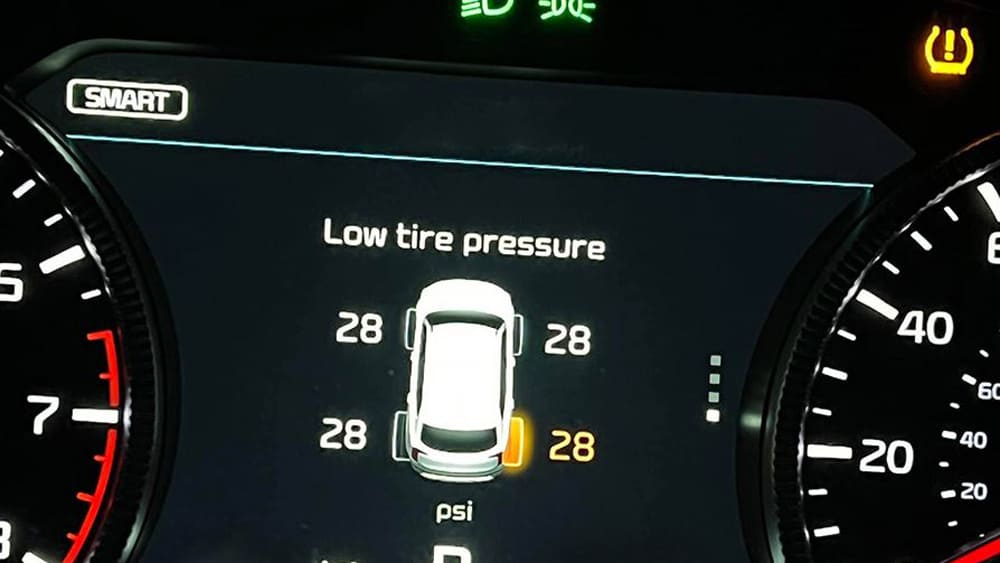
The tire pressure monitoring system warning is often treated as a minor inconvenience, but a sudden and substantial loss of tire pressure can become a serious driving hazard. The familiar symbol resembles a horseshoe-shaped tire with an exclamation mark in the centre.
The warning generally means that one or more tires have become significantly underinflated. However, drivers must distinguish between a gradual pressure drop and a sudden loss caused by a puncture, damaged valve, or tire failure.
Underinflated tires generate additional heat as they flex during operation. This can damage the tire’s internal structure and increase the possibility of tread separation or a blowout. Poor inflation can also affect steering response, braking performance, and vehicle stability.
NHTSA explains that the TPMS warning illuminates when one or more tires are significantly underinflated. The agency warns that driving on underinflated tires can cause overheating and eventual tire failure. It recommends checking tire pressure and inflating tires to the manufacturer’s recommended cold pressure.
What should you do?
- Reduce speed and avoid sudden steering or braking.
- Find a safe place to pull over.
- Inspect the tires for visible damage, punctures, or bulges.
- Check actual pressure with an accurate tire gauge.
- Use a properly inflated spare or arrange roadside assistance if a tire cannot safely hold pressure.
An illuminated TPMS warning does not necessarily mean the vehicle needs to be towed. If the tire is only slightly underinflated and shows no signs of damage, you may be able to restore the correct pressure and continue driving according to the manufacturer’s guidance.
However, if the tire is visibly damaged, rapidly losing air, severely underinflated, or affecting vehicle control, do not continue driving on it.
NHTSA recommends replacing tires when tread reaches 2/32 of an inch and also identifies bulges, cuts, cracks, and other physical damage as reasons to stop using a tire.
A few minutes spent checking tire pressure can prevent a much more dangerous roadside situation.