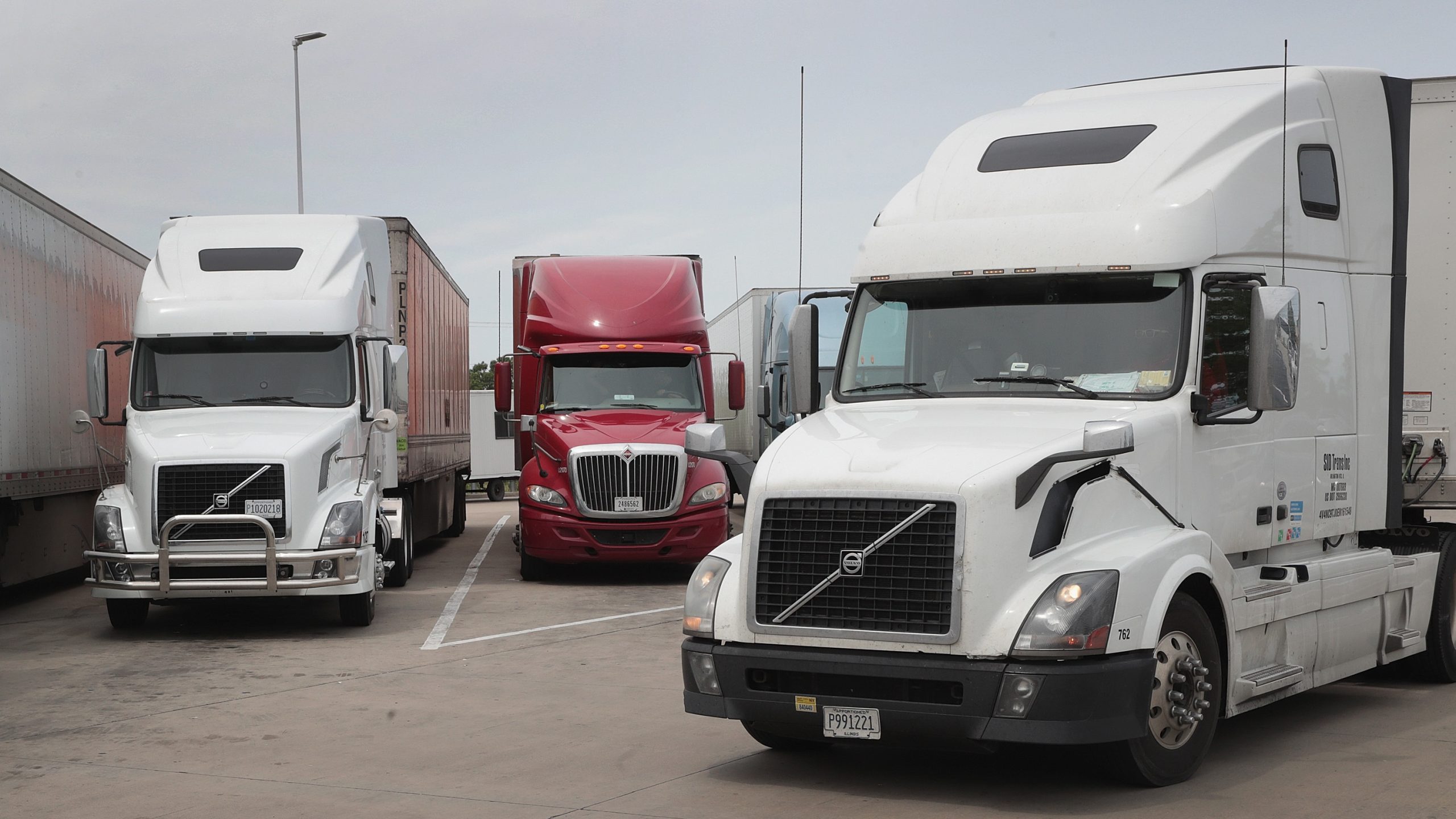
Dana Incorporated’s third-quarter 2026 results offer a positive signal for the commercial vehicle supply chain. The Ohio-based supplier reported sales of $2.04 billion, up $121 million from the same period last year, as stronger truck and bus demand lifted its commercial vehicle business.
Adjusted earnings rose substantially, driven by improved production efficiency, lower costs, and stronger pricing. Despite this progress, some challenges remain. Dana’s continuing operations posted a quarterly loss, while cash flow weakened compared with the same period last year.
Commercial Vehicle Demand Drives Dana’s Third-Quarter Growth
Dana reported third-quarter net sales of $2.038 billion, compared with $1.917 billion in the third quarter of 2025, an increase of approximately 6.3%.
Commercial Vehicle sales rose to $667 million from $564 million, an increase of 18.3%. Light Vehicle sales increased more modestly, reaching $1.371 billion against $1.353 billion a year earlier.
The difference shows where the strongest demand came from. Dana supplies propulsion and drivetrain technologies to manufacturers across several vehicle categories. Its commercial vehicle business serves heavy-duty and medium-duty trucks, buses, and vocational vehicles.
When fleet operators replace older vehicles, or manufacturers increase production, suppliers can benefit from higher demand for axles, driveshafts, and related systems.
Chief Executive Officer Byron Foster said Dana was seeing robust demand in the Class 5 through Class 7 truck and bus markets, as well as the Class 8 heavy-duty truck market. He identified infrastructure investment and replacement demand as important factors supporting orders and elevated backlogs.
Heavy-duty trucks are particularly important to suppliers because they require substantial drivetrain components and operate in freight transportation, construction, and other commercial sectors. Medium-duty trucks and buses also serve businesses and public services, giving suppliers exposure to demand beyond passenger vehicles.
Dana’s sales breakdown provides further detail. Volume and mix contributed $87 million to the year-over-year increase, reflecting stronger commercial vehicle demand, a favorable product mix, and backlog conversion. Tariff recoveries added $12 million, foreign currency translation contributed $5 million, and commodity recoveries added $17 million.
These figures show that growth came from both higher shipments and cost-recovery mechanisms. Recoveries help suppliers offset expenses passed through to customers, but they are different from demand-led increases in vehicle production. Volume and mix remained the largest contributors.
Profitability also improved across both major segments. Commercial vehicle adjusted EBITDA increased to $69 million from $51 million, while light vehicle adjusted EBITDA climbed to $151 million from $126 million. Company-wide adjusted EBITDA reached $218 million, up from $162 million a year earlier.
Higher Margins Show the Effect of Cost Reductions and Operational Improvements
Dana’s adjusted EBITDA margin improved to 10.7%, compared with 8.5% in the third quarter of 2025. The 2.2-percentage-point increase indicates that the company converted a larger share of its revenue into adjusted operating earnings.

Management attributed the improvement to operational efficiencies, material cost savings, a favorable product mix, commercial initiatives, and cost-recovery actions. These factors are important in a supplier business where manufacturing, labor, logistics, and raw materials create significant expenses.
Dana has also been pursuing a structural cost-reduction program launched in November 2024. Its original savings target was $200 million, but management increased it to $325 million by the end of the fourth quarter of 2026.
On October 28, the company said it had delivered approximately $320 million cumulatively, leaving about $5 million to complete the program. It separately reported $60 million in savings year-to-date in 2026.
The two figures measure different periods. The $320 million represents cumulative progress since the program began, while $60 million refers to savings achieved during the first nine months of 2026.
Adjusted net income reached $44 million, compared with an adjusted net loss of $5 million in the prior-year quarter. Diluted adjusted earnings per share improved to $0.41 from a loss of $0.04. These adjusted measures exclude certain items that management considers outside ongoing operating performance, so they should be considered alongside reported results.
The reported figures present a less positive picture. Dana recorded a $10 million net loss from continuing operations, compared with $13 million in net income from continuing operations a year earlier.
Reported net income was $15 million but included $29 million from discontinued operations. A $24 million loss on extinguishment of debt and higher income tax expense also affected continuing operations.
The tax expense included a $29 million charge related to a foreign income tax matter, partly offset by a $12 million restructuring-related benefit following the sale of its Off-Highway business.
Cash generation also weakened. Operating cash flow was $102 million, down from $111 million a year earlier, while adjusted free cash flow fell to $66 million from $101 million. Dana attributed the comparison partly to the absence of cash from its divested off-highway business, higher capital spending, and working-capital timing.
The quarter therefore demonstrates better operating performance, but financing costs, taxes, and cash flow remain important challenges. Stronger adjusted margins do not mean every part of Dana’s financial position has improved.
Dana Raises Its Sales Forecast as the Eaton Transaction Moves Closer
Dana raised its full-year 2026 sales forecast by approximately $50 million. It now expects annual sales of $7.75 billion to $7.85 billion.
The company maintained its adjusted EBITDA guidance of $800 million to $850 million, diluted adjusted earnings per share guidance of $1.75 to $2.25, and adjusted free cash flow outlook of $275 million to $375 million.
Raising the sales outlook while maintaining earnings guidance suggests Dana expects the additional revenue to fit within its existing profitability expectations. Sustaining margins will depend on demand, production execution, and continued cost recovery.
Another major development is Dana’s proposed transaction involving Eaton’s Mobility business. The companies are pursuing a combination intended to bring together complementary product portfolios, customer relationships, and manufacturing operations.
Dana said the transaction remained on track to close around the end of the first quarter of 2027, with nearly all regulatory approvals obtained and one still outstanding as of October 28. Closing remains subject to the required approvals and other conditions.
Management has identified a target of $250 million in annualized cost synergies within 24 months after closing. It also sees opportunities to expand aftermarket sales by combining product ranges and distribution relationships.
Dana expects Eaton’s fleet sales organization to create opportunities for additional drivetrain sales. These are projected benefits, not savings or revenue already achieved.
Dana also increased its planned share repurchases. It bought back approximately 6.6 million shares for $200 million during the third quarter, bringing repurchases for the first nine months of 2026 to $369 million.
The company expects to repurchase another approximately $100 million in the fourth quarter. Management said the increased plan reflects confidence as the Eaton transaction approaches.
For the automotive supply industry, Dana’s results show how commercial vehicle production can support supplier performance when light-vehicle growth is more limited. Sales and adjusted earnings increased substantially in its commercial vehicle segment, while improved margins demonstrated the value of cost discipline.
However, the quarter does not indicate that every part of the vehicle market is strengthening. Light vehicle sales rose only slightly, continuing operations recorded a loss, and adjusted free cash flow declined.
Dana’s next challenge will be sustaining commercial vehicle demand, completing its savings program, and improving cash generation. The proposed Eaton combination offers another opportunity, but its success will depend on execution after closing.