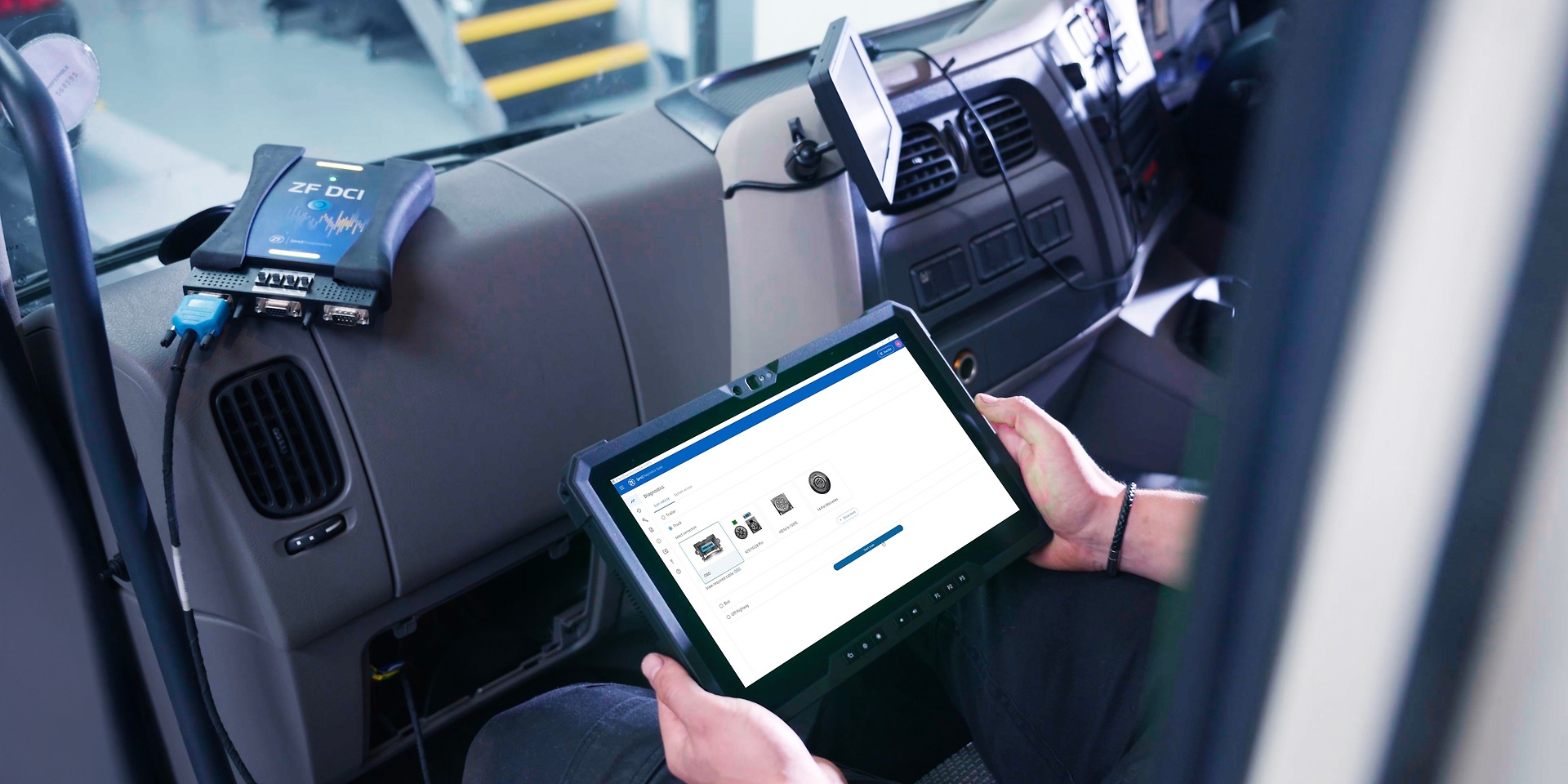
Independent repair shops increasingly face vehicles equipped with electronic systems that require more than a basic fault-code reader. To help technicians diagnose these systems, ZF Aftermarket is adding original-equipment diagnostic insights to its MultiScan platform.
Announced November 2, 2026, at the AAPEX show in Las Vegas, the update brings ZF engineering knowledge into the technician’s existing diagnostic workflow. The first application focuses on vehicles fitted with ZF Continuous Damping Control, an electronically controlled suspension technology.
Instead of leaving technicians with a fault code and a list of live-data values to interpret, the new feature provides targeted checks and relevant vehicle information.
ZF Adds OE Diagnostic Insights to MultiScan
First introduced at AAPEX 2025, ZF MultiScan is a multi-brand diagnostic platform that supports vehicle troubleshooting, advanced service functions, coding, and programming. The latest update builds on these capabilities by incorporating more targeted diagnostic guidance based on ZF’s original-equipment engineering expertise and its knowledge of the systems it supplies to automakers.
The new feature is designed to appear when a technician scans a vehicle and reads a diagnostic trouble code from a ZF electronic control unit. MultiScan automatically detects the relevant ZF control units during the vehicle scan.
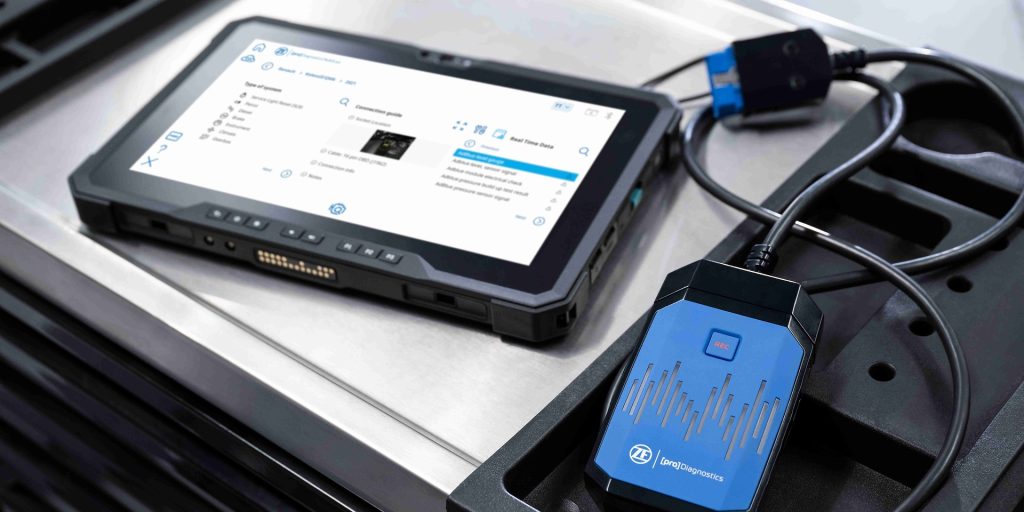
When a fault code is identified on a supported ZF controller, the technician can open the diagnostic insights directly from that fault-code screen.
A diagnostic trouble code does not necessarily identify the failed part. It reports that a control module has detected an abnormal condition, which may involve a sensor, wiring, a connector, or a mechanical component. Replacing a part based only on the code can lead to unnecessary expense.
ZF’s new insights are intended to help technicians move from identifying a code to testing the system. The information is organized as a short, fault-specific diagnostic test plan rather than a lengthy technical document.
It provides an overview of how the system operates, highlights the conditions and values relevant to the fault, and suggests checks based on the particular code and circumstances.
The platform also displays associated live vehicle data. In a conventional workflow, a technician may need to search manually through a list of Parameter Identifiers, or PIDs, to locate the measurements relevant to a fault. ZF says MultiScan can present the associated data directly, reducing the need to find each parameter separately.
This is not the same as automatically diagnosing and repairing a vehicle. The technician still has to interpret the information, perform the recommended checks, and confirm the root cause. The feature is designed to make that process more focused by bringing the manufacturer’s system knowledge and useful measurements into one place.
Continuous Damping Control Is the First Supported System
The first application covers vehicles equipped with ZF Continuous Damping Control, commonly known as CDC. This technology adjusts shock absorber damping electronically to respond to driving conditions.
Rather than relying only on fixed damper settings, the system can vary damping force according to information from vehicle sensors and control electronics.
The system aims to balance ride comfort and vehicle control. It can adjust damping as the vehicle encounters uneven pavement, corners, or braking, helping manage body movement while maintaining tire contact. Its exact operation depends on the vehicle’s design and calibration.
Because CDC relies on sensors, wiring, electronic control units, and adjustable dampers, diagnosing a problem can require more than inspecting a shock absorber.
A fault may relate to a position sensor, electrical connection, control signal, or another system input. The technician needs to establish what the control module is detecting and whether the measured values match expected behavior.
ZF says its diagnostic insights provide key conditions, values, and behaviors needed to investigate a fault, along with recommended checks based on the specific fault conditions. The relevant live data is displayed in the same workflow.
Multiple vehicle brands and models in North America use ZF’s CDC technology, although the company has not provided a complete list of covered vehicles in the announcement.
An example shared with the announcement illustrates how the information can be applied. For diagnostic trouble code C103C-11, the tool identifies the code and the affected corner of the vehicle, then displays relevant position-sensor data alongside the diagnostic insight.
This gives the technician a more direct starting point for checking the system rather than relying on the code description alone.
Electronic suspension systems can be expensive to repair, and an incorrect diagnosis may lead to replacing a damper or sensor that still works. By identifying relevant measurements and checks, the guidance may help workshops narrow down the cause before recommending parts. It cannot guarantee a faster repair, but it is designed to make diagnosis more focused.
Why the Update Matters for Independent Repair Shops
Modern vehicles combine mechanical components with software-controlled systems. Independent workshops need accurate system information, live data, coding and programming capabilities to handle repairs that might otherwise go to dealerships.
ZF positions MultiScan as an all-makes diagnostic solution for independent workshops. Its existing platform offers vehicle coverage across domestic, Asian, and European brands, as well as selected supercars and medium-duty trucks.
ZF also lists functions such as reading and clearing fault codes, viewing live data, component activation, service resets, ECU adaptations, and coding and programming. Availability varies by vehicle and system, so workshops need to check the platform’s coverage before relying on a particular function.
The addition of OE diagnostic insights gives the platform a more specific advantage on systems manufactured by ZF. The company designs and supplies technologies used by automakers, giving it engineering knowledge that may not be obvious from a generic fault-code description.
Bringing selected information into the aftermarket tool can help independent technicians understand how a ZF system is intended to behave and which checks are relevant when a fault appears.
Vehicle owners may also benefit if independent shops can diagnose problems accurately and avoid unnecessary parts replacement. Results will still depend on vehicle coverage, technician experience, and replacement-part availability.
ZF has not announced that the new insight feature will cover every system it manufactures. The initial rollout is focused on continuous damping control, and the company has not published a timetable for adding other technologies.
It has also not detailed whether the feature will require a separate subscription or whether it will be included in existing MultiScan access. Workshops should confirm commercial terms and vehicle coverage with ZF or an authorized distributor.
ZF is demonstrating the technology at AAPEX 2026 in Las Vegas, where visitors can see MultiScan’s diagnostic insights in live demonstrations.
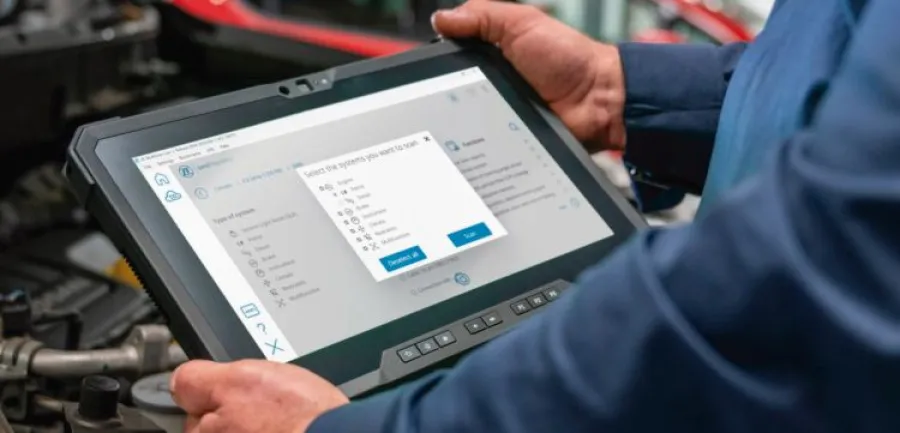
The company’s program also includes short expert training sessions and displays of its wider aftermarket product range at AAPEX Forum booth F13011. The demonstrations are intended to show how the information appears during a real diagnostic workflow.
For independent repair shops, the announcement tackles an increasingly common challenge: servicing and diagnosing sophisticated vehicle systems without having full access to the technical information and engineering insights available to original equipment manufacturers.
ZF’s first CDC application brings fault-specific guidance, recommended checks, and relevant live data into a single workflow. It is a focused expansion rather than a complete solution for every electronic repair, but it shows how component manufacturers can support the independent aftermarket with knowledge developed for original-equipment systems.
The feature’s future value will depend on how many additional ZF technologies and vehicle applications receive similar support. For now, CDC provides a practical starting point for bringing manufacturer-level diagnostic knowledge into independent workshops.