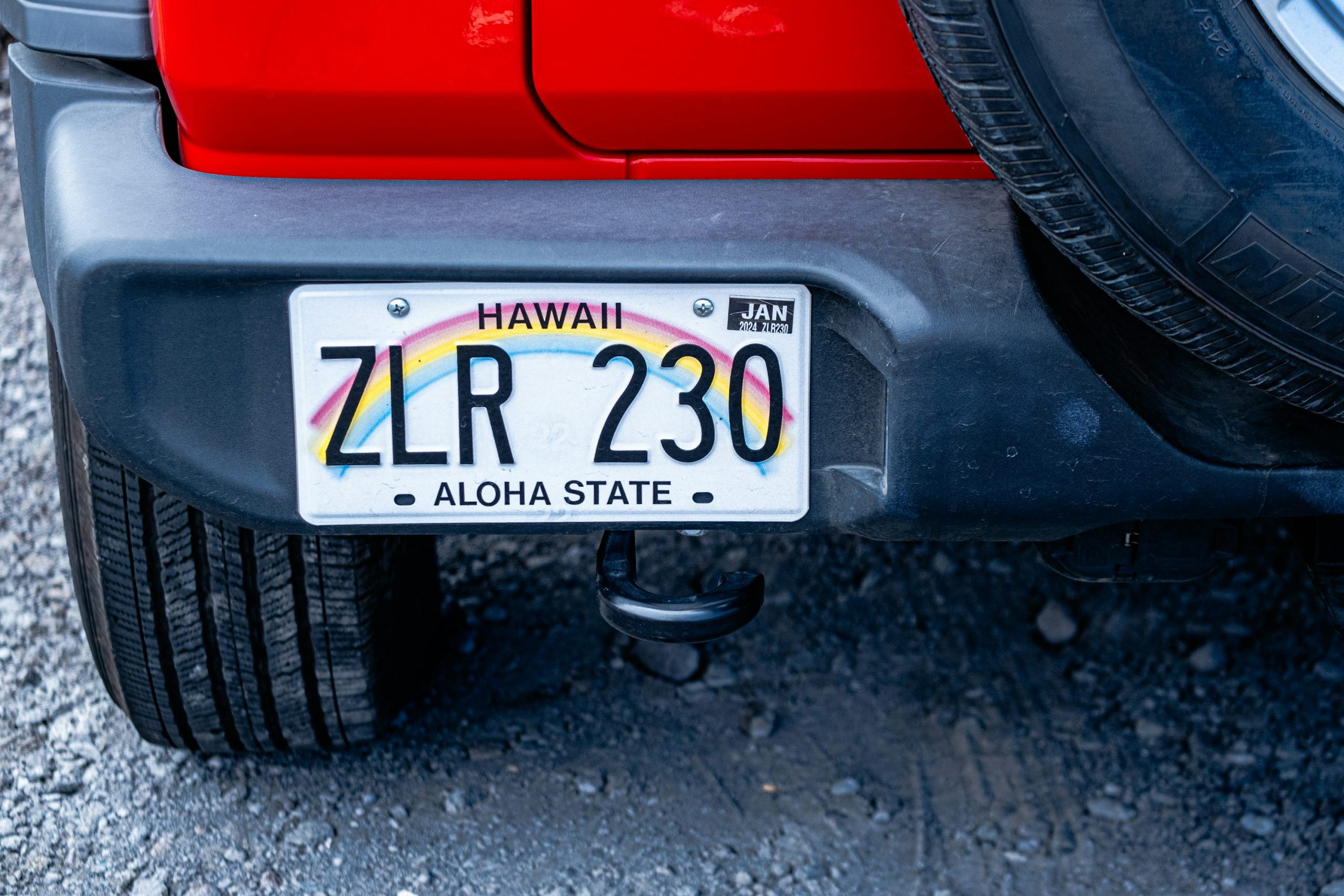
License plate covers may seem like harmless accessories, protecting registration plates from dirt, scratches, and weather damage. However, what appears to be a simple vehicle modification can create legal trouble in several parts of the United States.
State laws regulate how license plates must be displayed, including their visibility, readability, positioning, and use of tinted or reflective materials.
Some states specifically restrict certain types of covers, while others prohibit anything that interferes with law enforcement cameras or an officer’s ability to identify a vehicle. Here are eight states where drivers should pay close attention before installing a license plate cover.
1. California: Even Transparent License Plate Covers Can Cause Problems
California has some of the stricter rules in the country when it comes to license plate visibility. Drivers who install protective covers should understand that a product advertised as clear, transparent, or camera-friendly does not automatically make it legal.
Under California Vehicle Code Section 5201, registration plates must remain clearly visible and readable. Materials or objects that obstruct or impair the ability to read a plate can violate these requirements.
Unlike some states that only restrict tinted or reflective license plate covers, California takes a stricter approach by banning even completely transparent plastic covers, as noted by the National Conference of State Legislatures.
This means drivers should not assume that a completely clear cover is acceptable simply because it does not noticeably darken the plate.
The concern extends beyond ordinary visual inspection. License plates are used by law enforcement officers, toll collection systems, and other authorized electronic identification equipment.
A cover that creates glare, reflections, distortion, or another visual barrier can interfere with these systems. California also regulates products specifically designed to obscure or defeat license plate recognition.

Drivers can avoid potential issues by removing aftermarket license plate covers altogether instead of risking whether a specific material meets legal requirements. Decorative frames are generally a separate consideration, provided they do not block or make any part of the plate difficult to read.
California is particularly important for motorists who purchase accessories online. A product being marketed as a protective or anti-dirt accessory does not establish that it complies with state law. Before installing anything around a registration plate, drivers should check the applicable requirements instead of relying on a seller’s description.
2. New York: Glass and Plastic Plate Covers Are Prohibited
New York takes a particularly direct approach to license plate covers. Under Section 402 of the New York Vehicle and Traffic Law, registration plates must remain clean and easily readable, and they cannot be covered by glass or plastic material.
This restriction is important because it does not simply target dark-tinted or reflective accessories. A transparent plastic cover can also fall within the prohibition.
The rules became even more explicit on September 1, 2024, when amendments introduced through Part WW of Chapter 56 of the Laws of 2024 took effect. The revised law specifically prohibits glass and plastic coverings, as well as materials resembling an unauthorized registration plate.
It also addresses the sale and distribution of devices intended to obscure plate numbers or identifying marks.
New York’s approach reflects the importance of reliable vehicle identification. Police officers need to recognize registration numbers during traffic stops, while automated systems depend on readable plates for toll collection and traffic enforcement.
A cover that distorts a photographed plate can create problems even when a driver believes the characters remain visible in ordinary daylight.

The financial consequences are worth considering. Under Section 402(8), violations involving prohibited coverings or obscuring materials can carry fines ranging from $50 to $300. The law also provides for the seizure and confiscation of certain prohibited glass or plastic coverings that obscure plate readability.
New York drivers should therefore avoid aftermarket glass and plastic plate protectors altogether. Choosing a transparent product instead of a tinted one does not provide a reliable legal workaround. A simple decorative frame that leaves the plate unobstructed is a much safer option than installing a full-face cover.
3. Texas: Clear and Tinted Covers Can Both Lead to a Citation
Texas drivers should be careful when purchasing aftermarket license plate protectors because the state’s law addresses more than just dark or reflective covers.
Under Section 504.945 of the Texas Transportation Code, a vehicle cannot display a registration plate with a coating, covering, protective substance, or other material that distorts its angular visibility or detectability, obscures at least half of the state’s name, or alters, covers, or obscures the plate’s letters, numbers, or color.
This is an important distinction. A transparent cover is not automatically legal simply because someone can read the registration number while standing directly behind the vehicle. If the material interferes with visibility from different angles or covers identifying details, it can create a violation.
The financial consequences can also be significant. An ordinary violation under the relevant provisions can carry a fine of up to $200. However, a violation involving material that alters, covers, or obscures the plate’s letters or numbers can carry a fine of up to $300.
That amount can increase to $600 for a subsequent conviction, while two or more previous convictions can elevate the offense to a Class B misdemeanor.

Texas law also provides a possible dismissal route for certain violations if the driver corrects the defect before the first court appearance, pays a reimbursement fee of up to $10, and satisfies the statutory registration requirements.
Motorists should avoid license plate covers that alter the plate’s appearance or make it harder to identify. Even accessories advertised as protective solutions should be checked carefully before being installed.
4. Florida: Obscuring Devices Can Bring More Than a Traffic Ticket
Florida has strengthened its approach to license plate obstruction, making it particularly important for drivers to understand the difference between an ordinary decorative frame and an actual obscuring device.
Under Florida Statute 320.061, motorists cannot attach a substance, reflective material, illuminated device, spray, coating, or covering that interferes with the legibility, visibility, or detection of their registration plate.
The state introduced another significant measure through Senate Bill 1662, enacted as Chapter 2025-36. Effective October 1, 2025, Section 320.262 specifically prohibits license plate obscuring devices.
Its definition includes devices designed to cover a plate, interfere with its readability, distort its visibility, or prevent cameras and other systems from recording identifying details.
The penalties depend on the conduct involved. Knowingly violating Section 320.061 is a second-degree misdemeanor.
Purchasing or possessing a prohibited obscuring device under Section 320.262 is also a second-degree misdemeanor, while manufacturing or selling one is a first-degree misdemeanor. Using such a device to assist in committing a crime or avoiding detection can result in a third-degree felony.

There is an important distinction for ordinary accessories. A decorative frame is not automatically illegal under Section 320.061 if it leaves the required identifying information visible. However, drivers should not assume that every product sold as a plate protector qualifies for that exception.
Florida law requires license plates to remain clearly visible and recognizable to both individuals and automated recording systems. For this reason, drivers should steer clear of tinted, reflective, electronic, or obstructive covers that could affect the plate’s visibility or readability.
5. Pennsylvania: Tinted License Plate Covers Are Specifically Illegal
Pennsylvania drivers need to pay attention to a rule that specifically targets tinted license plate covers. Under Title 75, Section 1332(b) of the Pennsylvania Consolidated Statutes, it is unlawful to display a registration plate that is dirty enough to prevent identification, illegible, obscured, covered, or obstructed in ways that interfere with automated enforcement systems or electronic toll collection.
The law also expressly prohibits tinted plate covers. This means motorists cannot assume that a lightly tinted cover is acceptable simply because the registration number remains visible in normal daylight.
A cover might look harmless from a short distance but still create problems for automated cameras, particularly when sunlight, headlights, or different viewing angles affect the recorded image.
Pennsylvania does make an important distinction between a prohibited cover and a properly designed decorative frame. Section 1332(b.1) clarifies that a frame that minimally outlines the registration plate is not prohibited, provided the plate number and issuing jurisdiction remain identifiable to law enforcement and automated enforcement systems.
Drivers can therefore personalize the area around their plates without necessarily covering the actual registration information.

The financial consequences also deserve attention. Under Section 1332(c), violations involving interference with automated enforcement systems under subsection (b)(2), or obstruction of the issuing jurisdiction under subsection (b)(4), carry a $100 fine upon conviction. This specific penalty should not be confused with a universal fine for every type of plate-cover violation.
For Pennsylvania motorists, the sensible decision is to avoid tinted covers entirely. A clear, unobstructed registration plate with a minimally designed frame is a much safer choice than an accessory that could interfere with identification.
6. Illinois: License Plate Covers Are Prohibited, Even If They Are Clear
Illinois has adopted an especially straightforward approach to license plate covers. Under Section 3-413(g) of the Illinois Vehicle Code, a person cannot operate a motor vehicle equipped with registration plate covers.
Unlike states where the law focuses primarily on tinted, reflective, or obstructive materials, Illinois prohibits the use of plate covers themselves.
This distinction matters because drivers sometimes believe that switching from a dark plastic cover to a transparent one will solve the legal problem. In Illinois, that assumption is incorrect. The restriction is not limited to covers that make a plate difficult to read. A clear protective cover can also violate the law.
The state has also established rules concerning the sale and advertising of these accessories. Section 3-413(h) prohibits selling or offering registration plate covers for sale, while subsection (i) prohibits advertising them to promote their sale. These provisions demonstrate that Illinois is addressing the availability of the accessories as well as their use on vehicles.
There is another important part of the law that drivers should understand. Section 3-413(j) makes it a Class A misdemeanor to modify the original manufacturer’s rear plate mounting location to conceal registration information or knowingly obstruct it to hinder a peace officer.
The provision specifically includes electronic devices among the methods that can be prohibited.

Illinois drivers are better off removing aftermarket license plate covers instead of assuming they are legal based on their transparency or advertised features. Decorative frames may be acceptable as long as they do not cover the plate itself or block any registration details.
For anyone moving into Illinois from another state, this is an important detail to check before transferring vehicle accessories. A cover that was permitted elsewhere may not be legal on an Illinois-registered vehicle.
7. Virginia: License Plate Covers Cannot Alter the Plate’s Appearance
Virginia drivers are allowed to use certain license plate frames and accessories, but the law draws a clear line when those products change or obscure identifying information. Under Virginia Code Section 46.2-716, every registration plate must be securely attached, clearly visible, and legible.
The statute specifically prohibits colored glass, colored plastic, brackets, holders, mounting equipment, frames, and other coverings if they alter or obscure important plate information.
The details matter because Virginia’s restriction goes beyond hiding letters and numbers. A covering can also create a violation if it changes the plate’s original color, obscures the state name, or interferes with the registration expiration decal or other identifying marks.
Therefore, a tinted cover that appears relatively transparent in daylight can still be problematic if it changes the plate’s appearance.
However, this does not mean every decorative frame is automatically illegal. The law focuses on whether the accessory alters or obscures the specified information. A frame that leaves the registration number, state identification, plate colors, and expiration markings completely unobstructed is less likely to create a violation.

Virginia also offers an important opportunity for motorists who receive a summons. Under subsection D of Section 46.2-716, a court has discretion to dismiss the summons if the driver provides proof of compliance with the law on or before the court date. This is not an automatic dismissal, but it allows motorists to correct the problem.
The practical advice is to avoid colored or tinted covers and choose accessories that do not overlap the plate’s identifying details. Drivers should also inspect their registration decals because a frame that hides even a small part of the expiration information can create unnecessary legal trouble.
8. New Jersey: Even License Plate Frames Can Result in a Fine
New Jersey has specific requirements governing license plate frames and covers, and drivers should not assume that an accessory is acceptable simply because it does not hide the registration number.
Under New Jersey Statute 39:3-33, a plate frame or identification marker holder cannot conceal or otherwise obscure any marking imprinted on the registration plate or an official insert issued by the Motor Vehicle Commission.
This rule is particularly important for motorists who purchase decorative frames online. Some frames cover the edges of the plate, including parts of the state name, slogan, registration characters, or other printed details.
The New Jersey Supreme Court addressed this issue in State v. Carter in 2021, explaining that the relevant question is whether a marking remains reasonably identifiable. A frame does not necessarily violate the law simply because it covers a small portion of a marking if that information remains recognizable.
The New Jersey Motor Vehicle Commission explains that motorists using a cover or holder that obscures or conceals lettering can face a fine of up to $100. This makes even relatively inexpensive accessories a potential source of unnecessary expense.

New Jersey has also considered stronger legislation targeting intentionally obstructed plates, including tinted and blackout covers, reflective sprays, and retractable holders. However, proposed legislation must be distinguished from an enacted law, so motorists should check the current statutory position rather than assuming every proposed penalty has taken effect.
For everyday drivers, the safest choice is a simple frame that leaves every registration character and printed marking identifiable.
Avoid tinted covers, reflective materials, and accessories that interfere with camera recognition. A small styling modification is not worth risking a traffic citation or creating difficulties when passing through toll facilities.