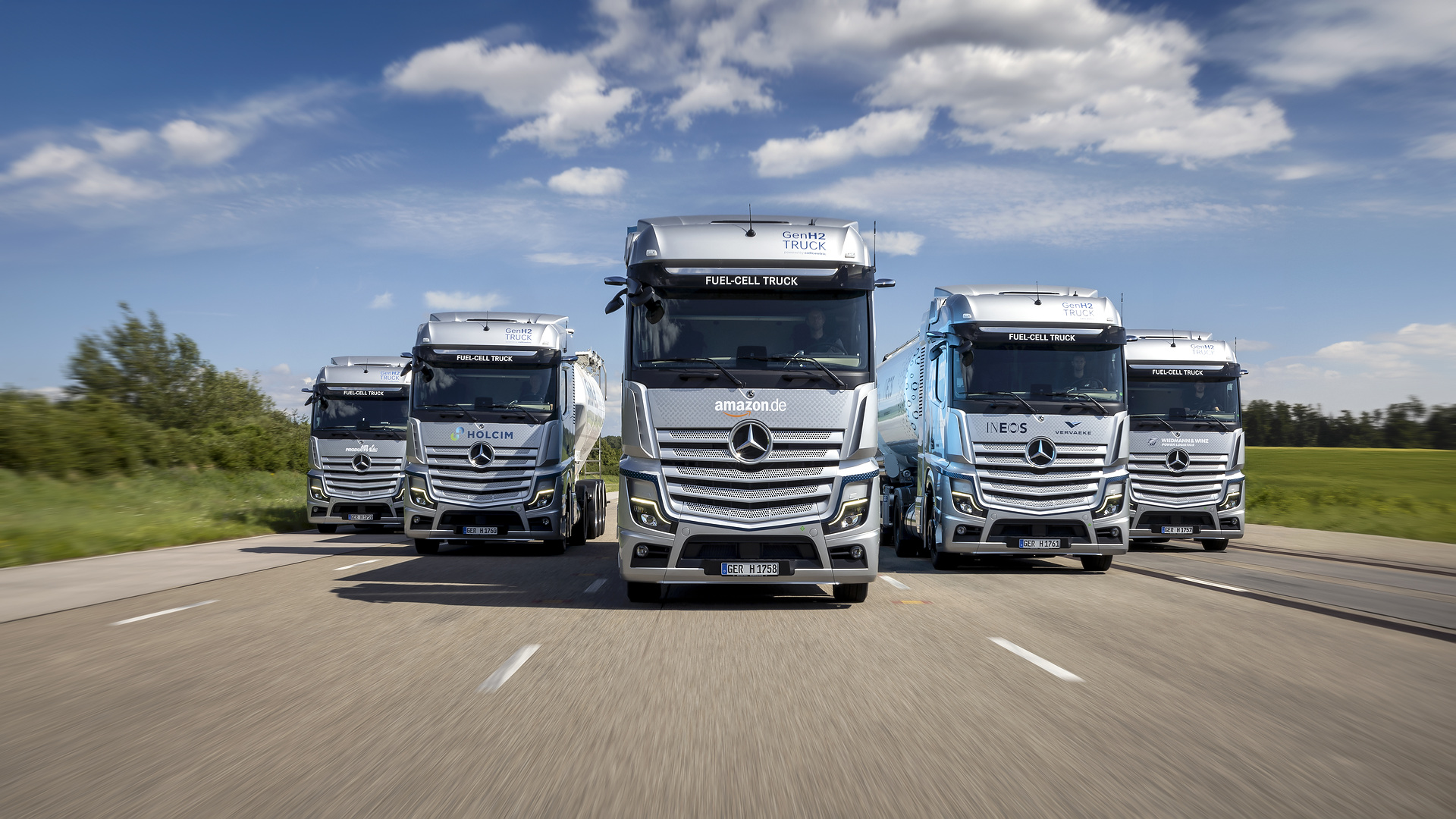
Daimler Truck delivered a sharp improvement in third-quarter profitability as stronger sales and higher earnings from its North American business helped lift the manufacturer’s financial results.
The German truckmaker reported adjusted operating profit of €1.12 billion for the July-to-September period, a 73% increase compared with the same quarter in 2025. Trucks North America was the biggest contributor, with operating profit rising substantially as vehicle sales recovered.
However, the results were not entirely positive. New orders fell short of analyst expectations, particularly in North America, raising questions about how easily the company can maintain its improved margins in 2027. The figures offer a useful snapshot of the uneven recovery taking place across the commercial vehicle industry.
North America Drives Daimler Truck’s Profit Rebound
Daimler Truck reported adjusted group earnings before interest and taxes (EBIT) of €1.124 billion in the third quarter of 2026, compared with €648 million during the same period a year earlier.
Industrial business revenue increased 20% to €11.635 billion, up from €9.695 billion. The adjusted return on sales for the industrial business also improved to 9.1%, compared with 6.2% in the third quarter of 2025.
The strongest performance came from Trucks North America, which includes Daimler’s major commercial vehicle operations in the United States, Canada, and Mexico. The division recorded 45,629 vehicle sales during the quarter, a 51% increase from 30,225 units a year earlier.
Revenue climbed 43% to €5.704 billion, while adjusted operating profit increased 169% to €691 million. Its adjusted operating margin improved to 12.1%, compared with 6.4% in the previous year’s third quarter.
These results indicate that the North American business has moved beyond the weaker conditions experienced during the same period in 2025. At that time, reduced freight activity and uncertainty surrounding U.S. import tariffs weighed on truck demand.
The improvement in 2026 reflects stronger vehicle volumes and better profitability, allowing the division to make a much larger contribution to Daimler Truck’s consolidated earnings.
North America is particularly important to the company because it is one of its largest commercial vehicle markets by revenue. Its portfolio includes Freightliner and Western Star trucks, which serve a wide range of customers, from regional delivery operators to long-haul transportation companies and vocational fleets.
Demand in this market is influenced by freight volumes, fleet replacement cycles, financing costs, and the financial health of trucking businesses.
The improvement was not limited to North America. Mercedes-Benz Trucks reported revenue of €5.363 billion, up 10% year over year, while adjusted EBIT increased 6% to €337 million. Its adjusted operating margin was 6.3%, slightly below the 6.5% recorded in the third quarter of 2025.
Daimler Buses, by contrast, experienced lower sales and revenue, with unit sales declining 16% to 5,394 vehicles.
Higher Sales Come Alongside Weaker-Than-Expected Orders
Although the third-quarter profit figures were strong, the order situation presented a more complicated picture. Daimler Truck received 71,168 new orders across its businesses, an increase of 10% from 64,412 in the third quarter of 2025. However, the result was 9% below analyst consensus compiled by Visible Alpha.
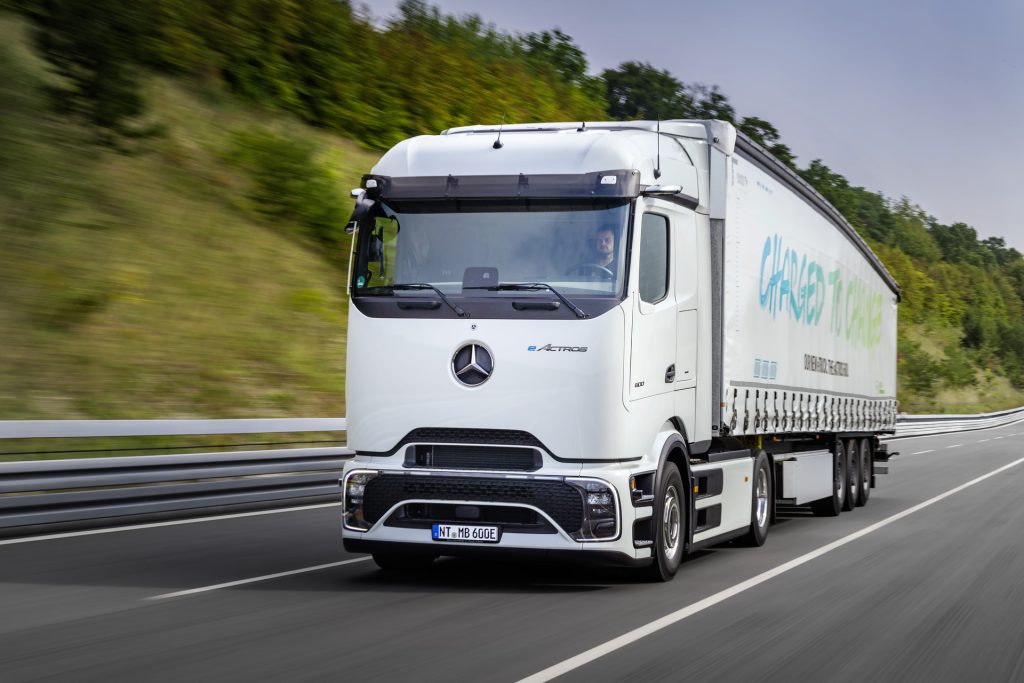
North American orders were particularly disappointing, falling 16% short of expectations despite increasing 12% year over year to 29,357 vehicles.
The distinction between sales and incoming orders is important for commercial vehicle manufacturers. Sales represent vehicles delivered during a particular period, while orders indicate demand for vehicles that customers intend to purchase.
Strong deliveries can reflect orders secured months earlier, so a rise in quarterly sales does not necessarily mean demand will remain equally strong in the following quarters.
Daimler Truck’s North American division illustrates this difference. It sold 45,629 vehicles in the third quarter, compared with 30,225 a year earlier. Its incoming orders reached 29,357, up 12% from 26,168.
That is positive growth, but the gap between actual orders and analyst expectations suggests that the market’s recovery may not be developing as quickly as some investors anticipated.
The wider trucking industry faces several factors that influence fleet purchasing decisions. Freight companies need sufficient transportation demand to justify buying additional vehicles.
When freight rates are weak or operating expenses increase, fleet operators may postpone replacement purchases or extend the time they keep existing trucks. Higher interest rates can also make new commercial vehicles more expensive to finance.
Fuel prices, driver availability, maintenance expenses, and regulatory requirements add further pressure. A trucking company considering a new vehicle must evaluate its expected operating costs over several years, not simply the initial purchase price. This can make fleet purchasing decisions more cautious even when freight activity begins to improve.
Daimler Truck’s third-quarter figures also show that the recovery is not uniform across its businesses. Mercedes-Benz Trucks achieved moderate revenue and profit growth, while Daimler Buses recorded lower unit sales and adjusted operating profit.
The bus division sold 5,394 vehicles, down from 6,443 a year earlier, and revenue declined 4% to €1.343 billion. Its adjusted EBIT fell 10% to €123 million.
For Daimler Truck, the North American performance was therefore the central driver of the quarterly improvement. The challenge is to convert stronger deliveries into a sustainable stream of new orders, rather than relying on a temporary increase in shipments.
What the Results Mean for Daimler Truck’s 2027 Outlook
Despite the stronger third-quarter performance, Daimler Truck maintained its full-year 2026 guidance. The company continues to expect an adjusted return on sales of 7% to 9% for its industrial business.
Its management has emphasized improved earnings, cash generation, and operational discipline, while acknowledging that market conditions remain different across regions and business segments.
One important indicator was free cash flow. Daimler Truck’s Industrial Business generated €974 million in free cash flow during the third quarter, compared with €24 million in the same period of 2025.
The improvement reflected stronger operating earnings and proceeds from the partial sale of the company’s ARCHION stake. The contribution from that transaction means the increase should not be interpreted as coming entirely from ordinary truck operations.
The company also reported that group unit sales increased 26% to 91,260 vehicles, compared with 72,277 a year earlier. Revenue from the Industrial Business rose to €11.635 billion. However, the year-to-date figures show why the third quarter needs to be viewed in context.
Adjusted group EBIT for the first nine months of 2026 was €2.460 billion, down 10% from €2.748 billion during the corresponding period of 2025. The quarterly rebound has therefore not yet erased the earlier weakness.
Management has expressed a positive view of the 2027 truck-market outlook. CEO Karin Rådström said demand had improved throughout 2026 despite elevated inflation, higher interest rates, and diesel prices.
Finance chief Eva Scherer also indicated that Trucks North America was exiting 2026 at an operational margin of around 10%. However, she cautioned that this was an indication of the business’s exit position, not formal guidance for its 2027 profitability.
That distinction is important because investors are looking for evidence that North America’s improved profitability can continue. Analysts have questioned whether the division can reach the market’s expected 2027 operating margin of approximately 11.5%.
Achieving that level would require further improvement from the roughly 10% exit rate discussed by management. The weaker-than-expected order intake adds uncertainty to that calculation because future production and deliveries depend on continued customer demand.
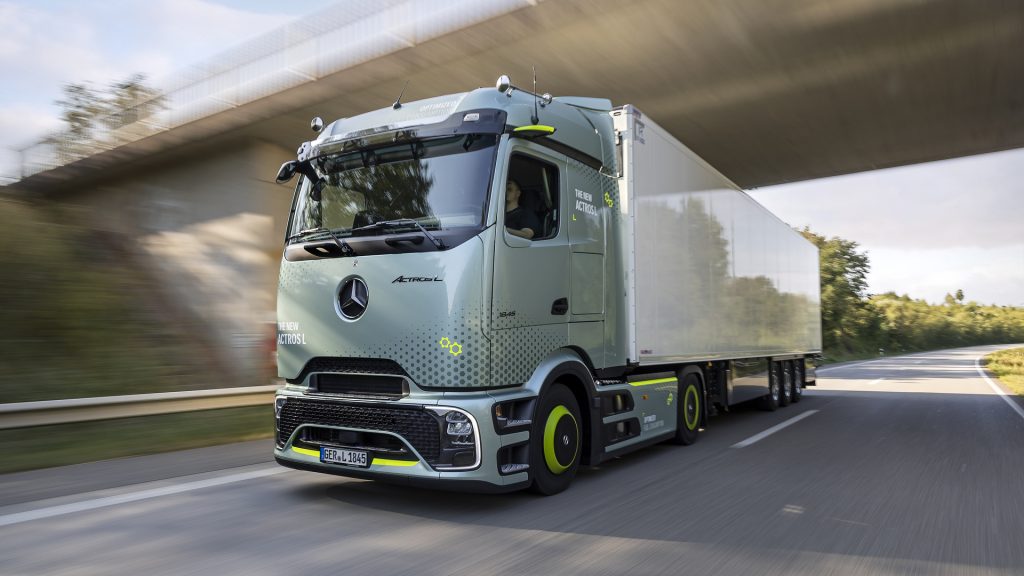
The market reaction reflected those concerns. Daimler Truck shares fell as much as 8.3% in early trading following the results before recovering some of the decline. Investors appeared to focus not only on the 73% profit increase but also on the order shortfall and the difficulty of sustaining North American margins into the next year.
For the commercial vehicle industry, Daimler Truck’s results highlight how quickly regional conditions can influence a global manufacturer’s financial performance.
North American sales and profitability improved significantly, but the order figures suggest that fleet demand still needs to strengthen further. European truck operations delivered more moderate growth, while the bus business faced lower volumes.
Daimler Truck’s third-quarter results demonstrate a substantial recovery in profitability, led by North America, but they do not yet establish that the improvement will continue at the same pace. The company’s next challenge is to turn stronger deliveries into a healthier order pipeline and maintain operating margins as it enters 2027.