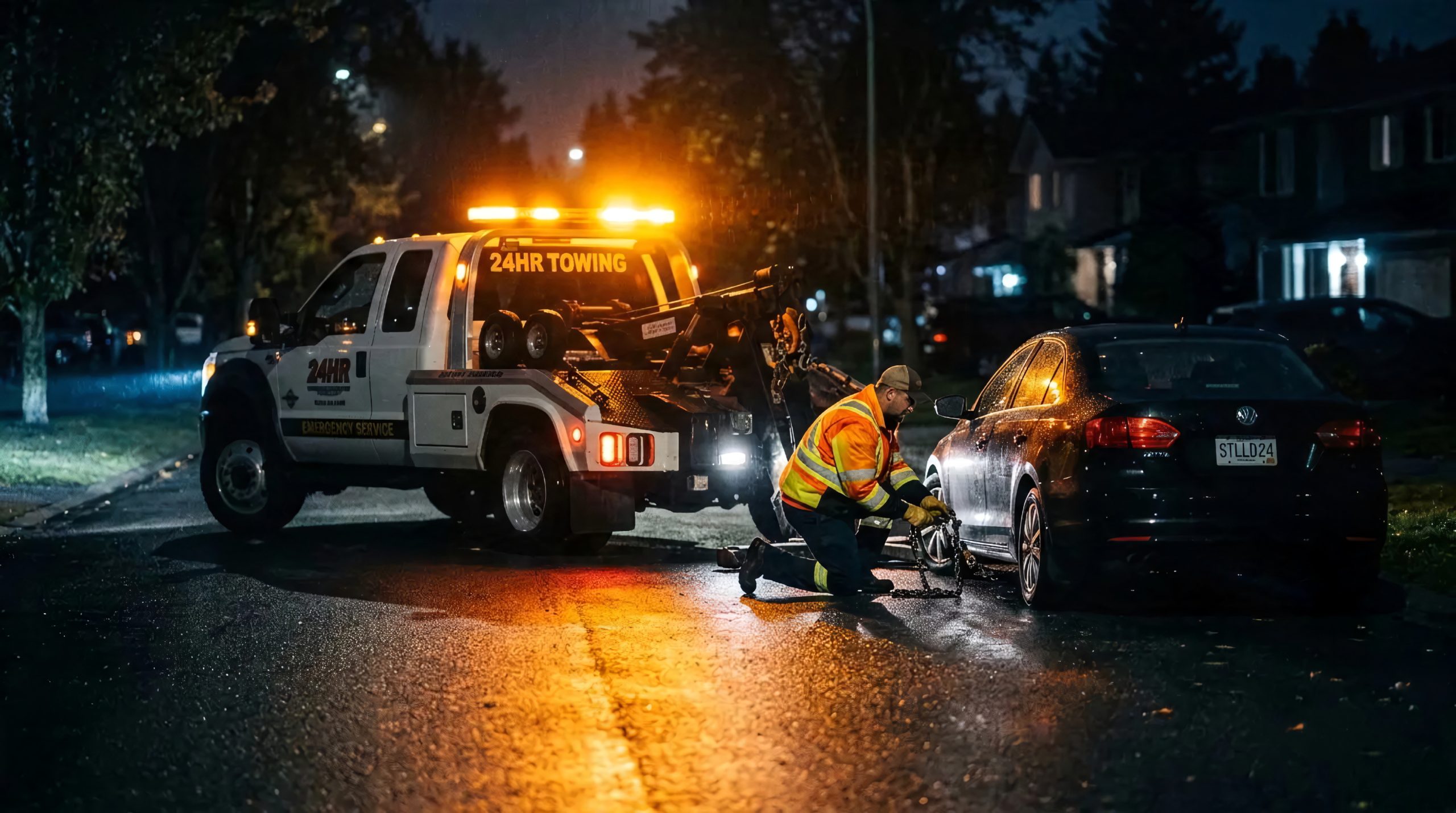
A tow truck doesn’t care what day it is, but its invoice does. Call a company at 2 p.m. on a Tuesday and you’ll probably get a calm dispatcher, a truck within half an hour, and a bill that matches the rate card. Call the same company at 8 p.m. on Thanksgiving and the same truck, the same driver, and the same ten miles can cost you double.
Most drivers never see this coming because tow pricing sits in a corner of the market nobody shops until they have to. Nobody compares rates while the car still runs. So here’s how a tow is priced, what a holiday adds, and how to avoid paying the most expensive version of a service you could have bought for much less.
How a Normal Tuesday Tow Gets Priced
Before considering holiday surcharges, it’s worth understanding what a typical towing bill includes. Most standard towing services charge two main fees: an initial hook-up fee and a mileage rate. The hook-up charge covers dispatching the truck, providing the equipment, and the driver’s time to secure your vehicle.
Depending on your location, this fee generally ranges from $75 to $150. After that, the company adds a per-mile charge, typically between $3 and $7, although some providers include the first few miles in their initial rate.
Those are ballpark numbers, and they shift by region. A city with heavy competition tends to run cheaper than a rural county with one operator for fifty miles. Some towns and states regulate rates, but mostly for police-ordered tows and private-property impounds. When you call a company yourself from the side of the road, you’re usually in open market territory, and the price is whatever the company quotes and you accept.
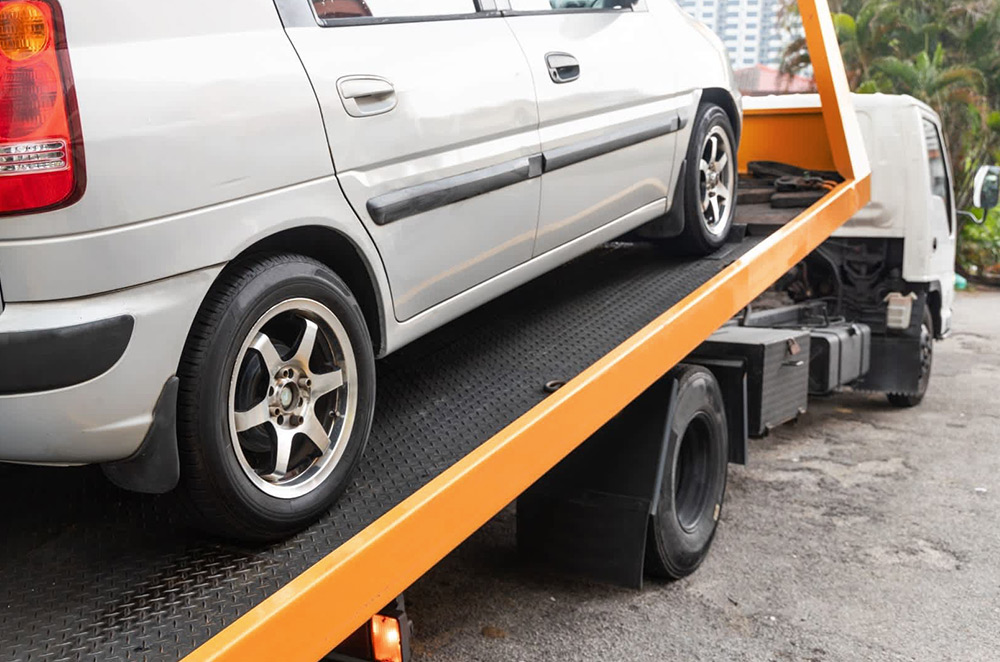
Then come the add-ons. A flatbed costs more than a wheel-lift truck. All-wheel-drive and electric vehicles often need a flatbed, which means you can’t always choose the cheaper truck. If your car is in a ditch, a parking garage, or a muddy shoulder, the company may charge for winching or recovery on top of the tow itself. Some add a fee for waiting if you’re slow to arrive or the car isn’t accessible.
On a regular Tuesday, though, the market behaves. Trucks are available, drivers are on their normal shifts, and the dispatcher has no reason to price you at the top of the range. If the first company quotes too high, you call the second one, and the second one knows you might. That mild pressure keeps prices honest. A weekday tow for a 15-mile trip often comes in around $150 to $200, and nobody feels cheated.
That competition is the thing a holiday takes away.
What a Holiday Does to the Bill
On Thanksgiving weekend, the same system runs under different conditions. Demand goes up, since millions of people are driving long distances at once. Supply goes down, since drivers want the day off, and the ones who work expect to be paid for it. Operators handle that squeeze by raising prices, and customers have almost no leverage.
The most common move is a holiday surcharge. Some companies add a flat amount, often somewhere around $50 to $150. Others raise the hook-up fee or push the per-mile rate up by a dollar or two. After-hours and weekend charges can stack on top, so a call at 9 p.m. on Black Friday can collect three separate add-ons before the truck leaves the yard.
That isn’t always greed. Paying a driver holiday wages to sit on a highway shoulder costs real money, and plenty of small operators price accordingly. But it still reaches you as a bill, and the variation between companies can be huge.
Wait time matters too, though it doesn’t show up as a line item. On a normal weekday, a truck can reach you in 30 to 45 minutes. On a heavy travel day, an hour and a half is common, and in rural areas it can stretch to several hours. If you’re standing next to a highway in the cold with kids in the car, that wait feels like its own cost, and some people pay extra just to get a faster truck.
Distance quietly makes things worse. On a Tuesday, you tow to the shop you trust, maybe four or five miles away. On a holiday, that shop is closed, so you start looking for one that’s open. The nearest one might be 30 or 40 miles out, and you pay the per-mile rate for every one of them, at the holiday per-mile rate. This is the part that turns a bad day into an expensive one. The holiday rate and the longer trip multiply each other.
Finally, there’s the destination trap. Some drivers panic and tell the dispatcher to take the car anywhere. The truck drops it at the company’s own yard, the gate gets locked, and the car sits there collecting daily storage fees, often $40 to $75 a day, until a shop opens on Monday. You paid for the tow, and now you’re paying for the parking, too.
The Same Breakdown, Two Calendars
Numbers make this easier to see. The figures below are illustrative, not quotes, and your own prices will depend on where you are and who you call. But they show how the pieces compound. Same car, same failure, same starting point. The only change is the calendar.
| Tuesday afternoon | Thanksgiving night | |
|---|---|---|
| Distance to shop | 15 miles | 40 miles (nearest open shop) |
| Hook-up fee | $95 | $95 |
| Holiday surcharge | none | $75 |
| After-hours charge | none | $50 |
| Per-mile rate | $4 | $6 |
| Mileage cost | $60 | $240 |
| Total | $155 | $460 |
| Typical wait | 30–45 minutes | 90 minutes or more |
That’s a tow that costs about three times as much, and it doesn’t include storage if the car lands in a yard over the weekend. Add two nights of storage at $50 a day and the tow bill reaches $560 before anyone has touched the car.
Look at where the extra money came from. Only $125 of the gap comes from the surcharge and after-hours fees, the stuff people think of as holiday pricing. The larger share, about $180, comes from distance at a higher rate. That’s the piece most drivers don’t anticipate. It’s not a rip-off in the usual sense. It’s the cost of the closest open shop being farther away, and it’s built into the situation.
This also explains why your instinct to “just get it towed home” can backfire. If home is 50 miles away, you might pay more to tow the car there than the repair itself would cost, and then still have to wait for a shop that’s open on Monday. Sometimes the smarter move is a shorter tow to a nearby lot or shop, with a plan to deal with the repair once the world reopens.
None of this means holiday tows are always a ripoff. Some companies hold their prices steady, and some cut a fair deal to a stranded family. The point is that you can’t assume, and you can’t compare after the fact. The price you accept on the shoulder is the price you pay.
How to Pay Less When You Can’t Pick the Day
You can’t choose when your car breaks down, but you can control a surprising amount of what happens next. The biggest savings come before you call anyone.
First, check what coverage you already have. Roadside assistance can come from an auto club, your car insurer, your credit card, or the manufacturer, and it’s common to find two or three of those at once.
People routinely pay full price for a tow they were already entitled to. Look at the mileage limits, because many plans cover only the first few miles or cap the total. If your coverage handles 15 miles and the nearest open shop is 40, you’ll owe the difference, but that beats owing the whole thing.
Second, ask three questions before you agree to anything. What’s the total price, including hook-up, mileage, and any holiday or after-hours charges? When will the truck realistically arrive? And is the destination open, staffed, and able to take the car right now?
A decent dispatcher answers all three without making you feel like a nuisance. If someone dodges the price or stays vague about timing, say thanks and call the next company. Two minutes on the phone can save a hundred dollars.
Third, get it in writing. A text message with the quote is enough. Vague verbal numbers have a way of growing by the time the truck arrives, and a written price gives you something to point to if the final bill looks different. If you can, pay with a credit card, which gives you dispute options a cash payment doesn’t.
Fourth, be careful about where the car lands. If every shop is closed, a tow yard is sometimes the only option, but ask about daily storage fees and gate hours before you say yes.
Find out whether you can retrieve belongings from the car over the weekend. And if a truck shows up that you didn’t call, particularly on a highway, check the company name and licensing before you let anyone hook up your car. Unsolicited tows are a known source of inflated bills.
Finally, keep every receipt. Many insurance policies and credit cards reimburse towing, lodging, or a rental car after a breakdown, and you can only claim what you can document. A five-minute phone call after the weekend can recover real money.
The best preparation takes about ten minutes before you leave. Save your roadside number in your phone, read the towing limit on your plan, and write down the name of one tow company along your route if you’re driving far. That’s usually enough to turn a panicked call into a short, calm one, and calm callers pay less.