
Buying a car involves more than comparing horsepower, fuel economy, interior quality, and technology. Safety equipment deserves just as much attention, particularly when a small additional investment can provide better protection during everyday driving.
Modern vehicles offer advanced driver-assistance systems that can help prevent collisions, reduce the severity of accidents, and make difficult driving situations easier to manage. However, not every expensive technology package delivers equal value.
Some features provide meaningful safety benefits, while others are primarily convenience upgrades. These seven safety features are worth considering when choosing your next vehicle in the American market.
1. Automatic Emergency Braking With Pedestrian Detection
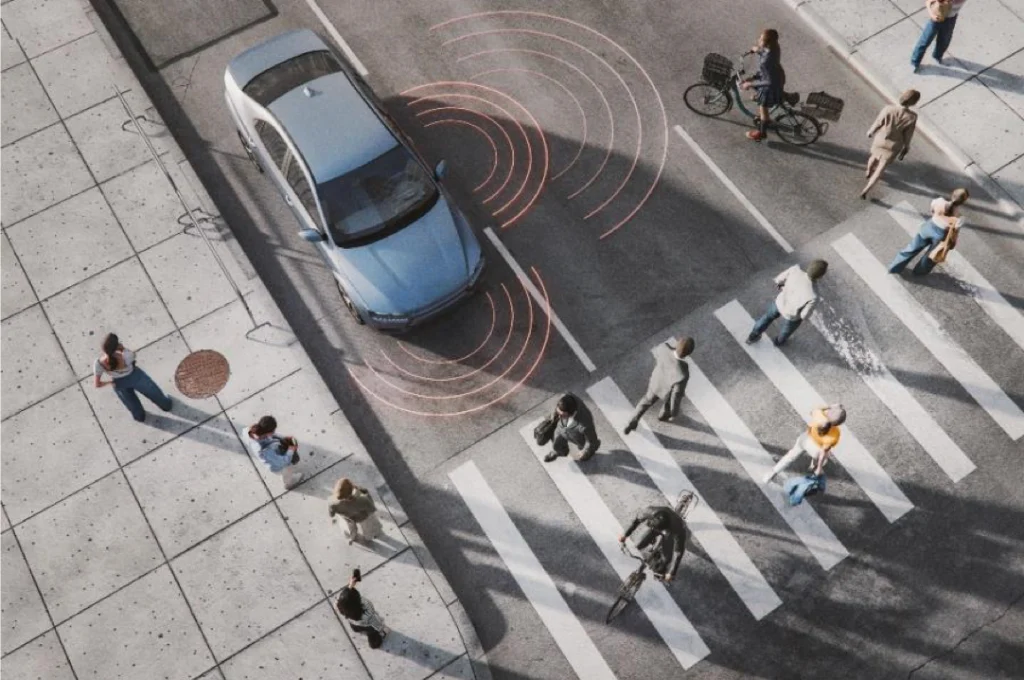
If there is one optional safety technology worth prioritizing when buying a vehicle, automatic emergency braking (AEB) should be near the top of your list. This system monitors the road ahead using cameras, radar, or a combination of sensors.
When it detects an approaching collision, it can warn the driver and automatically apply the brakes if the driver does not respond quickly enough.
The pedestrian-detection version adds another important layer of protection. It is designed to recognize people in the vehicle’s path and intervene when a collision appears imminent. This can be particularly valuable in residential neighborhoods, school zones, parking areas, and busy urban streets where pedestrians may suddenly enter the roadway.
There is meaningful US research supporting this technology. An Insurance Institute for Highway Safety (IIHS) study published in 2022 found that vehicles equipped with pedestrian-detecting AEB had 25% to 27% lower pedestrian crash rates. Pedestrian injury crash rates were 29% to 30% lower compared with vehicles without the technology.
However, the system is not perfect. The same research found no demonstrated reduction in pedestrian crashes occurring in darkness without street lighting, at speed limits of 50 mph or higher, or while the equipped vehicle was turning. Performance also varies between manufacturers and vehicle models.
When comparing vehicles, check whether AEB includes pedestrian detection rather than assuming every forward collision warning system can brake automatically. Look for independent IIHS evaluations and verify which operating conditions the system supports.
This feature cannot replace attentive driving, but its ability to intervene during a moment of distraction makes it a worthwhile investment.
2. Blind Spot Monitoring With Active Intervention
Changing lanes on a crowded American highway can be surprisingly risky, particularly when another vehicle is traveling beside you in an area that is difficult to see using conventional mirrors.
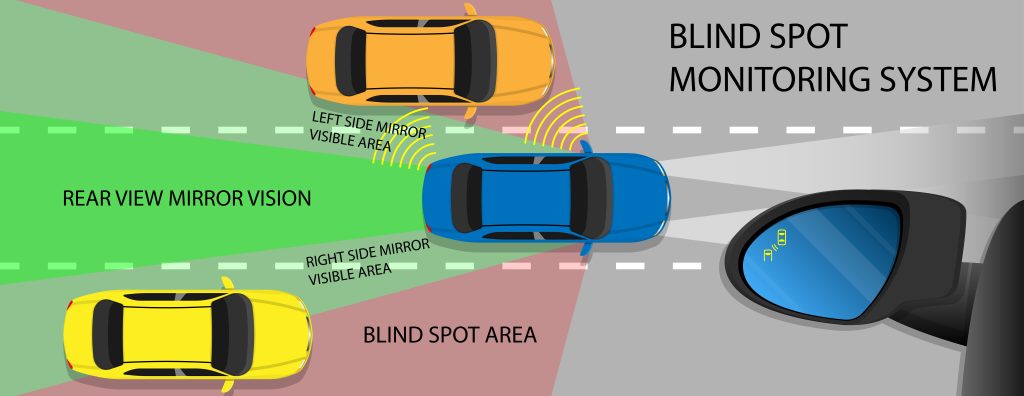
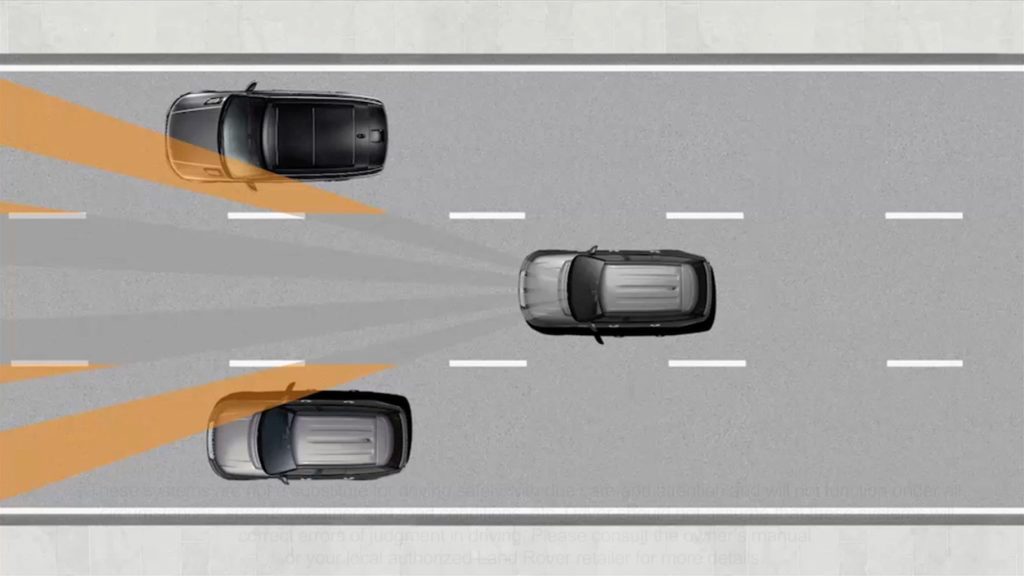
Blind spot monitoring helps address this problem by using sensors, usually mounted near the rear corners of the vehicle, to detect traffic approaching or occupying adjacent lanes.
When the system identifies a vehicle in the blind spot, it typically illuminates a warning indicator in the corresponding side mirror or near the driver’s field of view. Some systems also provide an audible alert when the driver activates the turn signal. More advanced versions can intervene with steering or braking if a collision becomes likely.
The distinction between warning-only monitoring and active blind spot intervention is important. A warning system informs you that another vehicle is nearby, while an intervention system may help prevent an unsafe lane change. If you are paying extra for this technology, check exactly which functions are included.
The IIHS reports that blind spot detection reduces lane-change crash rates by approximately 14%. Its research also associates the technology with lower insurance claim rates involving injuries and damage to other vehicles. These findings make it particularly relevant for drivers who regularly travel on multilane highways or navigate heavy urban traffic.
Before choosing a vehicle, check whether the system detects motorcycles as well as passenger cars. Sensor coverage and detection capabilities vary between manufacturers. Also determine whether the warning remains active at highway speeds and whether the system can identify approaching traffic quickly enough to be useful.
Blind spot monitoring is not a substitute for checking mirrors and looking over your shoulder before changing lanes. However, an additional warning when another vehicle is difficult to see can provide valuable protection against a potentially serious sideswipe collision.
3. Rear Automatic Emergency Braking
Backing out of a driveway or parking space can be more dangerous than many drivers realize. Pedestrians, children, cyclists, shopping carts, and vehicles can enter the area behind a car while the driver is concentrating on mirrors and the backup camera.
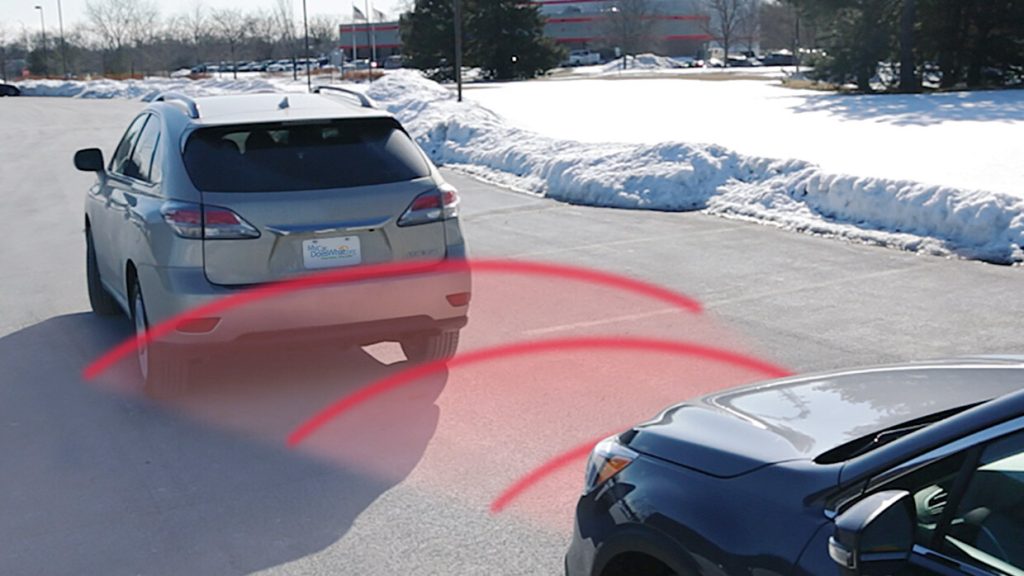
Rear automatic emergency braking adds another layer of protection by detecting obstacles and applying the brakes when a collision becomes imminent.
Unlike a conventional rearview camera, which simply displays the area behind the vehicle, this system can actively intervene. Depending on the manufacturer, it uses ultrasonic sensors, radar, cameras, or a combination of technologies to identify nearby obstacles.
If the driver fails to respond to warnings, the vehicle can automatically brake to prevent or reduce the severity of an impact.
This feature is particularly useful for large SUVs, pickup trucks, and vehicles with limited rear visibility. It can also help when reversing into crowded parking spaces where pedestrians and moving traffic may approach from unexpected directions.
Research from the Insurance Institute for Highway Safety identifies rear automatic braking as one of the most effective rear crash prevention technologies. Its studies associate the system with substantial reductions in backing crashes and related insurance claims. The technology has shown stronger benefits than relying on a rearview camera alone.
When comparing vehicles, check whether the system actually applies the brakes or simply provides an audible warning. Some manufacturers offer rear cross-traffic alert as a separate feature, detecting vehicles approaching from either side while reversing. Having both technologies can provide more comprehensive protection.
Remember that sensors can miss certain obstacles, particularly small objects, and their performance may be affected by dirt, snow, or heavy rain. Always check your surroundings before reversing.
If you frequently park in tight spaces, drive a large vehicle, or regularly travel with children, rear automatic braking is a particularly worthwhile option to consider.
4. Lane Departure Warning and Lane Keeping Assistance
Long highway journeys can become tiring, and even attentive drivers occasionally drift toward lane markings because of distraction, fatigue, or momentary lapses in concentration. Lane departure warning and lane keeping assistance are designed to address this problem by monitoring the vehicle’s position relative to the road markings.
Lane departure warning uses a forward-facing camera to identify lane boundaries. If the vehicle begins drifting out of its lane without an activated turn signal, the system can issue an audible, visual, or steering-wheel vibration alert.
Lane-keeping assistance goes a step further by providing corrective steering or applying individual wheel braking to help guide the vehicle back toward its lane.
Although manufacturers sometimes combine these technologies under one package, their functions are not identical. A warning-only system depends on the driver to respond, whereas an active lane-keeping system can provide limited corrective intervention.
The Insurance Institute for Highway Safety reports that lane departure prevention systems reduce the risk of certain single-vehicle, sideswipe, and head-on crashes. Its research also distinguishes these benefits from lane departure warning alone, which has not consistently reduced insurance claim rates.
This distinction matters when comparing expensive technology packages. If you regularly drive on interstate highways, consider a vehicle offering both reliable lane detection and corrective assistance rather than paying extra for an alert that simply makes a sound.
However, lane-keeping systems have limitations. Faded road markings, construction zones, sharp curves, poor weather, and unusual road layouts can affect performance. Some systems also operate only within specific speed ranges.
These technologies should support your attention, not replace it. Keep your hands on the steering wheel, watch the road, and follow the manufacturer’s instructions. A good lane-keeping package can provide useful protection against unintended drifting, particularly during long journeys.
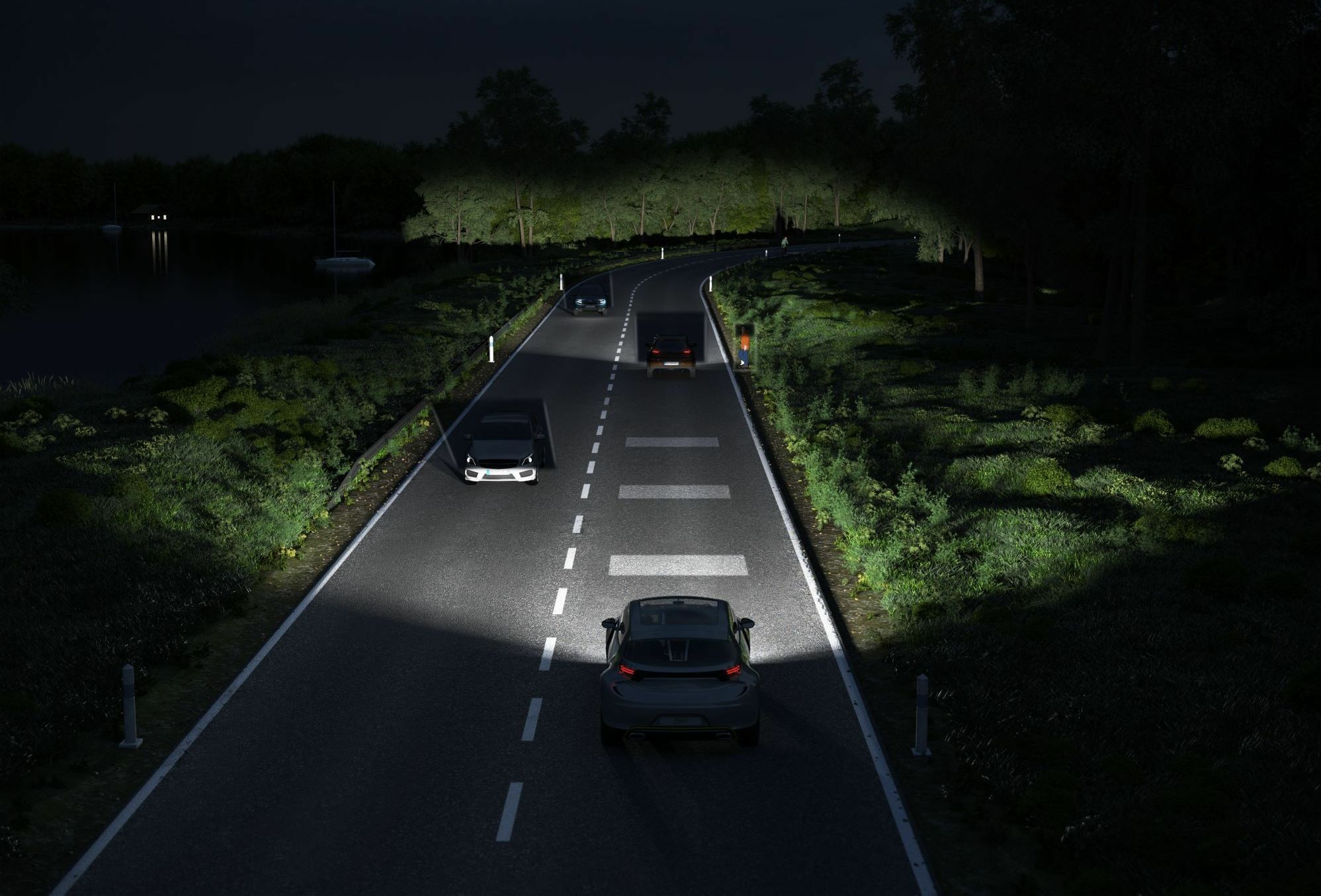
5. High-Quality Headlights and Adaptive Lighting
Good headlights are more than a cosmetic upgrade. They directly affect how much of the road you can see at night, how early you can identify hazards, and how confidently you can respond to unexpected obstacles.
If you regularly drive on poorly illuminated highways or rural roads, investing in a vehicle with independently rated high-performing headlights is a sensible decision.
Do not assume that LED headlights are automatically better than halogen units. The Insurance Institute for Highway Safety (IIHS) evaluates headlights based on actual illumination, visibility around curves, and glare experienced by approaching drivers.
Its testing shows that performance varies considerably between individual lighting systems, regardless of whether they use LED, HID, or halogen technology.
The real-world findings are particularly interesting. IIHS research found that vehicles with good-rated headlights experienced 19% fewer nighttime single-vehicle crashes and 23% fewer nighttime pedestrian crashes than vehicles with poor-rated headlights.
These findings make headlight quality a meaningful safety consideration rather than simply an appearance upgrade.
Adaptive headlights provide another potential advantage. These systems can adjust their direction as the vehicle turns, helping illuminate curved roads instead of concentrating all the light directly ahead. High-beam assist can also automatically switch between high and low beams when other vehicles are detected.
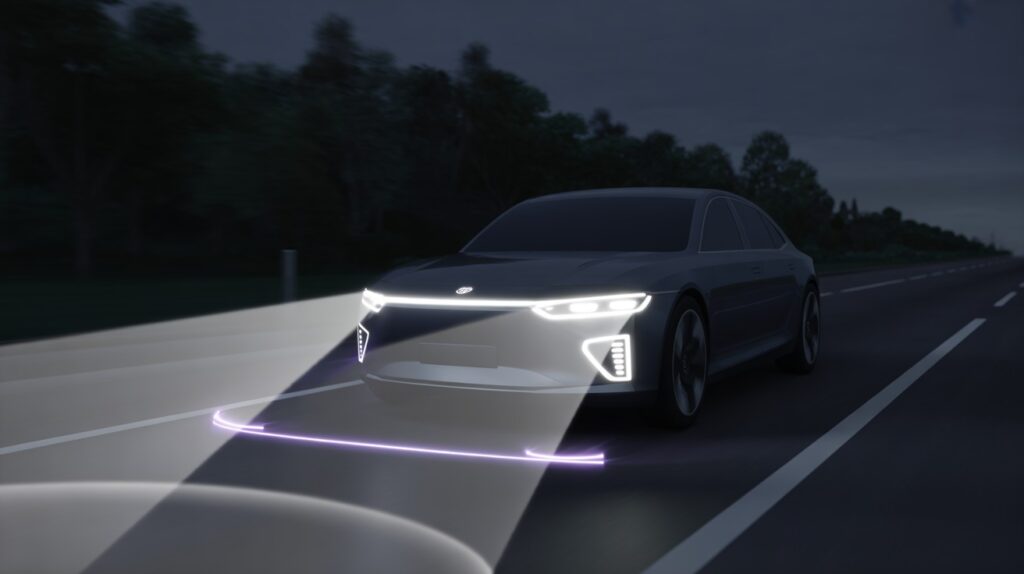
When shopping, look for the specific IIHS headlight rating of the vehicle and trim you intend to purchase. Different versions of the same model can have different lighting performance, depending on their equipment packages.
A well-designed lighting system is especially worthwhile for drivers who frequently travel after dark. Better visibility gives you more time to recognize pedestrians, animals, road debris, and unexpected changes in road direction.
6. Side-Curtain Airbags and Additional Side-Impact Protection
A vehicle’s safety equipment should protect occupants from more than frontal collisions. Side impacts can be particularly dangerous because there is relatively little space between passengers and the doors or other striking objects.
This is why vehicles equipped with comprehensive side-impact protection deserve serious consideration when comparing different trims and safety packages.
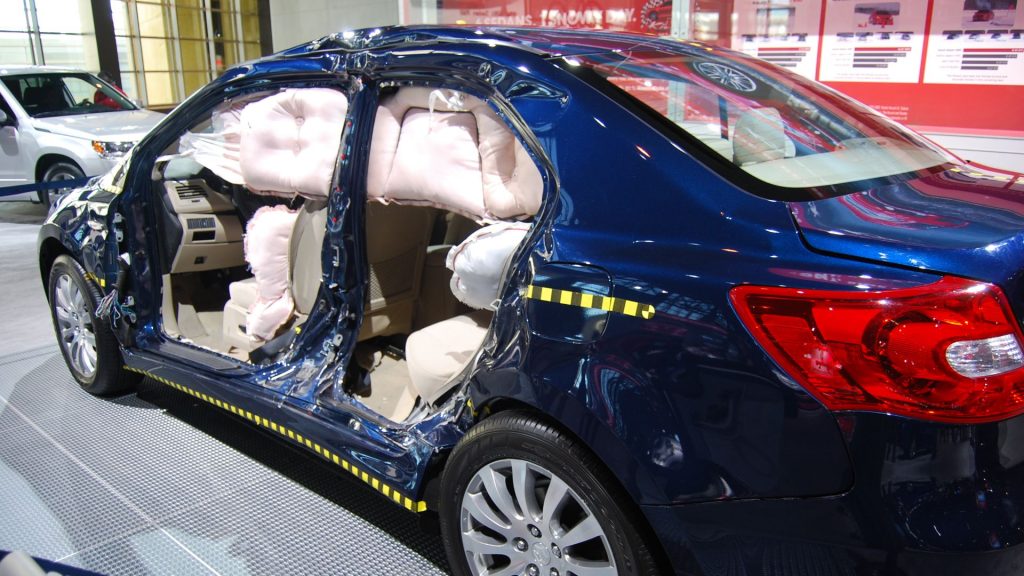
Side-curtain airbags deploy from the roof area and help protect occupants’ heads during certain side-impact and rollover crashes. Depending on the vehicle’s design, they may cover both front and rear seating positions.
Some systems also remain inflated longer during rollover events to help reduce the risk of occupant ejection through side windows.
The Insurance Institute for Highway Safety explains that head-protecting side airbags can substantially reduce injury risk by cushioning occupants and limiting contact with intruding structures. Its published research cites reductions in driver fatality risk of 37% in passenger cars and 52% in SUVs equipped with head-protecting side airbags during driver-side crashes.
Some vehicles also offer far-side airbags, sometimes called front-center airbags. These deploy between the driver and front passenger to help prevent occupants from striking one another during certain side-impact collisions. This is a particularly useful addition when evaluating vehicles with advanced occupant-protection packages.
Check the airbag specifications rather than relying on a manufacturer’s general statement that a vehicle has multiple airbags. Confirm whether protection extends to the rear seating positions and whether the curtain airbags include rollover deployment capability.
Also remember that airbags supplement seat belts rather than replace them. IIHS and NHTSA emphasize that properly worn seat belts remain essential for keeping occupants in the correct position during a crash.
For families who frequently carry passengers, comprehensive side-impact and curtain-airbag protection is a worthwhile feature to prioritize.
7. Automatic Crash Notification and Emergency Assistance
Safety does not end when a collision occurs. In a serious accident, getting emergency medical assistance quickly can make a significant difference, particularly when the vehicle leaves the roadway, occupants are unconscious, or the driver cannot reach a phone.
Automatic crash notification systems are designed to help in these situations by contacting an emergency response center after detecting a serious collision.
Depending on the manufacturer, the system uses vehicle sensors to identify events such as airbag deployment or a sudden, severe deceleration. It can then transmit information about the crash and the vehicle’s location to a response center.
An operator may attempt to communicate with the occupants and contact emergency services when necessary.
The National Highway Traffic Safety Administration (NHTSA) explains that automatic crash notification can reduce death and disability by helping emergency responders reach crash victims and transport them to medical facilities sooner.
This makes the feature particularly valuable for people who regularly travel alone, drive through rural areas, or spend long periods on highways.
Before paying extra, understand exactly what the manufacturer’s system includes. Some vehicles provide automatic collision alerts, emergency calling, GPS location sharing, and access to a live response agent.
Others require a connected-services subscription after an initial trial period. Coverage, cellular connectivity, and service availability can also vary by location.
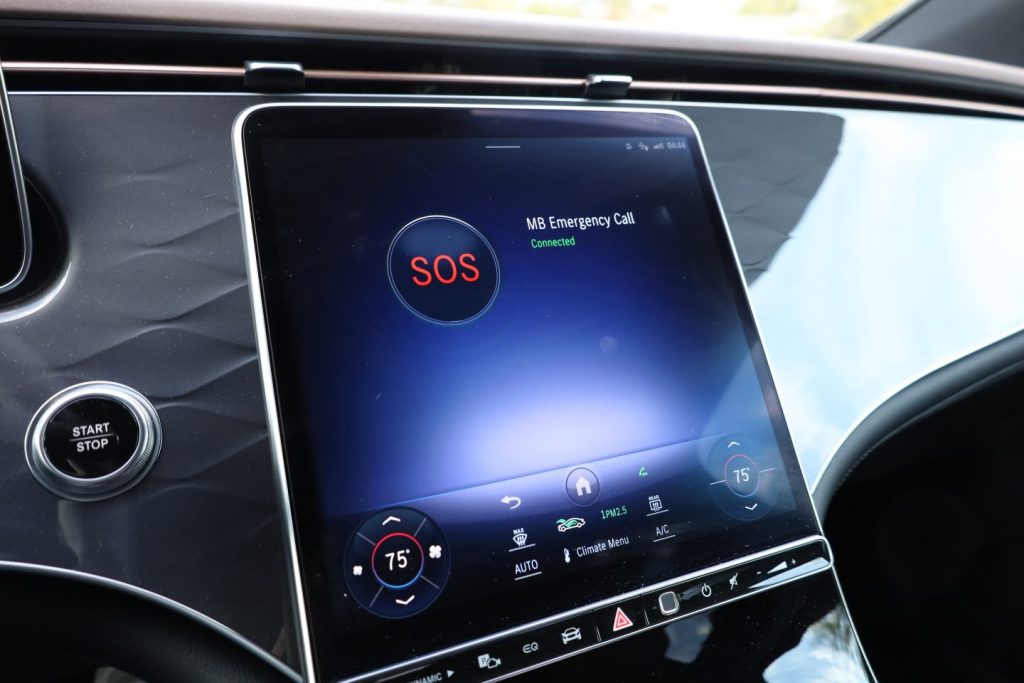
Ask whether the system can automatically contact emergency assistance after an airbag deployment or whether occupants must press an emergency button. Check the subscription cost and whether the service remains available throughout your intended ownership period.
Remember that automatic notification does not guarantee immediate emergency assistance. Cellular coverage, system detection, and local emergency response availability all influence how effectively it works.
For drivers who frequently travel long distances or carry family members, this technology offers valuable reassurance. It is particularly worthwhile when the system provides automatic crash detection rather than relying entirely on someone remembering to request help.
