
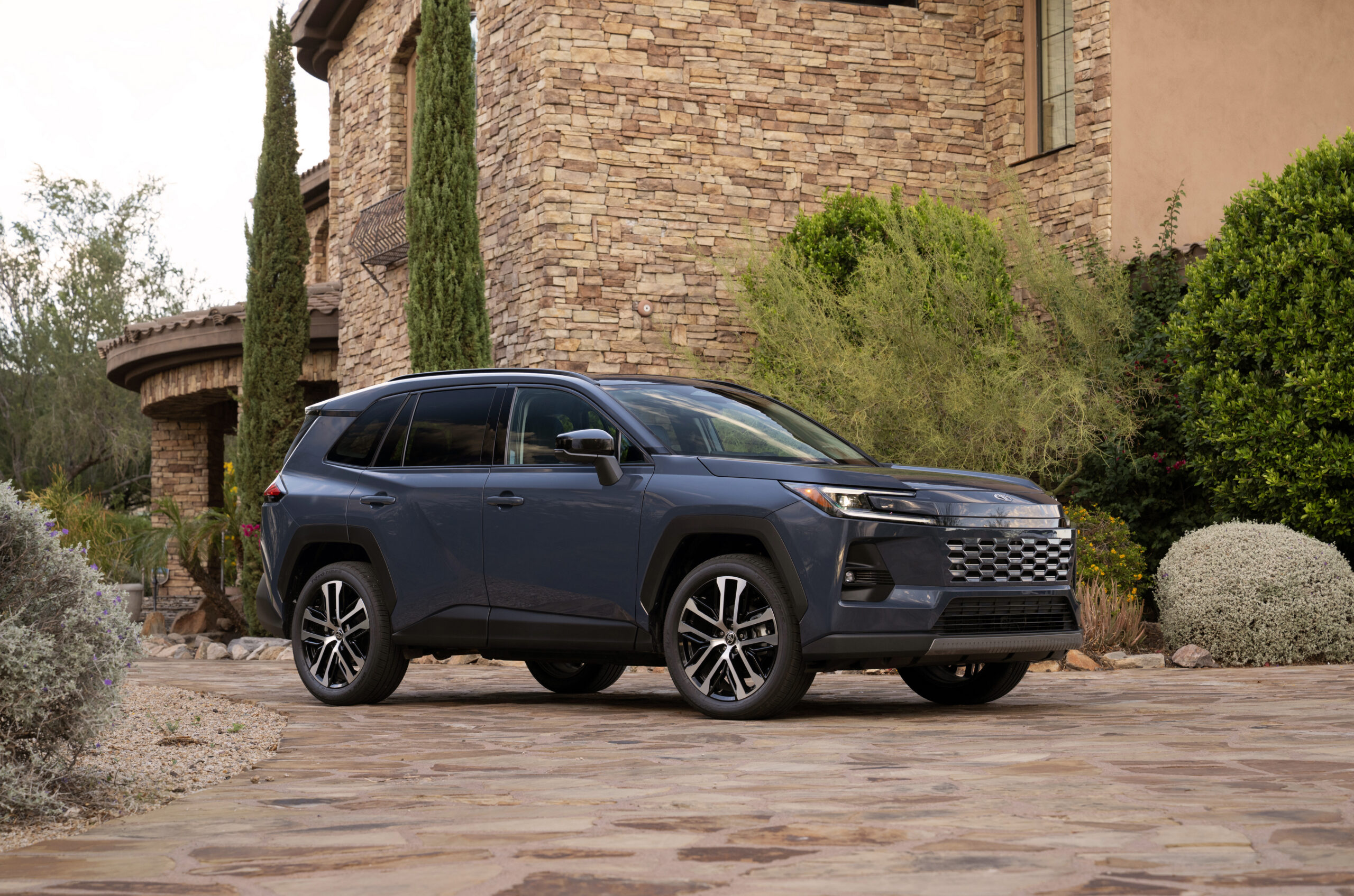
Toyota is making several practical changes to the 2027 RAV4 in the United States, focusing on improved capability for the Woodland grade and more convenient charging for plug-in hybrid models.
The Woodland receives revised suspension components that increase ground clearance to 9.1 inches, while every RAV4 plug-in hybrid gains a North American Charging Standard (NACS) port and an upgraded 11-kW onboard charger.
While these updates fall short of a full redesign, they focus on two features that appeal to buyers, improved capability on light off-road trails and easier access to public charging stations. Toyota has also introduced several smaller changes to equipment and convenience features throughout the lineup.
RAV4 Woodland Gets Revised Suspension and More Ground Clearance
The most visible mechanical update for 2027 is reserved for the RAV4 Woodland. Toyota has revised the suspension with new springs, shock absorbers, and jounce bumpers, increasing ground clearance from 8.1 inches to 9.1 inches.
That extra inch gives the Woodland more room underneath the vehicle when driving over uneven surfaces, rocks, and rutted trails. It also strengthens the distinction between this rugged-themed grade and the more road-focused RAV4 versions.
Ground clearance is an important consideration for drivers who regularly travel on unpaved roads. A vehicle with more space between its underbody and the ground is less likely to make contact with raised obstacles when crossing uneven terrain.
The Woodland’s suspension changes should therefore make it better suited to moderate trail use and rough access roads, although the additional clearance does not turn the RAV4 into a dedicated off-road vehicle.
Toyota has retained several features that support the Woodland’s outdoor-oriented positioning. The grade comes with standard all-wheel drive, all-terrain tires, raised roof rails with crossbars and a tow-hitch receiver.
It also includes rigid LED fog lights and a cargo-area 120-volt, 1,500-watt AC power outlet. These features give owners useful equipment for camping, outdoor recreation, and carrying additional gear.
The Woodland is available with either a conventional hybrid electric vehicle powertrain or a plug-in hybrid system.
That choice is useful because buyers can prioritize fuel efficiency and everyday convenience with the regular hybrid or choose the plug-in version for its ability to travel on electric power for shorter trips. Both configurations have standard all-wheel drive in this grade.
The suspension revision is not a lineup-wide change. Toyota’s announcement specifically identifies the Woodland as receiving the new springs, shocks, and jounce bumpers.
The GR SPORT also has its own performance-focused suspension and steering tuning, developed with Toyota Gazoo Racing, but it is a separate setup designed around handling rather than the Woodland’s increased ground clearance.
Toyota has also redesigned the Woodland’s all-weather floor and cargo mats for 2027. These additions are relatively small, but they suit the grade’s intended use. Drivers who regularly bring muddy footwear, outdoor equipment, or wet gear into the cabin may appreciate floor and cargo protection that is easier to clean.
The result is a more capable version of an already popular compact SUV, but buyers should keep expectations realistic. The extra clearance and all-terrain tires improve its suitability for light off-road driving. They do not provide the low-range gearing, heavy-duty underbody protection, or specialized hardware found in more serious off-road vehicles.
Plug-In Hybrid Models Add NACS Ports and Faster Charging Hardware
The more significant technology update affects every 2027 RAV4 plug-in hybrid. Toyota is adding a North American Charging Standard port, commonly associated with Tesla’s charging connector, to all PHEV grades.
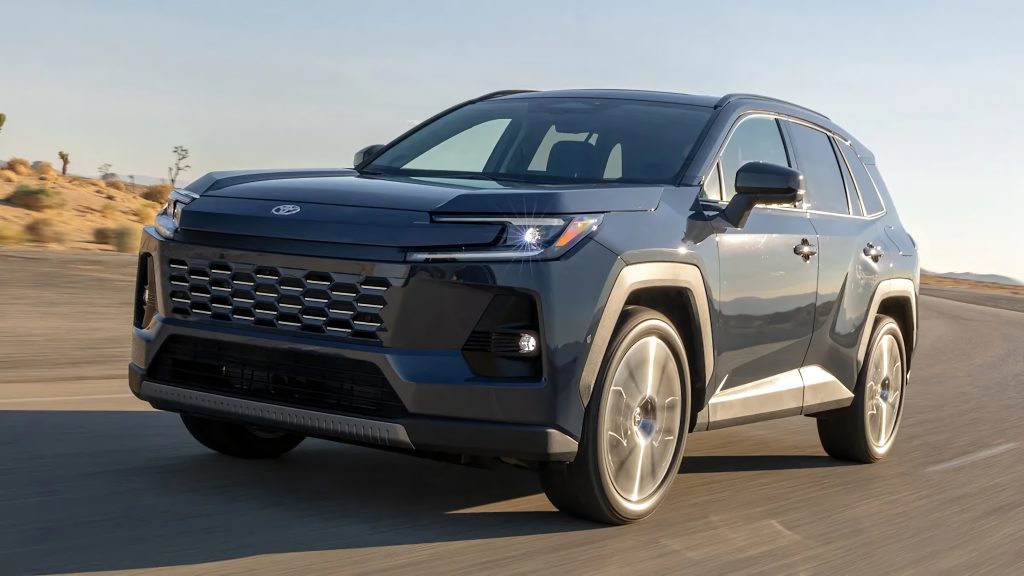
The change gives owners access to compatible NACS-equipped DC fast-charging infrastructure, subject to network access and charging-station availability. It also means the charging port moves to the driver’s side of the vehicle.
This is an important improvement because public charging compatibility can influence how convenient a plug-in hybrid is to own.
A PHEV combines a gasoline engine with an electric motor and rechargeable battery, allowing drivers to complete many shorter journeys using electricity before relying on the engine for longer trips.
Easier access to compatible fast chargers can make it more practical to recharge while away from home.
Toyota has also upgraded the onboard AC charger to 11 kilowatts across all PHEV grades. This hardware handles charging through Level 1 and Level 2 AC sources, including suitable home and public charging equipment.
The NACS port, meanwhile, enables DC fast charging. These are two different charging methods, and the 11-kW rating should not be mistaken for the vehicle’s maximum DC fast-charging power.
The distinction matters when comparing charging times. An 11-kW onboard charger can accept AC power at up to that rate when the external supply and electrical installation support it. Actual charging speeds depend on the available equipment and conditions.
DC fast charging bypasses the onboard AC conversion process and supplies power directly to the battery, with the vehicle controlling the rate it accepts.
The 2027 RAV4 PHEV lineup also retains meaningful differences in electric driving range depending on trim. Toyota’s manufacturer estimates list up to 52 miles of electric range for the SE, 50 miles for the XSE, 46 miles for the Woodland, and 45 miles for the GR SPORT.
These are estimates rather than guaranteed real-world results. Temperature, speed, terrain, driving habits, and accessory use can all affect the distance a vehicle travels on battery power.
All PHEV grades continue to use a 2.5-liter four-cylinder engine working with electric motors and a high-capacity battery. Toyota lists total system output at 321 horsepower, with electronic on-demand all-wheel drive standard.
This makes the plug-in RAV4 more powerful than the regular hybrid versions, although the added battery and charging hardware also make it a different ownership proposition.
The regular hybrid RAV4 does not receive the new NACS charging port because it is not designed to be plugged in. Its battery is recharged through the vehicle’s hybrid system, including regenerative braking and engine operation.
Toyota’s charging update is therefore specifically for customers choosing the plug-in hybrid versions.
Other 2027 Updates, Powertrain Choices, and U.S. Pricing
Beyond the Woodland suspension and PHEV charging changes, Toyota has introduced several smaller updates across the 2027 RAV4 range. All grades now receive a backup-camera washer, which can help keep the camera lens clear when dirt, road spray, or other debris affects rear visibility.
All-wheel-drive models also gain Multi-Terrain Select with Rock & Dirt and Mud & Sand modes. The system adjusts vehicle responses to suit different surfaces, replacing the previous Trail mode arrangement. Snow mode is now accessed through the drive-mode selector.
Toyota has also extended the Remote Connect trial period from one year to five years across the lineup. The connected service allows owners to use supported remote functions through the Toyota app, subject to an active trial or subscription and the availability of compatible services.
The 2027 models also continue to offer Toyota Safety Sense 4.0, the company’s latest suite of active safety and driver-assistance technologies.
The powertrain range remains divided between conventional hybrids and plug-in hybrids. Regular hybrid models use a 2.5-liter four-cylinder engine and Toyota’s fifth-generation hybrid system.
Combined output is 222 horsepower in front-wheel-drive versions and 229 horsepower in all-wheel-drive versions. Toyota’s manufacturer-estimated fuel economy reaches 43 mpg combined for the front-wheel-drive LE, SE, and XLE Premium grades. The Woodland hybrid is estimated at 38 mpg combined.
The PHEV range uses Toyota’s sixth-generation plug-in hybrid system and produces 321 total system horsepower. Its estimated combined fuel economy ranges from 37 to 41 mpg, depending on grade, in addition to the ability to drive using electric power. These figures are manufacturer estimates, and final EPA ratings may differ.
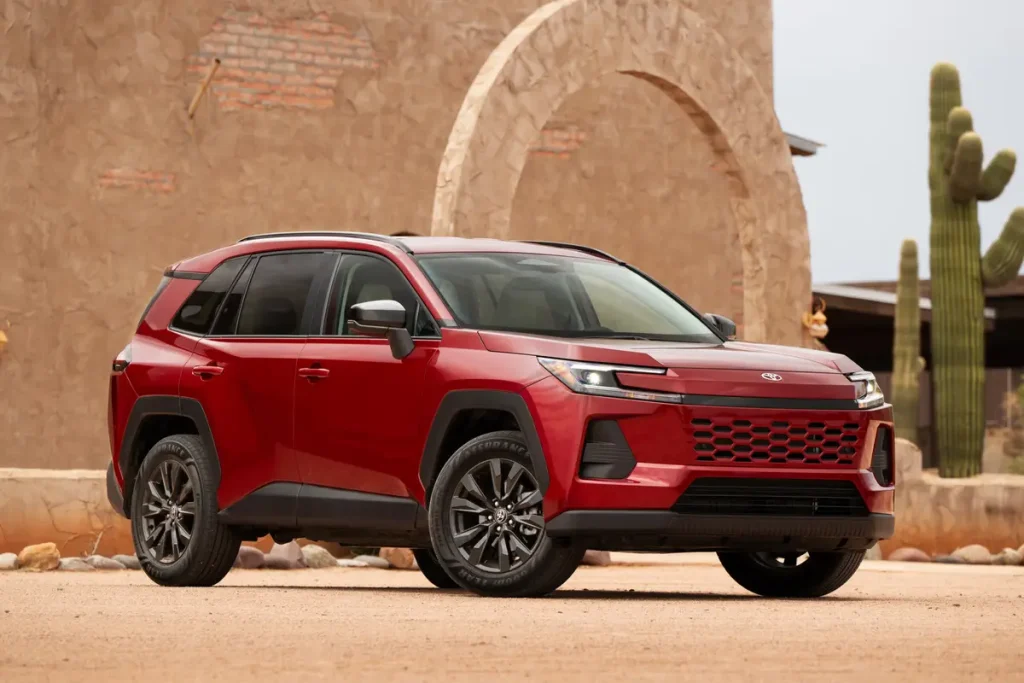
For U.S. buyers, Toyota lists starting MSRPs of $32,300 for the regular hybrid LE with front-wheel drive and $42,100 for the plug-in hybrid SE. Those figures exclude the delivery, processing, and handling fees.
The company expects 2027 hybrid models to begin reaching dealerships later in 2026, while PHEV versions are scheduled to arrive in early 2027.
Rather than introducing a complete redesign, Toyota has focused on making gradual improvements to the existing models. The changes target two key areas of ownership, giving the Woodland better capability on uneven terrain and making charging more convenient for plug-in hybrid owners.
The new NACS connection and 11-kW onboard charger give PHEV buyers more charging flexibility, while the Woodland’s revised suspension provides a measurable improvement in ground clearance.
For shoppers considering the 2027 RAV4, the choice will largely depend on how they intend to use the vehicle. The regular hybrid remains the straightforward option for buyers who want improved fuel efficiency without plugging in.
The PHEV offers electric driving capability and the convenience of a gasoline engine, while the Woodland adds equipment for drivers who frequently encounter unpaved roads. Toyota has not changed the basic identity of the RAV4, but these targeted updates make the 2027 lineup more useful across different driving needs.
