
Did you know your car loan might not be a life sentence? Many drivers sign for financing in a hurry at the dealership and never look at it again. That can be a pricey mistake. Refinancing swaps your current auto loan for a new one, ideally with a lower rate or a smaller monthly payment. Done right, it frees up cash you can use for groceries, savings, or that vacation you keep postponing.
Done carelessly, it can cost you more than you started with. The trick is knowing what to check before you sign. Here are seven friendly, practical things to understand first, so you can make a confident move.

1. Your Credit Score May Have Improved
Your credit score is one of the first things a lender may examine when you apply to refinance your car loan. It helps them assess how reliably you have managed borrowed money and determine the interest rate you may qualify for.
Think back to when you originally financed your vehicle. Perhaps your credit score was around 600 because you had limited credit history, missed payments, or high outstanding balances.
If you have since paid your bills consistently, reduced your credit card balances, and managed other debts responsibly, your score may have improved considerably.
For example, moving from a 600 credit score to 720 or higher could make you eligible for more competitive financing offers, depending on the lender’s requirements.
A lower interest rate can reduce the amount of interest you pay and may lower your monthly payment if the new loan has suitable terms.
Before applying, obtain copies of your credit reports and check them for errors. Incorrect account information, outdated debts, or reporting mistakes could affect your application. Dispute any inaccurate information through the appropriate credit bureau.
Also, remember that lenders may use different credit scoring models. The score you see through a banking application may not match the score used during your loan application.
If your credit profile has improved since your original purchase, refinancing may be worth investigating.
2. Loan Term Length Alters Total Cost
A lower monthly payment can make your car loan feel easier to manage, but it does not always mean you are saving money. One important detail to examine before refinancing is the length of the new repayment period.
When you refinance, a lender may offer a longer loan term to reduce your monthly obligation. For example, you might replace a loan with 36 months remaining with a new 60-month agreement.
This can make your monthly payments smaller because the remaining balance is spread across more months. However, you could end up paying more interest because the debt takes longer to repay.
Consider a borrower who wants to reduce a monthly payment from $450 to $320. The lower amount may seem attractive, especially when household expenses are rising. But if the new loan extends repayment by two additional years, the total interest could increase.
That is why you should look beyond the monthly payment when comparing refinancing offers. Ask for the total amount payable, the interest rate, and the full repayment schedule.
Whenever possible, aim to secure a lower interest rate without extending the remaining repayment period. If your budget allows, choosing a shorter term may help you clear the debt sooner and reduce interest expenses.

3. Prepayment Penalties & Fees
Read the fine print. Seriously. Some lenders charge a penalty if you pay off your auto loan ahead of schedule, and that fee can wipe out the savings you were chasing. Your current loan agreement should spell this out, or you can call the lender and ask directly.
The new lender may add costs, too. Application fees, origination fees, and title transfer charges can pop up on the paperwork, and they are easy to miss when you are focused on the interest rate.
So how do you decide? Do the math. Add up every fee, both from your old lender and the new one. Then compare that total against the money you expect to save each month over the remaining loan. If the savings clearly beat the fees, you are coming out ahead. If it is close, think twice.
Ask each lender for a full breakdown in writing before you commit. A fair lender will happily provide it. If someone dodges the question, treat that as a red flag and keep looking.
4. Vehicle Age and Mileage Limits
Your credit score and repayment history are not the only things lenders consider when reviewing a refinancing application. The age, mileage, and current condition of your vehicle can also determine whether you qualify.
Lenders use the vehicle as collateral for the loan. If you fail to make payments, the lender may have the right to repossess and sell the car to recover the outstanding debt.
Older vehicles and those with very high mileage may be harder to sell, making them less attractive as collateral. For this reason, some lenders place restrictions on vehicle age and mileage.
Certain institutions may be reluctant to refinance cars that are more than 10 years old or have accumulated between 100,000 and 150,000 miles. These are common screening ranges, not universal rules.
For instance, someone trying to refinance a 12-year-old vehicle with 160,000 miles may have fewer available lenders than someone with a newer car and lower mileage.
Your vehicle’s market value also matters. A lender may consider its make, model, condition, and outstanding loan balance when deciding how much it is willing to finance.
Before applying, ask potential lenders about their vehicle eligibility requirements. This can prevent unnecessary applications and help you focus on institutions that accept your car’s age and mileage.
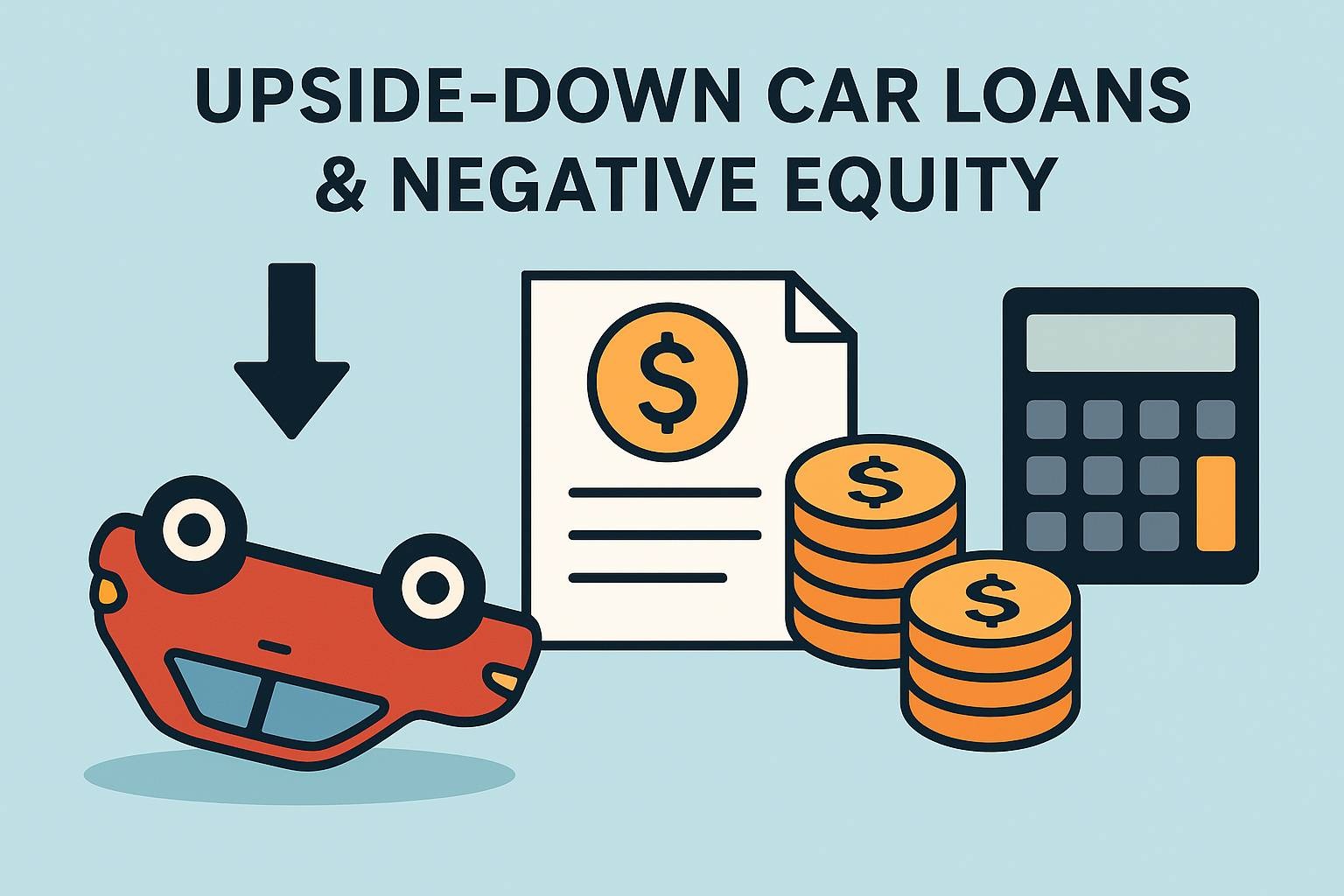
5. Watch Out for Negative Equity (“Being Underwater”)
One challenging situation occurs when your remaining car loan balance is higher than the vehicle’s current market value. This is commonly known as being underwater on a loan. It can make refinancing more difficult because lenders prefer the car’s value to be enough to cover the outstanding debt. When the loan exceeds the vehicle’s worth, lenders may consider it a greater financial risk.
It happens more often than you would think. New cars lose value fast, and rolling old debt into a new loan or making a small down payment can push you underwater quickly.
The first step is to find out where you stand. Get your payoff amount from your current lender. Then look up your car’s value using a trusted tool like Kelley Blue Book, and compare local trade-in prices as well. If the payoff is higher than the value, you have negative equity.
Do not panic. You still have options. Making extra payments toward the principal can close the gap. Some lenders may also work with you if your credit is strong. Waiting a few months while you pay down the balance can bring you above water and open up better offers.
6. The Timing of Your Loan Matters
Timing can make or break a refinance. Go too early, and you will probably be disappointed. A loan that is less than six months old rarely makes sense to refinance, because your credit has likely not changed much and you have not built a payment history that impresses anyone.
Wait too long, and the savings fade. With 24 months or fewer remaining, you are already paying mostly principal. Starting a brand-new loan resets the amortization clock, which pushes interest charges back to the front of the schedule. You could end up paying more, not less.
The sweet spot sits somewhere in the middle. Look for a point where you have a solid record of on-time payments, your credit score has moved up, and plenty of time is left on the loan for a lower rate to matter.
Mark your calendar. Check in every six months or so to see whether rates have dropped or your score has improved. A quick review a couple of times per year costs you nothing and keeps you ready to act when the numbers line up.

7. Shop Around and Compare Offers
Never grab the first offer that lands in your inbox. Your current bank may be friendly and convenient, but convenience does not always equal the best deal. A little shopping can save you real money.
Begin by exploring loan offers from different lenders, including local credit unions, online lending companies, and traditional banks. Credit unions may provide lower interest rates and better terms for their members, while online lenders often offer faster approval processes and convenient applications. Comparing several options can help you find a refinancing deal that best suits your budget.
Here is the good part. Many lenders let you pre-qualify with a soft credit pull, which does not hurt your score. You see an estimated rate without any penalty, so you can compare several offers risk-free.
When you do apply for a formal loan, try to submit your applications within a short window, such as 14 days. Credit scoring models usually treat multiple auto loan inquiries in that window as a single event, which limits the damage to your score.
Line up the offers side by side. Check the rate, the term, the fees, and the total cost. Then pick the one that truly fits your budget and your goals.